This update covers developments relating to the freedoms of expression, association and assembly in the United States of America from 1st July to 30th August 2026.
Context
Primary elections preview American voting priorities
Primary elections were held in the summer with mixed results. Both progressive and moderate candidates saw victories for the Democratic Party. Progressive candidate Abdul El-Sayed running for Senate in Michigan, and Democratic Socialist Melat Kiros running for Representative of Colorado both prevailed in their elections against establishment candidates. However, Francesca Hong in Wisconsin lost by a narrow margin to David Crowley in the Governor race. Key issues for Democratic voters included affordability, health care, Israel, and immigration. Midterm elections will take place on 3rd November 2026.
Legal battle between the states and federal government over voter registration regulations
On 24th August 2026, the US Supreme Court granted the government’s application for a stay on an injunction issued two months prior by the District Court of Massachusetts that paused the implementation of a 25th March 2025 Executive Order (EO). The EO issued by President Donald Trump directed an independent election agency to require voters to present their passport or other documents demonstrating citizenship when registering for federal elections. States sued the administration in three separate legal challenges, including Trump v. California, claiming that this order goes beyond the authority of the federal government. If enacted, this measure would restrict millions of Americans from participating in democratic elections.
Troubling immigration enforcement persists nationally
Immigration enforcement remains one of the Trump Administration’s top priorities this term. According to Immigration and Customs Enforcement (ICE) agents, the expectation is that officials make 2,000 arrests per day with the intent to deport these individuals. This escalation marks a surge in the summer of 2026 that has not been amplified, unlike previous enforcement campaigns.
On 7th July 2026, Lorenzo Salgado Araujo, an immigrant from Mexico, was fatally shot in his motor vehicle. The Department of Homeland Security (DHS) indicated that the vehicle stop was part of a targeted effort to arrest Araujo due to his status, and the agency alleged that he attempted to evade arrest by driving into the agent’s car which resulted in the agent firing his gun. Texas Civil Rights Project (TCRP) raised concerns about the use of force against community members following Araujo’s murder. The Washington Post reported that the other three men who were in the vehicle, Araujo’s coworkers, vehemently disputed the narrative perpetuated by ICE officials about the events leading to his death, reflecting a pattern of false claims by the agency and administration officials.
On 27th July, the administration put out a regulation that allows the US Citizenship & Immigration Services (USCIS) to forgo interviews with asylum seekers, where they are able to disclose details about persecution experienced in their home country, beyond what is included in documentation they submit. Without this interview, asylum seekers may be sent to deportation proceedings in front of a judge without having articulated their claims prior and with limited accessibility in the courtroom.
In August, a federal judge ruled that a policy that suspended visa processing from 75 countries was “contrary to law and in excess of statutory authority.” The State Department announced in January that it would implement this policy to ensure that individuals from the listed countries would not enter the country and seek “public assistance while living in the United States.” This was the latest effort by the administration to restrict migration from specific countries to the US.
Attacks on birthright citizenship escalate
On 6th August 2026, President Trump issued two EOs to restrict citizenship, Continuing to Protect the Meaning and Value of American Citizenship and Ending Birth Tourism. The orders aim to narrow eligibility for criteria for citizenship and clamp down on visas to prevent travel to the US for the purpose of giving birth within the country, which is already illegal. These latest attempts to restrict constitutional rights come after the Supreme Court decision that was handed down on 30th June 2026, that rolled back one of President Trump’s early EOs, Protecting the Meaning and Value of American Citizenship.
Association
Free speech and due process victory for international students vocal on Palestine
On 28th August 2026, a federal judge ruled that the Administration’s efforts to remove international students from the country for their Palestine advocacy was a violation of the First and Fifth Amendments.
The lawsuit, filed on 6th August 2025 by the Foundation for Individual Rights and Expression (FIRE) on behalf of The Stanford Daily, an independent student newspaper, challenged the use of immigration powers against individuals engaged in pro-Palestine speech, claiming that Immigration and Nationality Act (INA) provisions were weaponised by the administration to target students. The plaintiffs argued that “writers with student visas are declining assignments related to the conflict in the Middle East, worried that even reporting on the war will endanger their immigration status”
The judge declared that INA’s deportation and revocation of visa provisions violate the Constitution when used because of protected speech:
“The Court holds that, even if the government had established a compelling interest in the Challenged Portion of the Deportation Provision, separate from targeting noncitizen speakers with particular viewpoints, the Challenged Portion of the Deportation Provision is not narrowly tailored nor the least restrictive means of achieving those interests.
Freedom of speech is illusory if we are only “free” to express complimentary views about the government and its leaders. The true freedom in the United States is our “profound national commitment to the principle that debate on public issues should be uninhibited, robust, and wide-open, and that it may well include vehement, caustic, and sometimes unpleasantly sharp attacks on government and public officials […].
The Court finds that the Challenged Portion of the Deportation Provision is unconstitutional under the First Amendment as applied to protected speech.”
In October 2026, the government appealed the decision – it was formally registered before the Ninth Circuit as Case No. 26-6906. The decision is similar to previous rulings on recent government efforts to deport international academics and students for speech the administration officials object to.
This ruling is a victory for the First Amendment and a clear affirmation that the government cannot weaponise immigration law to punish and silence speech it doesn’t like, including that of student journalists, their sources or their contributors.
- Student Press Law Center Executive Director Gary Green.
Charges against labour leader protesting ICE dropped
On 27th July 2026, a federal judge dismissed criminal charges against David Huerta, president of the Service Employees International Union–United Service Workers West (SEIU-USWW), who was arrested on 6th June 2025 during a protest against a federal immigration enforcement operation in Los Angeles.
EVERYBODY WATCH. ICE IS OUT OF CONTROL. Video of SEIU California’s President David Huerta getting assaulted & arrested during an ICE raid in the warehouse district of Downtown Los Angeles today. He’s an LA native, American citizen and labor leader. Don’t turn away. https://t.co/TuDDSHaISC
— Fight for a Union (@FightForAUnion) June 6, 2025
Huerta had initially faced a felony charge related to allegedly obstructing federal officers, which prosecutors subsequently reduced to a misdemeanour. Following a motion by the US Department of Justice, the court dismissed the case without prejudice, with the dismissal becoming final on 27th August 2026.
In response, Huerta stated that “the charge against me was baseless, meant to intimidate anyone who dares to speak out, organise, or demand justice. There was never a real case, only an attempt to punish and silence me for exercising my constitutional rights.” This is an important victory in the midst of concerted targeting of anti-ICE protesters by the Administration.
Planned Parenthood funding resumes after politicised attack
On 4th July 2026, a provision in the “One Big Beautiful Bill” Act that halted Medicaid funding to Planned Parenthood expired, allowing funding to flow once again to the organisation. In the year that elapsed since funding was restricted, patients have been unable to get access to care and services. Planned Parenthood and Planned Parenthood Action Fund published a report days prior detailing the downstream effects of this funding loss, including “the closure of almost 30 health centres, two-thirds of which were in rural areas, or locations that had a shortage of medical services or healthcare professionals.”
The organisations also reported a 25 per cent decline in Medicaid-funded visits compared with the previous year, alongside reduced access to contraception, cancer screenings and sexually transmitted infection testing. Planned Parenthood criticised the restrictions as politically motivated and warned of their lasting consequences for access to essential healthcare.
Despite the expiry of the federal provision, restrictions on Planned Parenthood’s participation in Medicaid remained in place in several states, limiting the extent to which access to services could be restored.
Environmental Win for Michigan Tribes
On 31st July 2026, the Michigan Supreme Court overturned a permit that Enbridge, a Canadian company, needs to carry forward its tunnel project for the Line 5 pipeline in the region. It also ordered the Michigan Public Service Commission to redo its environmental review of the project. Native American Rights Fund (NARF) and Earthjustice have mobilised against this construction, highlighting the dangers of the project and implications for indigenous communities.
Civil rights activist arrested and charged amid politicised federal prosecution
On 12th August 2026, federal authorities served an arrest warrant on Heidi Beirich, civil rights activist and former staff of the Southern Poverty Law Center (SPLC), following a federal grand jury indictment issued the previous day. Beirich appeared before a federal magistrate in Riverside, California, where she was released on her own recognisance, subject to conditions including surrendering her passport. On 25th August, Beirich denied wrongdoing and pleaded not guilty. Her lawyer described the prosecution as politically motivated, arguing that it targeted her longstanding work investigating white supremacist and extremist groups.
The indictment charged Beirich with conspiracy to commit wire fraud, conspiracy to make false statements to a federally insured bank and conspiracy to commit concealment money laundering, arising from allegations concerning financial arrangements used to pay confidential informants investigating extremist organisations. The charges expanded criminal proceedings initiated against the SPLC in April 2026.
On 7th August, a federal judge rejected the SPLC’s motion, finding insufficient evidence of retaliatory prosecutorial motives. On 31st August, the court postponed the joint trial of Beirich and the SPLC until 1st February 2027.
On 25th August, CIVICUS condemned the arrest and indictment and called “on authorities to drop the charges and stop weaponising the justice system against critics.”
State Antiterrorism Laws
On 1st July 2026, a state-level terrorism designation law (H.B. 1471) went into effect in Florida. The law gives the Governor the authority to designate organisations recommended by the Florida Department of Law Enforcement chief as a “domestic terrorist organisation or foreign terrorist organisation if certain criteria are met.” Shortly after the law went into effect, Governor DeSantis expressed his intent to designate the Council on American-Islamic Relations (CAIR), the Muslim Brotherhood, and Antifa under this regime, as well as 90 other groups as FTOs under the new state law.
CAIR and CAIR-Florida filed a lawsuit on the same day, challenging the designation on the grounds that it violates the First and Fourteenth Amendments. They are represented by the ACLU, Southern Poverty Law Center (SPLC), and other lawyers. The implementation of the state law comes after the governor’s EO in December 2025 designating CAIR and the Muslim Brotherhood as FTOs in name.
Civil society organisations noted the implications of these designations, and groups such as Palestine Legal and the Center for Constitutional Rights have made statements of solidarity, underscoring the ways legal mechanisms by which the government targets dissent: “‘Terrorism’ labels and designations are part of a long history of criminalising, discrediting and using violence against communities and movements that challenge and resist oppressive US and allied political, economic, and social policies, domestically and internationally.”
Sanctions as a tool to restrict civil society
On 26th August 2026, the US Department of the Treasury’s Office of Foreign Assets Control (OFAC) imposed sanctions on Autistici/Inventati (A/I Collective), an Italian organisation providing digital infrastructure to civil society movements, alongside Palestine Action, a UK-based pro-Palestinian organisation, and Masar Badil, the Palestinian Alternative Revolutionary Path Movement, all organisations that advocate for Palestine and seek to end the Israeli occupation. They were designated as Specially Designated Global Terrorists under Executive Order 13224, as amended, over allegations of providing support for terrorism or acting on behalf of designated entities.
The designations blocked the organisations’ property and interests in property subject to US jurisdiction and generally prohibited US persons from providing or receiving funds, goods or services involving the designated entities without applicable authorisation. These restrictions also affected civil society organisations maintaining financial, contractual or service relationships with the designated groups, potentially exposing those subject to US sanctions jurisdiction to civil penalties for prohibited transactions. OFAC issued a temporary general licence allowing transactions necessary to wind down existing arrangements with A/I until 25th September 2026.
The sanctions had significant consequences for A/I, which had provided encrypted email, website hosting and other digital services to activists and civil society organisations since 2001. Following the designation, its autistici.org domain was suspended, its PayPal account was blocked and its banking operations were restricted.
communication spaces where we came of age: among email accounts, mailing lists, and collectively run web spaces, we learned the skills that would serve us, met the communities we grew up with, and discovered that another way of doing technology — without owners, without profit, based on trust and mutual help — is possible.
The designation is baseless: not a measure against terrorism, but an attempt to strike at the support structures of antifascism. It targets independent infrastructure run by volunteers, used by people and grassroots communities to organize, defend themselves and their rights, and communicate safely. It is an attack on self-determination and the right to associate.
- Osservatorio Nessuno OdV
US expands ICC sanctions
On 18th August 2026, the Trump Administration issued sanctions against the International Criminal Court (ICC) president and senior trial lawyer, building on previous sanctions against the United Nations Special Rapporteur on the situation of human rights in the Palestinian territory occupied since 1967 (OPT), Francesca Paola Albanese, for her engagement with the court, the ICC prosecutor, and judges. This is the latest escalation in its persistent targeting of the ICC.
The ICC strongly rejected the sanctions and notes that they are a “flagrant attack against the independence of an impartial judicial institution.” Just days prior, on 11th August 2026, four human rights organisations, American Friends Service Committee, Center For Constitutional Rights, Human Rights Watch, and Open Society Institute, filed a lawsuit challenging the EO issued on 6th February 2025 that authorised the sanctions regime against the ICC. The organisations allege that the sanctions are illegal and criminalise those who work with the ICC to bring about justice and accountability, particularly in the context of Palestine.
The sanctions imposed on the aforementioned individuals result in the blockage of transactions and engagement with the U.S. financial system, and prevent organisations that work with them on documentation, accountability, and justice seeking from maintaining this partnership without facing severe legal liabilities. The use of such coercive measures and the Secretary of State’s threat of a “sweeping campaign to dismantle the threat posed by the International Criminal Court to U.S. sovereignty” in July creates a chilling impact on civil society and harshly restricts collaboration between US bodies and international justice mechanisms.
US Government hosts political terrorism summit
On 16th July 2026, the US Department of State hosted a Ministerial on the Resurgence of Political Terrorism in Washington, D.C., bringing together leaders from over 65 countries to address what the government deems as the threat of “far-left terrorism” and transnational extremist networks. On the same day, Secretary of State Marco Rubio announced a visa-restriction policy aimed at individuals involved with far-left groups who “finance, recruit, incite, or otherwise enable terrorist, violent, and criminal Far-Left Terrorist networks.”
These actions build on the policies and expressed priorities of the administration, raising concerns that counterterrorism authorities could be used against lawful dissent. This is demonstrated by National Security Presidential Memo-7 (NSPM-7), the 2026 United States Counterterrorism Strategy, designation of “Antifa” as a domestic terrorism organisation despite no legal authority for this, and the frequent use of the Foreign Terrorist Organisation (FTO) designations to capture a broader swatch of international groups under this umbrella.
State Department report links US civil society organisations to alleged Cuban influence networks
On 20th July 2026, the US Department of State published a report entitled Cuba: The Capital of 21st Century Communism, alleging that the Cuban government had conducted a longstanding campaign of political subversion and influence in the United States, including through its alleged connections with civil society organisations. The report identified several US-based organisations, including the National Lawyers Guild (NLG), CodePink, the Democratic Socialists of America (DSA) and the Black Alliance for Peace, linking their political activities and international solidarity work to what it characterised as Cuban influence networks.
In response, on 23rd July, the NLG condemned the report as an attempt to justify increased government scrutiny and repression of the Cuba solidarity movement and other progressive organisations, describing it as “McCarthyite repression”. Defending Rights and Dissent similarly warned that the report employed guilt-by-association techniques to discredit activists, civil society organisations and elected officials, raising concerns about potential surveillance and restrictions on political dissent.
On 20th August 2026, the State Department announced further sanctions against three senior members of the Cuban Institute of Friendship with the Peoples (ICAP) and nine Cuban state entities, explicitly linking the measures to the July report.
On 26th August 2026, the NLG published a legal guidance document on government intimidation of the Cuba solidarity movement. The organisation reported that the Office of Foreign Assets Control (OFAC) had issued a request for information to at least one prominent CodePink activist concerning Cuba-related activities. The guidance addressed the potential legal consequences of such inquiries, including administrative subpoenas and investigations under the Foreign Agents Registration Act (FARA).
Peaceful Assembly
Seven pro-Palestinian protesters convicted and sentenced over Golden Gate Bridge blockade
On 2nd July 2026, a San Francisco jury convicted seven pro-Palestinian protesters of misdemeanour offences arising from a demonstration that blocked traffic on the Golden Gate Bridge for approximately four hours on 15th April 2024. The demonstration formed part of nationwide protests opposing US military support for Israel. All seven defendants were convicted of six misdemeanour counts, including four counts of false imprisonment, obstruction of a thoroughfare and unlawful assembly. One defendant was further convicted of refusing to disperse.
However, the jury failed to reach a verdict on a felony conspiracy charge that could have resulted in sentences of up to 15 years’ imprisonment. Of the 26 protesters originally arrested, 19 had previously had their charges dismissed or deferred.
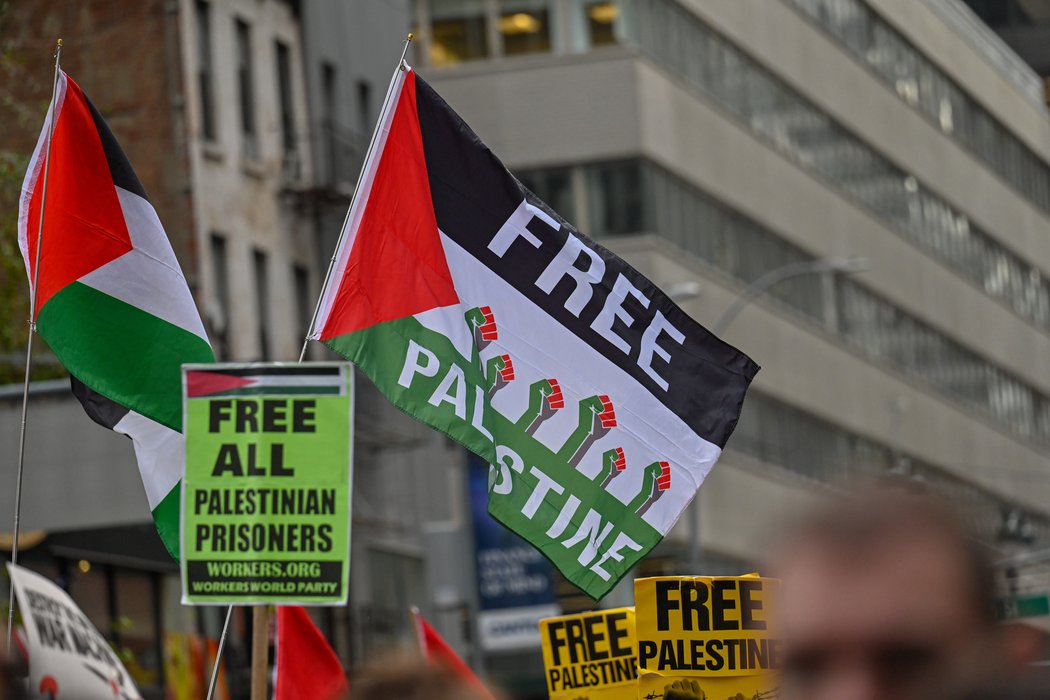
Tori Porell, Senior Staff Attorney at Palestine Legal, described the proceedings as a case of politically motivated over-prosecution intended to discourage criticism of US support for Israel’s genocide in Palestine. Defence lawyers argued that the demonstrators had engaged in non-violent civil disobedience after other forms of political advocacy had failed. Conversely, San Francisco District Attorney Brooke Jenkins maintained that the blockade had endangered motorists, disrupted emergency access and interfered with the rights of hundreds of commuters.
On 21st August 2026, the seven protesters were sentenced to 30 days in county jail, with credit for four days already served, six months’ probation and fines and restitution exceeding USD 1,300 per defendant. Up to half of the jail sentence could be served through a sheriff’s alternative work programme. The court suspended the custodial sentences pending appeal, while prosecutors confirmed that they would not retry the unresolved felony conspiracy charge. Although the authorities maintained that the sanctions reflected the serious disruption caused by the blockade, defence lawyers criticised the custodial sentences and the extensive criminal proceedings as disproportionate responses to non-violent protest.
Federal surveillance of protesters and organisations disclosed through criminal proceedings
On 13th August 2026, court documents filed by the defence of Isaac Sant, one of 15 defendants in the United States v. Sant case, revealed extensive surveillance of protesters, labour unions and civil society organisations by the DHS during ICE immigration enforcement in Minnesota, called “Operation Puppet Master”. As previously reported by the CIVICUS Monitor, the 15 defendants had been indicted in June 2026 on charges of conspiracy to impede or injure federal officers under 18 U.S.C. § 372, for their response and pushback against ICE immigration enforcement in Minnesota during Operation Metro Surge, where ICE agents violently targeted migrant communities, legal observers, and protestors in early 2026.
Federal prosecutors alleged that the defendants were associated with Direct Action Minnesota, a group they characterised as having links to antifa. All defendants pleaded not guilty.
The documents described undercover agents attending and secretly recording meetings at churches, libraries, schools and union halls, monitoring activist communications and collecting personal information about individuals involved in protests. The defence also presented records showing that Homeland Security Investigations (HSI) sought or obtained financial information concerning organisations including the Service Employees International Union (SEIU), Communications Workers of America (CWA), Sunrise Movement and Voices for Racial Justice.
Further documents disclosed in August included photographs of vehicles and people gathered at the memorial for Alex Pretti, who was fatally shot by federal immigration agents in January 2026, alongside records concerning the monitoring of Signal conversations and efforts to identify administrators of activist websites. Sant’s defence argued that the surveillance extended to individuals and organisations engaged in constitutionally protected activities without sufficient evidence of criminal wrongdoing, raising concerns over freedom of expression, peaceful assembly and association.
The surveillance campaign in Minnesota and the case against protesters is the latest implementation action of the National Security Presidential Memorandum 7 (NSPM-7), which served as a directive to government agencies to investigate and disrupt progressive networks allegedly perpetuating political violence and terrorist activity.
Legal documents released today show federal law enforcement officials extensively surveilled public meetings and activists during the ICE surge, and created dossiers on political enemies. I've been busy, but will post some takeaways on this thread soon: (1) www.mprnews.org/story/2026/0...
— Jon Collins (@jcollins.bsky.social) August 13, 2026 at 10:36 PM
[image or embed]
Protester arrested amid growing opposition to surveillance cameras
On 24th August 2026, police arrested Dominic O’Connor in Columbia, Missouri, during a protest against the city’s use of Flock automated licence plate recognition (ALPR) cameras, while displaying signs obstructing the view of surveillance cameras at a busy intersection. According to O’Connor, he was arrested on allegations of jaywalking, standing on a road median and resisting arrest, while police also discussed a possible charge of obstructing government operations. He was released after posting a USD 500 bond.
Civil liberties lawyer Dan Viets criticised the arrest and argued that Columbia’s ordinance restricting activities on road medians could be used to suppress constitutionally protected expression and protest. The city’s Median Safety Ordinance, which entered into force on 1st July 2026, restricts standing on certain road medians, with authorities maintaining that the measures are intended to protect pedestrians and motorists. On 12th August, the Winona Police Department in Minnesota announced that it would not reinstall its Flock cameras, citing concerns about public trust.
The incident occurred amid growing nationwide opposition to ALPR surveillance technology, with communities organising demonstrations and raising concerns at local council meetings about mass surveillance, privacy, data retention and the potential use of information by law enforcement without judicial warrants. An Electronic Frontier Foundation investigation published in November 2025 found that over 50 federal, state and local law enforcement agencies had conducted hundreds of searches using Flock’s nationwide ALPR network in connection with protest activity between December 2024 and October 2025 (the 50501 protests in February, the Hands Off protests in April, the No Kings, and others). The findings raised concerns about the use of surveillance technology to monitor people exercising their rights to freedom of expression and peaceful assembly.
In early September 2026, 404 Media reported that Flock Safety had demonstrated to law enforcement agencies how its integrated surveillance systems could be used to monitor protests and other public gatherings. In a company webinar, Flock representatives explained how its FlockOS platform could combine ALPR data, drones, gunshot detection systems, emergency response information and surveillance cameras, including those operated by third parties, into a centralised monitoring interface. Using a No Kings protest as an illustrative scenario, a company representative demonstrated how police could monitor protesters’ movements through live camera feeds, assess traffic conditions and access operational response plans without maintaining a continuous physical police presence at the demonstration.
In August 2026, Flock Safety announced changes to its surveillance systems, including reducing its standard data retention period from 30 to seven days, introducing additional controls over information sharing and expanding auditing mechanisms. However, the American Civil Liberties Union (ACLU) warned that these safeguards remained insufficient to address the broader privacy and civil liberties implications of nationwide ALPR surveillance, particularly the ability to aggregate vehicle location data and reconstruct individuals’ movements and patterns of activity.
These developments reflect concerns identified by the UN Special Rapporteur on the rights to freedom of peaceful assembly and of association in her 2026 thematic report, unmasking the chilling effects of the digital surveillance ecosystem (A/HRC/62/45). In paragraph 102, the Special Rapporteur explicitly identified automated number plate recognition, public surveillance cameras, facial recognition and other monitoring technologies as interconnected elements of a broader surveillance ecosystem. She warned that uncertainty surrounding data sharing between State and private actors could aggravate the chilling effects of surveillance on civic space.
ALPR companies like Flock violate our privacy across the country by taking photos of every vehicle passing their cameras, logging detailed information about them into a massive nationwide database, and making it possible to track those vehicles and apply AI to uncover their occupants’ private patterns of life.
- ACLU.
Environmental and technology activist sentenced to imprisonment following protest against artificial intelligence development
On 9th June 2026, a San Francisco jury found Wynd Sethe Kaufmyn, an activist associated with StopAI, guilty of four misdemeanour offences arising from a protest outside OpenAI’s headquarters on 22nd February 2025. According to the San Francisco District Attorney’s Office, protesters had chained and locked the entrance to the company’s offices and refused police instructions to relocate to a nearby public pavement. The jury convicted Kaufmyn of interfering with a business, trespassing with intent to interfere with a business, unlawful assembly and failure to comply with a dispersal order.
On 22nd June, a judge sentenced Kaufmyn to 14 days in jail, with sentence credits expected to reduce her actual detention to seven days. According to her lawyer, the judge also dismissed the business-interference conviction on First Amendment grounds. Kaufmyn was additionally ordered to remain at least 20 yards from OpenAI’s headquarters and to pay fines and fees, which could reportedly be satisfied through community service. Her lawyer indicated that the defence intended to challenge the restriction on approaching the company’s offices.
On 14th August, Kaufmyn surrendered to authorities to begin serving her custodial sentence. She defended her participation in the protest as non-violent civil disobedience intended to draw attention to the potential risks of advanced artificial intelligence.
In a separate development, on 10th August 2026, over 30 student activists associated with the Sunrise Movement, QuitGPT and the Young Democratic Socialists of America organised a protest at OpenAI’s Washington lobbying office. Protesters occupied the building’s lobby to oppose corporate lobbying concerning artificial intelligence regulation. According to the organisers, police arrested 13 protesters after approximately two hours.
BREAKING: 13 students are occupying @OpenAI’s brand new lobby office in DC, as their dark money super PAC is on track to spend nearly $200 million to buy elections this year. Young people want good jobs and a livable planet. https://t.co/kGr88a9m66
— Sunrise Movement 🌅 (@sunrisemvmt) August 10, 2026
Communities organise nationwide protests against data centre expansion
On 18th July 2026, communities opposing data centre construction organised 142 demonstrations across 42 US states—the first coordinated nationwide protest against the rapid expansion of data centres supporting artificial intelligence (AI) infrastructure. HumansFirst, an organisation co-founded by Amy Kremer, a former activist in the conservative Tea Party movement, coordinated the demonstrations. Texas recorded the largest number of protests, with 18, followed by Georgia with 11 and California with eight.
Protesters raised concerns about the environmental and economic impact of data centres, particularly their high water and electricity consumption, pressure on local infrastructure and potential increases in household utility costs. Organisers called for greater transparency in decisions approving new facilities, stronger environmental safeguards, community benefits and increased accountability from developers.
The protests took place amid growing public opposition to data centre construction in communities across the United States. According to an Annenberg Public Policy Centre survey, 61 per cent of surveyed US adult citizens opposed the construction of new data centres in their communities, up from 49 per cent earlier in 2026. The survey, which included 1,320 respondents, found majority opposition among Democrats, Republicans and political independents.
According to the Data Center Watch, at least 45 data centre projects, worth approximately USD 68 billion, had faced delays or cancellations during the second quarter of 2026. These developments highlighted intensified efforts to increase scrutiny over data centre expansion.
Thousands protest fatal ICE shooting and demand independent investigation
On 8th July 2026, more than 1,000 people marched through Houston, Texas, demanding accountability after an officer from ICE fatally shot Lorenzo Salgado Araujo, a 52-year-old Mexican national, on 7th July 2026. Protesters gathered near the site of the shooting in Houston’s Magnolia Park neighbourhood before marching to a nearby park. They carried Mexican flags and banners opposing immigration enforcement operations and called for an independent investigation into the shooting.
On 11th July, hundreds of protesters gathered outside Houston City Hall, demanding the release of evidence concerning the shooting and the release of three men who had reportedly witnessed the incident and were subsequently detained. Civil rights organisations, elected representatives and family members also called for an independent investigation. By August 2026, local and federal authorities continued investigating the shooting. The Harris County Commissioners Court, the governing body of the county that includes Houston, authorised funding to support the county prosecutor’s investigation, amid continuing concerns about transparency and the circumstances of Salgado Araujo’s death.
On 13th July 2026, demonstrations took place in Biddeford, Maine, following the fatal shooting of Johan Sebastián Durán Guerrero, a 25-year-old Colombian national, by an ICE officer. Residents gathered near the scene of the shooting to express concern over immigration enforcement operations and demand accountability. The following day, protesters also gathered outside an ICE facility in Scarborough, while residents organised vigils in Lewiston. Protesters placed flowers and photographs at memorials honouring Durán Guerrero.
Federal court blocks Virginia law restricting masked immigration officers and requiring identification
On 30th June 2026, a federal judge temporarily blocked Virginia from enforcing a law prohibiting federal immigration officers from concealing their faces during operations and requiring them to display visible identification. The legislation, signed into law on 20th May, sought to strengthen transparency and accountability in law enforcement amid growing concerns over the conduct of masked federal immigration agents.
In United States v. Commonwealth of Virginia, US District Judge Robert E. Payne granted a preliminary injunction following a constitutional challenge brought by the Department of Justice. In his opinion, issued on 2nd July 2026, the judge found that the federal government was likely to succeed in demonstrating that the legislation unlawfully regulated federal officers in violation of the Supremacy Clause and the doctrine of intergovernmental immunity. The court accepted federal government arguments that requiring officers to reveal their identities could expose them to harassment and retaliation and interfere with undercover and surveillance operations. Virginia appealed the injunction.
The decision came amid growing concerns over the use of masks and the absence of identification during federal immigration enforcement. ACLU has documented alleged patterns of excessive force, intimidation and interference with protests by federal immigration officers. The organisation warned that the use of facial coverings, unmarked vehicles and unclear agency identification had undermined transparency and made it difficult for affected individuals to identify officers responsible for alleged abuses.
Expression
Justice Department withdraws subpoenas seeking journalists’ sources and family telephone records
On 10th July 2026, federal authorities issued grand jury subpoenas seeking testimony from three New York Times journalists about confidential sources used in articles published on 8th and 9th July concerning the security capabilities of a Qatari-provided aircraft used by President Donald Trump. Additional subpoenas addressed to third-party communications providers sought telephone and text-message records relating to reporters and, according to the newspaper’s subsequent court submissions, included telephone numbers associated with one reporter’s mother and two reporters’ spouses. Some requests covered records dating from 1st January 2026, several months before publication of the articles. The newspaper challenged the measures as excessively broad and inconsistent with protections for confidential newsgathering.
On 21st July, the Associated Press reported that the newspaper had asked a federal court in Manhattan to invalidate the subpoenas. The government maintained that the reporting raised national security concerns and justified an investigation into possible unauthorised disclosures. At a hearing on 23rd July, District Judge Arun Subramanian questioned whether prosecutors had exhausted less intrusive investigative measures and addressed deficiencies in the government’s applications. Prosecutors acknowledged errors and agreed to withdraw the demands.
On 23rd July 2026, the court confirmed that both the subpoenas issued to journalists and the third-party subpoenas had been voluntarily withdrawn and were null and void. It therefore dismissed the newspaper’s motions to quash as moot, without determining their merits. The court required the government to return for judicial consideration before issuing renewed subpoenas. The Justice Department stated that its investigation remained ongoing.
This is the latest effort to target journalists, following the search and seizure of a Washington Post journalist’s home and multiple cases between the government and The New York Times.
Congressional committee subpoenas independent newsroom over alleged foreign influence, threatens journalists with questioning
On 21st July 2026, the US House Committee on Ways and Means, chaired by Republican Representative Jason Smith, issued a subpoena compelling independent nonprofit media outlet BreakThrough News to disclose financial records and internal communications as part of an investigation into alleged foreign influence over tax-exempt organisations. The committee alleged that the outlet had received funding from Neville Roy Singham, a US technology financier residing in Shanghai, and raised concerns about purported links to the Chinese Communist Party (CCP). Similar subpoenas were issued to two other nonprofit organisations, The People's Forum and Tricontinental: Institute for Social Research. The committee had initially requested BreakThrough News's financial records in February 2026, but the organisation refused to comply, arguing that the investigation lacked a legitimate legislative purpose and infringed its First Amendment rights.
On 23rd July 2026, the Freedom of the Press Foundation condemned the subpoena, warning that congressional investigations targeting newsrooms over their editorial positions could undermine press freedom and intimidate journalists. BreakThrough News similarly rejected the allegations, describing the investigation as an attempt to punish its reporting and political viewpoints.
Journalist questioned and electronic devices seized following reporting trip to Iran
On 10th July 2026, US Customs and Border Protection (CBP) officers detained and questioned journalist Max Blumenthal, founder and editor-in-chief of The Grayzone, for approximately two and a half hours at Washington Dulles International Airport following his return from a reporting assignment in Iran, where he had covered the funeral of Ayatollah Ali Khamenei. According to Blumenthal, officers questioned him about his journalistic activities, the financing of his trip and whether he had received payment for interviews. Officers also seized his two mobile phones after he refused to provide their passcodes, raising concerns about the potential exposure of confidential journalistic sources and unpublished reporting.
On 15th July, the Committee to Protect Journalists (CPJ) condemned the incident, warning that questioning journalists about their professional activities at border crossings could constitute intimidation and have a chilling effect on press freedom. Following an emergency legal application filed on 16th July by the American-Arab Anti-Discrimination Committee (ADC), CBP returned both phones on 17th July. A month later, Blumenthal filed a federal lawsuit against senior Department of Homeland Security and CBP officials, alleging that the seizure violated his First and Fourth Amendment rights.
The government has scrutinised reporting on Iran since the war broke out in early 2026, with the Federal Communications Commission (FCC) Chairman calling out news outlets for their reporting and President Trump threatening a journalist who leaked a story about a US airman whose plane was shot down by Iran.
President Trump threatens journalist with FCC action over coverage of election endorsements
On 30th August 2026, President Trump made a post on Truth Social threatening to report Kristen Welker, the host of NBC’s Meet the Press, to the Federal Communications Commission (FCC) for her “purposeful inaccuracy” while covering the ways in which Trump’s endorsement of candidates informed primary election results. As previously reported by the CIVICUS Monitor, President Trump has consistently used his allyship with the FCC Chairman, Brendan Carr, to threaten and censor reporters and talk show hosts.
Pentagon and Justice Department establish taskforce to investigate disclosures to the press
On 13th July 2026, US Secretary of Defence Pete Hegseth announced that the Department of Defense and Department of Justice had established a joint taskforce to identify and prosecute individuals suspected of unauthorised disclosures of sensitive government information to the press. In a video statement, Hegseth said he had authorised the Pentagon’s Office of General Counsel to request and receive information, records and assistance from across the department in connection with investigations into such disclosures.
Hegseth argued that the unauthorised release of sensitive information could endanger military personnel and national security. However, investigations directed at identifying journalists’ confidential sources can raise concerns for press freedom, particularly where journalists are subjected to compulsory legal process. The Department of Justice’s regulations, at 28 CFR § 50.10, establish protections and procedures governing demands for journalists’ records and testimony, while recognising legitimate law enforcement and national security interests.
As of July 2026, the Pentagon had not held a news conference for over two months, failing to share updates on escalating attacks in Iran.
Court postpones federal rule limiting admission periods for foreign journalists
On 17th July 2026, the Department of Homeland Security published a final regulation replacing the existing duration-of-status admission framework for foreign media representatives holding nonimmigrant status with fixed periods of admission. The regulation provided for admission of up to 240 days for most foreign journalists, or up to 90 days for holders of passports issued by the People’s Republic of China, except Hong Kong and Macao Special Administrative Region passport holders. Journalists requiring additional time could apply for extensions of stay. The regulation also affected foreign students and exchange visitors and was scheduled to take effect on 15th September 2026.
The department justified the change as a means of strengthening immigration oversight and addressing fraud and national-security concerns. Press freedom organisations, including the Committee to Protect Journalists and Reporters Without Borders, warned that short admission periods and repeated extension applications could discourage critical reporting or disrupt longer-term assignments. The limits concerned authorised periods of admission, not the period of validity printed on every journalist’s visa.
Relentless cycle of visa renewals restricts press freedom, as journalists will feel compelled to avoid drawing the administration’s ire, lest their applications be rejected.
- Committee to Protect Journalists.
Venezuelan journalist released after nearly three weeks in federal immigration detention
On 26th July 2026, federal Customs and Border Protection agents detained Venezuelan journalist Wilmer Solano Dávila during a traffic stop in Miami Beach, Florida. Solano, a former political reporter for the Venezuelan television network Globovisión, entered the United States on a journalist visa in January 2015 and later applied for asylum. According to the U.S. Press Freedom Tracker, he held temporary protected status until September 2025 and had a pending immigration case and work authorisation at the time of his detention.
His wife, Maria Moreno, stated that he had not been charged with a criminal offence and challenged the circumstances of his detention. The Department of Homeland Security confirmed that Solano had been taken into custody but stated that a valid work permit or pending application did not, by itself, confer lawful immigration status. Solano was released on 14th August, and his family said that his immigration proceedings remained unresolved.
Kansas journalist reaches settlement over 2023 police raid on newsroom
On 11th August 2026, former Marion County Record reporter Phyllis Zorn reached an US$850,000 settlement with the city of Marion, Kansas, resolving the remaining claims in her federal lawsuit arising from police raids on the newspaper’s newsroom and the home of its publisher and that of a former city councillor on 11th August 2023. As previously reported by the CIVICUS Monitor, officers seized journalists’ equipment, including Zorn’s personal mobile telephone, during an investigation into allegations involving access to a public record. Special prosecutors subsequently determined that the newspaper’s staff had not committed a crime.
Zorn had brought proceedings in 2024 alleging infringements of her First and Fourth Amendment rights. She previously settled with Marion County officials for US$600,000 in November 2025; the August 2026 city agreement brought her two reported settlements to US$1.45 million. The agreement resolved her claims without a final trial judgment establishing liability against each defendant. Other proceedings concerning the newsroom raids remained separate. The settlement nevertheless constituted a significant remedial development following an incident that had attracted widespread concern about interference with the press.
Journalist contests daily financial sanctions for protecting confidential sources
On 2nd July 2026, the US Supreme Court rejected an emergency stay request by investigative journalist Catherine Herridge, who had been held in civil contempt for refusing to identify confidential sources for reporting published in 2017 concerning Chinese-American scientist Yanping Chen. Chen brought litigation under the Privacy Act over alleged government disclosures of records relating to a federal investigation that ended without charges. A federal court had directed Herridge to identify her sources and imposed coercive sanctions of US$800 per day for non-compliance. The US Court of Appeals for the District of Columbia Circuit upheld the disclosure order in September 2025.
Chief Justice John Roberts had temporarily suspended enforcement while the emergency application was considered, but the Supreme Court denied the request on 2nd July; Justice Brett Kavanaugh indicated he would have granted a stay. On 20th August, Herridge petitioned the Supreme Court for review, asking it to consider the protection afforded to journalists’ confidential sources in federal civil litigation.
Appeals court upholds injunction against Florida restrictions on university teaching
On 7th July 2026, the US Court of Appeals for the Eleventh Circuit affirmed preliminary injunctions preventing enforcement of the higher-education classroom provisions of Florida’s Individual Freedom Act, widely known as the “Stop WOKE Act”. In the consolidated cases Pernell v. Florida Board of Governors and Novoa v. Diaz, university professors, students and a student organisation challenged provisions restricting instructors at public colleges and universities from endorsing or promoting specified ideas relating to race, sex, national origin and discrimination. Those provisions permitted classroom discussion of the concepts only without endorsement, while universities and professors faced possible financial or disciplinary consequences for non-compliance.
The appellate court rejected the state’s argument that government funding of public universities allowed the legislature to control classroom expression as government speech. It held that the restrictions constituted impermissible viewpoint discrimination and interfered with academic freedom protected by the First Amendment. The Foundation for Individual Rights and Expression (FIRE) supported the Novoa plaintiffs, while the American Civil Liberties Union and other organisations represented plaintiffs in the related Pernell proceedings.
That precedent makes clear that universities and even other government entities have crucial authority to shape curricular content, discipline teachers, and take other steps to guide and govern postsecondary education. But the speech ban Florida’s political leaders seek to impose here is different in both nature and degree from these ordinary concerns. The rule Florida developed for this case does not withstand scrutiny.
-
Human rights organisations petition UN over journalist Mumia Abu-Jamal's continued imprisonment
On 28th July 2026, a coalition of human rights organisations, including American Civil Liberties Union, Center for Constitutional Rights, California Coalition for Women Prisoners, and Release Aging People in Prison Campaign, submitted a petition to the United Nations Working Group on Arbitrary Detention seeking relief for journalist Mumia Abu-Jamal. He is a U.S. citizen who was convicted of the murder of a police officer, sentenced to death, and has been detained in a Pennsylvania prison since 1982. According to Amnesty International, his trial “failed to meet minimum international standards safeguarding the fairness of legal proceedings” and involved the publication of his “political beliefs and affiliations” to the jury in a negative manner, informing his sentencing.