In Indonesia, civic space is rated as ‘obstructed’. Under President Prabowo Subianto, human rights groups have documented the criminalisation, harassment and attacks on activists and others for their activism. Journalists have been targeted for their reporting and there has been a brutal crackdown on protests, with arbitrary arrests, excessive force and ill-treatment by the security forces with impunity. Authorities have also criminalised Papuan activists for their peaceful expression and supressed demonstrations in the region.
In recent months, activists have been criminalised, harassed and vilified, and film screening blocked, while lenient sentences were given for an attack against an activist. Environmentalists and indigenous leaders were unjustly prosecuted while the military silenced dissent with disinformation campaigns branding activists and journalists ‘foreign agents’. The authorities continue to target activists in Papua and persecute transgender women. There were arbitrary arrests during a labour day protest and a crackdown on protests in Papua.
Expression
Activists face criminal prosecution under internet law
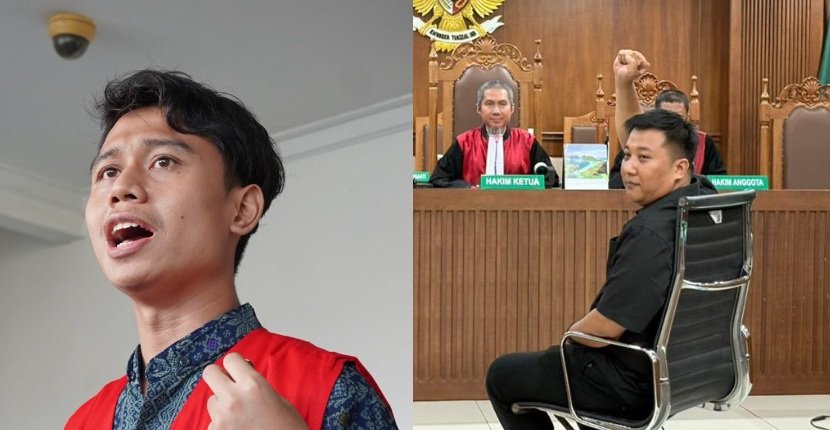
On 7th April 2026, the Central Jakarta District Court convicted activist Wawan Hermawan under the Electronic Information and Transactions (EIT) Law and sentenced him to seven months' imprisonment for reposting social media content during the mass protests in August and September 2025.
In August 2026, activist Khariq Anhar was also prosecuted under the same law for a satirical social media post related to the 2025 mass protests. Prosecutors have demanded a six-month prison sentence for Khariq, charged with unlawfully altering a screenshot of a news article and posting the edit on Instagram using the account @aliansimahasiswapenggugat.
Khariq and Wawan were initially arrested following the protests in response to government policies widely perceived as undermining civic space and worsening socio-economic conditions. Besides them, five other activists were also detained for speeches, social media posts, or other peaceful activities connected to the protests. On 6th March 2026, the Central Jakarta District Court acquitted Delpedro, Muzaffar, Khariq, and Syahdan of all charges, ruling that prosecutors had failed to prove allegations of incitement, dissemination of false information, hate speech, or child exploitation.
The draconian EIT law is a vague and overbroad law that has been systematically used to arrest, prosecute and punish activists, journalists, and government critics.
Amnesty International has called on the government Immediately to discontinue the prosecution of Khariq Anhar under the Electronic Information and Transactions Law unless prosecutors can present sufficient, credible and admissible evidence that he committed an internationally recognised criminal offence. It also urged the authorities to end the misuse of criminal law against individuals solely for exercising their rights to freedom of expression and peaceful assembly and ensure that these rights can be exercised without fear of intimidation or criminal prosecution.
Screenings of a film on Papua disrupted and blocked by the military
Indonesian authorities have shut down several screenings of a new documentary on alleged human rights abuses in Papua, including Indigenous land seizures. Rights groups and international media still face restricted access to the region.
— Al Jazeera English (@AJEnglish) May 23, 2026
Al Jazeera’s @JesWashington reports. pic.twitter.com/D2QMjjynEE
Throughout May 2026, public screenings of ‘Pesta Babi’ (The Pig Feast), a documentary produced by Watchdoc, have been met with intimidation, criminalisation, and forced shutdowns. The documentary highlights environmental exploitation in several regions, particularly Papua.
According to EU SEE, until 14th May 2026, there have been at least 21 instances of intimidation during screenings of ‘Pesta Babi’ across different regions, with many additional instances of bullying unreported. These instances included threatening phone calls, monitoring by security intelligence, requests for the identity of organisers, and forcible dissolutions of events. Many of these incidents of intimidation and shutdowns were carried out by security forces.
Major shutdowns include the dissolution of the community screening at the University of Mataram on 7th May 2026. According to the Human Rights Monitor, dozens of campus security personnel arrived at the venue and instructed organisers to cancel the event. University representatives stated that the cancellation was necessary to maintain security and public order on campus and argued that the documentary was not appropriate for screening within the university environment. Witnesses also reported the presence of police intelligence officers and members of the TNI monitoring the gathering. Rather than cancelling the event altogether, organisers relocated the screening approximately 50 metres outside the university campus to a nearby café.
In another incident, on 8th May 2026, members of the military reportedly dispersed a public screening of the documentary in Ternate City, North Maluku. The screening was halted because the film had attracted public criticism on social media and was considered by some to be provocative and capable of inflaming sensitive ethnic and religious issues.
On 12th May 2026, Indonesia’s National Human Rights Commission (Komnas HAM) expressed concern over the intimidation, prohibition, and forced cancellation of the screenings. It affirmed that film is a form of artistic expression and is protected under the Indonesian Constitution and international human rights instruments ratified by Indonesia, including the ICCPR and ICESCR. It stressed that any restriction on freedom of expression and cultural activities must be lawful, necessary and proportionate, and cannot be imposed through intimidation, pressure from authorities or vigilante actions.
Harassment against journalists marks declining press freedom
According to EU SEE, a series of incidents of harassment against journalists took place in April and May 2026.
Journalists covering a protest in front of the East Kalimantan Governor’s office in Samarinda on 21st April 2026 faced intimidation from the authorities, who seized their mobile phones and forcefully deleted recorded news data.
On 28th April 2026, a journalist in Medan was forcefully taken from a cafe by individuals suspected to be Indonesian National Armed Forces (TNI) members. During the incident, he was pressured to record a clarification video regarding his report on an alleged illegal condensate oil business that reportedly involved the military.
On 12th May 2026, a Central Kalimantan journalist received a threatening message, suspected to having been sent by the Cyber Crimes Directorate of the National Police. The message threatened that the journalist would suffer the same fate as Andrie Yunus, who was attacked with acid, if he didn’t delete a social media post inviting people to watch the documentary “Pesta Babi”.
As a result of the rise in harassment cases and increasing use of the law against journalists, Indonesia has fallen to 129th out of 180 countries in Reporters Without Borders’ World Press Freedom Index.
Two netizens arrested for criticism of government
According to EU SEE, based on a complaint filed on 4th August 2026, the Cyber Crime Directorate of the West Java Regional Police arrested two men over posts they had made on the social media platform Threads. They were charged with incitement or provocation under the Electronic Information and Transactions (ITE) Law for allegedly editing and sharing a provocative post about Prabowo’s speech, in which he said that Iran has nuclear weapons.
Amnesty International Indonesia condemned the arrests as repressive. The incident is part of a broader pattern of the ITE law being used to criminalise online posts commenting on official statements or otherwise being critical of the government.
Association
Light punishment for perpetrators of attack against activist
Indonesia military court begins trial of officers allegedly behind acid attack on activist https://t.co/afjCjuvdrQ
— Reuters Asia (@ReutersAsia) April 29, 2026
On 10th June 2026, the Jakarta Military Court delivered its verdict against four members of the Strategic Intelligence Agency of the Indonesian National Armed Forces (TNI) for their involvement in the acid attack against KontraS activist and human rights defender Andrie Yunus.
The court sentenced Second Sergeant Edi Sudarko to three years’ imprisonment and dismissal from military service, First Lieutenant Budhi Hariyanto Widhi to two years and six months’ imprisonment and dismissal, Captain Nandala Dwi Prasetya to two years’ imprisonment, and First Lieutenant Sami Lakka to one year and six months’ imprisonment without dismissal.
The panel of judges found the defendants guilty of premeditated assault causing injury but rejected allegations that the attack constituted part of a broader intelligence operation.
Dimas menyatakan bahwa setelah 156 hari atau tepat lima bulan sejak peristiwa tragis tersebut, Andrie masih harus berjuang dalam proses pemulihan yang panjang.https://t.co/qGy38mm0qE
— Media Indonesia (@mediaindonesia) August 13, 2026
As previously documented, on 12th March 2026, human rights defender Andrie Yunus became the victim of a targeted acid attack by two unidentified perpetrators, while driving his motorcycle in Central Jakarta. The men on a motorcycle threw acid at Andrie Yunus, causing severe chemical burns on his hands, face, chest, and eyes. Andrie Yunus is a human rights defender and the Deputy Coordinator for External Affairs of KontraS, the Commission for the Disappeared and Victims of Violence.
Human rights groups believe that the sentences imposed were not proportionate to the gravity of the attack and the severe injuries suffered by Andrie Yunus. In addition, the proceedings focused exclusively on the four direct perpetrators and failed to comprehensively examine evidence pointing to the possible involvement of additional actors.
According to findings released in March 2026 by Indonesian civil society’s Advocacy Team for Democracy (TAUD), the attack may have involved a broader network of individuals - including surveillance operatives, trackers, site scouts, and a field coordinator - suggesting a considerable degree of planning and coordination, rather than an isolated action perpetrated by a small group of persons.
The military court’s trial also failed to address broader questions regarding the hierarchical responsibility of the superiors of the four perpetrators. These concerns were raised by UN Special Rapporteurs on the situation of human rights defenders and on freedom of opinion and expression, who, on 3rd June 2026, expressed concern over the military jurisdiction in the case, warning that it could perpetuate impunity and hinder full accountability.
Civil society has also called on Jakarta Metropolitan Police to expedite efforts to identify and establish the involvement of all perpetrators. There are currently two police reports under investigation.
Environmentalists and indigenous leaders unjustly prosecuted
Indonesia is now conducting the largest deforestation in the world. Many police and prosecutors are pursuing wrongful prosecutions of environmentalists and Indigenous community leaders who protest deforestation and pollution, or defend land rights https://t.co/hDadUvPI2Y pic.twitter.com/gTHf6F5oSH
— Andreas Harsono (@andreasharsono) July 29, 2026
Indonesian authorities are pursuing wrongful prosecutions of environmentalists and Indigenous community leaders who protest deforestation and pollution, or defend land rights.
According to a report by Human Rights Watch in July 2026, since taking office in 2024, the administration of President Prabowo Subianto has intensified the crackdown on free expression by expanding the military’s role in state-owned mining, oil palm plantations, infrastructure projects, and so-called food and energy estates.
The 70-page report, “Grabbed Land, Silenced Justice: The Persecution of Environmentalists and Indigenous Leaders in Indonesia,” documents how Indonesian police have responded to complaints filed by company officials or politicians by silencing Indigenous villagers who demand their customary land rights and the activists who defend them. The authorities have targeted environmental and Indigenous community defenders using the criminal code and other laws to bring charges ranging from defamation to “spreading communism” to silence protest over environmental harm.
Human Rights Watch examined more than 50 cases from 2015 to 2025 from the islands of Java, Sumatra, Kalimantan, Sulawesi, and the Moluccas, as well as the six provinces of Papua to select 15 high-profile cases as examples of specific laws and legal provisions used to target activists and community leaders, including in SLAPP (Strategic Lawsuit Against Public Participation) actions.
Military silences dissent with disinformation campaigns branding activists and journalists ‘foreign agents’
#Indonesia🇮🇩: New @amnesty report reveals how the authorities are weaponising disinformation to label critical journalists as foreign agents. This intimidation of journalists constitutes a direct attack on press freedom and is unacceptable.
— IFJ (@IFJGlobal) May 19, 2026
Find out more⤵️https://t.co/nOiHtLBmfU
In May 2026, Amnesty International reported that under Indonesian President Prabowo Subianto there was a coordinated disinformation campaign portraying government critics as “foreign agents” to silence dissent and fuel intimidation and violence.
The report reveals a growing pattern in which Indonesian authorities – including the military – deploy online disinformation to target journalists, activists, academics and protesters in retaliation for their legitimate activism and expression. Meanwhile, tech giants Meta, TikTok, X and YouTube have allowed harmful disinformation to remain online.
Prabowo and senior officials have responded to multiple waves of demonstrations by repeatedly and publicly accusing critics of being paid, manipulated and controlled by foreign interests, and framing dissent as orchestrated rather than legitimate. This has been followed by a proliferation of “foreign agent” slurs against civil society actors online, often based on unsubstantiated claims that they want to “undermine” or “divide” Indonesia due to the fact they receive foreign funding or other support from overseas actors.
Amnesty International’s research found that campaigns disseminating false “foreign agent” allegations against civil society have in most instances involved hundreds of accounts acting in sync to post identical videos, graphics or messages in quick succession. This false information is then amplified across Instagram, Facebook, X, TikTok and YouTube.
The pervasive use of disinformation has created a climate of fear far beyond those directly targeted, discouraging people from participating in protests, collaborating with civil society organisations or expressing critical views online.
Targeting of activists in Papua
In recent months there have been reports of Papuan activists being targeted by security forces.
According to the Human Rights Monitor, on 1st May 2026, members of the military detained four political activists in the grounds of the Catholic Church of the Immaculate Heart of Mary in Mawan Village, Mandobo District, Boven Digoel Regency, South Papua Province. The arrest was reportedly carried out without an arrest warrant and without a clear legal basis.
The four activists were taken to the Boven Digoel military headquarters, where they were detained and interrogated for approximately three hours. They were subsequently transferred to the Boven Digoel Police Station, where they were interrogated by members of the police intelligence unit for approximately 30 minutes. The four detainees were then released.
On 19th May 2026, security forces apprehended Ruben Kobak, alias Kone Kobak, the Head of Diplomacy for the West Papua National Committee (KNPB) Yahukimo Regional Branch, in Dekai Town, Yahukimo Regency. The arrest was reportedly conducted without an arrest warrant or detention order. Kobak was allegedly subjected to intimidation and torture whilst in custody at Yahukimo District Police Station. He was released on 20th May 2026 due to lack of incriminating evidence.
Former student leader faces surveillance and legal threats after criticising government
List of Terror Against Ex-UGM Student Chair Tiyo Ardianto https://t.co/lfIUQjUqZS #TempoEnglish
— Tempo English (@tempo_english) June 14, 2026
Former Gadjah Mada University (UGM) Student Executive Board (BEM) Chairperson Tiyo Ardianto reported a series of intimidation incidents following his public criticism of government policies, including the Free Nutritious Meal (MBG) programme, education budget cuts, and other policies of the Prabowo administration.
According to EU SEE, Tiyo has faced restrictions on his participation in public forums, including being prevented from speaking at an event at Universitas Negeri Semarang (UNNES) in May 2026. On 13th June 2026, he also reported discovering a magnetic device attached to his vehicle after receiving a notification indicating the presence of an unknown device. Tiyo further stated that he had previously been followed by unidentified individuals while attending public events.
The Indonesian Caucus for Academic Freedom (KIKA) condemned the reported incidents and argued that the combination of surveillance allegations, restrictions on public participation, and legal action against a government critic raises concerns regarding academic freedom, freedom of expression, and the safety of students and academics engaging in public debate.
Police law revisions approved amid concerns over rights
On 9th June 2026, the House of Representatives approved a revision of Law No. 2 of 2002 concerning the National Police of the Republic of Indonesia. The revision expands the role and functions of the police, including allowing active police officers to hold civilian positions in ministries or government agencies without resigning.
Civil society organisations have raised concerns about the reform, with Amnesty International Indonesia describing the revision as a “red carpet towards authoritarianism.” The Police Reform Coalition warned that it may enable police activities beyond their core mandate, creating legal inconsistencies and weakening oversight of security institutions.
Civil society actors also point to potential impacts on fundamental freedoms, the governance of security institutions as well as broadly defined police functions that may enable institutional overreach.
Persecution against transgender women
In early to mid-July 2026, the persecution and violent attacks against transgender women (transpuan) in Bogor, West Java, intensified, with incidents reported in at least three different locations over a two-week period. The victims were primarily ‘transpuan’ sex workers, who were targeted while working or offering services in public spaces. According to Arisdo Gonzalez of Pelangi Nusantara, the attacks became more frequent amid the spread of anti-LGBTQ narratives in media and on social media, contributing to an increasingly hostile environment. Victims reported physical violence, including being beaten with bottles and wooden blocks and threatened with a samurai sword; at least one victim suffered injuries while attempting to defend herself.
The perpetrators were described as groups of individuals who took it upon themselves to police or “discipline” transpuan, rather than acting through lawful processes. One victim said she continued to experience fear and trauma following the attacks. The exact identities of the perpetrators and their motives remain unclear, although advocates link the escalation to increasingly visible anti-LGBTQ rhetoric.
The cases received attention from various human rights organisations including FORUM-ASIA, a regional human rights organisation focusing on the issues of civic space and fundamental freedoms. The organisation called on the government to immediately end discriminatory measures against LGBTIQ persons and repeal policies that enable surveillance, profiling or criminalisation based on SOGIESC, while ensuring that all laws and regulations comply with constitutional and international human rights obligations. It also demands effective investigation and accountability for violence, intimidation, doxxing, harassment and online attacks targeting LGBTIQ communities and human rights defenders, including action against both state and non-state perpetrators.
Peaceful Assembly
Arbitrary arrests during labour day protest
On 1st May 2026, during the International Workers’ Day (May Day) demonstrations in Jakarta, the Jakarta Metropolitan Police (Polda Metro Jaya) reportedly carried out arbitrary arrests of protesters participating in peaceful labour actions.
According to the Jakarta Legal Aid Institute (LBH Jakarta), the arrests targeted demonstrators exercising their rights to freedom of expression and peaceful assembly, with dozens of protesters detained, including workers and other members of the protest movement.
NGOs criticised the police response as excessive and unlawful, and called on the police to immediately release all detained protesters, stop criminalising peaceful protest, ensure access to legal assistance, and guarantee the rights to freedom of expression and assembly. It also urged the police to investigate any misconduct by officers and ensure that future May Day demonstrations are protected rather than suppressed.
Crackdown on Papuan protesters
On 27th April 2026, security forces violently dispersed a peaceful student demonstration organised by the Papuan Student Solidarity (SOMAP) in Waena and Abepura, Jayapura City, Papua province. Officers used tear gas, warning shots, and physical force, including in densely populated residential areas, exposing residents to harmful effects. At least one student was arbitrarily arrested, while three others were reportedly injured. The protest was part of coordinated demonstrations across West Papua and other parts of Indonesia demanding accountability for recent civilian killings.
On 5th June 2026, a group of environmental activists in South Sorong Regency, Southwest Papua province, were allegedly subjected to intimidation, threats and one incident of physical assault following a peaceful World Environment Day protest at the South Sorong Regent’s Office. According to the activists, the intimidation involved phone calls, WhatsApp messages and alleged physical violence by individuals believed to be local government officials, police officers and a government employee. The protest criticised the local government’s handling of waste management by symbolically depositing rubbish outside the Regent’s Office.
On 3rd August 2026, police forces repeatedly blocked and dispersed a peaceful demonstration organised by the West Papua National Committee (KNPB) at several locations in Sentani, Jayapura Regency, Papua Province. The protest, held under the theme “Papua: a Military and Humanitarian Emergency Zone”, was part of simultaneous KNPB demonstrations across West Papua and several other Indonesian cities. Injuries to 33 protesters were reportedly sustained as a result of excessive police violence during the crackdown in Sentani, including blows to protesters’ heads, backs, arms, hands and legs during the dispersals.
Crackdown on protests demanding harsher penalties for corruption
From Pati to Senayan, protesters take aim at corruption - Politics - The Jakarta Post #jakpost https://t.co/lgqV4p8QbX pic.twitter.com/B3XS4vL9tf
— The Jakarta Post (@jakpost) August 28, 2026
Police sought to restrict and block protesters, arrest them and allegedly used violence and intimidation against them during a protest on 27th August 2026, in front of the House of Representatives (DPR/MPR) complex in Jakarta.
The demonstration brought together students, civil society groups, and members of the public demanding, among other issues, the swift adoption of the Asset Forfeiture Bill (RUU Perampasan Aset), stronger action against corruption, and greater accountability from the government. The protest also took place one year after the nationwide demonstrations in August 2025, which resulted in deaths, mass arrests, and widespread allegations of excessive use of force by security forces.
The authorities deployed a substantial security presence around the parliamentary complex. Jakarta police reportedly mobilised 18,504 personnel to police the demonstrations across the capital.
Several buses carrying protesters were reportedly stopped by police while traveling to Jakarta, while a bank account belonging to United Pati People’s Alliance (AMPB) coordinator Supriyono was temporarily blocked by Bank Mandiri. Police also blocked several roads in the capital and conducted random searches of people travelling towards the parliamentary complex. Several routes on the commuter rail line in Jakarta were also suspended or diverted.
At the time of writing, at least three individuals - a journalist, a student, and a civilian - were reportedly assaulted and beaten by plain-clothes police officers during the protest. These alleged incidents raise serious concerns regarding the use of unidentified or plain-clothes personnel in crowd-control operations and the protection of protesters and journalists exercising their rights to freedom of peaceful assembly and expression.
There were also reports that police fired water cannons and tear gas to push back protesters in front of the parliament complex.
Police subsequently announced that 65 people had been arrested, claiming that they were suspected of potentially provoking unrest. They were primarily, school and college students.