LGBTI

Polish Women’s Strike activists targeted by the state: Our livelihoods and families are under threat

On 27th January 2021 the Constitutional Tribunal’s ruling, which outlaws abortion in cases of foetal abnormalities, was published in the Polish Journal of Laws, and came into effect. Following the ruling's enforcement, protesters took to the streets, and demonstrations are expected to continue in the weeks to come. Thus far at least 150 people have been detained during protests. Founders of the Polish Womens Strike have been charged for their role in protests. Police have used execessive force, tear gas, pepper spray, kettling tactics and physical violence. They have also used concerning detention methods which were documented in a recent report by the Polish ombudsperson. Amid these protests, censorship is a concern, with a draft law proposed which aims to prohibit social media platforms from blocking, banning or removing content that does not violate Polish law. In a further threat to press freedom, the government is pushing to introduce an advertising tax which will adversely impact independent media.
Read more  |  Read in Polish

Polish Women’s Strike activists targeted by the state: Our livelihoods and families are under threat

Major victory for LGBT+ community as Bhutan parliament decriminalises homosexuality

On 10th December 2020, a joint sitting of both houses of Bhutan’s parliament approved a bill to decriminalise same-sex relations. Sections 213 and 214 of the penal code had criminalised “unnatural sex”, widely interpreted as homosexuality. Read more

Major victory for LGBT+ community as Bhutan parliament decriminalises homosexuality

UN rights chief calls on Kiribati to establish a national human rights institution

In December 2020, the High Commissioner for Human Rights, Michelle Bachelet, submitted a letter to the Kiribati authorities following their human rights review at the UN Human Rights Council. In the letter, among other issues, she encouraged Kiribati to pursue its efforts to establish a National Human Rights Commission in compliance with the Paris Principles. Read more

Tags: LGBTI
UN rights chief calls on Kiribati to establish a national human rights institution

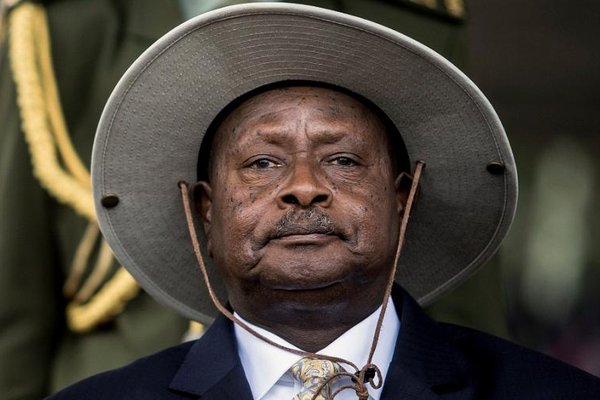
Turbulent election period sees attacks on opposition, internet shutdown and police violence.

Opposition leaders face attacks, arbitrary arrests and detention, ahead of and after January 2021 elections; Civil society efforts to monitor elections stifled by authorities; Election-related protests and rallies violently dispersed; Journalists targeted with violence by authorities; Internet, social media accounts shut down ahead of elections Read more

Turbulent election period sees attacks on opposition, internet shutdown and police violence.

Civic space under threat: protesters intimidated, journalists attacked, LGBTI rights targeted

On 22nd October 2020, the Polish Constitutional Tribunal ruled that abortion due to foetal abnormality is unconstitutional, sparking massive protests around Poland. Protesters have been met with the use of excessive force, physical violence and detention. In a concerning development, protesters including minors have been intimidated and threatened with charges for participating in protests. Journalists covering protests have faced detentions and the use of excessive force - including being pepper sprayed and beaten by police batons. Meanwhile LGBTI rights remain under attack, with a proposal to ban LGBTI parades and public gatherings submitted to the Polish Parliament. In a "Hungarian style takeover" of independent media, PKN Orlen -- a state-owned oil company -announced the acquisition of Polska Press- one of the country’s largest media publishers with an audience of 17,4 million internet users. The CEO of PKN Orlen, Daniel Obajtek, is said to be a loyal supporter of Law and Justice party president Jaroslaw Kaczynski. Read more  |  Read in Polish

Civic space under threat: protesters intimidated, journalists attacked, LGBTI rights targeted

Academic freedom at risk, barriers for transgender women as NGOs submit reports to UN on Japan

In recent months, there have been attempts by Prime Minister Yoshihide Suga to suppress academic freedom while Japan’s legal gender recognition law creates significant discriminatory barriers for transgender women to enroll in all public women’s universities in the country. There have also been ongoing protests against the Olympics and abuses in China. Read more

Academic freedom at risk, barriers for transgender women as NGOs submit reports to UN on Japan

Laws on Foreign Agents and Cybercrimes restrict civic space further in Nicaragua

On 15th October 2020, Nicaragua’s lawmakers approved the “Foreign Agents Law” which expands government powers to control and muzzle civil society. Read more

Laws on Foreign Agents and Cybercrimes restrict civic space further in Nicaragua

Several protests staged amid restrictions on assembly due to COVID-19

The Croatian Constitutional Court defended its choice not to review the constitutionality of laws passed that limited civic freedoms as part of COVID-19 pandemic measures. The Court claimed that the government had acted within its rights and with the intention of preventing the spread of the virus. Several protests took place during the reporting period including the annual Zagreb Pride March, protests over labour rights and against COVID-19 measures. In a separate development, COVID-19 continues to impact the media industry in Croatia. The Journalists’ Union of Croatia has pointed out that employers in the media sector are using COVID-19 as a justification to reduce the rights of media workers and journalists.

Read more

Several protests staged amid restrictions on assembly due to COVID-19

Criminal sanctions for organising gatherings remain, critical social media posts surveilled

The Irish Council for Civil Liberties (ICCL) had continuously questioned the necessity and proportionality of the use of criminal sanctions to enforce public health guidelines on restricting gatherings, especially given the high levels of public compliance, and the lack of evidence that criminalisation and prosecution are justified or likely to be effective. It has opposed the extension of the Emergency Health Legislation without substantial review and debate, which was due to expire in November. In a concerning development, organisers of the Black Lives Matter protest which took place on 6th June 2020 were being investigated under COVID-19 regulations. Anti-mask protests
which took place from August 2020 to October 2020, in which counter-protesters were attacked, have also been a matter of concern. It emerged that the Department of Justice has been carrying out extensive social media monitoring on posts commenting on issues concerning the department during the crisis, such as on the impact of COVID-19 on those living in the direct provision system.

Read more

Criminal sanctions for organising gatherings remain, critical social media posts surveilled

Journalist verbally attacked by the President; poor quality of information promotes fake news

An NGO that provides support for all gender identities in Albania, has said that the COVID-19 circumstances have worsened conditions of the LGBTI community. In addition, Pink Embassy, an NGO working to protect and advance the rights of the LGBTI community in Albania, called on the government to allow for all LGBTI people to be able get married and adopt children. Several protests were staged during the reporting period including by prisoners and oil workers who went on a hunger strike and by university students. Fact-checker, Faktoje has found that the poor quality of information in Albania has led to the spread of fake news, especially during the COVID-19 pandemic. Several incidents took place againt journalists, including verbal attacks by the President. Read more

Journalist verbally attacked by the President; poor quality of information promotes fake news