Christmas came early for South Africa as the Financial Action Task Force (FATF) finally removed the country from its grey list.#SouthAfrica #FATF #GreyList #FinancialFreedom #Compliance
— IOL News (@IOL) October 24, 2025
Read on https://t.co/JJ7PZwaaoA pic.twitter.com/6w5dj7fHOF
Introduction
South Africa removed from the FATF greylist
South Africa has strengthened regulation of the non-profit sector as part of reforms to address weaknesses identified by the Financial Action Task Force (FATF), particularly Recommendation 8 on the transparency and risk management of CSOs.
As of June 2025, 15,615 organisations had been deregistered for failing to submit mandatory annual reports or comply with statutory obligations, while 203,279 organisations remain at risk of deregistration for failure to honour their obligations in terms of the NPO Act. Deregistration results in loss of privileges such as tax exemptions and eligibility for government or donor funding.
On 24th October 2025, South Africa was officially removed from the Financial Action Task Force (FATF), formally called the list of “Jurisdictions under Increased Monitoring” after successfully addressing all 22 action items agreed with the FATF to strengthen its Anti-Money Laundering and Combating the Financing of Terrorism (AML/CFT) regime. This followed a positive on-site assessment in July 2025 confirming sustainable reforms. The delisting reflects improved institutional capacity to combat money laundering and terrorism financing and is expected to enhance investor confidence and bolster the country’s international financial reputation.
On 14th January 2026, the National Treasury published the draft General Laws (Anti-Money Laundering and Combating Terrorism Financing) Amendment Bill, 2025 for public comment, with submissions due by 13th February 2026. This draft Bill updates the earlier 2024 version and introduces new provisions specifically addressing CSOs and the conducting of lifestyle audits. The proposed amendments would significantly reinforce the powers of the Nonprofit Organisations Directorate, granting it authority to investigate, sanction, and impose administrative penalties. These include fines of up to R1 million (USD 61,075) and prison terms of up to five years for certain offences. The Bill also provides for an appeal mechanism through an Arbitration Tribunal, whose members would be appointed by the Minister of Social Development, the same executive authority overseeing the Directorate, raising concerns about independent oversight.
Furthermore, the draft Bill will strengthen South Africa’s AML/CFT framework by addressing the remaining gaps identified in the 2021 FATF Mutual Evaluation Report and during the remedial processes that led to South Africa’s exit from the FATF greylist in October 2025. These additions are designed to ensure South Africa is better prepared for the next FATF Mutual Evaluation, scheduled from mid-2026 to October 2027.
Association
Artisanal Mining Leader assassinated
Since 2016, at least 28 community leaders linked to mining, land, and environmental struggles have been killed in South Africa, with most cases remaining unresolved and highlighting a pattern of impunity.
On 14th October 2025, Tebogo Shawn “Paps” Lethoko, a respected leader of the National Association of Artisanal Miners (NAAM), was shot outside his home in Margaret Village, Stilfontein. Lethoko was widely known for advocating the rights of artisanal and small-scale miners, calling for formalisation of the sector, confronting criminal syndicates operating in abandoned shafts, and criticising the state’s failure to protect mining communities.
In the months before his death, Lethoko reportedly told colleagues he was being followed. He had openly challenged mining companies, including AngloGold Ashanti and Harmony Gold, accusing them of displacing communities and contributing to environmental harm, while also speaking out against criminal networks dominating informal mining sites in Northwest Province. Although the Artisanal and Small-Scale Mining Policy was amended in 2022, activists argue that stalled implementation created a regulatory vacuum that enabled syndicates to flourish.
At the time of his killing, Lethoko was preparing to speak on a national panel on mineral custodianship. Lawyers for Human Rights (LHR) condemned the murder and called for a thorough, transparent investigation, while organisations such as Mining Affected Communities United in Action (MACUA) emphasised the urgent need for protection and accountability for mining activists.
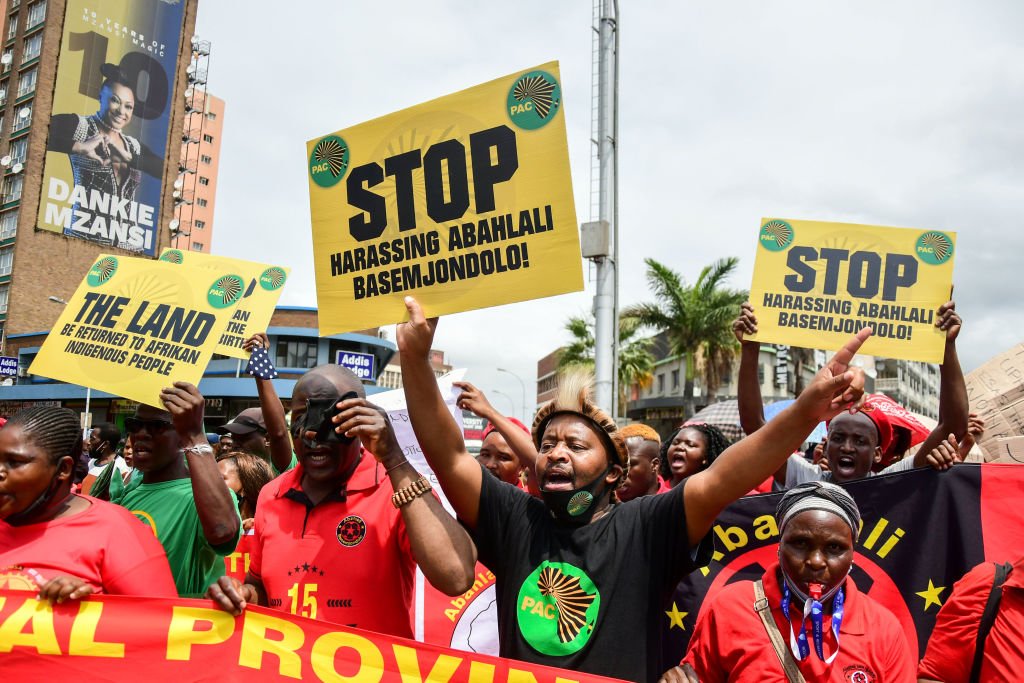
Leader of Abahlali baseMjondolo movement gunned down
On 12th February 2026, Zweli Mkhize, known as Khabazela, the treasurer of the eNkanini branch of the Abahlali baseMjondolo (AbM), a shack dwellers’ movement, was gunned down in the eNkanini settlement in Ellandale, Gauteng, while visiting a friend’s home. Reportedly two assailants arrived in a Renault vehicle and shot him. The murder appears to bear the hallmarks of a targeted political assassination.
Khabazela was widely regarded as a committed, transparent, and principled leader who dedicated himself to advancing the interests of his community.
Since 2009, 25 members of Abahlali baseMjondolo have been killed in connection with their human rights activism. Khabazela’s killing brings the total number to 26. Currently, six members of the eNkanini branch council have gone into hiding due to serious safety concerns. Despite the high number of killings, there have been only two successful convictions.
The Socio-Economic Rights Institute of South Africa (SERI) and other CSOs have called for an independent and credible investigation into Khabazela’s killing and other assassinated leaders of Abahlali baseMjondolo, urgent protection for threatened AbM leaders and decisive action by law enforcement to address political killings targeting activists and community leaders.
Killing of property activist raises concerns
On 16th December 2025, Warrick Stock, popularly known as DJ Warras, a radio and television presenter and property activist, was fatally shot in the Johannesburg CBD outside Zambesi House near the Carlton Centre. The shooting is believed to have been linked to a dispute related to the eviction and security control of a building that had been controversially occupied.
Reports indicate that Stock had spent several hours at the premises overseeing the installation of security systems. After parking his vehicle, he was allegedly approached by three unknown suspects who opened fire, shooting him five times before fleeing the scene on foot.
The killing triggered strong political reactions. Minister of Sport, Arts and Culture Gayton McKenzie publicly expressed anger and controversially suggested that “illegal foreigners” were responsible, linking the incident to hijacked buildings. The uMkhontho WeSizwe (MK) Party also condemned the murder, describing it as an attack on freedom of expression and civic activism. On 30th January 2026, police arrested 25-year-old Armindo Pacula, a Mozambican national, in relation to Stock’s murder. His co-accused, Victor Majola, is alleged to have orchestrated the killing.
Peaceful Assembly
Anti-migrant protests escalate despite court order
Anti-migrant groups such as Operation Dudula and March to March have continued to intensify protests against undocumented foreign nationals, despite a Gauteng High Court order issued on 4th November 2025 interdicting Operation Dudula and its leaders from intimidating, harassing, assaulting or obstructing foreign nationals and from interfering with their access to public services, including healthcare and education. It also ruled that only authorised state officials may request identification documents, and prohibited hate speech and related unlawful conduct targeting non-citizens.
On 23rd November 2025, as South Africa hosted the G20 Summit, being the first on African soil, Operation Dudula staged a protest calling on the government to prioritise unemployment, immigration and corruption over global events. The group clashed with police after defying authorised routes and attempting to block a key access road near the Nasrec Expo Centre used by heads of state. Police used tear gas and pepper spray to disperse protestors, and two men were arrested and charged with public violence, assault and contravention of a court order against Operation Dudula. Police reaffirmed that while peaceful protest is permitted, lawlessness and road blockades would not be tolerated.
On 14th January 2026, as schools reopened, dozens of parents supported by anti-migrant groups including the March and March Movement, Operation Dudula and individuals linked to the uMkhonto weSizwe (MK) Party held a series of protests outside Addington Primary School in Durban, Kwazulu-Natal Province. They alleged that foreign nationals were being prioritised and demanded placement for approximately 66 local learners, including around 40 displaced by floods. Tensions escalated on 21st January 2026 when clashes broke out between South African and foreign national parents. The police responded with stun grenades and water cannon to disperse protesters and protect learners and staff. Cases of public violence and incitement were opened against leaders of the uMkhontho WeSizwe Party (MKP), Operation Dudula and the March and March Movement. March and March Movement leader Jacinta Ngobese-Zuma surrendered to police on 27th January 2026 in connection with the unrest, to be charged formally and appear in court.
Expression
Journalist faces online backlash after challenging Trump on “White Genocide” claims
On 24th January 2026, eNCA reporter Heidi Giokos responded to online attacks following her interview with the US President Donald Trump at the 56th World Economic Forum Annual Meeting in Davos held from 19-23 January 2026. During the interview, Giokos asked President Trump what evidence would lead him to accept that there is no genocide against white South Africans. Trump maintained that the violence was real, stating, “We have seen the numbers, we have seen the records. It is taking place, and it’s got to be stopped.” This is despite South African crime statistics showing that violent crime affects all racial groups.
Social media users have accused Giokos of downplaying the experiences of victims and suppressing evidence of targeted violence. For example, a Twitter user targeted Giokos personally, alleging that her interracial relationship with fellow journalist Lindokuhle Xulu made her biased. Another user also referenced a 2022 robbery incident involving Giokos to support claims of “white genocide.” In response, Giokos condemned the use of her personal life and past trauma to fuel racially charged attacks, stating that it was inappropriate to exploit such experiences for attention.
The incident drew widespread public reaction. Many South Africans expressed solidarity with Giokos, praising her professionalism and defence of the country against misinformation. Others, however, argued that she could have addressed the criticism differently.
Police calls to investigate and criminalise journalists raise concerns
On 6th-7th October 2025 KwaZulu-Natal Police Commissioner Lieutenant-General Nhlanhla Mkhwanazi appeared before a parliamentary ad hoc committee probing his claims of political interference, corruption and syndicate influence within the South Africa Police Service (SAPS) where he made highly controversial proposals targeting journalists and the media.
On 6th October, he urged the ad hoc committee and Joint Standing Committee on Intelligence to authorise the State Security Agency to conduct a counterintelligence investigation of the media, alleging that “misinformation” published by journalists was being fuelled by rogue elements within SAPS to push certain narratives. The next day he escalated his stance, calling for journalists who publish what he deems to be misinformation to lose their jobs and face imprisonment, an unprecedented demand that critics say threatens constitutional media freedom.
Mkhwanazi specifically named reporters from News24, City Press and the Sunday Times as subjects for investigation. He claimed that a report by the Inspector-General of Intelligence (IGI) widely reported in the media was classified and should not have been published, and he asserted that Crime Intelligence’s operations must remain secret, even in parliamentary oversight settings.
Media houses, including the South African National Editors’ Forum (SANEF), condemned Mkhwanazi’s comments as a “chilling attack” on press freedom and a throwback to apartheid-era repression, calling on senior police and government officials to repudiate his remarks.