Middle East and North Africa
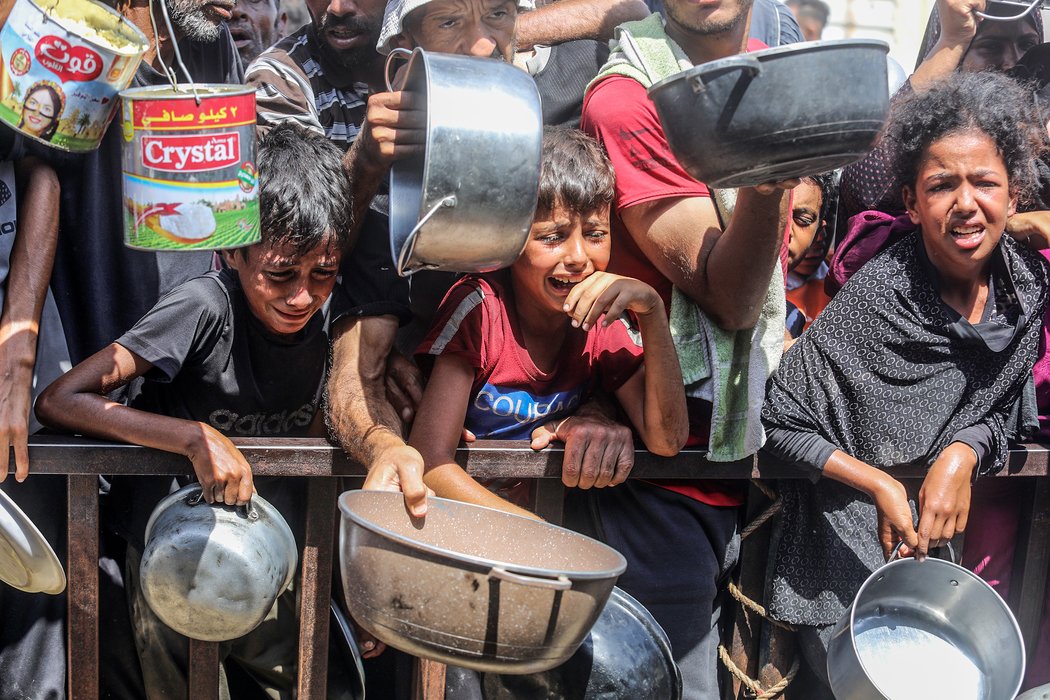
ONGOING CRISIS: ISRAEL’S GENOCIDE IN GAZA
The situation in the Occupied Palestinian Territories remains dire. In December 2024, Amnesty International research found sufficient basis to conclude that Israel has committed and is continuing to commit genocide against Palestinians in Gaza. According to the Al Mezan Centre for Human Rights in Gaza, between July 2023 and November 2025, over 67,000 people were killed, including 19,000 children, more than 169,000 have been wounded and over two million people have been forcibly displaced. More than 300 journalists and media workers and over 1,600 health workers have been killed. Israeli Occupation forces (IOF) have bombed and destroyed civilian homes in residential neighbourhoods and civilian infrastructure, including electricity supply, hospitals, roads, schools and sewage and water networks, and have engineered systematic starvation, including by blocking access to humanitarian aid. In addition, the IOF has continued to enforce a policy of arbitrary arrests and detention, as well as enforced disappearance, ill-treatment and torture of Palestinians in Gaza.
Rating Overview
Civic space across much of MENA is severely constrained. Out of 19 countries, civic space is rated as closed in 10, repressed in seven and obstructed in two. No countries are rated as open or narrowed. Most countries retained their previous ratings, apart from Israel, which has been downgraded from obstructed to repressed, and Oman, downgraded from repressed to closed.
Israel continues to cause catastrophe in the region. In Lebanon, escalating Israeli attacks have killed more than 2,700 people, injured 13,000 and displaced at least 1.3 million since 8 October 2023. Repeated attacks on aid workers by the Israeli military in southwest Lebanon have resulted in injuries to UN aid workers and the destruction of their equipment from deliberate targeting. Israeli airstrikes on the main border crossing between Lebanon and Syria have disrupted critical humanitarian operations and hindered civilians attempting to escape. Meanwhile, in Israel and Jordan, authorities have instrumentalised laws to target and prosecute people expressing solidarity with Palestinians through anti-war protests and social media.

Israel

Oman
Between 2024 and 2025, the Israeli government took measures to restrict civil society, undermine democratic institutions and silence those who oppose the genocide in Gaza. In March 2025, its parliament approved a proposal to alter the structure of the Judicial Selection Committee, the body responsible for appointing judges, in a move widely criticised for threatening judicial independence, the right to a fair trial and the separation of powers.
Several other legislative developments further eroded civic freedoms, including the passing of a law in October 2024 banning the UN Relief and Works Agency for Palestine Refugees (UNRWA) from operating in Israel.
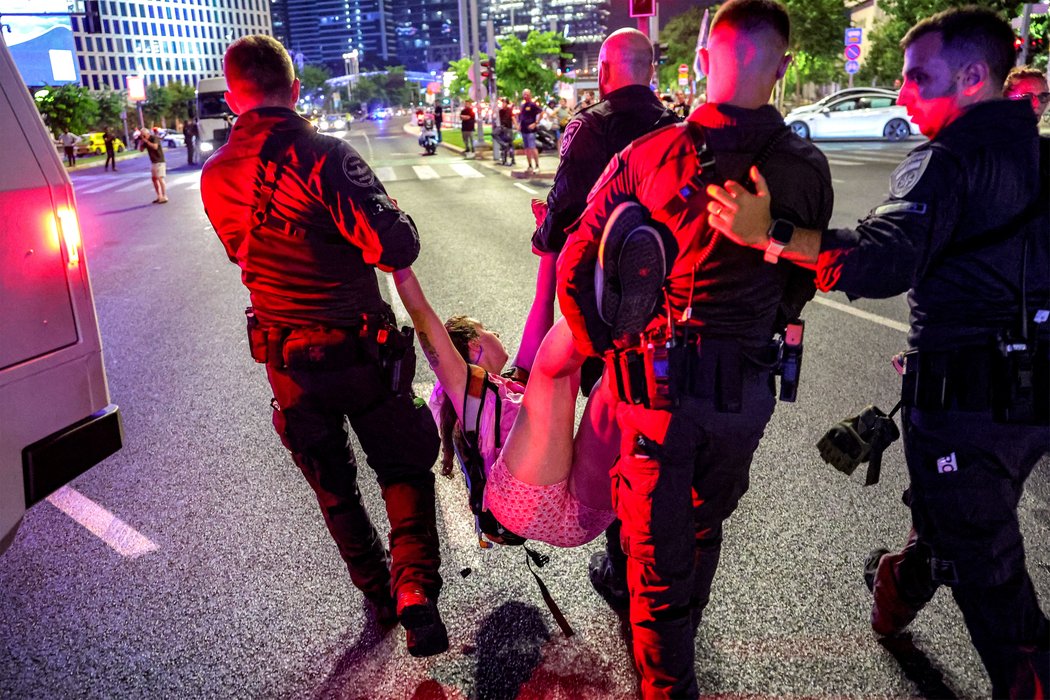
Other proposed laws sought to criminalise cooperation with the ICC, heavily restrict foreign funding to human rights organisations through heavy taxation and expand state surveillance powers through the proposed Computer Data Intrusion Law, which would allow police to secretly access and search private electronic devices. Additional proposals aimed to place the Public Broadcasting Corporation under direct political control, threatening media freedom. Palestinian citizens of Israel have faced growing repression, including arrests for social media activity and threats of citizenship revocation and deportation.
In Oman, dissent remains tightly restricted, as critics continue to face harsh retaliation including imprisonment and politically motivated job dismissals for expressing views that challenge the authorities. A new broadly worded citizenship law raises concerns about the granting of absolute discretionary powers to authorities to revoke people’s citizenship for acts that are deemed offensive to the sultan or sultanate without any avenue for judicial remedy, raising serious concerns about its impact on the rights to association and expression.
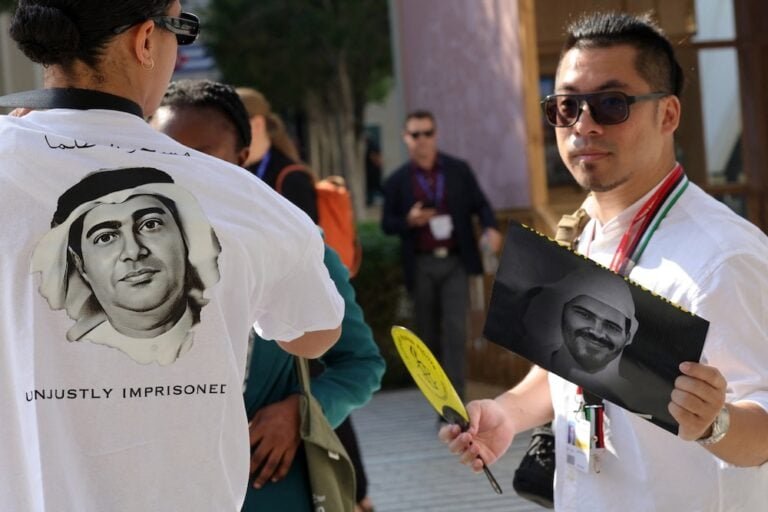
Prolonged and arbitrary detention remained a defining feature of political repression in MENA in 2025, as governments continued to persecute those perceived to be their political opponents. The United Arab Emirates (UAE) continued to put on trial innocent citizens who have mostly served their initial sentences, with the authorities evidently determined to keep them in prison indefinitely. In March 2025, the court rejected the appeals of 53 people convicted in what was known as the UAE84 case. The case, which involved a mass trial of 84 people that began in December 2023, includes over 60 activists who were already being held in prison past the end of their initial sentences on fabricated terrorism charges. Some have received life sentences, while the UAE’s best-known HRD, Ahmed Mansoor, was sentenced to an additional 15 years in prison.
Saudi Arabian authorities continue to detain prominent clerics, HRDs and religious scholars, despite some high-profile releases of HRDs and women’s rights activists such as Issa Al-Nukhaifi, Mohammed Fahad Al-Qahtani and Salma Al-Shehab. Eight years since the mass arrest of many influential and prominent figures, shortly after Mohammed bin Salman became the country’s Crown Prince and de facto ruler, many prominent activists, journalists and writers remain behind bars and subjected to constant legal delays and endless pending trials without dates being set. Amongst those still in detention are Hassan Farhan Al-Malki, prominent religious scholar Salman Al-Oudah, Awadh Al-Qarni and writer Essam Al-Zamel. Al-Malki, Al-Oudah and Al-Qarni have been kept in solitary confinement since their arrests. Imprisoned HRD Mohammed Al-Bajadi was sentenced to an additional 25 years in prison on 27 October 2025.
In addition, authorities continued to use detentions and prosecution as tools of censorship against activists, journalists and writers who voice dissent. In Morocco, journalist Hamid El Mahdaoui, director of the Badil website, was sentenced in November 2024 to 18 months in prison and fined around US$150,000 following a complaint by the minister of justice over a video implicating him in an affair. In Yemen, a Houthi-affiliated armed group abducted poet and writer Oras Al-Eryani in September 2025 after he mocked the anniversary of the 2014 Houthi takeover of Sana’a. In Iraq, activist and journalist Omed Haji Fatah Baroshki was sentenced on 30 January 2025 to six months’ imprisonment for a social media post calling for the release of other prisoners of conscience.
The weaponisation of citizenship through highly draconian laws is another troubling trend in MENA. As well as Oman’s new citizenship law, in Kuwait, there are concerns that an escalating trend of revoking the citizenship of thousands of Kuwaiti citizens could be used to target political opponents. In May 2025, amidst its ongoing onslaught on Palestinians living in Israel, the Israeli government announced it would begin deporting Palestinian citizens of Israel under its citizenship law, which authorises the revocation of citizenship or permanent residency under terrorism allegations.
Authorities also used deportation and forced returns as a tool of repression, as seen in Lebanon, where UK-based Omani HRD Nabhan Al-Hanshi was barred from entering the country in May 2025 after being placed on a blacklist.
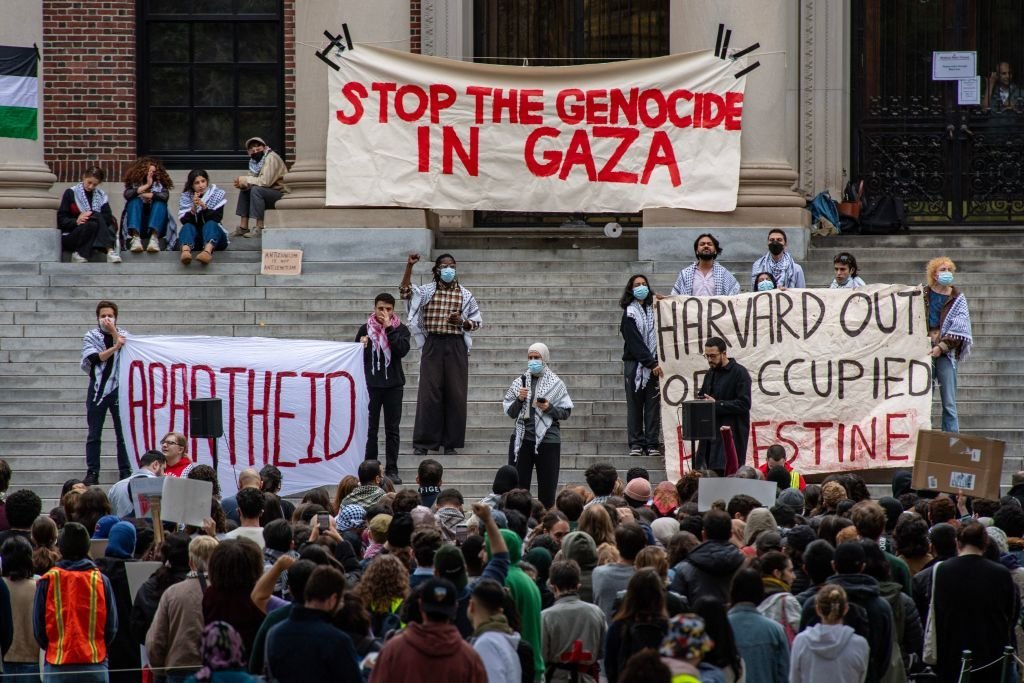
In Algeria in July 2025, Nassera Dutour, president of the Collective of Families of the Disappeared in Algeria, was detained at Algiers airport and forcibly returned to France. In Kuwait, authorities coordinated with Iraqi and Malaysian counterparts to forcibly return bloggers Salman Al-Khalidi and Mesaed Al-Musaileem to serve sentences issued in absentia in retaliation to their peaceful activism. In Morocco, authorities deported journalists attempting to cover developments in the occupied Western Sahara.
Across MENA, the situation of migrants remained deeply precarious, marked by increasing state repression, rising hostility and shrinking protection for those defending their rights. In Tunisia, lawyer Sonia Dahmani was sentenced to over four years in prison in five separate cases for denouncing racism against migrants from Africa South of the Sahara and was subjected to degrading treatment and denial of legal access. In Kuwait, a July 2024 rule requiring migrant workers to obtain employer permission to leave the country reinforces the kafala system – where migrant workers are tied to a specific employer – and heightens risks of abuse. In Libya, authorities in April 2025 accused CSOs that help migrants of conspiring to resettle Africans and shut down the headquarters of 10 organisations. In Algeria, migrants face escalating hate speech and racist rhetoric alongside mass deportations.
Top violations
The five most reported violations in MENA in 2025 were, in order, detention of HRDs, detention of journalists, judicial harassment, censorship and deportation of HRDs.
Human rights defenders prosecuted
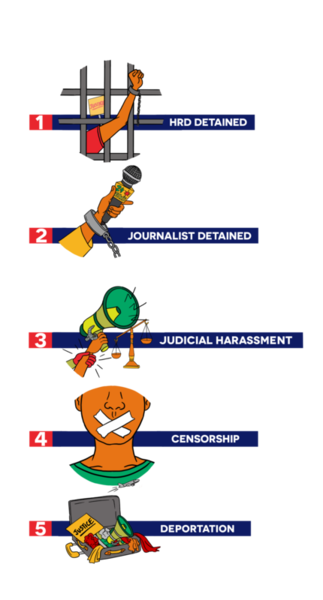
DETENTION OF HRDs
Across the region, governments and armed groups continued to target activists, aid workers and HRDs through arbitrary detention to silence them and obstruct humanitarian and human rights work. HRDs were detained in at least 10 out of 19 MENA countries.
In Bahrain in March 2025, HRD Ali Al Hajee was questioned about his human rights work, particularly his social media posts on X/Twitter. He was arrested and detained for seven days pending investigation on charges of misusing social media. Both his prolonged interrogation and detention occurred without his lawyer being present.
In Morocco, arbitrary arrests and detentions against Western Saharan activists have continued in the Occupied Territories of Western Sahara. In January 2025, Hassan Zerouali, a member of the Administrative Committee of the Collective of Sahrawi Human Rights Defenders (CODESA), and Salah Dlimi, another member, were arrested and interrogated, as part of which they were subjected to physical and verbal abuse. They were released five hours later. In August 2025, police again harassed and detained Zerouali at a checkpoint.
In Saudi Arabia, Mohammed Al-Bajadi, who in 2009 co-founded the Saudi Civil and Political Rights Association, was arrested on 24 May 2018 during a crackdown on WHRDs. He was sentenced to 10 years in prison with a suspension of five years. When his sentence expired in April 2023, he was kept in arbitrary detention for over two more years. He was eventually subjected to a retrial and on 27 October 2025, was sentenced to a further 25 years in prison.
In Tunisia in April 2025, the Judicial Anti-Terrorism Unit arrested and detained lawyer and retired judge Ahmed Souab after raiding his house.
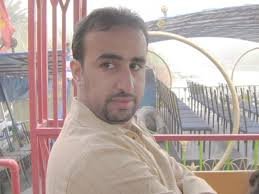
Souab is a member of the defence team in a case in which 40 people, including activists, lawyers, political opposition members and other public figures, are accused of conspiracy against internal and external state security and terrorism for allegedly plotting to overthrow the government of Tunisian President Kais Saied. Souab’s arrest followed public statements in which he criticised trial conditions and denounced the executive’s interference in judicial affairs.
which 40 people, including activists, lawyers, political opposition members and other public figures, are accused of conspiracy against internal and external state security and terrorism for allegedly plotting to overthrow the government of Tunisian President Kais Saied. Souab’s arrest followed public statements in which he criticised trial conditions and denounced the executive’s interference in judicial affairs.
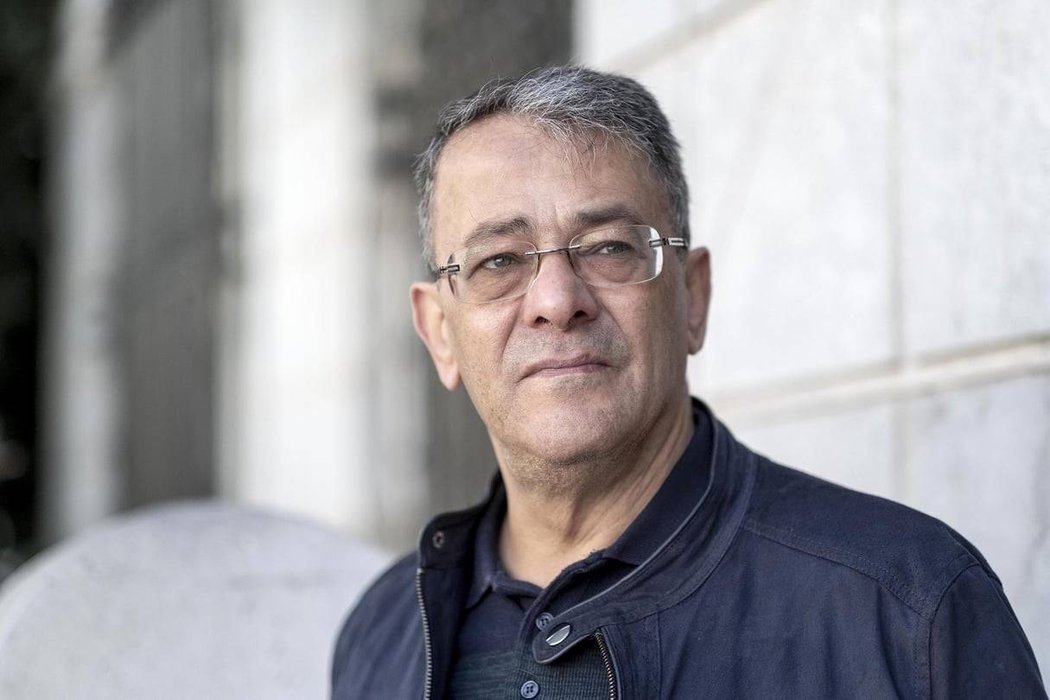
In the UAE in January 2025, Sudanese democracy and human rights activist Mohammed Farouk Suleiman, who lives in the country, was arrested and detained without charges as he was about to board a flight. Suleiman is known for his efforts to achieve a democratic civilian transition in Sudan.
Aid workers and HRDs who are at the frontlines providing critical services in conflict and warzones continue to face serious challenges to their work and serious threats to their lives. In Yemen, the de facto Houthi government arbitrarily detained seven UN staff working in areas under its control in January 2025, adding to dozens of staff from UN agencies and Yemeni and international CSOs who have been arbitrarily detained since May 2024. One of the detained UN humanitarian workers died in custody.
In the Occupied Palestinian Territories, Israeli forces have targeted healthcare workers, arbitrarily detaining them for delivering essential aid. In December 2024, the IOF detained Hussam Abu Safiya, director of the Kamal Adwan Hospital in northern Gaza, which was one of the area’s last functioning hospitals before Israeli forces bombed, burned and evacuated it. Safiya was tortured and placed in solitary confinement, and authorities extended his detention for a further six months in March 2025. He is being held under the Unlawful Combatants Law, which enables prolonged detention without charges, stripping detainees of any meaningful judicial review or due process rights.
DETENTION OF JOURNALISTS
Detention of journalists was documented in at least seven countries and remains among MENA’s top five civic space violations, as in 2024.
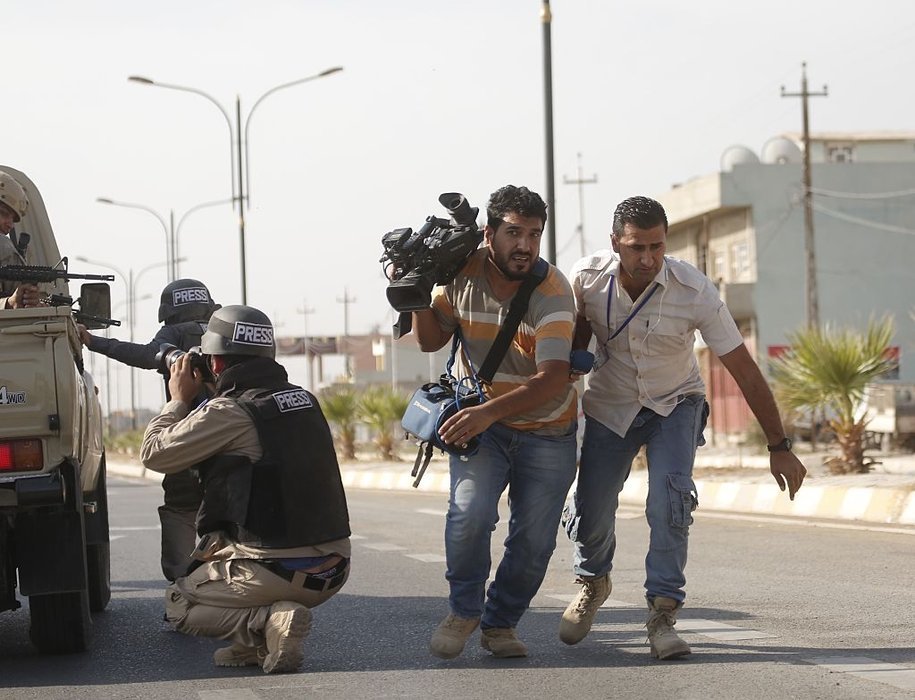
As with aid workers, journalists working in conflict settings continued to face severe challenges to their work. Israel maintained its onslaught on journalists and media in the context of its genocide in Gaza. In June 2025, French journalists Omar Faiad, a reporter for Al Jazeera, and Yanis Mhamdi, from the independent media outlet Blast, were detained in an Israeli detention centre after they refused to consent to their deportation when Israel intercepted a Freedom Flotilla Coalition ship heading towards Gaza to challenge Israel’s unlawful blockade. Four activists, including Greta Thunberg, were deported to Europe.
Within the Occupied Palestinian Territories, journalists work within a severely restrictive environment. In January 2025, Palestinian reporter Amna Balalo and camera operator Sakher Taleb Zwatieh were detained and expelled while covering a military raid in Jenin. A few days later, freelance journalist Raghad Salameh was detained for interrogation while entering the Tulkarm refugee camp.
In Yemen, Houthi gunmen arrested journalist Majed Zaid in September 2025 and detained him at an unknown location. His arrest was linked to a commemoration of the 26 September anniversary of the declaration of the Republic in Yemen, a date the Houthi group opposes celebrating.
Lebanese journalist Layal Ikhtiyar was briefly detained upon arriving in Beirut, Lebanon, in January 2025, over her interview with Israeli army spokesperson Avichay Adraee on al-Arabiya. She was released after being questioned by a judge.
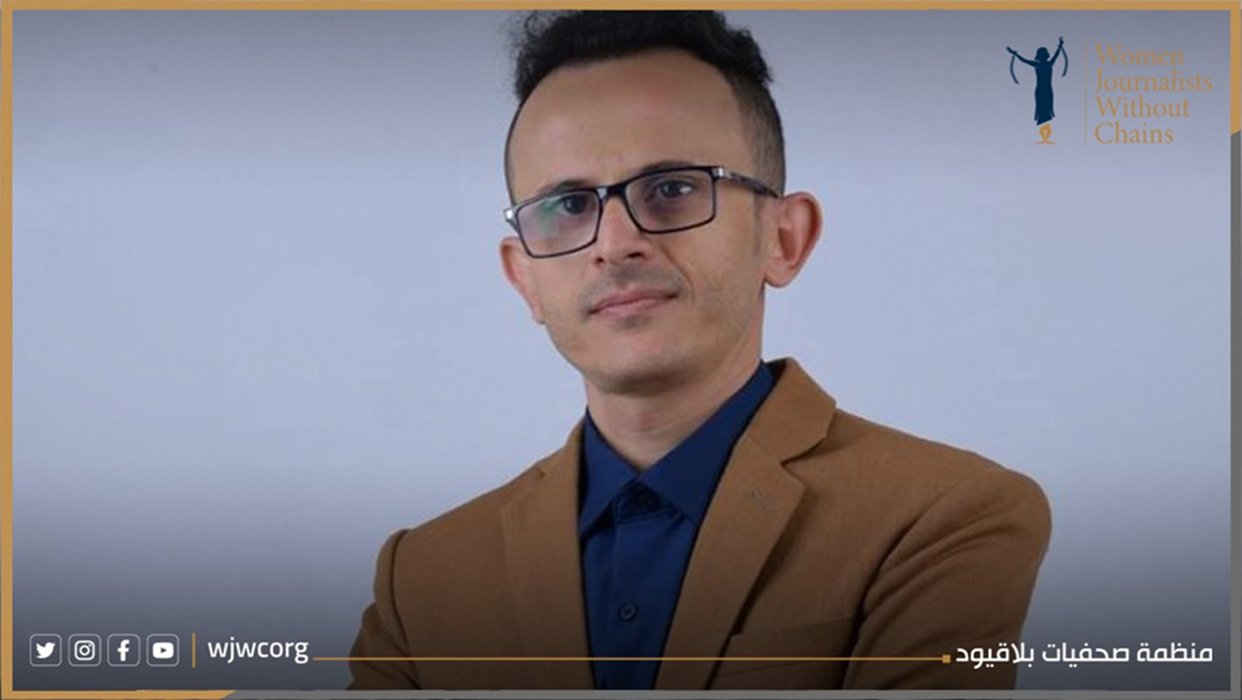
In Algeria in December 2024, journalist Mustapha Bendjama was arrested and detained pending trial on accusations of belonging to a terrorist group, harming national unity and spreading false news. His arrest was related to his Facebook page where he reports on local political and social issues. He was released a few days later without charges after authorities questioned him about his Facebook posts. He was placed under judicial control and banned from leaving the country.
JUDICIAL HARASSMENT
Judicial harassment was documented in at least seven MENA countries. Across the region, a worrying trend noted again in 2025 was the systematic judicial persecution of HRDs who are in the criminal justice system, in efforts to keep them stuck in long and unfair cycles of criminal litigation. Tactics included fabricated charges, the bringing of new charges against imprisoned activists to prevent their release or bring them back to prison after release, undue delays and postponement of trials to keep people in prolonged detention, and unfair trials that fail to meet due process thresholds.
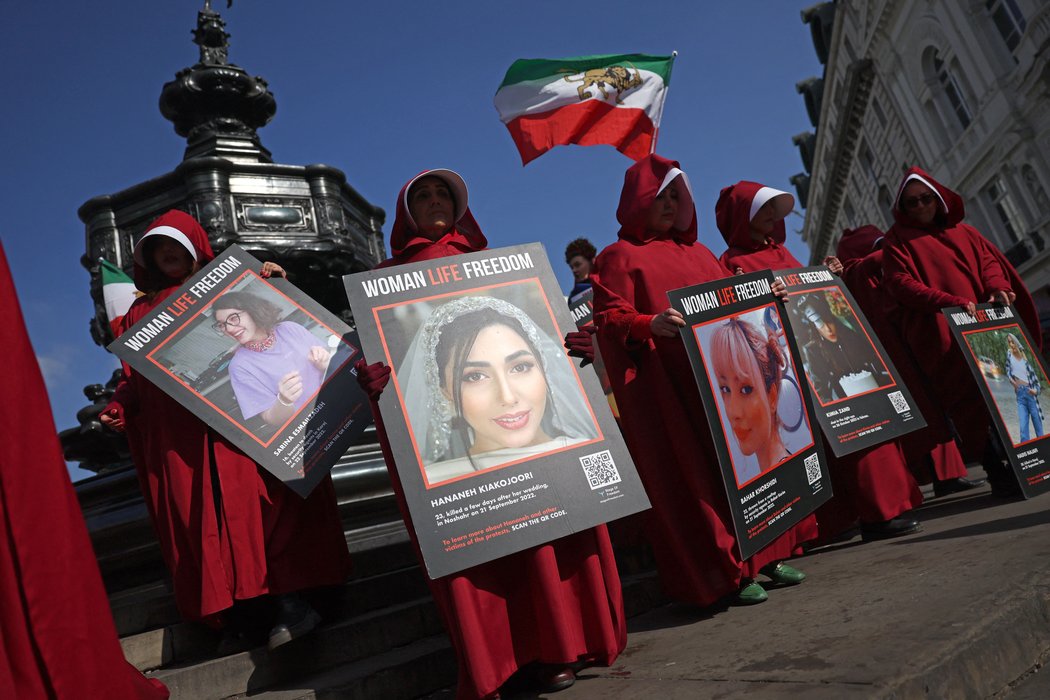
Iran, flagged in our previous reports for abusing the criminal and legal systems, continued to use its judicial systems to persecute HRDs. From keeping HRDs in prolonged detention and imprisonment through long cycles of litigation, authorities have now turned to the systematic use of death sentences and executions as a means of intimidation and repression. Death sentences have increasingly targeted people linked to labour activism and the Woman, Life, Freedom movement that mobilised mass protests following the 2022 death in police custody of Iranian Kurdish woman Mahsa Jina Amini. Authorities often impose death sentences following grossly unfair trials marked by coerced confessions, denial of due process and torture. Pakhshan Azizi, Behrouz Ehsani, Mehdi Hassani, Mojahed (Abbas) KourKouri and Varisheh Moradi, who were arrested during the Woman, Life, Freedom uprising, have all been sentenced to death. With the absence of judicial safeguards, dozens of activists remain at imminent risk of execution.
In Iraq in August 2025, journalist Sherwan Sherwani was sentenced to another four years and five months in prison just weeks before his planned release. Sherwani is a journalist whose work, up until his arrest, focused on corruption and human rights, including freedom of expression. He was arrested in October 2020 along with four other activists and journalists and sentenced to six years in prison in a grossly unfair trial based on broad and vague laws. His latest conviction is for allegedly threatening a prison officer.
In Kuwait in June 2025, Mohammed Al-Barghash, prominent defender of the rights of the Bedoon ethnic minority, was again detained and charged with state security offences in retaliation for a video he posted on X/Twitter thanking all those who followed his case and mentioning his request to meet with the interior minister to discuss the injustice imposed on him and Bedoon people. He had been acquitted just the month before.
In Israel and the Occupied Palestinian Territories, authorities used the courts and administrative actions to harass Al-Jazeera through bans. In January 2025, the Palestinian Authority issued a directive to suspend and freeze all Al Jazeera operations, citing alleged legal violations. This was followed by a Palestinian court’s ruling prohibiting local service providers in the occupied West Bank from broadcasting Al Jazeera.
Additionally, the Attorney General ordered the blocking of several websites affiliated with the Al Jazeera network. Earlier, on 24 December 2024, the Fatah Movement Jenin Branch issued a statement banning Al Jazeera from entering the city, under the pretext of ‘provoking unrest and internal fighting’. In Israel in September 2024, authorities raided and shut down Al Jazeera’s offices in Ramallah, after an Israeli court authorised its closure for 45 days. In January 2025, the closure was extended for another 60 days.
In Qatar in March 2025, the Criminal Court sentenced activist Umm Nasser to three years in prison and a fine of 50,000 Qatari Riyals (approx. US$13,650) on charges of spreading false rumours. Nasser’s right to a fair trial was severely compromised by the authorities’ intimidation of her defence team.

COUNTRIES OF CONCERN: IRAN AND SAUDI ARABIA
USE OF DEATH PENALTY AND EXECUTIONS AGAINST HRDS AND JOURNALISTS
In Iran and Saudi Arabia, the death penalty is being used as a tool of political repression, targeting activists, journalists and protesters. An unprecedented surge in executions in 2025 points to a deepening crisis marked by coerced confessions, grossly unfair trials and the systematic denial of due process.
In Saudi Arabia, authorities have carried out executions at record levels, reaching at least 300 in the first ten months of 2025 alone. The victims included peaceful protesters and at least one journalist, reflecting a widening campaign of repression against dissent. Journalist Turki al-Jasser was executed in June 2025 after seven years of arbitrary imprisonment on fabricated charges related to his online publications. Authorities executed Jalal Labbad in August and Abdullah al-Derazi in October 2025. Both were minors when they took part in protests in 2011 and 2012. Their executions showed a complete disregard for international human rights law, which prohibits capital punishment for crimes committed by people under 18.
In Iran, authorities have intensified their use of executions to crush dissent and intimidate people. The first months of 2025 saw a 75 per cent increase in the number of executions compared to the same time period in 2024, with at least 113 executions being reported in the first 25 days of May 2025 alone. Those targeted include members of ethnic minorities, political dissidents and WHRDs, with a troubling rise in the number of women executed.
The Supreme Court has upheld several death sentences in emblematic cases, including that of Pakhshan Azizi, whose request for judicial review was rejected in January 2025. Her execution was only temporarily halted following public pressure. Varisheh Moradi’s death sentence, issued in November 2024, remains under appeal. WHRD Sharifeh Mohammadi faces imminent execution after the Supreme Court upheld her sentence in retaliation for her peaceful labour activism.
| COUNTRY | SCORES 2025 | 2024 | 2023 | 2022 | 2021 | 2020 | 2019 | 2018 |
| ALGERIA | 27 | |||||||
| BAHRAIN | 17 | |||||||
| EGYPT | 18 | |||||||
| IRAN | 9 | |||||||
| IRAQ | 18 | |||||||
| ISRAEL | 47 | |||||||
| JORDAN | 31 | |||||||
| KUWAIT | 28 | |||||||
| LEBANON | 50 | |||||||
| LIBYA | 27 | |||||||
| MOROCCO | 42 | |||||||
| OMAN | 23 | |||||||
| PALESTINE | 13 | |||||||
| QATAR | 29 | |||||||
| SAUDI ARABIA | 5 | |||||||
| SYRIA | 6 | |||||||
| TUNISIA | 34 | |||||||
| UNITED ARAB EMIRATES | 9 | |||||||
| YEMEN | 13 |