Introduction
Sweden Democrats lose support in election, attempts to form government stalled
The far-right Sweden Democrats (SD) lost support for the first time in the party’s history in the general election on 13th September 2026, while the centre-left Social Democrats emerged as the largest party and began trying to form a government. Prime Minister Ulf Kristersson, leader of the centre-right Moderate Party, resigned on 17th September, four days after the vote. The final results gave the left-leaning opposition parties 176 seats, three more than the right-leaning Tidö coalition, which governs with SD support. The two blocs were separated by 50,359 votes.
SD’s influence over migration policy is expected to persist, as the Social Democrats have also backed many of the restrictive measures introduced in recent years. These include ending permanent residence permits for refugees, widening the grounds for revoking residence permits and requiring certain public employees to report undocumented migrants to the police. Coalition talks have been difficult because of significant policy differences between potential partners. At the end of October, a new government had yet to be formed.
Amnesty warns of weakening human rights protections in Sweden
In its annual report for 2025, Amnesty International warned that changes in several areas risk weakening human rights protections in Sweden in practice. It raised concerns about restrictions on freedom of expression and peaceful assembly, saying people are still being detained and prosecuted for peaceful civil disobedience despite the Supreme Court’s July 2025 acquittal of 11 climate activists charged with sabotage.
Amnesty also highlighted shortcomings in the protection of Sami rights. It said that although Sweden has introduced legislation requiring consultation with Sami representatives, the law does not oblige decision-makers to seek their agreement, and industrial exploitation of traditional Sami lands continues. In December 2025, the UN Committee on the Elimination of Racial Discrimination criticised Sweden’s failure to protect Sami rights adequately. It called on the government to review the Consultation Act and ensure meaningful consultation in which consent is actively sought.
UN committee criticises Sweden’s police visitation zones over racial profiling concerns
On 5th December 2025, the UN Committee on the Elimination of Racial Discrimination (CERD) criticised Sweden’s police visitation zones, where officers can search people without specific suspicion of a crime. Introduced in 2024, the zones can be established where there is a significant risk of shootings or explosions. CERD raised concerns about reports of racial profiling in their implementation. The committee’s vice-chair, Gay McDougall, said the zones violated the International Convention on the Elimination of All Forms of Racial Discrimination, to which Sweden is a party. CERD called on Sweden to review its anti-discrimination legislation so that it explicitly addresses racial profiling. Justice Minister Gunnar Strömmer’s press secretary said the government considered the legislation compatible with fundamental rights and international conventions.
Parliament backs constitutional change to allow citizenship revocation
On 5th December 2025, the Swedish government submitted draft constitutional amendments to Parliament that would allow authorities to revoke the citizenship of dual nationals convicted of crimes that seriously harm Sweden’s vital interests. The proposal builds on recommendations made by a cross-party inquiry in January 2025, which supported revocation where citizenship had been obtained through bribery or fraud, or where individuals had committed crimes such as espionage or treason. The government’s proposal would also cover serious offences threatening Sweden’s vital interests, including those committed by leaders of organised crime networks. Courts would decide individual cases. UN anti-discrimination experts have warned that broader grounds for revocation could rely on discriminatory, overly broad and vague criteria, particularly affecting dual nationals and people born abroad.
Parliament passed the first of the two required votes on 21st May 2026. Because constitutional amendments need approval by two simple majorities with a general election in between, the amendment is not yet final.
Freedom of association
UN rapporteur warns of gradual erosion of rights for human rights defenders in Sweden
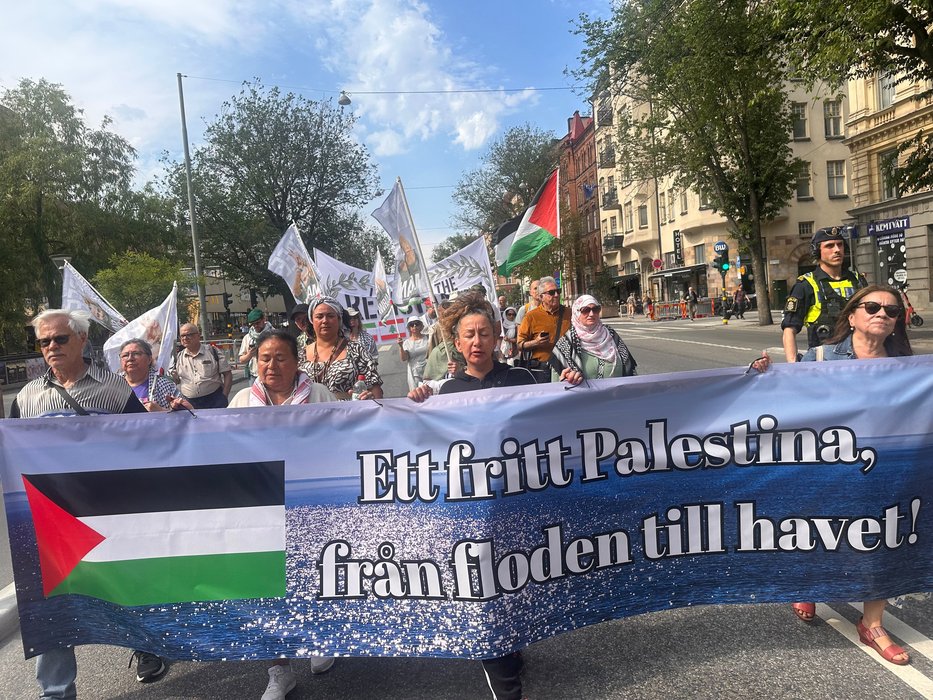
On 6th March 2026, Mary Lawlor, the UN Special Rapporteur on human rights defenders, warned that human rights defenders in Sweden were facing a gradual erosion of their rights amid growing threats, harassment and stigmatisation, as well as restrictions on freedom of expression, peaceful assembly and association.
Lawlor said civil society organisations faced increasing bureaucratic demands and declining funding, while environmental and climate activists risked prosecution and were labelled “potential terrorists” or “criminals”. She said student activists and journalists covering Palestinian rights had reportedly faced intimidation, and that advocacy for LGBTQI+ people and persons with disabilities was becoming more difficult. She also expressed concern about negative narratives targeting ethnic and religious minorities and their effect on minority rights defenders.
Lawlor urged the Swedish government to counter smear campaigns, ensure adequate funding for human rights work and involve defenders meaningfully in decision-making. She said defenders must be able to advocate for human rights without obstacles or fear of retaliation.
Sida funding decisions draw scrutiny
In June 2025, the Swedish International Development Cooperation Agency (Sida) discontinued funding for the Olof Palme International Center, the Swedish labour movement’s umbrella organisation for international solidarity, despite the centre having passed all formal reviews. Dagens Nyheter reported that the decision, announced on 13th June, followed Director General Jakob Granit’s reinterpretation of the rules to bar organisations that also receive party-related funding. The centre, which says it was the only organisation affected, lost about 68 million kronor (about €6.2 million). Critics questioned whether the move was politically motivated, noting that Development Cooperation Minister Benjamin Dousa of the centre-right Moderate Party had repeatedly called for the centre to lose its funding. Sida initially set a transition plan running to 2027 for the centre’s roughly 100 partner organisations to seek alternative funding. However, in February 2026, Sida shortened the remaining phase-out period from a plan extending into 2027 to five months. After criticism, including a petition signed by more than 55,000 people, Sida reversed its decision and announced it would extend existing support, without additional funding, to 31st December 2026.
Separately, also in June 2025, Swedish media reported that an external audit by Ernst & Young for Sida had found significant risks and critical shortcomings at Hepatica, the aid organisation affiliated with the far-right Sweden Democrats. Hepatica has received millions of kronor under the PAO system, which channels part of Swedish aid through parliamentary parties’ own organisations. The audit identified weaknesses in budget procedures, partner vetting, anti-corruption safeguards and whistleblowing mechanisms. The findings followed reports that government pressure had influenced Sida’s decision to approve funding after earlier rejections on quality grounds. In March 2026, Sida approved a further payment of just over 23 million kronor (about €2.1 million), despite reportedly rating the risk as “extreme”. Two Sida officials reportedly registered reservations. Hepatica has also cooperated with the Institute for Conservative Action, a Brazilian organisation reported to have close ties to the family of former far-right Brazilian President Jair Bolsonaro and to oppose abortion. Sida’s rules bar PAO support for actors that oppose women’s rights.
In February 2026, four civil society platforms – CONCORD Sweden, ForumCiv, the Forum for Civil Society Organisations with a Social Focus, and Fremia – lodged a complaint with the Parliamentary Ombudsman (JO) over Sida’s decision not to renew its humanitarian partnership with Islamic Relief Sweden. The decision followed an “in-depth review” by the Swedish Centre for Combating Violent Extremism. The platforms, whose members include Islamic Relief Sweden, argued that the decision raised concerns about proportionality, legal certainty and predictability, noting that the organisation had worked with Sida for more than a decade and publicly expressed satisfaction with its work. They said neither Sida nor the extremism centre had found evidence of anti-democratic or violent activities, or of links to the organisation’s current leadership. Sida said that, under a “precautionary principle”, it could not rule out historical and indirect connections, including family ties, within the organisation’s wider network. The platforms warned that this approach could impose an impossible burden of proof on civil society groups and asked the Ombudsman to determine whether Sida had complied with administrative law principles.
Government-funded campaign urging Afghans to return home draws criticism
In July 2026, Aftonbladet reported that the Swedish government had spent more than 8 million kronor (about €0.7 million) on a campaign encouraging Afghans facing deportation to return voluntarily to Taliban-run Afghanistan, without disclosing that it was the funder. The campaign, called Zindagi Taza (“Fresh Start”), aimed to persuade at least 200 Afghans to return. Paid advisers recruited through voluntary organisations, mosques and cultural associations promoted the prospect of starting a new life in Afghanistan.
The report prompted criticism over the campaign’s transparency and ethics, given Sweden’s travel warnings for Afghanistan and the country’s severe human rights and security situation. Torun Elsrud, a researcher at Linnaeus University, described concealing the government’s involvement while encouraging returns as “deeply unethical”. Migration Minister Johan Forssell said he had been unaware that the funding source was concealed and pledged to review the matter. The contractor, Seefar, maintained that participation was voluntary and that participants received clear information about the project.
Bill to criminalise participation in criminal organisations moves forward, trade unions express concerns about impact on freedom of association
On 19th October 2026, Sweden’s Council on Legislation backed a government proposal to make it a crime to participate in, or associate with, criminal networks and gangs, even where an individual has not committed a specific underlying offence. The bill defines a criminal organisation as a group of more than two people involved in crime for financial gain or other “unfair advantages”. Lawmakers said the definition is intended to cover everything from loosely organised groups to structured criminal organisations, including companies, motorcycle clubs, and family-based networks.
The Council’s opinion raised no major objections to the bill but recommended replacing the term “association” with “grouping” to clarify that the offence targets groups committing serious crimes rather than entire organisations.
The legislation also requires a constitutional amendment to allow restrictions on freedom of association. During consultations in April 2026, the Swedish Trade Union Confederation (LO) warned that the proposal was too vague and left excessive room for interpretation, potentially undermining legal certainty and democratic freedoms. LO also cautioned that weakening freedom of association could affect trade unions, civil society organisations, the media and academia.
Swedish authorities seek to deport Kurdish transgender activist to Turkey despite fears of persecution
On 28th May 2026, Swedish police detained Bella Demhat, a Kurdish transgender rights activist, and transferred her to a detention facility near Stockholm pending deportation to Turkey. Demhat fled Turkey in 2017, saying she faced persecution and death threats. She has publicly advocated for LGBTQI+ rights and Kurdish causes, and says she risks violence from both state authorities and family members if returned.
According to reporting by Blankspot, the Swedish Security Service classified Demhat as a national security threat because of her alleged links to the Kurdistan Workers’ Party (PKK). The outlet said earlier assessments had found she held no significant responsibilities within the organisation. Her lawyer argued that her identity, activism and background warranted international protection, and criticised the authorities’ assessment that she could safely relocate within Turkey. Swedish authorities maintained that she was not entitled to asylum and that the deportation order remained valid.
On 24th August, Demhat was released from the Migration Agency’s detention centre in Märsta after the agency determined that there were obstacles to enforcing the deportation order, her lawyer, Silas Aliki, told the newspaper Arbetaren. Aliki said the agency did not expect the deportation to be carried out in the near future, but that since Demhat still has no residence permit, the deportation order stands, and what happens next is unclear.
Funding cuts and new democracy requirements for state-funded adult education
Sweden has introduced a state “democracy requirement” for folk high schools and study associations that receive government grants through the Swedish Council for Popular Education (Folkbildningsrådet). It took effect on 13th January 2026 and complements the council’s existing internal requirements.
The measure follows a law that took effect on 1st January 2025, which introduced a common democracy requirement for civil society organisations and religious communities receiving state funding. Previously, individual agencies distributing grants applied their own standards. Under the law, grants may not go to organisations if they or their representatives exercise violence, coercion or threats, or violate people’s fundamental rights and freedoms; discriminate against people or violate the principle of equality; or otherwise “counteract” the democratic system. Recipients found to have breached these conditions may have to repay funding retroactively.
The rights group Liberties has criticised the requirement and how it has been applied. In its 2025 Rule of Law report, Liberties argued that religious and ethnic minority organisations face targeted, discriminatory treatment and are routinely stigmatised in media and political debate, and that withdrawing public funding can in practice force them to close.
It cited the case of Ibn Rushd, Sweden’s oldest and largest Muslim study association. According to Liberties, a routine internal review at the end of 2023 found that two books on the syllabi of five study circles contained chapters that could conflict with the democracy requirement. Liberties said there was no indication that the chapters had been studied or used, but that media and politicians portrayed the review as a state investigation into the association’s teaching. Several municipalities and regions then cut or withheld funding to its member organisations. Folkbildningsrådet subsequently decided not to distribute any grants to Ibn Rushd for 2025, citing inadequate organisational and financial capacity. Liberties said the decision forced the association to close.
Separately, study associations have reported growing difficulties in accessing public funding after successive government cuts. In June 2026, the umbrella organisation Studieförbunden published a report showing that funding had been reduced in stages: by 250 million kronor (about €23 million) in 2024, 100 million (about €9 million) in 2025 and a further 150 million (about €14 million) planned for 2026. It said the reductions had contributed to the loss of activities, jobs and local spaces, including rehearsal rooms and meeting places.
Freedom of peaceful assembly
Sweden authorises police use of live facial recognition
On 27th May 2026, Sweden’s parliament approved a law allowing police to use live facial recognition to identify or locate individuals in cases involving serious crime, kidnapping, human trafficking and threats to life. The law, which took effect on 1st July 2026, is part of the government’s efforts to tackle gang violence. According to Biometric Update, the decision significantly expands biometric surveillance powers in Sweden and places the country among a growing number of European states authorising police use of the technology despite continuing privacy and civil liberties concerns.
Under the law, the technology may be used only when proportionate and absolutely necessary, and with prior court authorisation. In urgent cases, police may deploy it without approval but must apply to a court within 24 hours. The Swedish Authority for Privacy Protection will oversee its use, and police and the Swedish Security Service must carry out a fundamental rights impact assessment before first deployment.
Earlier, on 4th November 2025, Swedish media reported that the Swedish Police Authority had used Acus, an artificial intelligence-based analysis tool developed from the Gotham platform of the US technology company Palantir, for at least five years without public disclosure. According to an investigation by Dagens ETC, the system can quickly compile detailed personal profiles by combining data from criminal and surveillance registers, Sweden’s BankID digital identification system, mobile operators and social media.
The Police Authority declined requests for information about the system, citing confidentiality and national security, and said it could neither confirm nor deny a relationship with Palantir. A former police analyst told Dagens ETC that the programme was shrouded in secrecy. Johan Grahn, a lawyer who has represented defendants in cases linked to the FBI’s Operation Trojan Shield, criticised the approach as indiscriminate mass surveillance. The extent of the system’s use, and the legal safeguards governing its handling of personal data, remain unclear.
Far-right Aktivklubb stages unauthorised march in central Stockholm
On 29th November 2025, about 70 people, mainly young men wearing masks, marched through central Stockholm under the banner of the far-right Aktivklubb movement, which Sweden’s Security Service (Säpo) had previously warned about as a violent extremist group. Participants shouted nationalist slogans, including “Hail Victory”, while bystanders responded with shouts of “No Nazis on our streets” and other expressions of opposition.
Police escorted the group for more than an hour as it marched from Karlaplan through Östermalm towards Riddarholmskyrkan, where participants stopped for a group photo with Bengal lights and shouted Nazi slogans. The gathering was unauthorised, but police said they had no grounds to disperse it because officers reported no disturbances. After the march ended, police escorted participants towards the Old Town underground station.
The anti-racist magazine Expo noted that police did not intervene, even though the Court of Appeal had previously ruled that the slogan “Hail Victory” violated the law against incitement against an ethnic group. Police declined to comment when Expo asked whether any participants in the march would be prosecuted for using it.
Far-right torchlight procession met with counter-protest in Stockholm
On 30th November 2025, the far-right party Alternative for Sweden (AFS) held a torchlight procession in central Stockholm to mark the anniversary of the death of King Charles XII. About 40 people took part in the march, which began at Riddarholmen at 3pm and proceeded to Kungsträdgården, where a statue of the king stands. An anti-fascist counter-demonstration was held at Kungsträdgården with police permission. Expo reported that several hundred anti-racist counter-demonstrators attended, far outnumbering the AFS event.
According to media reports, a commotion broke out after the procession ended, when three AFS sympathisers attacked counter-protesters with their fists. Two people were detained: one AFS supporter was taken into custody for drunkenness and is suspected of assault, and another person was held on suspicion of aggravated theft after allegedly trying to snatch a flag from someone else.
Unlike after the previous day’s march, Stockholm police said they would open investigations for incitement against 11 people who shouted “Hail Victory” at the event, and against another group who gave Nazi salutes.
Police remove 15 counter-protesters ahead of far-right march near Stockholm
On 6th December 2025, the far-right Salem march took place for the first time in 15 years, drawing about 200 participants to Salem, outside Stockholm. The march was held annually from 2000 to 2010 in memory of a 17-year-old with far-right connections who was murdered in 2000. Far-right groups portrayed him as a martyr and used the event to protest against what they described as “anti-Swedish violence”. According to media reports, the march was revived by an organiser with links to the neo-Nazi Nordic Resistance Movement (NMR).
About 150 counter-protesters gathered, while local residents held a separate demonstration and Christmas market at Rönninge Square. Police removed 15 counter-protesters before the march began, citing disturbances. Police later imposed a ban on face coverings, citing the earlier incidents.
Police reported that they had opened two criminal investigations after an officer was hit by a stone and in connection with an incident in which several people allegedly tried to break through a police line. They said three officers sustained minor injuries.
Activists deported or threatened with deportation over protest participation
Although no arrests were reported at the Salem march itself, police detained a German national who had planned to join the counter-protests beforehand. He was later deported as a security threat over his earlier participation in a pro-Palestinian protest.
On 12th December 2025, Swedish authorities deported German student Lorenz Püttker and imposed a five-year entry ban. Püttker had taken part in a pro-Palestinian protest at Lund University in May 2024, where he refused to leave the Lundagård encampment when police ordered protesters to disperse, and was carried away by officers. He was later convicted of disobeying police orders and fined.
Police detained Püttker after he returned to Sweden and tried to attend the counter-protest against the far-right Salem march. They deemed him a threat to public order and security, citing his earlier conviction. At the same counter-protest, police also detained eight other people on the grounds that they were in Sweden unlawfully and posed a threat to public order and security.
Püttker disputed the decision. His lawyer argued that the authorities had not shown that he posed a serious enough threat to justify deporting an EU citizen, and warned that targeting EU citizens over demonstrations could restrict freedom of expression and assembly. Püttker said he would appeal the entry ban, arguing that it undermined fundamental rights and freedom of movement within the EU.
On 22nd November 2025, Aftonbladet reported that police had recommended the deportation of David Alcer, a German-Hungarian researcher and climate activist, arguing that his activism threatened the democratic order. Alcer, who works at Lund University and has lived in Sweden since 2019, has taken part in several peaceful climate actions organised by Restore Wetlands, including a protest during singer Loreen’s performance at Melodifestivalen in 2023 and demonstrations against peat mining. Police cited two previous convictions, resulting in daily fines, for breaching public order legislation and disrupting parliamentary proceedings.
In April 2026, Michel Forst, the UN Special Rapporteur on environmental defenders under the Aarhus Convention, wrote to the Swedish government that he could see no legal basis for the measures against Alcer, which appeared to be retaliation for peaceful environmental protest. He criticised the Border Police’s description of civil disobedience as a threat to the democratic order and called for an investigation and compensation. The government responded in late June that it took the concerns seriously but that the constitution prevented it from intervening in authorities’ decisions in individual cases.
On 21st September 2026, Aftonbladet reported that the Swedish Migration Agency had decided not to deport Alcer, contradicting the police recommendation. The agency said there was nothing to indicate that he had caused significant damage to people or property, or exposed the public to serious danger, or that he intended to do so in future. It concluded that it had not been shown that expulsion was particularly justified on grounds of public order and security.
Alcer said he had been stopped by plainclothes police in April 2025 and again on 3rd September 2025, and taken to a police station without being suspected of a crime. He said he was denied access to a lawyer and described a year under the threat of deportation as “completely absurd”.
Climate activists take Swedish state to court over protest prosecutions
On 26th May 2026, 46 climate activists from Sweden, Norway and Germany brought a case against the Swedish state in Stockholm District Court. The claim concerns how police and the criminal justice system have handled climate protests. According to the activists, 388 people have been suspected of offences in connection with protest activities since 2020, and the resulting investigations and prosecutions have infringed their rights to freedom of expression and peaceful assembly.
The activists argue that repeated prosecutions, detention and the possibility of severe penalties deter people from taking part in demonstrations. Civil Rights Defenders has also voiced concern that the criminalisation of protest may affect people’s willingness and ability to exercise constitutionally protected rights.
Bromma Airport protests lead to convictions and fresh arrests
On 4th May 2026, Solna District Court convicted two climate activists of vandalism over a protest at Bromma Airport in Stockholm in September 2023, and acquitted the other 15 defendants. The two, a man in his 40s and a woman in her 50s, received suspended sentences and 50 daily fines each. They were also ordered to pay 76,500 kronor (about €7,000) each in damages to the private aviation company Grafair.
Seventeen activists were arrested after red paint was thrown at a private aircraft terminal, an aircraft and several cars. They were initially suspected of the more serious offence of airport sabotage but were later charged with vandalism and aiding and abetting vandalism. The action drew considerable attention after the state-owned airport operator, Swedavia, said it had forced the diversion of an ambulance flight. The newspaper ETC later reported that this claim was untrue.
On 10th October 2026, climate protesters staged another action at the private jet terminal at Bromma. According to police, several activists climbed over a fence and entered the runway and one of the terminals. One protester glued themselves to the nose wheel of an aircraft and was removed by police. Police arrested five people on suspicion of airport sabotage. Four others were reported for alleged violations of the Protection Act, and ten people in total were reported for disobeying police orders. Swedavia and Grafair said regular airport operations and private air traffic were unaffected.
In its 2026 and 2025 Rule of Law reports on Sweden, the rights group Liberties said that the offences of sabotage and “blue sabotage” (sabotage of emergency services), which carry potential prison sentences, have increasingly been used against activists for non-violent civil disobedience. It said this has had a significant chilling effect on civic space.
Activists arrested after rooftop protest at Government Offices
On 22nd January 2026, the environmental group Restore Wetlands staged a protest against peat mining at the Government Offices in Stockholm. One activist climbed onto the roof, while the facade of the Ministry of Finance was sprayed with paint and a placard was displayed. Police tried to persuade the activist to come down voluntarily, and at noon she descended and was arrested for an alleged violation of the Protection Act. Four other people were arrested on suspicion of the same offence.
Police had classified the Government Offices as a protected site, which prompted their intervention. The Protection Act covers security-sensitive objects, military installations and critical facilities, and violations carry a potential prison sentence.
Major climate mobilisation in Stockholm draws tens of thousands
On 23rd August 2026, about 50,000 people from 280 organisations took part in a climate demonstration in central Stockholm, according to the Swedish Society for Nature Conservation. The march began at 1pm and aimed to show widespread public support for stronger climate policies.
Participants included environmental groups, trade unions, religious communities, researchers and artists. People travelled from more than 70 locations across Sweden, with some cycling from the south of the country over a week. The society said the number of participating organisations could be a record for a climate demonstration in Sweden.
Court acquits man over road blockade at Saab shareholder meeting
On 1st April 2026, about 20 protesters from groups including Svenska Freds and Extinction Rebellion gathered outside the annual general meeting of the Swedish defence company Saab in Linköping. Eight lined up across a local road, blocking traffic, and one glued himself to the ground. Police moved several protesters and investigated suspected disobedience to the authorities and participation in an unauthorised public gathering. They described the situation as calm.
On 8th September, Linköping District Court acquitted a man charged with disobedience to the authorities over the protest. He admitted gluing himself to the road after police ordered the group to leave, but denied wrongdoing. The court ruled that eight protesters standing in a row across the road did not constitute a crowd, which is required for a conviction for disobeying police orders.
Age of criminal responsibility lowered to 14 after protests and row over union criticism
In October 2025, Prime Minister Ulf Kristersson’s government proposed lowering Sweden’s age of criminal responsibility from 15 to 13 for serious offences, as part of its efforts to tackle gang violence. The proposal faced widespread opposition from consulted public bodies, including the police and prison services, as well as civil society. On 11th June 2026, the government dropped the plan to include 13-year-olds and instead proposed a minimum age of 14 for particularly serious crimes. The Riksdag approved the revised bill by 281 votes to 66 on 13th August, and the law took effect on 10th September 2026.
Trade unions, civil society groups and child-rights advocates held demonstrations and other actions against the original proposal. On 12th November 2025, the children’s rights organisation Bris dressed child statues in Stockholm, Gothenburg, Malmö and Strängnäs in prison uniforms. On 13th April 2026, hundreds of people gathered at Gustav Adolfs Torg in Malmö as part of coordinated demonstrations in ten Swedish cities. The protests were organised by Save the Children, Bris, the Church of Sweden, the trade union Vision and the Swedish Academic Association SSR. Suzanna Holmberg of Save the Children criticised the proposals as contrary to the UN Convention on the Rights of the Child and to research on child development.
The issue developed into a wider dispute over expert advice, trade union participation in public debate and the government’s response to criticism. After the April protests, Minister for Civil Defence Carl-Oskar Bohlin of the Moderate Party publicly criticised the civil servants’ union Fackförbundet ST and its chair, Britta Lejon, over the union’s participation in the protests. The board of the Swedish Trade Union Confederation then warned the prime minister that the minister’s remarks risked discouraging unions from criticising government policy. ST also argued that the government had ignored substantial criticism from experts, authorities and civil society.
Freedom of expression
Swedish journalists report declining transparency and rising harassment, RSF says
Reporters Without Borders (RSF) has warned of growing challenges to press freedom in Sweden, in a report published ahead of the general election on 13th September. The report is based on interviews with 25 journalists, most of them working for local and regional media.
Of those interviewed, 80 per cent said public authorities had become less open over the past five years, and 84 per cent had had difficulty obtaining official documents or information in the previous year. Journalists described delays, redacted documents, high fees and officials avoiding interviews. Sixty-four per cent said they had experienced threats or harassment, including threatening messages, legal threats and physical confrontations.
Sweden ranks fifth in RSF’s World Press Freedom Index, but 64 per cent of the journalists surveyed said press freedom had declined over the past five years, and 60 per cent expected it to worsen. RSF urged the next government to improve access to public information, tackle disinformation and harassment, strengthen support for local journalism and increase investment in public service media.
Sweden passes “honest living” law allowing residence permits to be revoked
On 24th March 2026, the government introduced a bill requiring migrants to show “honest living” in order to keep their residence permits. Under the proposal, authorities would have wider powers to revoke permits for reasons including unpaid debts or fines, failure to comply with official decisions, benefit fraud and working without paying taxes. The bill also broadened the grounds for revocation where individuals are considered security threats or have given false information in their applications.
Rights groups, including Civil Rights Defenders, criticised the proposal, warning that “honest living” is vaguely defined and could lead to unequal treatment. Civil Rights Defenders also raised concerns that authorities could take non-criminal statements into account when assessing whether someone meets the requirement, which could discourage migrants from exercising their freedom of expression and encourage self-censorship. Parliament passed the law on 15th June, and it took effect on 13th July 2026.
Also on 15th June 2026, Parliament narrowly approved legislation, dubbed the “snitch law” by critics, requiring employees at six public authorities to report undocumented migrants to the police. The obligation applies to the Public Employment Service, the Pensions Agency, the Tax Agency, the Social Insurance Agency and two other national bodies. Schools, healthcare facilities, municipalities and social services are exempt. The law, due to take effect on 13th July, is part of the government’s broader efforts to increase deportations.
Hundreds of people protested against the legislation in Stockholm on 14th June. Rights groups, trade unions and humanitarian organisations warned that the requirement could undermine trust in public institutions and deter undocumented migrants from using essential services, including healthcare and education. They also raised concerns about racial profiling, discrimination and conflicts with public-sector workers’ professional and confidentiality duties.
Nearly a quarter of Swedish voluntary groups report threats or harassment, official report finds
The Civil Society Report 2026, published on 28th May by the Swedish Agency for Youth and Civil Society (MUCF), a government authority under the Ministry of Culture, found that almost a quarter of voluntary associations had experienced violence, property damage, theft, threats or harassment connected to their activities in 2025. Advocacy organisations were more exposed: 22 per cent reported threats or harassment, compared with 7 per cent of organisations that did not engage in advocacy. One in ten associations said they had refrained from, or changed, their activities because of threats and hate.
MUCF identified organisations working on rights-related issues, including feminism, anti-racism and LGBTQI+ issues, as particularly exposed. It said harassment can directly affect civil society’s ability to express views, mobilise supporters and continue its work.
Union survey points to “culture of silence” in public institutions
In May 2026, the civil service union Fackförbundet ST published En tyst stat utmanar demokrati och rättssäkerhet (“A silent state challenges democracy and the rule of law”), a report based on more than 22,000 responses from public-sector employees. According to the union, 29 per cent of respondents experienced a culture of silence, while 46 per cent said they avoided criticism for fear of negative consequences. The union reported particularly high levels of perceived silence at the National Board of Institutional Care (SiS), the Prison and Probation Service, the Migration Agency, the Police Authority and the Government Offices.
The union said the findings raise concerns about the conditions for employees who want to raise objections, report problems or criticise decisions, and about freedom of expression and public accountability, particularly where staff hold information about how public services operate.