Introduction
ANTI-MIGRANT PROTESTS AND POLITICAL RHETORIC AHEAD OF THE 2026 LOCAL GOVERNMENT ELECTIONS
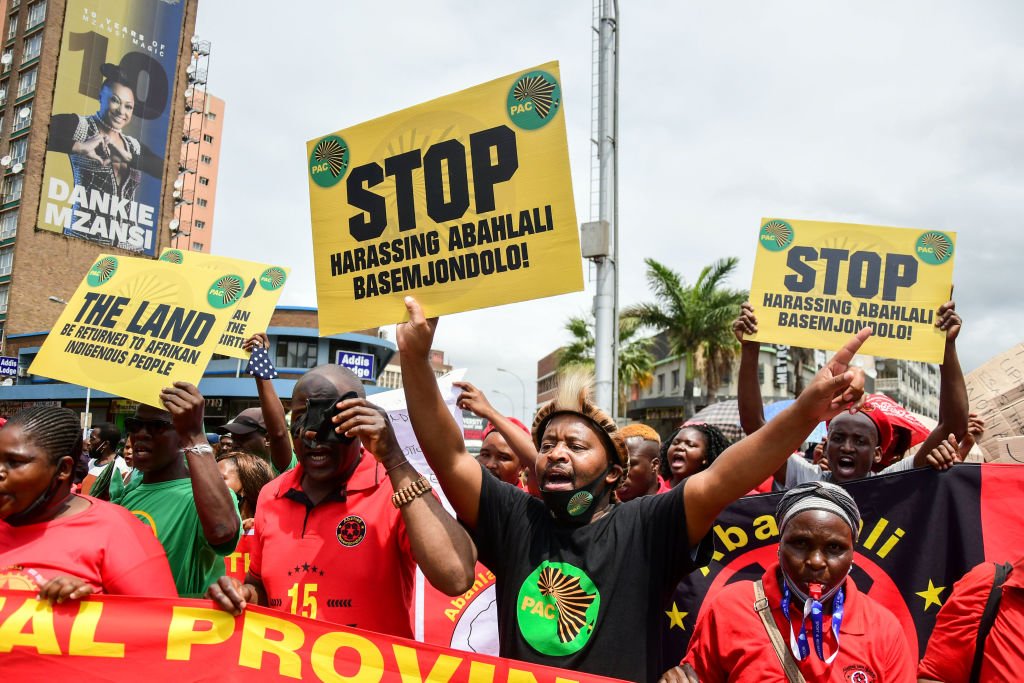
As South Africa prepares for the Local Government Elections scheduled for 4th November 2026, migration has emerged as a prominent campaign issue with several political parties using it to mobilise electoral support. Anti-migrant groups such as March and March Movement, Operation Dudula and Progressive Forces have intensified their campaigns by organising nationwide protests calling for stronger border controls, stricter migration enforcement and the deportation of undocumented migrants.
The founder and leader of the March and March Movement, Jacinta Ngobese Zuma, declared 30th June 2026 as the deadline for undocumented migrants to leave South Africa, further escalating tensions in the weeks leading up to the planned nationwide protests.
In the beginning of April 2026, South Africa experienced its largest wave of anti-migrant protests in Johannesburg, Pretoria, Durban, Cape Town, Gqeberha, Polokwane, Bloemfontein and numerous smaller towns. Anti-migrant groups argued that South Africa was being overrun by undocumented migrants whom they blamed for high unemployment, crime, pressure on the healthcare and education systems, housing shortages and overstretched public services. As the protests intensified, violence spread to several communities. Foreign-owned homes and businesses were looted or destroyed, while migrants reported intimidation, assaults, and forced displacement. At least five people were killed in incidents including the alleged stoning of a Malawian during protests in Pietermaritzburg, the killing of two Mozambican men in Mossel Bay, and the reported deaths of two Nigerian nationals in Pretoria and Witbank.
The violence also displaced hundreds of migrants, many of whom sought refuge in churches, mosques, community centres, embassies, police stations, and temporary shelters. On 20th May 2026, hundreds of foreign nationals gathered outside Durban Central Police Station seeking safety after reports of attacks on undocumented migrants. Police dispersed the crowd using rubber bullets and stun grenades after protestors reportedly refused to leave the premises, resulting in several injuries.
On 29th June 2026, the National Joint Operational and Intelligence Structure (NATJOINTS) announced that approximately 25,000 undocumented migrants had been voluntarily repatriated since the beginning of the latest unrest. Ahead of the nationwide protests, the government implemented extensive security measures, deploying thousands of police officers to high-risk areas, including transport hubs, hospitals, shopping centres, and foreign-owned businesses. President Cyril Ramaphosa appealed for peaceful protests and emphasised that the enforcement of immigration laws is the responsibility of the State rather than private individuals or vigilante groups.
On 30th June 2026, approximately 120 anti-migrant protests took place across the country, during which protest organisers submitted memoranda of demands to government authorities. According to the South African Police Service (SAPS), 108 protests remained peaceful, while 12 required police intervention following incidents of violence, looting, or clashes with the police. SAPS reported one death linked to the protests and more than 900 arrests for offences including violation of immigration law, public violence, robbery, looting, malicious damage to property and harbouring undocumented migrants.
The March and March Movement announced that it would continue organising weekly protests until the government implements stronger migration controls.
Peaceful Assembly
PROTESTS ERUPT OVER SEVERE WATER SHORTAGES
On 1st July 2026, residents of Ratanda staged protests over a prolonged water crisis that has left many households without a reliable supply for nearly a month. Some community members accused the Lesedi Local Municipality of being dishonest about the cause of the shortages, initially claiming it was planned maintenance. However, it later emerged that the municipality reportedly owed Rand Water approximately R70 million (USD 4,233,936). According to residents, the municipality had defaulted on a payment arrangement with Rand Water, which resulted in the utility implementing a 20% water reduction. As a result, many areas in Ratanda have been receiving water only once or twice a week over the past month, while others have had no supply at all.
By 3rd July 2026, tensions escalated further. Police used tear gas and rubber bullets to disperse protesters and reopen blocked roads. Clashes broke out between residents and police, and the situation became increasingly violent, with the mayor’s house set alight during the unrest. Two people were killed in clashes with police. Police also arrested 15 people, 4 of whom were expected to appear in the Heidelberg Magistrate's Court. No arrests have yet been made in connection with the torching of Lesedi Local Municipality Mayor Mluleki Nkosi’s residence.
Association
EMFULENI WHISTLEBLOWER KILLED FOR PREPARING TO DISCLOSE A FRAUD SCHEME
On 30th March 2026, Martha Mani Rantsofu, the acting accountant at Emfuleni Local Municipality, was shot and killed in Vanderbijlpark, Gauteng. CCTV footage of the incident showed Rantsofu standing beside her vehicle outside a tyre repair shop when an unidentified man approached from behind and opened fire. After she fell to the ground, the assailant fired several more shots before fleeing the scene.
Rantsofu was preparing to expose a R16 million (USD 967,757) fraud scheme involving the manipulation of municipal debt, in which officials wrote off municipal debts in exchange for bribes. It was further claimed that audits conducted by Rantsofu had uncovered additional financial irregularities, including discrepancies relating to a newly acquired municipal vehicle fleet, with some vehicles reportedly unaccounted for. Her family insists she feared for her life and had taken steps to report alleged corruption before she was gunned down. However, the police have not confirmed these allegations, and municipal authorities have stated that there is no evidence directly linking her murder to her official duties.
Police launched a murder investigation, which was later transferred to the South African Police Service (SAPS) Political Killings Task Team because of the circumstances surrounding the case.
The killing prompted condemnation from CSOs and anti-corruption advocates, who described the murder as another example of the dangers faced by public officials and whistleblowers exposing corruption. The Congress of South African Trade Unions (COSATU) called on law enforcement agencies to identify, arrest, prosecute and impose the maximum legal penalties on those responsible.
Weeks later, on 20th May 2026, Janitha van Reenen was arrested by the SAPS Political Killings Task Team on fraud charges relating to the alleged misappropriation of more than R400,000 (USD 24,193) from Emfuleni Local Municipality. During the investigation, she reportedly informed police that she could identify those responsible for Rantsofu’s killing.
COMMUNITY ACTIVIST KILLED IN MAHIKENG
On 20th May 2026, community activist and anti-crime campaigner Thato Molosankwe was shot and killed at his home in Lomanyaneng, Mahikeng, Northwest Province. According to the South African Police Service (SAPS), armed assailants entered his home and fatally shot him before fleeing the scene.
Thato’s family, colleagues and community members believe he may have been silenced because of his outspoken work exposing crime, corruption and governance failures in Mahikeng.
The killing prompted widespread condemnation from civil society organisations (CSOs) and public officials. The South African Federation of Trade Unions (SAFTU) described the murder as a serious attack on community activism and called for a thorough and independent investigation, the swift prosecution of those responsible and stronger protection measures for activists and whistleblowers.
ATTACKS ON COMMUNITY ACTIVISTS DURING THE ELECTORAL PERIOD
On 20th June 2026, community activist and Democratic Alliance (DA) ward candidate Sinovuyo Dyokwe was shot and killed in Dunoon, Cape Town, while returning home after participating in voter registration activities ahead of South Africa's Local Government Elections scheduled for 4th November 2026. An unidentified gunman opened fire on Dyokwe, who died at the scene.
Dyokwe was a well-known community activist and the DA's candidate for the Ward 104 by-election. She had spent the day assisting residents with voter registration activities when she was attacked. Her killing occurred during an important stage of the election process and heightened concerns about the safety of political candidates and community activists involved in local governance and electoral activities.
Although the motive remains under investigation, media reports indicated that investigators were examining several possible lines of inquiry, including allegations that Dyokwe had previously received threats linked to extortion networks operating in Dunoon. Senior DA officials stated that she had reported these threats to the authorities before her death.
The murder prompted widespread condemnation from government officials and political leaders. Western Cape Minister for Police Oversight and Community Safety Anroux Marais described the killing as a senseless act of violence and called for a thorough investigation to ensure those responsible are brought to justice. The Democratic Alliance paid tribute to Dyokwe as a dedicated grassroots activist committed to improving her community and strengthening democratic participation through voter mobilisation. The party also announced support for her family and colleagues and called for a swift and transparent investigation.
GAUTENG INTRODUCES NATIONALITY-BASED FUNDING RESTRICTIONS FOR CSOS
In June 2026, the Gauteng Department of Social Development (GDSD) introduced new funding conditions as part of its 2026/2027 Service Level Agreements (SLAs) with non-profit organisations. The new clause provides that provincial funding "may not be utilised for the remuneration of non-South African citizens." While CSOs remain free to employ foreign nationals using alternative funding sources, they may no longer use grants received from the Gauteng Department of Social Development to pay their salaries. According to the DSD, the measure was introduced because social work is no longer considered a scarce skill in Gauteng and it maintains a database of approximately 2,000 unemployed South African social workers who could be employed instead.
The decision was met with strong criticism from CSOs, particularly those providing welfare, child protection, refugee and migrant support services. The Gauteng Care Crisis Committee (GCCC) argued that the funding restriction undermines the operational independence of CSOs and discriminates against qualified professionals based solely on nationality. The Committee further stated that many organisations rely on experienced non-South African social workers who possess specialist language skills and cultural knowledge that are essential for serving diverse communities, including refugees, asylum seekers and migrants. According to the GCCC, the new funding condition "goes against our ethics and morals" because social work is founded on principles of equality, non-discrimination and service to vulnerable groups.
Expression
ESCALATING ATTACKS ON JOURNALISTS COVERING ANTI-MIGRANT PROTESTS
The South African National Editor’s Forum (SANEF) documented an increase in attacks against journalists, reporters and media crew, ranging from coordinated online harassment and doxxing to physical assaults and intimidation. Many of these incidents were linked to reporting on anti-migrant protests. Journalists who investigated or challenged anti-migrant narratives were subjected to sustained online abuse, threats and violence. Journalists were extensively trolled and their photographs as well as personal details were circulated on social media to identify and target them.
On 22nd June 2026, the uMkhonto weSizwe Party (MKP) issued a hostile public statement against Business Day political editor Hajra Omarjee after she reported on alleged links between former President Jacob Zuma and the planned 30th June 2026 protests. Instead of pursuing established media accountability mechanisms, such as lodging a complaint with the Press Council, MK publicly insulted and sought to intimidate Harja.
Also on 22nd June 2026, News24 intern Yusuf Kosadia-Hassen was confronted by protesters armed with whips while covering protests in Boksburg. Protesters accused him of being a foreign national and intimidated him while he was reporting.
On 19th June 2026, News24 journalist Sakhiseni Nxumalo was threatened and assaulted while covering anti-migrant protests in Pietermaritzburg. Protesters allegedly threatened to kill him for filming an assault victim, pushed him, attempted to seize his phone, demanded his identity documents, and confiscated another journalist's camera memory card.
On 5th June 2026, Sowetan editor-in-chief Sibongakonke Shoba and members of his family were doxxed after he criticised the March and March vigilante activities.
On 2nd June 2026, GroundUp journalists Daniel Steyn and Ashraf Hendricks were subjected to coordinated online harassment after publishing an article debunking claims made by the March and March Movement.
Earlier, in April and May 2026, GroundUp reporters Joseph Bracken and Tsoanelo Sefoloko were repeatedly threatened by March and March supporters while covering protests in Durban. The March and March publicly identified them as journalists whom supporters should not engage with and later informed GroundUp that it would no longer cooperate with the outlet, accusing Bracken of pursuing a personal agenda.
CSOs warned that these incidents reflected a troubling pattern of escalating hostility towards the media, in which online abuse increasingly translated into intimidation and physical violence. South African National Editors Forum (SANEF), the Committee to Protect Journalists (CPJ) and other press freedom organisations condemned the attacks and called on political leaders, anti-migrant groups and law enforcement authorities to publicly affirm the role of journalists, ensure their safety while reporting, investigate attacks promptly, hold perpetrators accountable, and refrain from rhetoric that vilifies or incites hostility against members of the media. They also urged the South African Police Service to protect journalists covering protests and to uphold constitutional guarantees of media freedom and freedom of expression.