This update covers the protection of the freedoms of expression, association and peaceful assembly in Kyrgyzstan from October 2025 to March 2026. It has been prepared by International Partnership for Human Rights (IPHR) for the CIVICUS Monitor.
Early parliamentary elections held in Kyrgyzstan in November 2025 further consolidated the power of political forces supportive of President Sadyr Japarov, against a backdrop of limited political competition and ongoing pressure on dissenting voices. The detention of a group of opposition figures in the lead-up to the elections reinforced concerns about the misuse of criminal charges to marginalise political opponents. Among those targeted was opposition party leader Temirlan Sultanbekov, who was previously prosecuted ahead of local elections in November 2024 when he spent months in pre-trial detention before ultimately receiving a probationary sentence.
In February 2026, President Japarov suddenly dismissed his close ally, head of the State Committee for National Security (SCNS) Kamchybek Tashiev, ending a powerful tandem that had shaped politics in Kyrgyzstan since 2020. The dismissal came amid debate over possible early presidential elections linked to uncertainty about the length of Japarov’s current term. While the Supreme Court later ruled out early elections, members of a group of 75 public figures who called for such elections – and were perceived as supporters of Tashiev – faced questioning and detention. In addition, officials linked to Tashiev were removed from their posts. In a further turn of events, in March 2026, the tax service published an investigation implicating Tashiev’s family and associates in systematic corruption schemes at a state oil company. A criminal investigation on corruption was opened and Tashiev – who led anti-corruption efforts while heading the SCNS – was also summoned for interrogation, although not formally designated as a suspect.
The tandem between Kyrgyz President Japarov and former security chief Tashiev – the eki dos, the “two friends” – has well and clearly ended.
— The Diplomat (@thediplomat.com) March 21, 2026 at 9:35 PM
[image or embed]
During his tenure as security chief, Tashiev oversaw a widening campaign against government critics. His departure and subsequent initiatives to reform the security apparatus therefore sparked cautious hope for a change in the authorities’ approach to dissent. Following a civil society appeal to review cases against journalists and activists, a presidential spokesperson indicated that law enforcement practices would be reconsidered, with greater emphasis on preventive measures and less frequent use of arrest during investigations. However, he did not signal any fundamental shift regarding the misuse of criminal legislation to penalise government critics in retaliation for their legitimate exercise of fundamental freedoms – a pattern that persisted throughout the reporting period.
Among those subject to sustained pressure were the independent investigative platforms Kloop and Temirov Live. In October 2025, a local court declared materials by Kloop, Temirov Live, and the affiliated Ayt Ayt Dese “extremist” and banned their activities, rendering it unlawful to share, engage with, or possess their publications. While two Kloop journalists sentenced to prison in September 2025 were released on probation following appeals, Temirov Live’s director Makhabat Tazhibek kyzy remained imprisoned. However, in March 2026, the Supreme Court ordered a review of her case based on an opinion from the UN Working Group on Arbitrary Detention (WGAD), which found her detention unlawful and linked to her journalistic work. As the new trial began later the same month, Tazhibek was released under a travel ban pending the outcome of the proceedings. Human rights defenders welcomed the review of her case and her release from custody as steps in the right direction but stressed that the charges against her must be quashed, in line with the WGAD’s calls.
A Kyrgyz court freed a prominent investigative journalist after 18 months behind bars, placing her under a travel ban as she awaits a retrial in a case widely condemned as an attack on free speech. www.occrp.org/en/news/kyrg...
— Organized Crime and Corruption Reporting Project (@occrp.org) March 23, 2026 at 4:37 PM
[image or embed]
The campaign against Kloop and Temirov Live extended to their representatives in exile, including through criminal charges initiated in absentia and attempts at forced return. In October 2025, Kloop co-founder Rinat Tukhvatshin learned that Kyrgyzstan had sought a so-called Red Notice against him through Interpol. While the request was ultimately rejected, it illustrated the dangers facing critical voices even outside the country. Repressive measures against family members and colleagues in Kyrgyzstan are also used as a means of putting pressure on journalists in exile. The UN WGAD noted that the targeting of Makhabat Tazhibek kyzy was linked to her being the wife of Bolot Temirov, Temirov Live’s founder, who was expelled from the country in 2022. Notably, the campaign that led to his expulsion was triggered by the publication of an investigation into corruption involving Kamchybek Tashiev’s family, whose findings were similar to those of the recent, officially endorsed inquiry following Tashiev’s fall from power.
Other journalists, bloggers, and activists also faced politically motivated criminal cases, with charges typically brought under broadly worded provisions of the Criminal Code, such as those penalising the instigation of riots, discord, or the forceful seizure of power, which are used to penalise the legitimate exercise of civic freedoms. UN human rights experts have repeatedly raised the alarm about this practice.
Musician-poet Askat Zhetigen, who was imprisoned in 2024 for allegedly calling for the forceful seizure of power after criticising President Japarov, was placed in a punishment cell in March 2026 in apparent retaliation for reporting alleged corruption and rights violations in prison. After the case attracted wide public attention, he was released early from the punishment cell, and the Ombudsperson’s office said it would investigate the events, although no officials were known to have been held accountable at the time of writing. This case reinforced concerns about the gap in efforts to prevent torture and ill-treatment resulting from the dissolution of the National Centre for the Prevention of Torture in September 2025, with the transfer of its functions to the Ombudsperson’s Office being under way.
The five-year probationary sentence issued against human rights defender Rita Karasartova, who was charged with inciting riots after sharing an appeal from an opposition activist on social media, was upheld on appeal in December 2025. The UN WGAD concluded that she was targeted for exercising her freedom of expression and criticised the government for “recycling” charges previously used against her in the so-called Kempir Abad case. The Working Group also found that her detention and that of four other women activists in the Kempir Abad case – where they were charged with instigating unrest after peacefully opposing a government-negotiated border deal with Uzbekistan – violated international human rights law and constituted retaliation for their civic engagement on a politically sensitive issue. That case eventually ended with the acquittal of Karasartova and her co-defendants in June 2024 – a decision upheld on appeal in March 2026, following an extended appeals process initiated by prosecutors.
In February 2026, an appeals court reduced independent journalist Kanyshay Mamyrkulova’s sentence from four to three years’ probation after acquitting her of inciting inter-ethnic hatred, while upholding her conviction for calling for riots. Both charges were brought after she criticised a border deal with Tajikistan. Meanwhile, in January 2026, retired journalist Bayan Jumagulova was denied permission to travel abroad for essential medical treatment, as a criminal case on inciting ethnic hatred related to her social media posts remained under review. The case against her has been pending since mid-2024, when she travelled to Kyrgyzstan for a visit after living in Germany for many years.
Activist and blogger Aibek Tenizbaev also faced charges of inciting inter-ethnic hatred, initiated following his criticism of Kremlin-linked media in Kyrgyzstan, particularly the recently launched Nomad TV channel. First detained in December 2025, he was released under a travel ban pending further investigation. In another case of concern, in February 2026, media designer Ernis Zheentaev was sentenced to six years in prison for allegedly calling for riots and disseminating “extremist” materials over social media posts critical of the authorities.
Legislation which excessively restricts the exercise of civic freedoms remained of serious concern. Draft implementing regulations put forward in February 2026 heightened fears of expanded state control over media following the adoption of a new media law in summer 2025. While the law requires both traditional and online media to obtain compulsory state registration, civil society actors warned that the proposed implementing regulations would increase the risk of arbitrary enforcement in this context. In particular, they raised concerns about unspecified requirements for supporting documents, an expanded list of cases requiring compulsory re-registration, and broader grounds for denying registration or re-registration. Accordingly, they called for revisions of the draft regulations. The final version had yet to be presented at the time of writing.
A report published by the UN Office of the High Commissioner for Human Rights in December 2025 confirmed the chilling impact of the 2024 “foreign representative” law. Most of the 115 CSOs surveyed reported self-censorship following its adoption, while many reduced their activities and some closed altogether – particularly groups working with vulnerable populations. Pressure from law enforcement authorities also increased, alongside social media attacks, while cooperation with state bodies declined. The report concluded that civil society’s watchdog role has been seriously weakened, with organisations across the board – including those beyond the human rights sector – now avoiding activities that could be construed as “political”.
In December 2025, three representatives of the International Federation for Human Rights (FIDH), who were due to take part in a human rights film festival organised by Bir Duino Human Rights Movement, were denied entry to Kyrgyzstan without explanation. This incident raised concerns about growing hostility toward not only domestic but also international human rights organisations.
In December 2025, a court-sanctioned ban on protests in central Bishkek – first introduced in spring 2022 at the request of the Russian embassy – was again extended. Those wishing to assemble peacefully are required to gather instead in Gorky Park, with President Japarov stating that people may protest there “all day” and say “whatever they want,” provided they “don’t lie” or “call for riots.”
Ahead of a planned peaceful protest against the prolonged blanket ban, human rights defender Tolekan Ismailova, environmental rights activist Bermet Borubaeva, and video operator Bulat Satarkulov were detained on 13th March 2026 and questioned for several hours before being released. In Ismailova’s case, police focused on her social media posts condemning Russia’s war against Ukraine and expressing support for Ukrainian colleagues, suggesting these could “spark conflict” through broad “public resonance.” She was also questioned about the activities and funding of her organisation, Bir Duino Human Rights Movement. Human rights groups raised concern that Ismailova was being subjected to pressure in retaliation for her peaceful human rights engagement, which has also included legal petitions to challenge the protest ban in Bishkek.
📍Kyrgyzstan 🚨Women human rights defenders Tolekan Ismailova and Bermet Borubaieva were arbitrarily detained and questioned by authorities in Kyrgyzstan last Friday. They were released on the same day, after being held for nearly six hours. 🔗Read more: www.frontlinedefenders.org/e...
— Front Line Defenders (@frontlinedefenders.bsky.social) March 16, 2026 at 9:08 PM
[image or embed]
Reported challenges in organising a women’s rights assembly in Bishkek on 8th March 2026, International Women’s Day, reinforced concerns about undue restrictions on assemblies. According to the organisers, they were not allowed to hold a march as in previous years and were only given the green light to gather in Gorky Park following an appeal to the president, although the Law on Assemblies requires notification rather than approval for rallies, and mandates that bans must be court sanctioned. Following the rally, organisers and participants faced verbal attacks on social media and during a state TV broadcast, with critics accusing them of undermining “traditional” values.
Proposed amendments to the Law on Assemblies, initiated by an MP in March 2026, would expand the powers of local authorities to restrict where protests may take place without court approval, including by designating specific venues for holding assemblies. If adopted, these provisions would make it easier for authorities to prevent demonstrations within the sight and sound of target audiences, in violation of international standards.
During the reporting period, the Enhanced Partnership and Cooperation Agreement, signed by the EU and Kyrgyzstan in 2024, continued to await ratification. The European Parliament has called for concrete measures to address the country’s deteriorating human rights situation before the treaty’s final approval and full implementation, with its Kyrgyzstan rapporteur emphasising that the Parliament’s human rights engagement is intended to ensure Kyrgyzstan upholds the commitments it has voluntarily undertaken.
President Japarov’s controversial October 2024 proposal to consider reinstating the death penalty in response to a shocking murder of a young girl drew strong criticism from the international community. It eventually stalled, with the Constitutional Court ruling in December 2025 that reintroducing capital punishment would breach both Kyrgyzstan’s Constitution and its international obligations.
In the sections below, these issues are discussed in more detail and links to additional information provided.
General developments
Parliamentary elections and detentions of opposition figures
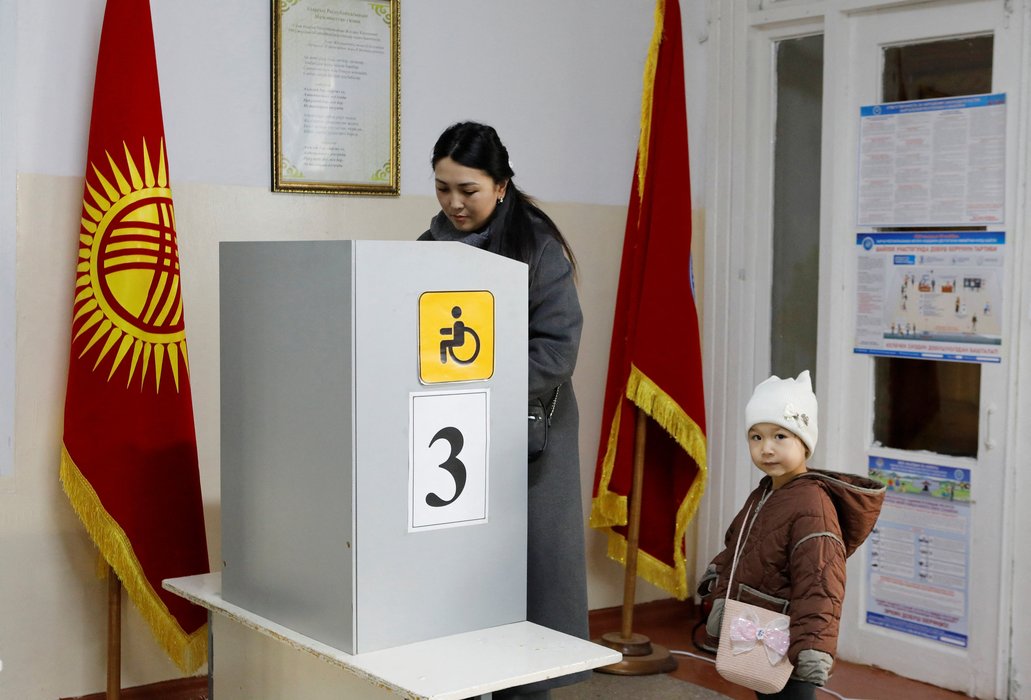
Taking place in an increasingly restrictive environment, the early parliamentary elections on 30th November 2025 resulted in a sweeping victory for allies of President Sadyr Japarov, further consolidating his power. International observers concluded that, while the elections were efficiently administered from a technical perspective, they were undermined by a lack of genuine political competition, limited transparency, and pressure on media and civil society. The rescheduling of the elections – originally due in November 2026 – was justified by the need to allow more time between these elections and the forthcoming presidential elections to avoid “instability”.
Just days before the vote, a group of opposition figures were detained on charges of allegedly preparing riots, prompting concerns about the use of criminal law to sideline political opponents. Ten people were placed in custody pending further investigation. While some were later transferred to house arrest, others remained behind bars at the time of writing, with their detention having been extended to mid-May 2026.
Among those held in pre-trial detention is Temirlan Sultanbekov, leader of the opposition Social Democrats party. He was previously prosecuted in November 2024 for alleged vote buying and held in detention for months before being handed a probationary sentence in April 2025. At the heart of the new case is a covertly recorded kitchen-table conversation in which Sultanbekov vaguely speculated about “a change of power,” after being repeatedly prompted by an interlocutor.
In December 2025, Sultanbekov was placed in a punishment cell for 10 days, prompting his lawyer to express concerns that this constituted retaliation for complaining about detention conditions to representatives of the Ombudsperson’s office during a visit to the detention facility. The prison service denied these allegations, insisting that Sultanbekov had been punished for repeated violations of prison rules and that his treatment corresponded to legal requirements.
Dismissal of security chief, timing of presidential elections and calls for a review of criminal cases against critics
In a sudden move, on 10th February 2026, President Japarov dismissed his close associate Kamchybek Tashiev, who had served as head of the SCNS and was widely perceived as co-ruling the country as part of an informal tandem since Japarov’s rise to power in 2020. Japarov’s office described the move as being “in the interests of the state” and aimed at preventing “a split” and strengthening “unity.” It later clarified that these remarks concerned political actors allegedly seeking to pursue their own interests under the guise of Tashiev’s name.
Tashiev’s dismissal took place amid growing speculation about possible early presidential elections, driven by legal uncertainty over the length of Japarov’s current term. Japarov was elected in 2021 under the old constitution, which provided for a single six-year term, while the new constitution adopted later that year introduced five-year terms with the possibility of re-election. On the day before Tashiev’s dismissal, a group of 75 public and political figures issued an appeal calling for early elections to avoid further uncertainty. The letter also praised the government’s achievements, in particular in areas overseen by Tashiev such as the fight against organised crime and corruption. Its signatories were subsequently summoned for questioning, and five were placed in custody pending investigation on charges of preparing riots. Numerous officials and parliamentarians associated with Tashiev were also subsequently fired or pressured to step down.
In response to a request for clarification from President Japarov, the Supreme Court ruled on 17th February 2026 that he should complete the six-year mandate won in 2021, and that the new five-year term applies only to future elections. Accordingly, it concluded that early presidential elections are not required and that the next vote can proceed as scheduled in January 2027.
Following Tashiev’s departure, Japarov initiated reforms of the SCNS. In this context, a group of media and civil society representatives issued an appeal to President Japarov, the new SCNS head and the Supreme Court president calling for an impartial review of rulings issued against journalists and activists in recent criminal cases, in particular those involving charges of calling for riots. Under Tashiev’s leadership, the SCNS was actively engaged in the criminal persecution of government critics, with cases often initiated under broadly worded Criminal Code provisions such as those related to riots. His departure raised some hopes for a possible liberalisation of these practices.
Following the appeal, the president’s press secretary, Askat Alagozov, told media that, as part of ongoing reforms, law enforcement approaches to civil society activists and journalists would be “reconsidered,” and that a recommendation would be issued to rely more on “prophylactic measures” and use arrests more rarely during investigations. At the same time, he stressed that this does not mean activists and journalists would be allowed to do “whatever they want,” and that decisions would be made in accordance with “specific circumstances” and “existing legislation.” His comments did not appear to address concerns that criminal legislation is often misused to baselessly prosecute activists and journalists in retaliation for their legitimate exercise of freedom of expression and other fundamental freedoms.
In a further turn of events, in mid-March 2026, the state tax service published a video investigation alleging systematic corruption schemes at a state oil company during Tashiev’s tenure as SCNS head, with multimillion-dollar profits reportedly benefiting his relatives and associates. A criminal case was opened in this context and several individuals were arrested. Upon returning to Kyrgyzstan on 19th March, Tashiev – who had previously positioned himself as a key anti-corruption figure – was also summoned for questioning, although he was not formally designated as a suspect. Notably, the findings presented in the new video investigation were similar to those of an earlier report published by Temirov Live in 2022, which was followed by the initiation of spurious criminal charges against its founder, Bolot Temirov, the revocation of his Kyrgyz citizenship, and his subsequent deportation from Kyrgyzstan.
International engagement on human rights in Kyrgyzstan
As previously reported, a resolution adopted by the European Parliament in September 2025 highlighted concerns about the deteriorating civic space in Kyrgyzstan and called for concrete steps to address these issues ahead of the ratification and implementation of the EU–Kyrgyzstan Enhanced Partnership and Cooperation Agreement (EPCA), signed in June 2024. It also stressed the need for effective assessment of the EPCA’s implementation, using human rights benchmarks. As of mid-March 2026, Kyrgyzstan had yet to ratify the EPCA. The agreement also needs to be ratified by the EU – requiring approval from the European Parliament – and all EU member states before it can fully enter into force, although parts of it may be applied provisionally following signature.
In follow-up to the September 2025 resolution, the European Parliament’s Subcommittee on Human Rights (DROI) held a discussion on the situation in Kyrgyzstan on 27th January 2026. Speaking at the event, MEP Nacho Sánchez Amor, the Parliament’s rapporteur on Kyrgyzstan, emphasised that raising human rights concerns does not constitute interference in the country’s internal affairs but rather reflects efforts to uphold commitments undertaken by Kyrgyzstan under the EPCA and the GSP+ scheme, which grants trade preferences conditional on the effective implementation of international human rights conventions.
The following month, from 16th to 18th February 2026, members of the Parliament’s Delegation for Relations with Central Asia (DCAS) visited Kyrgyzstan. As detailed in a mission report, during their meetings with parliamentary counterparts and other officials, the MEPs discussed different issues related to EU–Kyrgyzstan relations, including human rights. They also met with President Japarov, who offered them a visit on “a future occasion” to detained opposition leader Temirlan Sultanbekov, whose case was raised.
During the reporting period, the UN WGAD issued important opinions on cases in Kyrgyzstan involving violations of the exercise of fundamental freedoms, including those of imprisoned Temirov Live journalist Makhabat Tazhibek kyzy, as well as human rights defender Rita Karasartova and four fellow women activists detained in the so-called Kempir Abad case. In both instances, it found that the authorities had violated Kyrgyzstan’s international obligations on freedom of expression and other fundamental rights, highlighting a worrying pattern of treating criticism of government policies as incitement to unlawful conduct (see more below under Expression).
Representatives of the international community spoke out against President Japarov’s controversial proposal to consider reinstating the death penalty, made in response to the shocking rape and murder of a young girl. UN High Commissioner for Human Rights Volker Türk warned that “such a retrograde move would be a serious breach of international law”, stressing that as a party to the Second Optional Protocol to the International Covenant on Civil and Political Rights, Kyrgyzstan is prohibited from reintroducing capital punishment. In response to an MEP inquiry, EU High Representative for Foreign Affairs Kaja Kallas likewise stated that reinstating the death penalty would violate Kyrgyzstan’s international human rights obligations and “cause considerable harm” to its international reputation.
Following widespread criticism, the initiative appeared to stall, and in December 2025 the Constitutional Court ruled that reintroducing capital punishment would violate both the Constitution and Kyrgyzstan’s international obligations. While not irreversible, this ruling is a welcome development and illustrates how international engagement can help mitigate alarming initiatives.
Expression
Draft implementing rules for media law prompt concerns
As covered in the previous update, a new media law was passed by Parliament in June 2025 and subsequently signed by the president. It entered into force on 21st August 2025.
The law, adopted through an expedited process, introduced significant changes compared to an earlier draft developed by a working group that included media representatives. It is of particular concern that the final version requires compulsory registration of both traditional and online outlets, while granting the government powers to determine the registration procedures. The revised law was strongly criticised by media representatives and human rights groups, including IPHR and partners.
On 4th February 2026, the government published draft implementing regulations on the registration of media outlets for public discussion. According to the draft, the registration body would finalise the registration of media outlets within five working days of receiving an application and the required accompanying documents. The list of required documents contains an open-ended reference to “other documents”. Registration could be refused, among other reasons, if the information provided is deemed to contain “inaccuracies” or “discrepancies”, or if the documents submitted are considered to be “inconsistent” with national legislation. Media outlets would also be required to undergo re-registration through a similar procedure in certain circumstances, including if they change their publication language, the address of their editorial offices, or their website domain.
In their assessments, CSOs expressed concern that the draft regulations expand the grounds for requiring re-registration of media outlets and for denying registration beyond those set out in the media law. They also warned that vague provisions – such as those entailing unspecified references to documents required for registration and those setting out broad reasons for refusing registration – grant authorities wide discretion, which could lead to arbitrary implementation and create potential risks of corruption.
Under the draft regulations, media outlets could be closed by a court after receiving more than three written warnings for alleged violations within a year. Such warnings could be issued, for example, for disseminating information deemed to contain calls for the forceful change of the constitutional order or for inciting ethnic, national or other discord. While these provisions mirror those already included in the new media law, they are worrying in light of the pattern of misuse of similar Criminal Code provisions against critical voices (see more below).
The public discussion of the draft regulations ended in late February 2026. At the time of writing, the final version had not yet been presented.
Crackdown on Kloop and Temirov Live platforms
The independent investigative platforms Kloop and Temirov Live continued to face sustained pressure.
As reported before, eight Kloop contributors were arbitrarily detained during a sweeping security operation in May 2025, with four of them facing charges of allegedly calling for “disobedience” and riots. In September 2025, video operators Aleksander Aleksandrov and Joomart Duulatov were each sentenced to five years in prison on these charges, while two accountants were given three-year probationary terms. Authorities accused them all of involvement in producing and distributing videos labelled “destructive” and “false”, even though experts found no direct calls for unrest. Along with other human rights NGOs, IPHR condemned the convictions, saying they marked a new peak in the authorities’ campaign of retaliation against Kloop, and sent a chilling message to all those engaged in independent journalism in the country.
In November 2025, Aleksandrov’s and Duulatov’s sentences were changed to three years’ probation on appeal, resulting in their release. Nevertheless, the fact that they were convicted in the first place remains of serious concern.
Temirov Live’s director Makhabat Tazhibek kyzy was sentenced to six years’ imprisonment on similar charges as the Kloop journalists in October 2024. This sentence was later upheld on appeal, as a result of which she remained behind bars.
In an opinion published in October 2025, the UN WGAD concluded that Tazhibek had been imprisoned unlawfully in retaliation for her journalistic work and called for her immediate release. It described the provision under which she was prosecuted as “impermissibly broad and vague” and found that the court conflated criticism of the government with inciting disobedience. It also concluded that her conviction was part of “systematic harassment” of Temirov Live and other independent media, noting that she was targeted “in part” because she was seen “as an extension of” her husband, Temirov Live’s exile-based founder Bolot Temirov.
In a statement issued in January 2026, eight international media and human rights organisations – including IPHR – urged the Kyrgyzstani authorities to fully comply with the Working Group’s opinion and release Tazhibek without delay.
The NHC joins call on #Kyrgyzstan to implement UN working group demands and free journalist Makhabat Tajibek kyzy, director of anticorruption investigative outlets Temirov Live and Ait Ait Dese @pressfreedom.bsky.social @rsf.org @globalfreemedia.bsky.social @iphr.bsky.social @crdefenders.bsky.social
— Norwegian Helsinki Committee (@nhcno.bsky.social) January 30, 2026 at 5:19 PM
[image or embed]
Following several postponements, on 10th March 2026, Kyrgyzstan’s Supreme Court considered a petition from Tazhibek’s lawyers to reopen her case based on the WGAD opinion. The Court ruled to return the case for review to a local court and cancelled the previous verdict, although it stopped short of acquitting her. The new trial began at Leninsky District Court in Bishkek on 23rd March 2026. At the first hearing, the court ruled in favour of a request from the defence to release Tazhibek under a travel ban pending the outcome of the trial, while rejecting a request to terminate the legal proceedings against her. The next hearing was scheduled for 7th April 2026. Following her release later that day, Tazhibek expressed gratitude to all who have supported her while in prison and said that she was looking forward to reuniting with family members, including her son, who has been living with his grandmother during her imprisonment.
While welcoming the review of Tazhibek’s case and her release, human rights defenders continued to call for the charges against her to be dropped. For example, the Committee to Protect Journalists described her release as “a rare and significant step in the right direction”, but stressed that “this is not enough” and that the Kyrgyzstani authorities “should follow through by withdrawing all charges against her without delay.”
In a separate development, following a request from prosecutors, the Oktyabrsky District Court in Bishkek issued a decision on 27th October 2025 declaring materials published by Kloop, Temirov Live, and the latter’s sister project Ayt Ayt Dese “extremist”. The ruling resulted in a ban on the platforms’ activities and the inclusion of their materials in an official registry of organisations and publications deemed “extremist”. The “extremist” designation also extended to materials published by the platforms’ exile-based founders, Rinat Tukhvatshin and Bolot Temirov, respectively.
A court in the Kyrgyz capital, Bishkek, declared the content published by Kloop, Temirov Live, and Ait, Ait Dese – as well as the activities of the outlets’ founders, Bolot Temirov and Rinat Tukhvatshin – extremist, in the latest salvo against the country’s independent media.
— The Diplomat (@thediplomat.com) October 30, 2025 at 9:38 AM
[image or embed]
The justifications provided by the court made it clear that the platforms were targeted for their independent reporting. According to the ruling, they have systematically published “manipulative”, “one-sided”, and “highly critical” content about the authorities, contributing to a negative image of state institutions and societal tension. They were also accused of “destructive” activities allegedly threatening public security. However, the court failed to cite any specific materials that would amount to “extremism”.
The platforms’ representatives were not notified of the hearing in advance, and it proceeded in their absence. The ruling entered into force immediately. In March 2026 the Supreme Court rejected an appeal against the decision, thereby upholding the “extremist” designations. As a result, sharing, liking, or otherwise engaging with materials produced by these platforms can now lead to criminal liability. Under Article 332 of the Criminal Code, disseminating such materials carries a sentence of 3–5 years in prison, and up to 7 years in aggravating circumstances. Under Article 332-1 – introduced in summer 2025 – possession of “extremist” materials is also criminalised, with penalties of up to three years in prison following a written warning. Following the extremist designations, social media users engaging with material posted by the independent platforms have reportedly been summoned and questioned by police, with such engagement cited in at least one criminal case.
The “extremist” designation of the media platforms was severely criticised by media watchdogs and human rights groups. For example, the Committee to Protect Journalists described it as “a shocking and desperate attempt to stifle anticorruption reporting into the top echelons of Kyrgyzstan’s government”, while the International Press Institute called it “yet another escalation in the fight against critical media” in the country.
In a related development, in October 2025, Kloop founder Rinat Tukhvatshin learned that the Kyrgyzstani authorities had requested Interpol to issue a ‘Red Notice’ against him. A Red Notice is a request to Interpol member states to locate and provisionally arrest an individual pending extradition. Interpol ultimately rejected the request, citing rules designed to prevent the misuse of its systems for politically motivated purposes. While this outcome was welcome, the case reinforced concerns about transnational repression targeting government critics abroad.
Commenting on the case, Tukhvatshin stated: “This system was created to locate dangerous criminals around the world, but our authorities have chosen to use it to persecute journalists — me, in this case. I’m not afraid because I’ve done nothing wrong and broken no laws. I believe that I will be fine. But it’s a shame for the country.”
Imprisoned musician-poet reports violations
As reported before, musician-poet Askat Zhetigen was sentenced to three years in prison in July 2024 on charges of calling for the forceful seizure of power – a sentence later upheld by the Supreme Court. He was prosecuted after harshly criticising President Japarov and government policies on social media.
In early March 2026, Zhetigen was ordered to spend 15 days in a punishment cell for alleged breaches of prison rules. He viewed the measure as retaliation, as it came shortly after he reported alleged corrupt practices and violations of the rights of detainees to representatives of the Ombudsperson’s office who visited the prison. After Zhetigen’s lawyer disseminated a letter from his client regarding this development, it attracted wide media and social media attention, and the musician-poet was eventually released early from the punishment cell following the intervention of the head of the prison service. The Ombudsperson’s office said it would investigate the actions against Zhetigen and assess their lawfulness. However, at the time of writing, no prison official was known to have been held responsible for violating Zhetigen’s rights.
One journalist’s sentence reduced on appeal, another denied travel for medical reasons
As covered before, in July 2025, independent journalist Kanyshay Mamyrkulova was convicted of allegedly calling for riots and inciting inter-ethnic enmity due to social media posts criticising the government’s lack of transparency regarding a border demarcation deal with Tajikistan. She received a four-year probationary sentence, accompanied by wide-ranging restrictions on her online activities. Both human rights groups and UN human rights experts criticised the case against her. In February 2026, an appeals court acquitted Mamyrkulova of the charges of inciting inter-ethnic hatred, while retaining those on calling for riots, and reduced her sentence to three years’ probation. Violating the conditions of her release could still result in imprisonment.
During a visit to Kyrgyzstan in June 2024, retired former RFE/RL journalist Bayan Jumagulova learned that a criminal case had been opened against her on charges of inciting hatred in connection with her social media posts. She was subsequently banned from leaving the country pending the investigation and trial proceedings, which began in September 2024 and have been dragging on for more than a year. In January 2026, Jumagulova requested permission to travel to Germany – where she lived for many years prior to the criminal prosecution – to undergo surgery related to an earlier kidney transplantation. However, despite providing supporting medical documentation, the Sverdlovsky District Court denied her request.
UN working group faults Kyrgyzstan for cases against women activists
Human rights defender Rita Karasartova was sentenced to five years’ probation for allegedly organising riots and calling for the forceful seizure of power at a closed trial in September 2025. These charges were initiated against her after she posted an appeal on social media from a persecuted opposition activist. Despite the concerns voiced by human rights organisations and international human rights experts, her sentence was upheld unchanged by an appeals court in December 2025. This sentence is being further appealed to the Supreme Court.
Rita Karasartova was previously prosecuted within the framework of the so-called Kempir Abad case, where more than two dozen activists, bloggers and public figures were detained in October 2022 and charged with instigating unrest after peacefully opposing a government-negotiated border deal with Uzbekistan. In an opinion issued in November 2025, the UN WGAD concluded that the detention of Karasartova and four other activists, including Klara Sooronkulova, Gulnara Dzhurabayeva, Asya Sasykbayeva, and Perizat Suranova as part of this case violated international human rights law.
During the investigation, the five women activists spent months in deplorable conditions in pre-trial detention. Following a closed-door trial marred by due process violations, they were eventually acquitted in June 2024 but remained under house arrest pending an appeal filed by prosecutors.
The WGAD concluded that the case against the five women activists “demonstrates that the authorities arrested them not for any actual threat to public order, but for daring to organise civic engagement on a politically sensitive issue”, effectively equating dissent with incitement to violence. Accordingly, the Working Group found it clear “that the basis for their arrest and detention was their exercise of freedom of expression and peaceful assembly”. It also emphasised that the classification of case materials and the denial of access to them for their defence violated the principle of equality of arms and the defendants’ right to an effective defence, while the fact that the courts repeatedly postponed hearings and extended their detention without providing a reason violated their right to be tried without undue delay.
As regards the new criminal case against Rita Karasartova, the WGAD stated that the “recycling of substantially identical charges” following her previous acquittal, coupled with the government’s “failure to provide any evidence of specific criminal conduct” shows that her rearrest and conviction “lack any legal basis and constitute arbitrary detention”. It also noted that the conduct for which she was arrested – sharing a letter written by another activist on social media – “goes to the very core of protected expression”.
The WGAD called for a full and independent investigation of the circumstances surrounding the arbitrary deprivation of liberty of the five women activists and appropriate measures against those responsible for the violation of their rights. It also called for their full release and compensation for the violations suffered.
In a ruling issued in late March 2026, Bishkek City Court upheld the earlier acquittal of the five women activists, as well as their co-defendants in the Kempir Abad case, bringing to an end an appeals process that had dragged on for nearly two years. As a result, those under house arrest will be released. This was a welcome development, although the issue of compensation for rights violations raised by the WGAD has yet to be addressed.
Activist prosecuted after criticising pro-Russian media
In a recent case that forms part of the pattern of misusing overly broad criminal code provisions to stifle criticism, activist and blogger Aibek Tenizbaev was detained in December 2025 on charges of inciting interethnic hatred. Security services alleged that he had “systematically” posted “provocative” content on social media and that expert assessments had identified “signs” of incitement in his materials. He was initially placed in pre-trial detention but was later released under travel restrictions pending further investigation, which was ongoing at the time of writing.
Tenizbaev’s detention came after he criticised Russian influence and Kremlin-linked media in Kyrgyzstan. In particular, he accused Nomad – a recently-launched TV channel that rebroadcasts programmes from a leading Russian TV channel – of spreading “propaganda.” The Media Action Platform expressed serious concerns about Tenizbaev’s prosecution, noting that the security services’ failure to specify which content, or which ethnic group, the charges concerned reinforced the impression that he was being targeted for exercising his freedom of expression.
Media designer imprisoned over social media posts
On 13th February 2026, Pervomaisky District Court in Bishkek sentenced media designer Ernis Zheentaev to six years in prison for allegedly calling for riots and disobedience to the authorities, as well as disseminating “extremist” materials. The charges concerned his social media posts featuring comments on current events and criticism of authorities, reportedly including re-posts, and were based on the conclusions of a linguistic expert assessment. Zheentaev, who has worked for different independent media outlets, was first arrested in November 2025. Shortly after his conviction, his seriously ill mother passed away. Only following a petition to the president by his relatives was he permitted to attend her funeral. His lawyer said that they will appeal the sentence.
Association
UN study confirms negative impact of “foreign agent” style law
The Russian-style “foreign representative” law adopted in 2024 continued to loom over civil society as a constant threat, although it has not been enforced as harshly as initially feared, and only five organisations had registered under it as of the beginning of March 2026.
A report published by the UN Office of the High Commissioner for Human Rights (OHCHR) in December 2025 confirmed that the law has had a serious chilling effect across the civil society sector. The report was based on a survey of 115 CSOs working on human rights, media, the protection of vulnerable groups, environmental issues and other areas. It found that after the adoption of the law, 77 percent of all surveyed CSOs – and more than 90 percent of human rights groups – engaged in self-censorship, including by reducing public activities and avoiding sensitive language or criticism in their communications. Almost half of the organisations reported reducing cooperation with government authorities, 37 percent downsized or paused programmes, and seven percent self-liquidated. CSOs also reported intensified surveillance and pressure from law enforcement (34 percent), alongside worsening public attitudes linked to stigmatising public rhetoric (52 percent) and social media attacks (39 percent).
The report noted that the law has particularly affected organisations working with vulnerable populations. For example, out of 62 women’s organisations surveyed, four had closed, while over 40 percent downsized their activities or shifted away from rights-based work. Similarly, CSOs supporting the LGBTQI+ community have faced widespread marginalisation, with many ceasing public activities and a key LGBTQI+ organisation closing down.
The report concluded that civil society’s crucial watchdog role in supporting the authorities in fulfilling international commitments has been significantly weakened. Not only human rights groups but also organisations providing assistance to vulnerable groups and environmental CSOs are now avoiding activities that could be construed as “political”.
In light of these findings, the report makes a number of recommendations to the government, including bringing legislation on CSOs in line with international human rights standards, ensuring that organisations are not required to register as “foreign representatives” for the legitimate exercise of fundamental freedoms, and changing government rhetoric to highlight the positive contributions of civil society to national development.
Liquidation of torture prevention body creates gap
As covered in the previous update, in summer 2025 the authorities moved to dissolve the National Centre for the Prevention of Torture (NCPT) – an internationally recognised independent monitoring body – despite widespread criticism from civil society and international experts. The NCPT was subsequently liquidated in September 2025, with its functions to be transferred to the Ombudsperson’s Office. During the reporting period, the Office’s new mandate was still being defined, including the development of relevant procedures and allocation of staff responsibilities. This transition created a gap in torture prevention efforts, increasing the risk of ill-treatment of detainees.
Reported cases in which detainees were allegedly penalised for complaining about their treatment to representatives of the Ombudsperson’s Office – such as musician-poet Askat Zhetigen (see Expression) and opposition activist Temirlan Sultanbekov (see General Developments) – were also worrying.
International human rights defenders denied entry ahead of film festival
In December 2025, border officials at Manas International Airport in Bishkek denied entry to three representatives of the International Federation for Human Rights (FIDH) without explanation and confiscated their passports. The FIDH representatives were forced to take the next available return flights to their departure cities and only received their passports back upon arrival. In Kyrgyzstan, they had planned to take part in an annual human rights documentary film festival organised by a local member organisation, Bir Duino Human Rights Movement. The festival programme included several workshops focusing on the alarming human rights situation in the country.
In a public statement, the Observatory for the Protection of Human Rights Defenders – a joint initiative of FIDH and the World Organisation Against Torture (OMCT) – condemned “the politically motivated refusal” by the Kyrgyzstani authorities to allow the FIDH delegation to enter the country. The UN Special Rapporteur for human rights defenders also expressed concerns about the incident.
Peaceful Assembly
Protest ban extended again
In response to a request from local authorities, Pervomaisky District Court in Bishkek ruled in December 2025 to prolong a ban on peaceful assemblies in central areas of the capital through 31st March 2026. This ban, first introduced in spring 2022 following a request from the Russian embassy to end the anti-war protests outside its premises, has been repeatedly extended and has now been in force for four years. Those wishing to peacefully assemble are required to instead gather in a specifically designated venue – Gorky Park. An exception is, however, made for official state and municipal events, which are allowed to take place on Ala-Too Square, illustrating the discriminatory nature of the ban.
When publicly commenting on the issue, President Japarov insisted that authorities are not preventing assemblies from taking place, stating that people can protest in Gorky Park “all day” if they wish and say “whatever they want”, on condition that they “don’t lie” or “call for riots”.
However, the implementation of the protest ban has prevented citizens from exercising their right to peaceful assembly near government buildings and at other central locations.
Moreover, in a worrying development, on 13th March 2026, human rights defender Tolekan Ismailova, environmental rights activist Bermet Borubaeva and video operator Bulat Satarkulov were detained ahead of a planned peaceful protest against the blanket ban. They were all taken to a local police station, where they were held and questioned for several hours before being released.
The day before her detention, Ismailova learned that police had initiated a so-called pre-investigative check into her social media activity, which had allegedly provoked “public resonance” and “negative reactions” from other users. An official document issued in this context called for her to be summoned and requested that she provide clarifications. On 13th March, she was reportedly questioned in particular about her posts related to Russia’s war against Ukraine, in which she condemned atrocities committed by Russian forces and expressed support for Ukrainian colleagues. Police asked whether the posts were sponsored by third parties and suggested they could “spark conflict”. They also inquired about the activities and funding of her organisation, Bir Duino Human Rights Movement.
In a joint statement, 28 members of the Civic Solidarity Platform, including IPHR, voiced concern about the pressure against Ismailova, stressing that “interrogations, summonses, and other procedural actions must not be used as a tool for intimidation or to prevent peaceful civic engagement”.
Legal challenge against protest restrictions rejected
In December 2025, human rights defenders Tolekan Ismailova and Bermet Borubaeva submitted a petition to the Constitutional Court, requesting it to declare certain provisions of the Law on Peaceful Assemblies unconstitutional. The petitioners argued that by allowing local authorities to request courts to impose restrictions on the time, place, and route of assemblies, these provisions facilitate long-term blanket bans such as the one seen in Bishkek in violation of the Constitution and Kyrgyzstan’s obligations under the International Covenant on Civil and Political Rights.
However, in January 2026, the Constitutional Court rejected the petition, citing non-compliance with technical requirements, without specifying the alleged inconsistencies. The defenders appealed this rejection, requesting a review and the opportunity to participate in proceedings.
In parallel, in December 2025 the two human rights defenders submitted individual complaints to the UN Human Rights Committee alleging violations of the right to peaceful assembly amid growing pressure on civil society and restrictions linked to the “foreign representative” law.
Proposed amendments extending the regulating powers of authorities
In mid-March 2026, proposed amendments to the Law on Assemblies, initiated by a Member of Parliament, were posted for public discussion. The amendments would expand the powers of local authorities to regulate assemblies by allowing them to impose restrictions on the venue and route of assemblies without court approval, as currently required. In particular, local authorities would be able to designate specific locations where assemblies must take place and determine the routes of demonstrations and marches. Court approval would still be required to impose outright bans on protests. These changes were argued to be necessary to ensure public order, the safety of citizens, and the protection of the rights of those who do not participate in assemblies.
However, the proposed provisions would make it easier for authorities to prevent peaceful protests from taking place in locations where they can effectively reach their intended audience, in violation of Kyrgyzstan’s international obligations. Under international human rights law, restrictions on the exercise of the freedom of peaceful assembly are permitted only in strictly defined and narrowly limited circumstances. International human rights experts have also emphasised that authorities have a duty to facilitate assemblies at the organisers’ preferred location and within “sight and sound” of the intended audience.
Women’s rights assembly obstructed
For almost a decade, a women’s rights march has been held in Bishkek on International Women's Day, marked on 8th March. However, this year, the organisers reported significant difficulties in holding the event. According to them, with reference to security considerations, local authorities did not allow a march, but only a rally. When the organisers insisted on marching as usual, they were reportedly warned that the rally would also not get the green light and were subjected to pressure. Only following appeals to the president and members of Parliament, was the rally ultimately allowed to take place in Gorky Park, gathering more than 100 participants.
Although, as noted above, a court-sanctioned blanket ban on peaceful assemblies remains in place in central Bishkek, with assemblies instead relocated to Gorky Park, the reported restrictions on the 8th March assembly do not appear consistent with the requirements of national law. Kyrgyzstan’s Law on Assemblies provides for a notification procedure under which organisers are required to notify authorities of protests in advance but are not required to obtain prior permission. Assemblies may only be banned if they are aimed at promoting unlawful objectives such as propaganda of war and violence, while restrictions on the time or place of assemblies may only be imposed to ensure the safety of participants or other citizens. Authorities must seek a court review of the lawfulness of any decision to ban or restrict an assembly within 24 hours.
This incident also reinforces concerns about the proposed legal amendments, which would grant local authorities expanded powers to restrict the conduct of assemblies.
Following the rally on 8th March, the organisers reported facing a wave of criticism and verbal attacks on social media, accusing them of holding events that allegedly undermine so-called traditional values. The negative backlash appeared to be reinforced by a discussion about the event broadcast on a state TV channel. A video shown at the beginning of the programme featured a photo of three young women holding a placard with a controversial message about the role of women, which bore clear signs of being AI-generated. The organisers confirmed that no such placard had been used, describing the photo as a “provocation” and expressing regret that the state TV channel – particularly given its large audience – helped spread negative propaganda.
During a later discussion in Parliament, President Japarov suggested that less than one percent of the population supports the kinds of calls voiced at women’s rights rallies and stated that it is the authorities’ responsibility to prevent the expression of slogans that contradict “our mentality and traditions.”