Bahrain Watchlist 2026
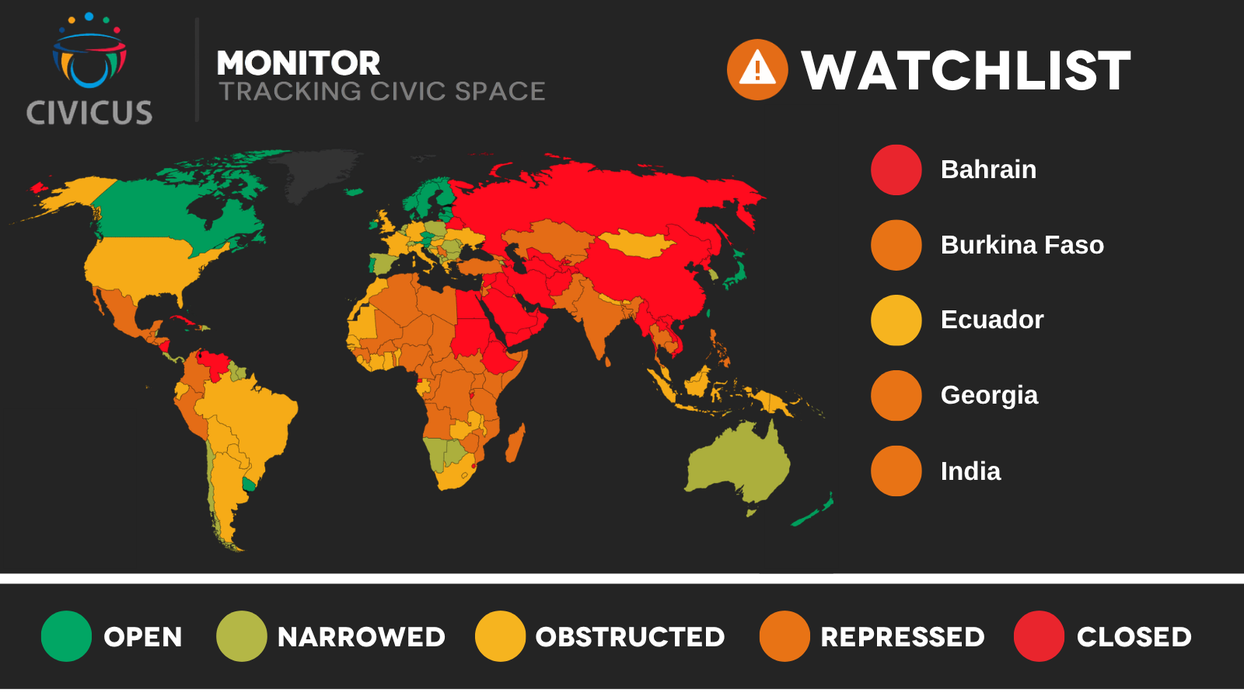
Bahrain added to human rights watchlist amid sweeping crackdown on dissent
- More than 200 people detained for social media posts and peaceful protests amidst the regional conflict
- Authorities accused of secret detentions, enforced disappearances and torture of critics
- Government expands crackdown on civic freedoms under the guise of national security
29 July 2026 – Bahrain has been added to the latest CIVICUS Monitor Watchlist following a sharp escalation in violations of civic freedoms in the midst of the conflict between Israel, the United States and Iran. Authorities have used the regional security crisis as a pretext to intensify restrictions on freedom of expression, target activists and political critics, and carry out a wave of arbitrary arrests and detentions.
The CIVICUS Monitor currently rates Bahrain as “Closed,” the worst rating a country can receive, indicating an environment where the government routinely imprisons, seriously injures and kills people for exercising their fundamental freedoms. Alongside Bahrain, the latest Watchlist also includes Burkina Faso, Ecuador, Georgia and India, all countries where there has been a recent and rapid decline in civic freedoms.
Since the outbreak of the regional conflict, Bahraini authorities have launched a systematic campaign against those expressing opinions about the war or criticising government policies. At least 200 people have reportedly been detained for social media posts or participation in peaceful demonstrations. Many are believed to be held in undisclosed locations without access to lawyers or contact with their families.
“The authorities have seized on regional tensions to intensify their suppression of fundamental freedoms,” said Khalid Ibrahim, Executive Director from the Gulf Centre for Human rights. “Freedom of expression is increasingly being treated as a security threat, resulting in widespread arrests, prolonged detentions and a growing climate of fear.”
The right to freedom of expression has come under increasing pressure. On 16 March 2026, Bahrain's Ministry of Interior warned against using social media to publish or share content deemed harmful to national security. Since then, authorities have detained scores of individuals under broadly defined offences such as “spreading false news,” “glorifying terrorism” and “undermining public order,” with some reportedly receiving sentences of up to ten years in prison and, in one case, life imprisonment.
Human rights defenders, labour activists and religious figures have also been targeted. Writer and labour activist Khalil Yaqoub Buhazaa was arrested in May 2026 in connection with his writings and social media posts and remained in detention for more than a month before charges were dropped. In the same month, authorities announced the arrest of over 40 religious scholars following raids on their homes, accusing them of links to Iran and bringing charges including espionage and terrorism-related offences.
Concerns have also mounted over reports of enforced disappearances, secret detention and abuse in custody. In March 2026, the family of political prisoner Mohammed Abdulmohsen Al-Mousawi received his body after he died in detention, reportedly bearing signs of torture. Al-Mousawi had been detained alongside two relatives whose whereabouts remain unknown. Authorities alleged links to foreign entities, but credible reports indicate the arrests were linked to opinions expressed on social media.
“The death of Mohammed Al-Mousawi and continuing reports of secret detention and abuse highlight the grave risks facing those who challenge the authorities,” said Sylvia Mbataru, MENA researcher for the CIVICUS Monitor. “When people can be detained in secret, held incommunicado and subjected to abuse demonstrates just how little space remains for independent voices.”
Authorities have also weaponised citizenship laws against perceived critics. In April 2026, Bahrain revoked the citizenship of 69 people, including dozens of children, leaving many stateless. The authorities accused those affected of sympathising with Iran or collaborating with foreign entities. The decisions were reportedly implemented without due process or any meaningful opportunity to challenge them, and several individuals were subsequently deported.
The severity of the crackdown prompted an unprecedented appeal in May 2026 from five detained opposition and human rights leaders held in Jaw Central Prison, including prominent human rights defender Abdulhadi Al-Khawaja. They called on the authorities to end the ongoing repression, release prisoners of conscience and engage in meaningful national dialogue.
NOTES TO THE EDITOR
On Bahrain’s civic space rating of Closed:
Bahrain is currently rated Closed by the CIVICUS Monitor. There are a total of 33 countries in the world with this rating (see all). This rating is typically given to countries where there is complete closure - in law and in practice - of civic space. Any criticism of the ruling authorities is severely punished and there is virtually no media freedom (see the full description of ratings). See Frequently Asked Questions about the Watchlist here.
ABOUT THE CIVICUS MONITOR:
The new watchlist is released by the CIVICUS Monitor, an online platform that tracks the latest developments to civic freedoms, including the freedoms of expression, association and peaceful assembly, across 198 countries and territories.
البحرين تُدرج على قائمة المراقبة الخاصة بسيفيكوس مونيتور في ظل حملة قمع واسعة ضد المعارضين
- احتجاز أكثر من 200 شخص بسبب منشورات على وسائل التواصل الاجتماعي ومشاركتهم في احتجاجات سلمية على خلفية النزاع الإقليمي.
- اتهامات للسلطات بممارسة الاحتجاز السري والإخفاء القسري وتعذيب المنتقدين.
- الحكومة توسّع حملتها على الحريات المدنية بذريعة الأمن الوطني.
29 تموز/يوليو 2026 – أُدرجت البحرين على أحدث قائمة مراقبة صادرة عن سيفيكوس مونيتور، في أعقاب تصعيد حاد في انتهاكات الحريات المدنية على خلفية النزاع بين إسرائيل والولايات المتحدة وإيران. وقد استغلت السلطات الأزمة الأمنية الإقليمية ذريعةً لتشديد القيود على حرية التعبير، واستهداف النشطاء والمنتقدين السياسيين، وتنفيذ موجة من الاعتقالات والاحتجازات التعسفية.
ويصنّف سيفيكوس مونيتور البحرين حاليًا ضمن فئة «مغلق»، وهو أسوأ تصنيف يمنحه المؤشر، إذ يشير إلى بيئة تمارس فيها السلطات بصورة منهجية سجن الأفراد وإلحاق الأذى الجسيم بهم، بل وقتلهم، بسبب ممارستهم حقوقهم وحرياتهم الأساسية. وتضم قائمة المراقبة الأخيرة أيضًا بوركينا فاسو والإكوادور وجورجيا والهند، وهي جميعها دول شهدت تراجعًا سريعًا ومثيرًا للقلق في الحريات المدنية خلال الفترة الأخيرة.
ومنذ اندلاع النزاع الإقليمي، شنت السلطات البحرينية حملةً ممنهجة ضد كل من يعرب عن آرائه بشأن الحرب أو ينتقد السياسات الحكومية. وتشير التقارير إلى احتجاز ما لا يقل عن 200 شخص بسبب منشورات على وسائل التواصل الاجتماعي أو مشاركتهم في احتجاجات سلمية. ويُعتقد أن العديد منهم محتجزون في أماكن غير معلنة، من دون تمكينهم من التواصل مع محامين أو أفراد أسرهم.
وقال خالد إبراهيم، المدير التنفيذي لمركز الخليج لحقوق الإنسان (GCHR):"استغلت السلطات التوترات الإقليمية لتشديد قمعها للحريات الأساسية. وأصبحت حرية التعبير تُعامل على نحو متزايد باعتبارها تهديدًا للأمن، مما أدى إلى اعتقالات واسعة النطاق، واحتجازات مطولة، وتصاعد مناخ الخوف."
كما تعرضت حرية الرأي والتعبير لمزيد من التضييق. ففي 16 آذار/مارس 2026، حذّرت وزارة الداخلية البحرينية من استخدام وسائل التواصل الاجتماعي لنشر أو تداول محتوى تعتبره ضارًا بالأمن الوطني. ومنذ ذلك الحين، احتجزت السلطات عشرات الأشخاص استنادًا إلى تهم فضفاضة الصياغة، مثل «نشر الأخبار الكاذبة» و«تمجيد الإرهاب» و«تقويض النظام العام». وتشير التقارير إلى أن بعضهم حُكم عليهم بالسجن لمدة تصل إلى عشر سنوات، فيما صدر في إحدى القضايا حكم بالسجن المؤبد.
استُهدف أيضًا المدافعون عن حقوق الإنسان، والنشطاء العماليون، والشخصيات الدينية. فقد اعتُقل الكاتب والناشط العمالي خليل يعقوب بوهزاع في أيار/مايو 2026 على خلفية كتاباته ومنشوراته على وسائل التواصل الاجتماعي، وظل محتجزًا لأكثر من شهر قبل اسقاط التهم. وفي الشهر نفسه، أعلنت السلطات توقيف أكثر من 40 عالمًا دينيًا عقب مداهمة منازلهم، متهمةً إياهم بوجود صلات بإيران، ووجّهت إليهم تهمًا، من بينها التجسس وجرائم ذات صلة بالإرهاب.
ولا تزال المخاوف قائمة أيضًا بشأن التقارير التي تفيد بتعرّض محتجزين للإخفاء القسري وسوء المعاملة أثناء الاحتجاز. وفي آذار/مارس 2026، تسلّمت أسرة السجين السياسي محمد عبد المحسن آل موسوي جثمانه، بعد احتجازه، وقد بدت عليه آثار تعذيب، وفقًا للتقارير. وكان آل موسوي قد اعتُقل مع اثنين من أقاربه الذين لا يزال مكان وجودهما مجهولًا. وزعمت السلطات وجود صلات لهم بجهات أجنبية، غير أن تقارير موثوقة تشير إلى أن اعتقالهم جاء على خلفية آراء عبّروا عنها عبر وسائل التواصل الاجتماعي.
وقالت سيلفيا مباتارو، الباحثة المعنية بمنطقة الشرق الأوسط وشمال أفريقيا في سيفيكوس مونيتور:
"إن وفاة محمد آل موسوي، واستمرار ورود التقارير عن الاحتجاز السري وسوء المعاملة، يسلطان الضوء على جسامة المخاطر التي يواجهها من يجرؤون على مساءلة السلطات. فعندما يمكن احتجاز الأشخاص سرًا، وعزلهم عن العالم الخارجي، وتعريضهم لسوء المعاملة، فإن ذلك يكشف مدى ضيق الحيّز المتاح أمام الأصوات المستقلة."
كما استخدمت السلطات قوانين الجنسية كأداة لاستهداف من تعتبرهم من منتقديها. ففي نيسان/أبريل 2026، جرّدت البحرين 69 شخصًا، بينهم عشرات الأطفال، من جنسيتهم، مما ترك الكثير منهم عديمي الجنسية. واتهمت السلطات المتضررين بالتعاطف مع إيران أو التعاون مع جهات أجنبية. ونُفذت هذه القرارات بصورة استعجالية، من دون مراعاة الأصول القانونية الواجبة أو إتاحة أي فرصة حقيقية للطعن فيها، قبل أن يُرحَّل عدد من الأشخاص المتضررين لاحقًا.
وقد دفعت جسامة حملة القمع، في أيار/مايو 2026، خمسةً من قادة المعارضة المحتجزين والمدافعين عن حقوق الإنسان في سجن جو المركزي، من بينهم المدافع البارز عن حقوق الإنسان عبد الهادي الخواجة، إلى توجيه نداء غير مسبوق إلى السلطات لوضع حد لأعمال القمع المستمرة، والإفراج عن سجناء الرأي، والانخراط في حوار وطني جاد وهادف.
ملاحظات للمحررين
بشأن تصنيف المجال المدني في البحرين ضمن فئة "مغلق":
يصنّف سيفيكوس مونيتور المجال المدني في البحرين ضمن فئة "مغلق". ويوجد حاليًا 33 دولة حول العالم مصنفة ضمن هذه الفئة (انظروا هنا). ويُطلق هذا التصنيف على الدول التي تشهد إغلاقًا كاملًا للمجال المدني، قانونًا وممارسةً. ففي هذه الدول، يُعاقَب بشدة أي انتقاد للسلطات الحاكمة، وتكاد حرية الإعلام تكون منعدمة (انظروا الوصف الكامل للتصنيفات هنا). ويمكن الاطلاع على الأسئلة الشائعة بشأن قائمة المراقبة هنا.
نبذة عن سيفيكوس مونيتور
سيفيكوس مونيتور منصة إلكترونية تابعة لتحالف CIVICUS، ترصد أحدث التطورات المتعلقة بالحريات المدنية، بما في ذلك حرية التعبير وحرية تكوين الجمعيات وحرية التجمع السلمي، في 198 دولة وإقليمًا حول العالم.