General update
On 1st July, GCHR delivered a statement at the Universal Periodic Review (UPR) adoption for Iran. GCHR remarked that Iran had “noted” (rejected) all recommendations on adopting international legal instruments, limitations on the death penalty, the release of protesters and the vast majority of recommendations on freedoms of expression, assembly, or association.
GCHR and CIVICUS made a joint submission on Iran to the UPR in which we examine Iran’s fulfilment of the rights to freedoms of association, expression and peaceful assembly and unwarranted restrictions on human rights defenders since its previous UPR examination in November 2019.
Association
On 28th August 2025, the Gulf Centre for Human Rights (GCHR) warned that woman human rights defender Sharifeh Mohammadi is at risk of execution amid an ongoing crackdown. The human rights organisation expressed its alarm at reports that her death sentence has been upheld by Iran’s Supreme Court and remarked that this comes during a recent broader pattern of intensified repression against human rights defenders and activists.
The Campaign to Defend Mohammadi stated that her death sentence was issued based on her affiliation with a labour organisation more than a decade ago, but was really a reprisal for her peaceful labour activism. She was arrested on 5th December 2023 in Rasht and remains in prison there. Rights groups protested her sham trial and alleged that she was tortured and forced to give a confession.
GCHR noted that since late 2024, Iran has intensified its politically-motivated use of the death penalty and lengthy prison sentences against human rights defenders, particularly women labour activists and Kurdish minorities, marking an escalation of a longstanding pattern of repression.
Death sentences have increasingly targeted individuals linked to the “Woman, Life, Freedom” movement or labour activism, often following grossly unfair trials marked by torture, denial of due process and coerced confessions. The Supreme Court has upheld death sentences in several emblematic cases, including Pakhshan Azizi, whose judicial review was rejected in January 2025 and whose execution was only temporarily halted following public outcry. Meanwhile, Varisheh Moradi’s death sentence, issued in November 2024, is still under appeal with no resolution to date.
Adding onto these concerning developments, international experts and institutions have warned that executions are being used systematically as a tool of intimidation and repression. The situation has worsened amid heightened political tensions and the absence of judicial safeguards, placing dozens of activists at imminent risk of execution.
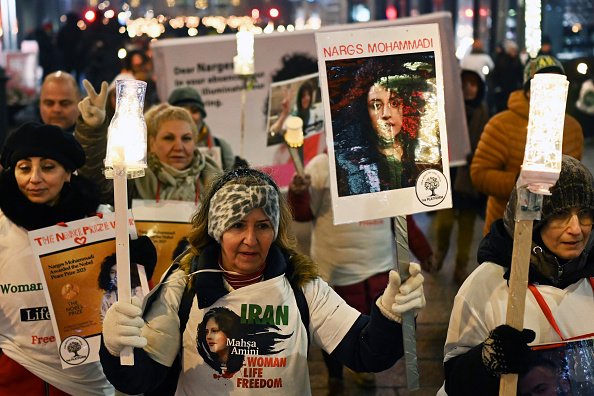
Earlier in August, Nobel Prize winner Narges Mohammadi did an interview with the German magazine Der Spiegel, in which she says that the Islamic Republic of Iran “has significantly intensified its crackdown on dissidents, human rights activists, and political prisoners.” She has been on medical furlough from prison for eight months but could be sent back any time.
On 28th August 2025, she published on her X account a letter she directed to the UN Special Rapporteur on the human rights situation in the Islamic Republic of Iran, Prof. Mai Sato, in which she said, “I write to draw your urgent attention to the escalating unlawful and repressive measures being imposed against independent lawyers in Iran.”
On 11th July 2025, the Norwegian Nobel Committee said in a statement it was “alarmed by reports of serious threats against Narges Mohammadi, who was awarded the Nobel Peace Prize in 2023. Ms. Mohammadi was awarded the prize for her fight against the oppression of women in Iran and her fight to promote human rights and freedom for all.” The statement also confirmed that Mohammadi called Jørgen Watne Frydnes, Chair of the Norwegian Nobel Committee, and informed him that she has received, through her lawyers and through indirect channels, warnings which in her own words were described as a threat of “physical elimination” by agents of the government.