GENERAL
Following the outbreak of war in Iran on 28th February 2026 involving Israel and the United States, the conflict spread to Lebanon after Hezbollah joined the fighting and Israel launched retaliatory strikes in southern Lebanon, the Bekaa Valley and the southern suburbs of Beirut starting on 1st March 2026.
According to the Lebanese Ministry of Public Health, as of 23rd March 2026, the escalation had resulted in at least 1,039 people killed and 2,876 injured across the country, reflecting a sharp increase in civilian casualties as hostilities intensified. According to the Disaster Risk Management Unit (DRM) and the Ministry of Social Affairs, as of 8th March 2026, 538 collective shelters were open across the country, hosting about 117,228 internally displaced persons, including over 27,000 families fleeing bombardment and evacuation orders in the south and the southern suburbs of Beirut.
In separate developments, on 23rd February 2026, the Parliamentary Human Rights Committee approved a proposal to abolish the death penalty in Lebanon and replace it with life imprisonment. The proposal will now be referred to the full Parliament for debate and a final decision. This represents a major step forward in a country where the death penalty for serious crimes has existed since the creation of the modern Lebanese state and remains enshrined in law, even though it has not been carried out for more than 20 years. The United Nations Special Rapporteur on extrajudicial, summary or arbitrary executions, Morris Tidball-Binz, welcomed the legislative efforts and called for such reforms to align with international human rights obligations to protect the inherent right to life and human dignity under the International Covenant on Civil and Political Rights (ICCPR).
Association
In a positive development, the Ministry of Labour formally approved the registration of the Union of Journalists in Lebanon (formerly the Alternative Press Syndicate) on 19th February 2026, without raising any objections.
Anger in Lebanon as government raises VAT and petrol prices https://t.co/sxLDfShVgx
— The National (@TheNationalNews) February 17, 2026
Peaceful Assembly
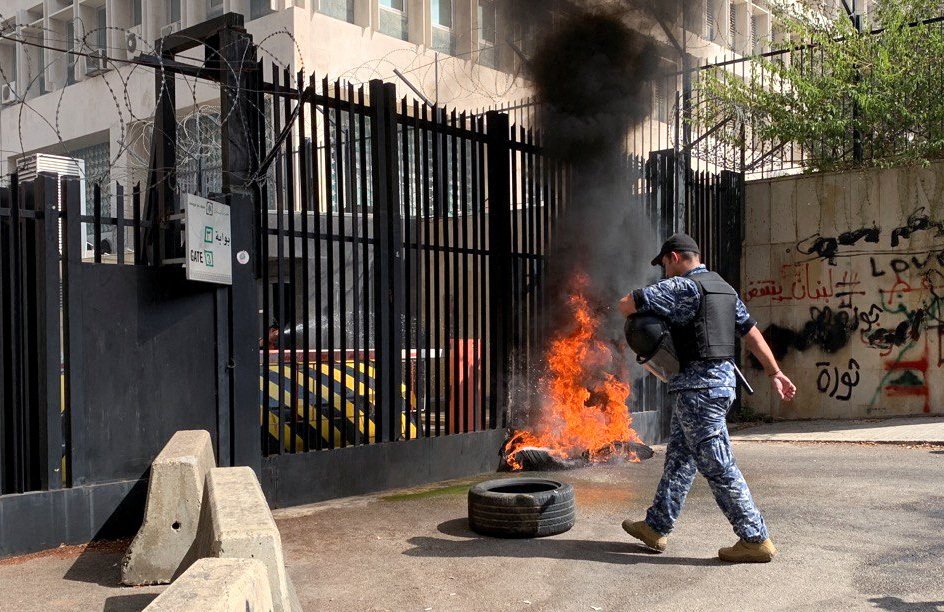
In mid‑February 2026, anger over new fuel price hikes and VAT increases sparked protests across Lebanon, with taxi drivers and citizens blocking major roads in Beirut on 17th February. Demonstrators said the measures worsened everyday living costs and undercut planned wage and pension increases. Small rallies and strikes by public sector workers reinforced the message that the taxes would leave most people worse off, marking another episode of public unrest in the country’s ongoing financial crisis.
Expression
On 18th February 2026, it was reported that Lebanon’s draft Media Law, referred to Parliament in December 2025, had completed its committee review and amendments and was ready for debate in the full Parliament in the following weeks. The draft includes provisions on decriminalising press offences and establishes a media regulatory framework.
In separate developments, amid the ongoing conflict in Lebanon, the government formally instructed all official state media outlets, including national television, radio, and the state news agency, to stop referring to Hezbollah as “resistance” in their reporting and to use neutral terminology instead. The Information Minister announced the directive on 2nd March 2026, explaining that it reflects government policy and should be adhered to across government‑affiliated media as part of efforts to standardise language in official coverage during the crisis. The announcement sparked online debate on social media with diverse views from supporters of Hezbollah and those who oppose it.
Journalists in Lebanon continue to face increasing risks, with media offices coming under attack, putting both staff and the free flow of information in danger. Israeli airstrikes on 2nd March 2026 damaged several media offices in Lebanon, including Al‑Manar TV and Al‑Nour Radio in Beirut and Sawt Al‑Farah Radio in Tyre. The International Federation of Journalists (IFJ) condemned the strikes, calling them violations of international law and highlighting the risks to journalists and freedom of expression. The attacks caused significant property damage, disrupted broadcasting, and forced evacuations. IFJ and Lebanese journalist unions urged protective measures for media workers and stressed that civilian media infrastructure must not be targeted.
Likewise, in early March, Lebanese reporters at the frontline covering the ongoing hostilities faced intensifying Israeli strikes, underscoring deteriorating safety conditions for journalists on the ground. On 18th March 2026, Mohammad Cherri, a journalist with Al‑Manar TV, was killed in an Israeli airstrike in central Beirut, a strike that also killed his wife and drew widespread condemnation.
The following day, on 19th March, British journalist Steve Sweeney and his cameraman Ali Rida Sbeity were wounded in an Israeli strike near the Al‑Qasmiya Bridge in southern Lebanon while clearly identified as media personnel.
On 28th March 2026, Lebanese media reported that three journalists; Ali Shoeib (Al-Manar TV) and Fatima and Mohammed Ftouni (Al-Mayadeen), were killed in an Israeli airstrike in southern Lebanon near Jezzine while covering the conflict.