General Update
On 17th October 2024, the National Coalition of Human Rights Defenders Uganda (NCHRD-U) reported that 65% of Uganda’s Human Rights Defenders (HRDs) lack essential emergency protection services, leaving them vulnerable to threats and torture. Only 35% of respondents reported availability of these services at the national level, with 33% noting accessibility at the regional level. They highlighted that legal services are most critical, especially during high-risk events, and noted that coordination issues and reliance on donor funding hinder effectiveness.
The African Commission on Human and People’s Rights condemned Uganda’s escalating repression of environmental human rights defenders (EHRDs), citing arbitrary arrests, judicial harassment, and physical violence, particularly against activists opposing oil projects. During its 81st Ordinary Session, held from 17th October to 6th November 2024, the Commission adopted Resolution ACHPR/Res.613 (LXXXI) 2024, denouncing the Ugandan government’s crackdown on peaceful protestors against oil projects. The resolution highlighted a series of arrests since 2023, including the detention of 47 anti-EACOP student activists, 21 protestors delivering a fossil fuel petition, and several demonstrators outside the Chinese Embassy. The Commission also condemned the enforced disappearance of Stephen Kwikiriza and the brutal beating of environmental defender Bob Barigya by police. The Commission urged Uganda to uphold fundamental rights, end the persecution of EHRDs, drop all charges against peaceful protesters, and investigate human rights violations. It also called for Uganda to ratify the International Convention on Enforced Disappearances and align its laws with international human rights standards.
On 12th December 2024, the International Federation for Human Rights (FIDH), Avocats Sans Frontières (ASF), and the Civic Response on Environment and Development (CRED) released a report titled “Heated: Human Rights, Frontline Communities, and Oil in Uganda.” The report builds on community-based impact assessments of the Lake Albert oil extraction and development project, covering the Tilenga and Kingfisher oil sites and the East African Crude Oil Pipeline (EACOP). It documents land rights violations, labour rights abuses, restrictions on freedom of assembly, sexual and gender-based violence, and attacks on human rights defenders. At the Kingfisher site, the report uncovered several cases of sexual exploitation, where military personnel coerced women into sex in exchange for selling fish freely. At the same time, company staff promised jobs in return for sexual favours. The report further finds that the Ugandan army has also carried out repeated arrests, extortion, and mistreatment of community members, enforcing harsh fishing restrictions that have undermined the area’s main livelihood and instilled fear among residents. The findings reinforce long-standing concerns about the project’s environmental and human rights impacts.
Association
In September 2024, police hit NUP leader Robert Kyagulanyi with a tear-gas canister while he visited his lawyers in Bulindo, Kampala. Despite reports from officers that Kyagulanyi stumbled while getting into his vehicle, X-ray results later showed tear-gas canister fragments in his leg. Police had attempted to block the opposition leader from marching down a road, which led to an altercation where Kyagulanyi was injured.
On 16th November 2024, Ugandan authorities, aided by Kenyan authorities, abducted opposition leader Dr. Kizza Besigye in Nairobi, Kenya, while he attended a book launch, as previously documented on the Monitor (Kenya page). He later appeared in a Ugandan military court. The court charged Besigye with “soliciting for logistical support and identifying military targets in Uganda” and possessing Ugandan military weapons. This abduction, following the earlier disappearances of other members of Uganda's FDC party in Kenya, highlights the misuse of military courts to target the opposition.
On 21st February 2025, Besigye was accused of treason in a civilian court after his case was transferred from a military tribunal. Treason carries a potential death penalty in Uganda. A Supreme Court ruling declared military trials for civilians unconstitutional, leading to his case’s transfer. He is accused of plotting to overthrow the government through meetings abroad and seeking military and financial support. Besigye, alongside two co-accused, did not enter a plea, as treason charges must be heard in a higher court. He recently ended a hunger strike, protesting his detention. His request for medical transfer was denied, and he remains in custody while investigations continue.
On 11th April 2025, the High Court denied Besigye’s bail and that of his aide Hajj Obeid Lutale, citing the gravity of the charges and concerns over possible interference with investigations. This decision came despite the two meeting standard bail conditions and presenting credible sureties.
On 7th January 2025, security officers assaulted and arrested human rights lawyer Eron Kiiza as he attempted to access a military courtroom where he was representing opposition leader Dr Kizza Besigye and his aide Haji Obeid Lutale. The General Court Martial convicted Kiiza of contempt of court and sentenced him to nine months in Kitalya Prison, where he was transferred the same day. His colleagues, who visited him in detention, reported that he had been tortured and denied basic legal safeguards. On 4th April 2025, the High Court in Kampala granted Kiiza cash bail of 20 million shillings (USD 5,589) as he appeals the conviction.
On 18th February 2025, opposition leaders gave the government a 48-hour deadline to release all political prisoners, including Dr Kizza Besigye, whose health is reportedly deteriorating in Luzira Prison. The ultimatum followed an unsuccessful attempt by opposition figures to visit Besigye, raising serious concerns about his well-being and access to medical care. Leaders from several political parties, including National Unity Platform President Robert Kyagulanyi, Alliance for National Transformation founder Maj Gen Mugisha Muntu, Uganda People’s Congress President Jimmy Akena, and People’s Front for Freedom leader Erias Lukwago, met at the NUP headquarters in Kavule to chart a way forward. They condemned what they described as the government’s sustained persecution of political opponents and warned of increased action if Besigye and other detainees were not released within the set timeframe. They stressed that unlawful detention, denial of access to family and legal counsel, and neglect of medical needs amount to serious violations of human rights and democratic principles.
On 18th February 2025, shortly after opposition leaders gave the government a 48-hour ultimatum to release Dr Kizza Besigye, heavily armed men believed to be Ugandan security operatives abducted Fred Nyanzi Ssentamu, Head of Mobilisation for the National Unity Platform. They allegedly forced him into a vehicle and held him incommunicado for four days, during which he endured torture. NUP President Robert Kyagulanyi, also known as Bobi Wine, claimed that operatives from the Chieftaincy of Military Intelligence released Nyanzi and abandoned him near his home.
In a statement, NUP President Bobi Wine disclosed that Micheal Mpalanyi, a party member, was abducted by armed men on 18th March 2025 in Matugga. He condemned the ongoing detention of Mpalanyi and another supporter by security operatives. The party demanded their immediate release and raised alarm over what it described as a systematic campaign of repression. NUP accused the government of orchestrating illegal arrests, enforced disappearances, and acts of torture against its members, highlighting a continued assault on civil liberties and political freedoms in Uganda.
On 18th March 2025, the Uganda Police Force raided the National Unity Platform offices in Kavule and Kamwokya, claiming to investigate reports of unauthorised military drills. The operation, which was carried out with other security agencies, followed a public parade where NUP supporters wore red uniforms and berets. NUP President Bobi Wine condemned the raid and accused security forces of planting evidence and sealing off surrounding roads. He further alleged that shortly after a meeting with over 40 elders from the Teso subregion, military operatives abducted the attendees, including elderly individuals, and later abandoned them at Wandegeya Police Station. The party denounced the operation as a targeted act of political intimidation and a violation of the rights to freedom of association and peaceful assembly.
Peaceful Assembly
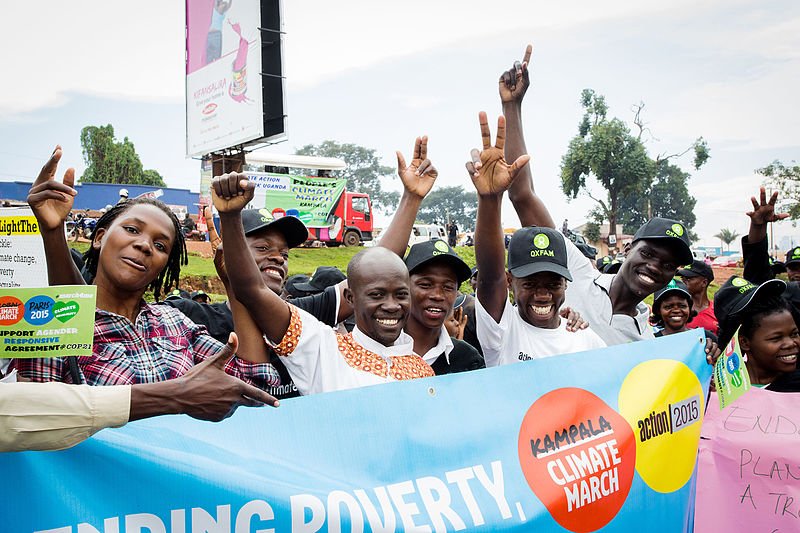
On 11th November 2024, police officers arrested five environmental activists who staged a protest against the destruction of the Lwera wetland by alleged Chinese investors. The demonstrators, affiliated with Weka-Afri Sustainable Biodiversity and Food Security Foundation, were intercepted near Kitgum House on Jinja Road while marching under the banner “Save Lwera Wetland from Destruction.” Holding placards and chanting slogans, the activists condemned the National Environment Management Authority (NEMA) for failing to protect Uganda’s wetlands. The protest escalated into running battles with police, leading to the arrest of five individuals who were detained at Central Police Station (CPS) Kampala.
Separately, on 11th November 2024, police arrested 15 activists protesting Uganda’s ongoing oil developments and charged them with common nuisance. The young Ugandans protested the East African Crude Oil Pipeline (EACOP), citing threats to the environment and local livelihoods. Kampala Metropolitan Police spokesperson Patrick Onyango confirmed the arrests.
Similarly, authorities in Kampala arrested 11 environmentalists on 26th February 2025 during a protest at the European Union Mission against the EACOP. The protesters, members of the Students Against EACOP Uganda group, sought to deliver a petition to the head of the EU delegation, urging the bloc to take action against the controversial $5 billion project. Police charged the activists with “common nuisance” and remanded them to Luzira Prison. Their demonstration aimed to highlight the environmental and social risks associated with EACOP, including threats to biodiversity, displacement of communities, and long-term ecological damage.
Expression
On 26th February 2025, two masked officers from Uganda’s Joint Anti-Terrorist Task Force (JAT) violently attacked Ibrahim Miracle, a journalist with Christian broadcaster Top TV, as he covered the arrest and beating of an opposition candidate ahead of a parliamentary by-election in Kampala. One of the officers forcefully seized Miracle’s camera and ordered him to stop filming. During the attack, Miracle sustained serious facial injuries, including a fractured orbital bone, and required hospitalisation and two surgeries. The assault sparked outrage, prompting lawmakers to raise the issue in Parliament the following day. In response, Uganda’s Trade Minister David Bahati pledged a government investigation. The Kampala Metropolitan Police spokesperson Luke Owoyesigyire also confirmed that authorities were aware of the case and were waiting to obtain Miracle’s statement.
On 3rd March 2025, police officers assaulted Nation Media Group camera operator Stephen Kibwiika while he was covering the Kawempe North by-election near the NUP headquarters. Despite clearly identifying himself with a “Press” vest, officers struck him with batons, causing severe ankle injuries that left him unable to walk properly for days. Similarly, on 4th March 2024, around eight officers forcibly restrained NMG reporter Steven Mbidde and dragged him to the ground as he broadcast live coverage of the detention of NUP supporters. Kibwiika denounced the officers’ actions as a calculated attempt to silence the press and restrict the flow of information. He argued that the security forces deliberately forced journalists to delete footage or surrender their equipment, undermined media freedom, and denied the public its right to access independent and accurate reporting.
On 13th March 2025, security forces violently assaulted and intimidated at least 12 journalists who were reporting on the Kawempe North by-election in Uganda. The coordinated attacks targeted members of the press carrying out their professional duties and represented a serious violation of press freedom and fundamental human rights. Masked soldiers beat New Vision reporter Ibrahim Ruhweza using batons and gun butts. They then detained him and his colleague, Isaac Nuwagaba, in an unmarked vehicle. During their detention, soldiers forced them to delete all video footage and photographs. These actions not only violated their right to work but also obstructed the public’s access to truthful reporting on the electoral process. At a polling station, several soldiers physically assaulted Hasifah Nanvuma, a reporter with Spark TV under Nation Media Group. They struck her repeatedly on the back and arms as she reported live from the scene. Nanvuma was wearing a vest clearly labelled “Press,” yet this identification did not prevent the attack.
Security personnel detained photojournalist Abubaker Lubowa, camera operator Denis Kabugo, and reporter Raymond Tamale, also with Nation Media Group. The soldiers held them in an unmarked vehicle for four hours. Lubowa later reported that the soldiers blindfolded and beat them on the head, arms, legs, and ribs. He also stated that the officers confiscated their phones and watches and destroyed their cameras. Journalists working for NBS Television also suffered violent attacks. Security forces assaulted photojournalist Francis Isano, camera operator Hassan Wasswa, and reporter Hakim Wampamba. Isano sustained serious injuries that required hospitalisation. He remained under medical care for several days following the assault. In another disturbing incident, unknown individuals attacked Uganda Broadcasting Corporation’s camera operator, Jahiem Jamil Ssekajja, while he was filming at a polling station. They struck him with electrical wires, leaving visible welts on his body. Ssekajja later developed a fever due to his injuries.
These incidents reflect an alarming disregard for press freedom and a broader pattern of repression targeting journalists in Uganda, including targeted assaults on independent media and journalists covering electoral events. In a brief statement, acting military spokesperson Chris Magezi announced that the armed forces had opened investigations into the alleged assaults and confiscation of journalists’ equipment. However, journalists and rights defenders continue to express concern over systemic impunity for security forces accused of violating press freedoms.