This update covers developments relating to the freedoms of expression, association and peaceful assembly in Venezuela from November 2024 to May 2025.
General
Venezuela’s 2025 elections marked by repression
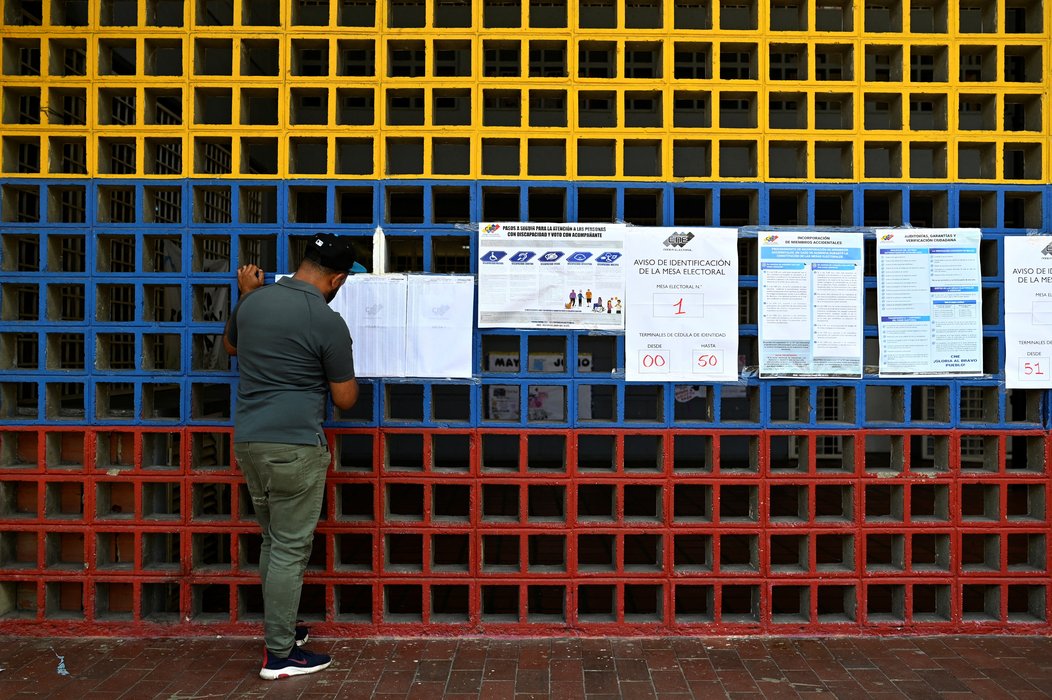
On 25th May 2025, Venezuela held elections for the National Assembly, regional governorships and local legislatures. The National Electoral Council (CNE), the state authority responsible for organising and certifying elections, reported that the ruling coalition, the Simón Bolívar Great Patriotic Pole, obtained 82.6 per cent of the parliamentary vote and won 23 of the country’s 24 governorships.
For the first time, ballots also included positions linked to the Essequibo territory, a resource-rich area internationally recognised as part of Guyana but claimed by Venezuela. This step represented a further escalation of a long-standing territorial dispute and occurred while proceedings remain pending before the International Court of Justice (ICJ).
The CNE reported voter turnout of 42 per cent, an increase from the 30.5 per cent recorded in the 2020 parliamentary elections. Opposition groups challenged these figures and estimated abstention at approximately 85 per cent. The electoral process took place without independent international electoral observation.
The pre-election period coincided with a new wave of repression against civil society. In the days preceding the vote, security forces reportedly arbitrarily detained more than 70 people, including human rights defenders, opposition figures, lawyers and journalists. Authorities alleged that those detained planned to disrupt the electoral process (see below).
Earlier, in January 2025, Nicolás Maduro began a controversial third term as president. During this period, authorities used incommunicado detention and broadly framed national security charges against prominent human rights defenders (see below). This followed a fraudulent 2024 electoral process marked by protests and a documented increase in repression. For example, in January 2025, the Inter-American Commission on Human Rights (IACHR) published a report documenting concerns about the lack of electoral transparency and serious human rights violations, and issued recommendations to restore democratic guarantees.
These developments further deepened Venezuela’s prolonged crisis, in a country devastated by years of economic collapse and political oppression.
🇻🇪Venezuela: The 25 May elections, held earlier than scheduled, took place in a deeply deteriorated political context following last year’s fraudulent presidential election. @fanzinero of @LabPazVe speaks on this.https://t.co/apN8R0at2G #CIVICUSLens pic.twitter.com/C7jhHUzzaH
— CIVICUS (@CIVICUSalliance) June 4, 2025
Civil society under pressure
According to data published by the Venezuelan civil society organisation CIVILIS, during the first quarter of 2025, documented civic space violations disproportionately affected specific segments of civil society. Political organisations accounted for the highest share of cases (41.7 per cent), followed by journalists and media outlets (17.5 per cent) and human rights organisations (13.6 per cent). This distribution points to sustained pressure on actors central to political participation, public debate and accountability.
Restrictions on the freedom of association constituted the most frequently affected right (56.7 per cent), indicating continued interference with organising and collective action. Violations of the right to participation (45.8 per cent) and freedom of expression (28.9 per cent) followed. Police forces appeared as the primary alleged perpetrators in 70 per cent of cases, while judicial and administrative authorities featured in 43.6 per cent.
Association
HRDs and opposition leaders at risk as enforced disappearances and arbitrary detentions continue
Since the fraudulent 2024 presidential elections, systematic persecution against HRDs, journalists and opposition leaders has intensified. As of 5th May 2025, national organisations have recorded at least 894 political prisoners and 66 missing persons. The cases summarised below illustrate patterns of arbitrary detention, enforced disappearance and other human rights violations:
On 7th January 2025, authorities arbitrarily detained Carlos Correa, director of the freedom of expression organisation Espacio Público. A prominent journalist and defender, Correa has led Espacio Público since 2002, promoting freedom of expression, association, and access to information. Over the past two decades, he has been the target of physical assaults, smear campaigns, and public threats by senior government figures for denouncing human rights violations.
The following day, at least 85 civil society organisations, including CIVICUS, expressed concern and called on the authorities to clarify Correa’s situation, ensure his physical and psychological integrity, guarantee communication with family members and legal counsel of his choice, and lift all restrictions on his liberty in accordance with due process guarantees and international human rights standards.
His whereabouts remained unknown for eight days, despite repeated requests for information from his family and legal representatives. Two days later, officials took him before an antiterrorism court without access to trusted legal counsel or the ability to communicate externally. Yet authorities continued to deny knowledge of his location, even as it rejected a habeas corpus petition filed on his behalf. Throughout this period, Correa remained detained at a facility operated by the Bolivarian National Intelligence Service (SEBIN) in El Helicoide, a notorious torture centre in Caracas.
On 16th January 2025, authorities released Correa. However, they did not provide access to the case file or clear information on the legal basis for his detention. Authorities imposed precautionary measures, but they did not fully disclose their scope or conditions.
#Venezuela 🇻🇪: We demand the immediate release of @espaciopublico's Director, Carlos Correa, abducted amid ongoing human rights violations surrounding the irregular by-elections & presidential inauguration.
— CIVICUS (@CIVICUSalliance) January 8, 202
We stand with Carlos & all human rights defenders.#LiberenACarlosCorrea pic.twitter.com/21ncAimxft
In a separate case, on 9th May 2025, Eduardo Torres, a lawyer with the Venezuelan Program Education-Action on Human Rights (PROVEA), was forcibly disappeared for 96 hours. His detention was only acknowledged following public pressure from civil society and a statement by UN High Commissioner for Human Rights Volker Türk. On 13th May 2025, the Attorney General linked him, without formal charges, to alleged conspiracy, criminal association, terrorism and treason in relation to parliamentary and regional elections.
Prior to his disappearance, Torres had been harassed by Venezuelan security forces being granted precautionary measures by the IACHR since April 2024. In May and June 2025, several human rights organisations, including CIVICUS, called on the authorities to disclose Torre’s whereabouts. Front Line Defenders also issued an alert highlighting his disappearance and the broader risks faced by human rights defenders in Venezuela.
Organizaciones internacionales exigen el cese de la represión contra quienes defienden derechos humanos en Venezuela.
— PROVEA (@_Provea) May 30, 2025
Alertan de criminalización para desacreditar y restringir la labor, además de prácticas que pueden constituir crímenes de lesa humanidad. https://t.co/AyJR1cmEUx
The pattern extends to labour activists. On 9th January 2025, security forces arbitrarily detained labour activist Juan Valor as he left his home in San Félix, Bolívar state. According to relatives, the detention occurred as he prepared to attend an opposition mobilisation ahead of the presidential inauguration. For more than 24 hours, officials withheld information on his whereabouts. Relatives later learned that authorities held him at a facility of the National Anti-Extortion and Kidnapping Command (CONAS).
On 11th January 2025, a court ordered his pretrial detention at the same site and charged him with terrorism, incitement to hatred and resistance to authority. Authorities assigned a public defender and barred private legal representation, restricting his right to an effective defence.
Valor is a labour leader in the Guayana industrial region and a former member of the Single Trade Union of Workers in the Steel Industry and Related Industries (Sindicato Único de Trabajadores de la Industria Siderúrgica y sus Similares). On the same day, security forces also arbitrarily detained Romel Zabala, a worker at the state-owned aluminium company Bauxilum, following an opposition mobilisation in Puerto Ordaz.
Trade unions and labour organisations publicly criticised the detentions, raising concerns about the use of terrorism-related charges against labour activists and protesters.
On 10th January 2025, the day of Nicolás Maduro’s inauguration, agents of the Bolivarian National Intelligence Service (SEBIN) arbitrarily detained Noel Vidal Álvarez Camargo, a 65-year-old businessman and former president of Fedecámaras and Consecomercio, at a private residence in Miranda state. Officers reportedly carried out the arrest without a warrant or explanation and withheld information about his whereabouts until 7th February 2025, placing him in a situation that may amount to enforced disappearance.
Authorities later charged Álvarez Camargo with incitement to hatred, conspiracy and terrorism during remote hearings. Despite formally appointing private legal counsel, courts have refused to recognise his lawyer, effectively denying his right to defence. Since March 2025, authorities have reportedly held him incommunicado at El Helicoide, while information received indicates a serious deterioration in his health and lack of clarity regarding access to adequate medical care.
Relatives filed two constitutional challenges (amparo) before the Supreme Tribunal of Justice, challenging violations of due process and seeking urgent health-related measures; authorities have not responded. In early July 2025, the IACHR granted precautionary measures, finding that his rights to life and personal integrity face a serious and urgent risk.
On 22nd May 2025, unidentified security forces arbitrarily detained Lourdes Villarreal, a teacher and labour activist, in Caracas. The detention occurred as she left her home in the La Pastora neighbourhood to go jogging near the Panteón Nacional. Witnesses reported that a white vehicle intercepted her outside her residence and forced her inside. In response, Venezuelan civil society organisations called on the authorities to clarify her whereabouts and the legal basis for her detention.
Villarreal serves as a spokesperson for Formación de Dirigentes Sindicales, a civil association linked to labour organising, and has played a visible role in sustained protests by education workers. She has publicly demanded salary increases, respect for collective bargaining agreements and improved working conditions for teachers, administrative staff and pensioners. On 1st May, International Workers’ Day, she participated in demonstrations against declining wages and employment benefits in the public education sector. In the months preceding her detention, Villarreal publicly challenged senior officials.
Opposition figures have also been targeted. On 23rd May 2025, security forces arbitrarily detained Juan Pablo Guanipa in Caracas. Guanipa is a senior figure in the opposition party Primero Justicia and a close ally of opposition leader María Corina Machado. The detention took place two days before the parliamentary and regional elections and formed part of a broader security operation targeting opposition figures in the lead-up to the vote.
Guanipa, a lawyer and former governor-elect of Zulia state, also served as First Vice-President of the National Assembly. He had remained in hiding for several months amid fears of arrest following Venezuela’s 2024 election results. He had not appeared publicly since August 2024, when he took part in an opposition protest shortly before authorities detained fellow opposition figure Biagio Pilieri. Shortly after his detention, a message posted on Guanipa’s social media account stated that security forces had “kidnapped” him and that he would join other detained opposition leaders.
Diosdado Cabello, Minister of Interior, Justice and Peace, later confirmed the detention. He accused Guanipa of leading a “terrorist network” allegedly planning attacks during the elections. Authorities claimed they had seized electronic devices and documents linked to the alleged plot and announced increased security measures around diplomatic missions.
Hermanos, si están leyendo esto es porque he sido secuestrado por las fuerzas del régimen de Nicolas Maduro.
— Juan Pablo Guanipa (@JuanPGuanipa) May 23, 2025
Por meses, yo, como varios venezolanos, he estado en la clandestinidad para mantener mi seguridad. Lamentablemente, mi tiempo en resguardo llegó a su fin.
A partir de… pic.twitter.com/DvS38DULix
On 18th December 2024, opposition party Vente Venezuela reported the enforced disappearance of Ramón Bejarano, a human rights defender and regional coordinator of Citizens’ Associations for the party in Bolívar state. Relatives and colleagues lost contact with Bejarano on 17th December 2025, the day he was scheduled to attend a meeting with pensioners, which he did not reach. As of the latest information, authorities have not disclosed his whereabouts or indicated whether any legal proceedings have been initiated against him.
Bejarano’s disappearance occurred amid a broader pattern of repression in Bolívar state. Human rights organisations reported that his case marked the fourth detention or disappearance of an opposition political figure in the state since 10th December 2024. Previous cases included the arrests of Jorge Francisco Sambrano, linked to Acción Democrática, and Álvaro Mora and Edgar Sarabia, both associated with Vente Venezuela. At the local level, Bejarano was known for defending the labour rights of public sector workers and supporting pensioners’ demands for fair wages and contractual benefits.
On 10th December 2024, state security forces arbitrarily detained Jesús Alexander Armas Monasterios, a former Caracas councillor (2013–2018), political activist and human rights defender, in Caracas. Six hooded, armed men in uniforms without official insignia abducted him from a café, where he was meeting a colleague to discuss support for relatives of political prisoners and allegations of human rights violations. The men did not identify themselves or present a warrant and took him away in an unmarked vehicle.
The detention followed public accusations by Diosdado Cabello, Minister of the Interior and Justice, who named Armas on his television programme “Con el mazo dando” on 4th December 2024, alleging links to opposition activities associated with María Corina Machado. After the detention, authorities repeatedly denied his detention at the SEBIN and General Directorate of Military Counterintelligence (DGCIM) facilities. Relatives filed complaints for enforced disappearance and attempted to submit habeas corpus petitions, but courts refused to receive them.
On 17th December 2025, Armas’s partner reportedly learned that he was being held at a Bolivarian National Police (PNB) detention centre and had been tortured in a clandestine SEBIN facility. Two days later, officials stated that he was no longer there and provided no information on his transfer or whereabouts. In late December 2024, the IACHR granted precautionary measures in his favour after finding that he faced a serious and urgent risk of irreparable harm to his life and personal integrity.
Jesús Armas’ case is yet another stark reminder that Venezuela remains a dangerous place for those who stand for democracy and human rights. Other similar cases like that of Rocio San Miguel, Javier Tarazona, Kennedy Tejeda, and thousands of others make it very clear.
- Isabel Carlota Roby, senior staff attorney at RFK Human Rights.
Civil society organisations targeted by senior official
On 28th May 2025, the Minister of Interior, Justice and Peace, Diosdado Cabello, publicly vilified several civil society organisations during a televised press conference broadcast on the state-run channel Venezolana de Televisión. He alleged that non-governmental organisations, including Foro Penal, Médicos Unidos de Venezuela and PROVEA, had links to terrorist structures.
The minister claimed that these organisations participated in destabilisation efforts surrounding recent regional elections (see above), including alleged plans to place explosives in hospitals and polling stations. During the broadcast, officials displayed an organisational chart naming individuals and groups. Those referenced included Eduardo Torres Muñoz of PROVEA and Médicos Unidos de Venezuela, as well as a photograph of Alfredo Romero, president and director of Foro Penal.
Cabello further alleged that those named had received funding from the United States Office of Foreign Assets Control and from drug trafficking networks. He also accused them of involvement in arms and explosives trafficking and of planning attacks against the embassies and residences of Colombia, Spain and France, as well as United Nations offices in Venezuela. Authorities did not present judicial evidence to substantiate these claims during the press conference.
The statements occurred amid reported harassment of Foro Penal and its members, including Alfredo Romero, one of the Venezuelan lawyers accredited to litigate before the International Criminal Court.
Alerta 🚨
— PROVEA (@_Provea) May 28, 2025
Rechazamos las acusaciones del ministro de Interior de Venezuela, Diosdado Cabello, quien señala a PROVEA -junto a otras ONG de derechos humanos- de formar parte de un supuesto plan “terrorista”.
Esta criminalización busca desacreditar el trabajo de denuncia y… pic.twitter.com/BZenq8nxBV
Over 1,700 attacks against human rights defenders reveal state policy to dismantle civic space
On 20th March 2025, the Observatory for the Protection of Human Rights Defenders, a joint programme of the World Organisation Against Torture (OMCT) and the International Federation for Human Rights (FIDH), released a report documenting a systematic state policy to suppress civic space in Venezuela through arbitrary detentions, censorship, judicial persecution, and restrictive legislation.
Between 2022 and 2023, the Observatory recorded more than 1,730 attacks against human rights defenders (HRDs) and civil society organisations, including harassment, defamation, intimidation, and forced disappearances. The report found that over 78 per cent of these violations were perpetrated by state actors, primarily targeting those involved in labour and social mobilisation, as well as journalists and opposition figures during the 2024 presidential elections.
The study highlighted that workers’ protests in the health and education sectors were met with systematic repression by security forces and pro-government civilian groups, resulting in the arbitrary detention of at least 60 trade union leaders and widespread surveillance and intimidation.
The Venezuelan government is subjecting its population to a torturing environment, creating a collective and individual experience that conditions the behaviour of the populace through terror and fear of being subjected to human rights violations, thus inhibiting political participation and freedom of expression of Venezuelans.
- Olga Guzman, Head of the Americas Desk at the World Organisation Against Torture (OMCT)
Judicial sanctions against lawyer raise concerns over reprisals for legal action
On 4th November 2024, Venezuela’s Supreme Tribunal of Justice (TSJ) imposed financial and professional sanctions on lawyer María Alejandra Díaz Marín through Constitutional Chamber ruling No. 603. The court fined her the equivalent of 100 times the highest official exchange rate set by the Central Bank of Venezuela, temporarily suspended her licence to practise law and ordered the Disciplinary Tribunal of the Caracas Bar Association to initiate disciplinary proceedings.
Authorities have not published the full judgment, limiting scrutiny of the court’s reasoning. The TSJ website states only that Díaz Marín’s conduct was deemed “reckless”, citing Article 121 of the Organic Law of the Supreme Tribunal of Justice, which allows sanctions for abusing judicial remedies or disrupting judicial activity. The ruling does not specify which actions met this threshold. The sanctions followed a constitutional challenge (amparo) filled by Díaz Marín, seeking to compel the CNE to publish complete, disaggregated results of the July 2024 presidential election.
According to civil society organisations, the TSJ’s organic law does not expressly provide for the temporary suspension of a lawyer’s licence as a sanction in these circumstances. As of the latest information, disciplinary proceedings had not commenced, reportedly because authorities have not released the full ruling. Any sanction arising from that process would be appealable only before the same TSJ chamber that issued the original decision.
Furthermore, on 9th January 2025, Díaz Marín reported harassment, threats and a risk of detention. She alleged that authorities briefly detained family members to pressure her to surrender to security forces, invoking accusations that included terrorism and incitement to hatred.
New sweeping laws raise concerns about civic freedoms
On 15th November 2024, the National Assembly adopted the Law on Oversight, Regularisation, Action and Financing of Non-Governmental Organisations and Non-Profit Social Organisations, which entered into force upon its publication in the Official Gazette on the same day. The Law establishes a regulatory regime applicable to all non-governmental and non-profit social organisations operating in or from Venezuela, irrespective of their denomination or mission, except for entities already governed by special statutory frameworks, such as trade unions and professional bodies.
Article 5 circumscribes the scope of protected associative purposes by limiting eligible organisations to those pursuing charitable, social, humanitarian, cultural, educational, environmental or similar aims, while expressly excluding organisations oriented towards economic profit or partisan political objectives.
The Law conditions the acquisition of legal personality on prior registration before the Autonomous Service of Registries and Notaries (SAREN). Registration requires the submission of extensive constitutive documentation, including detailed information on organisational objectives, internal governance structures, asset composition, and the existence or expectation of foreign funding. In addition, the Law mandates ongoing compliance obligations, notably annual accountability to members, tax and employer registration where applicable, and compulsory notification to State authorities of all funding and donations for purposes of verifying the “lawfulness” of funds.
It further provides for the creation of a National Register under the ministry with competence in matters of justice, without clarifying whether registration in this database is automatic, ex officio, or subject to an additional application by organisations.
The Law's enforcement architecture confers broad supervisory and control powers on the Executive. Article 26 requires organisations, once registered, to notify the public registry of a wide range of “relevant acts” through ordinary or extraordinary assembly records. Chapter IV extends the regulatory regime to foreign-domiciled organisations seeking to operate in Venezuela, subjecting them to prior registration before the ministry responsible for foreign affairs, additional regulatory norms yet to be adopted, and full subjection to State supervision and control. Foreign nationals involved in such organisations are further subjected to domestic migration law, thereby linking associational activity with immigration enforcement.
The sanctioning framework, set out in Chapter V, defines multiple administrative offences and establishes pecuniary sanctions, revocation of registration for foreign organisations, and expulsion of foreign nationals involved in sanctioned entities. Sanctions are imposed through the summary procedure provided in the Organic Law on Administrative Procedures, while judicial review is limited to a nullity action before the administrative courts within a 30-day period. This shortened limitation period contrasts sharply with the general 180-day term provided under the Organic Law of the Administrative Jurisdiction, thereby restricting effective access to judicial remedies.
The transitional provisions impose retroactive compliance burdens on already-registered organisations. Existing organisations must update registry information within 90 days and amend their statutes within 180 days to conform to the new requirements, under penalty of nullity of registration. Although the Law temporarily exempts these acts from registration fees, the consequence of non-compliance, loss of legal personality, raises serious concerns regarding legal certainty, non-retroactivity, and proportionality.
As analysed by Acceso a la Justicia, a civil society organisation dedicated to monitoring justice administration and the rule of law in Venezuela, the Law does not resolve pre-existing regulatory obstacles faced by civil society organisations but instead introduces additional burdens, inconsistencies, and regressive elements. These include the transformation of registration from a declarative to an authorisation-based regime, the erosion of organisational autonomy, the risk of double sanctioning in violation of the principle of non bis in idem, and the establishment of confiscatory fines and dissolution mechanisms that are disproportionate and without equivalent precedent in Venezuelan administrative law.
According to the Washington Office on Latin America (WOLA), Venezuela’s new NGO law and U.S. funding freeze are a death blow to the country’s civil society:
The NGO Oversight Law, coupled with the Trump administration’s rollback of U.S. foreign assistance allocated through cooperation programs with multilateral agencies and international organizations, has dealt a one-two punch to Venezuelan civil society. Hundreds of organizations now face the grim choice of going underground, relocating abroad, or shutting down operations altogether. Meanwhile, the White House’s efforts to discredit USAID and other channels of foreign funding have emboldened Venezuelan authorities, who have long sought to justify a crackdown against internationally funded human rights monitors and aid groups
- WOLA.
On 29th November 2024, the National Assembly adopted the Organic Law Liberator Simón Bolívar against the imperialist blockade and in defence of the Bolivarian Republic of Venezuela (commonly referred to as the Simón Bolívar Law). Lawmakers passed it through a fast-tracked legislative process in response to the Banning Operations and Leases with the Illegitimate Venezuelan Authoritarian Regime Act (the BOLIVAR Act), which the United States House of Representatives approved in early November 2024. The BOLIVAR Act would bar US government bodies from hiring individuals or entities that maintain business dealings with the government of Nicolás Maduro.
The stated purpose of the law is to protect Venezuela’s sovereignty, independence, territorial integrity, self-determination and human rights against what it defines as “unilateral coercive measures and other restrictive or punitive actions” adopted by foreign states, entities or individuals. The law characterises the promotion, support, invocation or participation in foreign sanctions or hostile measures as conduct that threatens national security and the rights of the population.
The law introduces a sweeping system of penalties targeting both individuals and legal entities found liable under its provisions. Sanctions include long prison terms, typically between 25 and 30 years; prolonged political disqualification from holding public office, in some cases amounting in practice to permanent exclusion; and a range of civil and administrative measures, such as heavy fines and the loss of property rights linked to the alleged conduct. In the case of foreign nationals, penalties may also include expulsion from the country. The law further classifies the offences as imprescriptible, allowing prosecution without any time limit.
Although authorities present the law as a protective instrument grounded in national defence and human rights, its content has raised concerns among legal experts and human rights organisations. Central to these concerns are the law’s broad and vague definitions of prohibited conduct and the absence of clear legal criteria to distinguish criminal acts from lawful expression, political advocacy or engagement with international actors. This lack of precision undermines legal certainty, a core component of the rule of law, and increases the risk of arbitrary enforcement.
Espacio Público, a Venezuelan freedom of expression organisation, has identified several systemic risks:
- The law may restrict freedom of expression and political participation, as peaceful protest, criticism of public policy or advocacy related to international measures could fall within the scope of criminalised conduct
- The threat of criminal sanctions, administrative penalties and possible licence revocation for media outlets may encourage self-censorship and reduce access to independent information.
- The severity of penalties, combined with vague procedural safeguards, raises concerns regarding due process guarantees, including the principles of proportionality and presumption of innocence, protected under national and international human rights law.
- The law grants authorities wide discretion in determining what constitutes prohibited conduct, increasing the risk of selective or discriminatory application against political opponents, activists, journalists and civil society organisations.
La Ley Simón Bolívar Contra el Bloqueo Imperialista y en Defensa de la República Bolivariana de Venezuela introduce restricciones severas que afectan la libertad de expresión, la participación política y el acceso a la información | #28dic https://t.co/xo0LWao2Cv
— Espacio Público (@espaciopublico) December 28, 2024
Authorities expand financial and sanctions controls affecting civil society
On 31st March 2025, the Superintendency of Banking Sector Institutions (SUDEBAN), the banking supervisor body, published Resolution No. 010-2025, establishing binding rules for banks on the management and supervision of risks related to money laundering, terrorist financing and the financing of the proliferation of weapons of mass destruction (AML/CFT/FPWMD). Authorities presented the resolution as part of Venezuela’s implementation of obligations arising from United Nations Security Council resolutions adopted under Chapter VII of the UN Charter and standards set by the Financial Action Task Force (FATF).
The resolution requires banks to apply a risk-based approach, including customer due diligence, identification of beneficial ownership, transaction monitoring and the reporting of suspicious activities. It also expands regulatory oversight by granting supervisory authorities broad inspection and enforcement powers over financial institutions.
Article 3 classifies non-governmental and non-profit organisations as Designated Non-Financial Businesses and Professions, defining them as entities considered vulnerable to misuse for AML/CFT/FPWMD purposes. While this classification departs from FATF terminology, under which non-profit organisations constitute a distinct category, it explicitly subjects non-governmental organisations to heightened control under the resolution.
Although the resolution refers to a risk-based approach and defines high, medium and low risk categories, it does not establish objective parameters for assigning risk levels. Instead, Article 41 authorises SUDEBAN to issue general or individual instructions determining risk assessment methodologies and outcomes. These instructions need not be published in the Official Gazette, limiting transparency and external scrutiny. At the time of reporting, authorities had not disclosed the criteria applicable to non-profit organisations, raising concerns regarding compliance with FATF Recommendation 8.
The resolution imposes a markedly disproportionate set of obligations on non-profit organisations. It subjects them to a higher number of mandatory actions than any other regulated entity and designates them as the only category to which specific “red flags” apply. These include indicators such as sudden changes in funding levels, cash handling or low-value transactions, factors that also apply to other high-risk sectors but which the resolution does not expressly attribute to them. Moreover, the resolution allows banks to request additional information from non-profit organisations without limitation, rendering compliance requirements effectively open-ended.
In cases where authorities or banks identify any of the designated red flags, the resolution mandates further investigative actions, including interviews and additional verification procedures, even where information overlaps with data already provided. The cumulative effect grants financial institutions wide discretion to impose escalating controls on non-profit organisations based on indeterminate criteria. By contrast, the resolution applies less stringent verification requirements to other higher-risk actors, including politically exposed persons.
An analysis by the International Center for Not-for-Profit Law (ICNL) found that the framework may disproportionately restrict freedom of association by subjecting non-profit organisations to excessive and poorly defined financial scrutiny under a uniform risk regime:
- Restrictions on freedom of association: “The Rules require banking institutions to supervise NPOs’ financing on vague and excessive grounds, and to conduct investigations that violate NPOs’ right to receive and use funding.”
- Non-compliance with international standards for countering the financing of terrorism: “Rules require banking institutions to use a “one-size-fits-all” approach to their NPO clients, applying disproportionate measures to mitigate terrorism financingthreats and subjecting NPO activities to a supervisory regime more appropriate for entities that present a higher level of risk.”
This approach diverges from FATF guidance, which cautions against indiscriminate de-risking and calls for proportionate, targeted measures that safeguard legitimate civil society activity.
On 3rd April 2025, the Ministry of Interior, Justice and Peace and the Ministry of Economy and Finance jointly issued a resolution that sets out administrative procedures for implementing decisions of the United Nations Security Council. The framework includes mechanisms for the designation and exclusion of individuals and entities, as well as the application of provisional measures such as asset freezes and access restrictions. Authorities presented the resolution as a domestic implementation tool linked to Venezuela’s obligations under Chapter VII of the UN Charter.
According to legal experts, beyond transposing UN obligations, however, the resolution authorises the Executive to create national designation lists of individuals and entities allegedly linked to terrorism or the proliferation of weapons of mass destruction, even in the absence of an explicit UN Security Council or sanctions committee listing. Persons or entities included on these national lists may face asset freezes and other restrictive measures without prior judicial authorisation.
Human rights organisations have warned that the resolution’s broad scope and indeterminate criteria increase the risk of arbitrary application. The absence of clear judicial oversight and effective remedies raises concerns regarding due process and property rights, protected under international human rights instruments. These risks appear particularly acute for civil society organisations, including humanitarian and human rights groups, which depend on access to financial services to carry out their work.
Expression
Journalists arbitrarily detained while covering anti-government protests
On 9th January 2025, security forces in Maracaibo, Zulia state, arbitrarily detained journalist Leandro Palmar, news director of the University of Zulia’s Luz Radio, and his assistant Belises Salvador Cubillán while they were covering anti-government demonstrations. Authorities denied both journalists access to private legal representation and assigned them a state-appointed public defender.
Two days later, a criminal court ordered their continued detention on preliminary charges of terrorism, conspiracy, incitement to hatred and disturbance of public order, according to the National Association of Journalists (CNP) and the National Press Workers Union (SNTP).
Their detention took place amid a broader wave of repression surrounding protests against President Nicolás Maduro’s third-term inauguration (see General). In the days preceding the inauguration, authorities arbitrarily detained at least 18 journalists.
Journalists arbitrarily detained for reporting on politics and crime
On 20th February 2025, national intelligence agents arbitrarily detained Rory Branker, editor of the digital news outlet La Patilla, at his home in Caracas. The detention followed a post Branker published in December 2024 criticising the government’s release of political detainees after the contested re-election of Nicolás Maduro in July 2024. Shortly after the detention, unidentified officers returned to his residence and seized electronic devices. For more than a week, authorities failed to provide official information regarding his whereabouts.
Several days later, Diosdado Cabello, Minister of Interior, Justice and Peace, confirmed during a televised programme that authorities were holding Branker. He accused him of extortion in connection with the alleged dissemination of false information. As of the latest reports, authorities had not informed Branker’s family of his place of detention.
The SNTP and other press freedom organisations raised concerns that the detention forms part of a broader pattern of arbitrary detention of journalists, which they describe as a strategy of “punishment as warning” against critical reporting.
In a separate case, on 4th March 2025, authorities arbitrarily detained Román Camacho, a crime reporter for the digital outlet Contrapunto and a volunteer union delegate, in Caracas. According to the union, officers took Camacho earlier that day and transferred him around midday to a facility of the Forensic Criminal Investigations Police (CICPC) in El Hatillo, in the metropolitan area of Caracas. The SNTP stated that the detention appeared linked to Camacho’s reporting on a homicide in the José Félix Ribas neighbourhood of Petare, a densely populated parish in the municipality of Sucre, Miranda state.
On 8th April 2025, security forces in Caracas arbitrarily detained journalists Nakary Mena Ramos and Gianni González, who work for the independent news outlet Impacto Venezuela, after they published a report on rising crime rates in the capital’s Plaza Venezuela area. The journalists went missing near a public square in downtown Caracas before authorities located them in detention. Two days later, a criminal court ordered Mena’s pre-trial detention at a women’s prison outside Caracas on charges of “hate crimes” and “publishing fake news”, citing preliminary allegations linked to their reporting. González was sent to El Rodeo II prison, also near the capital. Authorities denied both journalists access to private legal counsel and assigned them state-appointed public defenders.
On 23rd May 2025, security forces arbitrarily detained Carlos Marcano, a journalist and university lecturer, during a pre-dawn raid on his home in the Miranda neighbourhood of Sucre municipality in Caracas, Venezuela’s capital. The SNTP reported that officers detained Marcano after searching his residence without disclosing a warrant.
According to media reports, authorities linked his detention to a broader security operation ahead of the May regional and legislative elections, after Diosdado Cabello publicly accused him of involvement in an alleged plot to “sabotage” the elections. Marcano remained missing to his family and colleagues for more than a week after his detention, with authorities providing no information on his location during that period. Human rights and press freedom organisations described this period of unconfirmed detention as consistent with enforced disappearance.
According to data compiled by Instituto Prensa y Sociedad Venezuela (IPYS Venezuela), authorities detained at least 16 journalists between 2024 and 2025, with eight remaining in detention at the time of reporting. Several detentions coincided with the selective release of other detainees, reinforcing what civil society groups describe as a “revolving door” pattern.
Civil society organisations documented that authorities often carried out these detentions without due process safeguards, frequently invoking charges such as terrorism or incitement to hatred, and that the practice has contributed to self-censorship, forced displacement and exile among journalists.
Asociación gremial de Venezuela denuncia detención del periodista Román Camacho en Caracashttps://t.co/yftvLwwnb5
— LatAm Journalism Review (@LatAmJournalism) March 6, 2025
Journalist faces online harassment after reporting on elections in Caracas
On 25th May 2025, journalist Beatriz Adrián faced online harassment in connection with her reporting on Venezuela’s regional and legislative elections in Caracas. The attacks followed a live report from the Colegio Santo Tomás de Villanueva, where Adrián stated that approximately 100 of around 5,000 registered voters had cast ballots at the time of her coverage.
Political activist Indira Urbaneja publicly challenged Adrián’s reporting through posts on social media platforms X and Instagram, criticising her for carrying out journalistic work during the voting process. After the National Association of Journalists (CNP) expressed solidarity with Adrián and defended her professional role, Urbaneja escalated her remarks. She described the CNP as a “cloaca that should be blown up” and accused it of committing “hate crimes”.
Such language carries particular weight in the Venezuelan context, where authorities have previously used accusations of “hate crimes” to initiate criminal proceedings against journalists, human rights defenders and political opponents, often without due process guarantees. The freedom of expression organisation Espacio Público warned that verbal attacks and smear campaigns against journalists constitute forms of harassment that restrict freedom of expression and undermine the public’s right to information.
Authorities shut down last AM radio station in Táchira, deepening information blackout
On 31st March 2025, authorities ordered the closure of Radio Mundial 860 AM, the last remaining AM radio station in Táchira state, a western border region with Colombia. The National Telecommunications Commission (CONATEL), the state telecommunications regulator, enforced the decision.
CONATEL declared the “extinction of domain” of the station’s broadcast frequency and ordered it off air. The regulator did not respond to explanations submitted by the station’s director, Nelson Chacín Fernández, regarding alleged administrative breaches. These explanations referred to mandatory state broadcast chains and recurrent electricity outages, which have repeatedly disrupted transmissions in the region.
Radio Mundial 860 AM played a key role in rural and remote communities by providing public-interest information on electricity supply, fuel availability and access to health services. The station also helped counter unauthorised radio broadcasts by armed groups, a practice previously documented by the civil society organisation Fundaredes. Its closure marked the fourth radio shutdown in Táchira in 2025, left the state without any AM broadcasters and resulted in the loss of employment for journalists and other media workers.
Journalists and civil society actors warned that the measure further restricts access to information in a border region already affected by frequent power cuts and limited internet connectivity. The CNP, Táchira branch, condemned the shutdown and highlighted its impact on freedom of expression, the right to information and the livelihoods of media workers.
Peaceful Assembly
Nationwide protests take place amid heavy security and internet disruptions
On 9th January 2025, thousands of opposition supporters demonstrated across Venezuela to protest the imminent inauguration of Nicolás Maduro for a third presidential term (see General). Protesters took to the streets one day before the swearing-in ceremony. The protests unfolded amid a heavy security presence at opposition gathering points and parallel pro-government marches organised by the ruling party.
In Carabobo state, security forces of the Bolivarian National Guard (GNB) dispersed a peaceful protest in Valencia with tear gas and other crowd-control measures. Opposition leader María Corina Machado, who had remained in hiding following post-election repression, was expected to appear publicly to lead the demonstrations. Authorities deployed heavily armed police and intelligence officers across Caracas, while government-aligned groups installed stages with amplified music near opposition rally points.
Participation increased as the day progressed, but mobilisation remained lower than during the mass post-election protests in July. Experts linked this to a climate of fear following violent repression after the election.
Civil society organisations reported sudden internet restrictions during the protest period. Independent monitors documented coordinated blocking of public DNS servers and access to virtual private network (VPN) services, extending earlier restrictions on platforms such as TikTok and other social media and censorship-circumvention tools.
According to data from Armed Conflict Location & Event Data Project (ACLED), opposition-led protests occurred in 21 of Venezuela’s 23 states in January 2025, with 72 protests recorded, compared with 20 protests in December 2024. Parallel demonstrations also took place abroad, with more than 60 protests in at least 14 countries organised by Venezuelans in the diaspora opposing Maduro’s government.
Families of political prisoners mobilise nationwide demanding releases and due process
Between 24th and 28th February 2025, relatives of political detainees and human rights defenders held a series of peaceful protests in Caracas under the banner of the Comité por la Libertad de los Presos Políticos en Venezuela (CLIPPVE). The actions formed part of the “Route for Justice and Freedom”, a coordinated mobilisation calling for the release of all political detainees, respect for due process guarantees and dignified detention conditions. According to CLIPPVE spokesperson Diego Casanova, participants planned to continue mobilising until authorities released all political prisoners.
Protesters organised the route around visits to key state institutions. On 24th February, protesters gathered outside the Palace of Justice, demanding the effective processing of habeas corpus petitions, respect for the right to legal counsel of choice and compliance with constitutional prohibitions on arbitrary detention and enforced disappearance. On 25th February, participants protested at the Public Defence Office, criticising its role in practices they said undermine the right to defence.
Further demonstrations took place at the Ombudsperson’s Office on 26th February, the Ministry for Penitentiary Services on 27th February, and the Attorney General’s Office on 28th February. At the final stop, protesters called for impartial investigations into allegations of torture, deaths in custody and politically motivated prosecutions.
CLIPPVE and participating organisations linked the “Route for Justice and Freedom” to wider concerns about the criminalisation of dissent, the use of counter-terrorism frameworks against protesters and persistent obstacles to peaceful assembly.
Protests in Caracas and Maracaibo address migrant deportations
On 18th March 2025, hundreds of people marched in Caracas in a demonstration organised by pro-government groups to protest the deportation of more than 200 Venezuelan migrants from the United States to El Salvador. The United States authorities carried out the deportations under the Alien Enemies Act of 1798, alleging links between those deported and the criminal group Tren de Aragua.
The march passed through central areas of the capital and ended outside the National Assembly, which remains under government control. Protesters carried placards calling for justice and freedom, with many asserting that the deported individuals were innocent.
Family members of deported migrants participated in the demonstration. Several reported losing contact with relatives after authorities informed them that deportation to Venezuela would take place. According to relatives, some detainees held valid work permits in the United States and were arrested during routine activities, including at their homes. Others stated that they later believed their relatives were being held in El Salvador after identifying physical characteristics in images circulating online.
Similar protests took place on 17 March in Maracaibo, Zulia state, where families also rejected allegations linking detainees to Tren de Aragua.
Workers and pensioners protest wages as security forces block march
On 1st May 2025, around 200 workers and pensioners gathered in Caracas to protest wages and social benefits as insufficient to meet basic needs. Protesters assembled in Plaza Venezuela on International Workers’ Day and called on the government of Nicolás Maduro to increase salaries and pensions and to negotiate collective agreements. Protesters also sought access to housing credit and improved social benefits, and they linked their demands to the cost of essential goods, including food.
The protest followed a government announcement increasing the so-called “integral minimum income” for public sector workers through bonuses, while retaining the legal minimum wage at its 2022 level. Union representatives argued that the wage policy undermines constitutional guarantees of a living wage and leaves workers and retirees unable to cover basic needs.
Security forces blocked the planned march and prevented protesters from advancing beyond Plaza Venezuela.