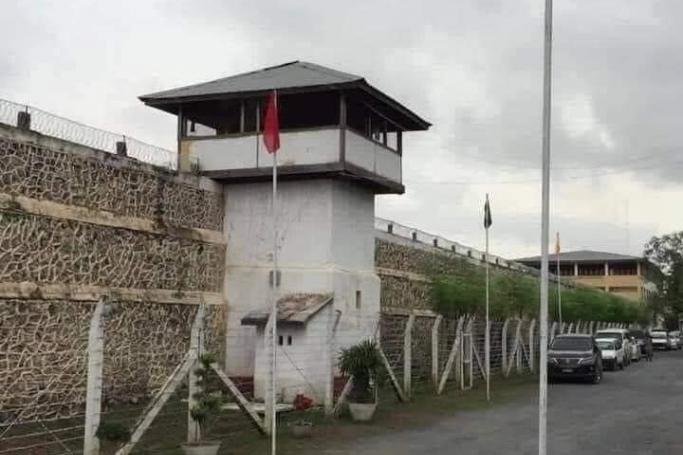
Myanmar’s civic space is rated ‘closed’ by the CIVICUS Monitor. Since the 2021 coup, thousands of activists and protesters have been detained on fabricated charges including terrorism, incitement and sedition. Many have been convicted by secret military tribunals in unfair trials and given harsh sentences, including the death penalty. Some have been tortured or killed. There has also been an unrelenting crackdown on the media.
UN High Commissioner for Human Rights Volker Türk addressed the Human Rights Council on 28th February 2025, and detailed the devastating toll of the ongoing conflict and economic collapse on civilians. He said that the number killed in violence in 2024 was the highest since the military coup in 2021. Over 1,800 civilians were killed in 2024, many in indiscriminate airstrikes and artillery shelling, with attacks on schools, places of worship and healthcare facilities having become routine. He also noted that nearly 2,000 people have died in custody since the coup, most due to summary executions and torture. Tens of thousands of Rohingya fled to Bangladesh in 2024, despite border restrictions.
On 25th May 2025, a new report by the UN human rights office (OHCHR) highlighted the worsening situation since the military coup, which derailed Myanmar’s democratic transition and ignited widespread armed resistance. It urged a multifaceted response to the crisis, including urgent humanitarian support, cross-border aid for displaced populations and increased political engagement with Myanmar’s democratic forces and emerging governance structures. It also emphasised the need for accountability through international justice mechanisms, including a referral of the situation to the International Criminal Court (ICC).
The junta declared the end of a state of emergency in parts of the country on 31st July 2025 as it ramped up plans for elections, which opposition groups have pledged to boycott, and monitors warn will be used to consolidate the junta’s hold on power. The elections will take place in both December 2025 and January 2026.
On 7th August 2025, the CSO Working Group on Independent National Human Rights Institution (Burma/Myanmar) (Working Group) and the Asian NGO Network on National Human Rights Institutions (ANNI) urged the Southeast Asia National Human Rights Institution Forum (SEANF) to immediately remove the junta-controlled Myanmar National Human Rights Commission from its network.
According to The Assistance Association for Political Prisoners (Burma), as of 14th August 2025, 22,304 political prisoners are currently in detention with 10,983 serving sentences.
In recent months, there have been continued reports of torture and ill-treatment of human rights defenders and political prisoners, leading to deaths in detention. Spontaneous protests continue to be reported but the culture of peaceful protest has been decreasing due to repression. The junta also imposed harsh new penalties for protesting its planned sham election. Journalists continued to be arrested, jailed and attacked while the junta blocked the entry of international journalists following the March 2025 earthquake.
Association
Torture and ill-treatment of human rights defenders
Human rights defenders in Myanmar have continued to face torture and ill-treatment in detention.
ILO urges the Myanmar military authorities to immediately release Thet Hnin Aung, General Secretary of MICS-TUsF https://t.co/kS26J0inW1 pic.twitter.com/JGLGJJfZop
— ILOAsiaPacific (@ILOAsiaPacific) July 14, 2023
In February 2025 it was reported that labour rights activist Thet Hnin Aung, the General Secretary of the Myanmar Industries Craft & Services Trade Union Federation (MICS - TUsF Myanmar), had been physically assaulted, leading to head injuries, and placed in solitary confinement inside the prison.
Thet Hnin Aung, a prominent trade union leader, was charged in 2021 with violation of Article 17/1 of the local “Unlawful Association Law” for his active participation in the Civil Disobedience Movement. He was sentenced to two years in prison, which he served in Insein Prison in Yangon and Zaymathwe Prison in Mon State.
After his two-year sentence, he was released on 26th June 2023 before being forcibly disappeared for five months. He was then charged under Article 52a, a Myanmar counter terrorism charge, and given the maximum sentence of seven years with hard labour following a secret trial. The conviction and sentence are most likely linked to his activism work and more so his involvement in the Civil Disobedience Movement.
Jailed protest leader Ko Wai Moe Naing has been transferred from Monywa Prison to Mandalay’s Obo Prison, ex-political prisoners said. He was arrested April 15, 2021, when junta troops rammed him with a car. He was jailed for 74 years on various charges. https://t.co/O6GINVbYKy pic.twitter.com/P7G1X4FvWA
— The Irrawaddy (Eng) (@IrrawaddyNews) June 13, 2025
According to the Political Prisoners Network – Myanmar (PPNM), Wai Moe Naing, a leading figure in the anti-coup movement and chairman of the Monywa University Students’ Union, was brutally beaten by prison staff upon arrival at Obo Prison in Mandalay. In their statement on 1st July 2025, PPNM reported that Wai Moe Naing was struck on the head with a metal rod, causing heavy bleeding and loss of consciousness. Despite the seriousness of his injuries, prison authorities failed to provide emergency medical care or transfer him to the prison hospital.
Wai Moe Naing is now being held in solitary confinement with his legs shackled, the group said. They also reported that prison officials have restricted family visits and banned the delivery of care packages.
He was among nearly 200 political prisoners who were transferred from Monywa Prison to Obo Prison on 12th June 2025. Upon arrival, many were reportedly subjected to unprovoked beatings by prison staff.
Wai Moe Naing is serving a combined sentence of 74 years in prison after being convicted on various baseless charges including sedition, unlawful assembly, abduction with the intent to murder, murder and treason, for his role in Monywa’s protests. He was detained in April 2021.
Deaths of political prisoners in detention
There have also been ongoing reports that political prisoners have died due to a lack of medical care, torture, ill-treatment and unlawful killings.
According to a statement from the Political Prisoners Network Myanmar (PPNM) on 25th February 2025, two political prisoners died in Obo Prison, Mandalay Region due to inadequate medical care.
Ko Aung Tun, a 28-year-old political prisoner, died on 18th February 2025 after developing severe sores that became infected. He was sentenced to three years under Section 505(a) of the Penal Code that broadly penalises “incitement” and “false news” and had been held in Obo Prison since 6th September 2022.
Daw San Yee, a 65-year-old political prisoner, died on 10th February 2025. She suffered from multiple health conditions, including high blood pressure, diabetes, heart disease, and liver disease. Arrested in April 2021, she was sentenced to 22 years in prison on 5th February 2022, under Sections 52(a) and 50(j) of the Counter-Terrorism Law.
According to ALTSEAN-BURMA, on 13th April 2025, in Magway Prison (Magway Region), prison guards shot dead two political prisoners and injured five inmates during an alleged riot inside the prison.
Ma Wut Yee Aung, a senior member of Dagon University’s Student Union, has been sentenced to four more years in prison, in addition to the three years she was given for alleged incitement in March 2022. She is in bad health in prison, the union said. #WhatsHappeningInMyanmar pic.twitter.com/iCQGROzZCK
— The Irrawaddy (Eng) (@IrrawaddyNews) June 28, 2023
On 20th July 2025, Ma Wut Yee Aung, a central executive committee member of the Dagon University Students’ Union, died from injuries reportedly sustained during torture while under interrogation in junta custody. According to political prisoners recently released from Insein Prison, 26-year-old Ma Wut Yee Aung suffered severe head injuries and possible brain trauma as a result of torture. These injuries reportedly caused her to lose consciousness frequently during her incarceration.
Ma Wut Yee Aung was arrested on 14th September 2021 and sentenced to three years under Section 505(a) of the Penal Code. On 27th June 2023, she was given an additional four-year sentence under Section 52(a), bringing her total prison term to seven years.
In the same month, the death in custody of Ko Pyae Sone Aung, an executive member of the National League for Democracy (NLD) chapter in Mon State’s Belin Township, was reported. He was arrested in January 2022 and given six years for alleged sedition and terrorism. Held at Thaton Prison, the 44-year-old had been suffering from hypertension, diabetes, and clogged arteries.
Ex-political prisoners Maung Tha Cho, 67, a writer, and anti-regime Buddhist monk Shwe Nyawa Sayadaw, 61, died on Thursday while being treated at hospitals in Yangon. Both were jailed for post-2021 coup activism and released in 2022. Read more: https://t.co/IwWFWuTCwR… pic.twitter.com/pCzOfXqf4x
— The Irrawaddy (Eng) (@IrrawaddyNews) July 10, 2025
Two former political prisoners - prominent writer Maung Tha Cho and anti-regime Buddhist monk Shwe Nya Wa Sayadaw - died in July 2025 while being treated at hospitals in Yangon. They had reportedly suffered from medical neglect while detained in prison. Maung Tha Cho was prosecuted under Section 505(a) of the penal code for two articles he wrote in 2020 criticising the military. Shwe Nya Wa Sayadaw was prosecuted for “offences against the state” under Section 505(b). Both were sentenced to two years’ imprisonment by the regime and released in November 2022.
On 5th August 2025, a coalition of 15 rights groups, including Amnesty International, Article 19 and Politics for Women Myanmar, released a joint public statement expressing concern over reports of an ever-worsening human rights crisis in Myanmar prisons. The letter condemned the military regime for its widespread use of torture and the systematic denial of healthcare to political prisoners, noting the rising number of deaths in detention.
UN adopts resolution on Rohingya crisis
On 5th July 2025, the UN Human Rights Council adopted a consensus resolution reaffirming the international community’s commitment to the protection of Rohingya Muslims and other minorities in Myanmar and calling for durable solutions to the ongoing crisis in Rakhine State.
The resolution, titled “Situation of Human Rights of the Rohingya Muslims and Other Minorities in Myanmar” was adopted during the 59th session of the UNHRC, with widespread support from member states.
The newly adopted resolution highlights several key priorities: protection of human rights and ensuring accountability for atrocities committed against the Rohingya; addressing the shrinking availability of humanitarian aid, and calling for equitable burden-sharing by the international community; urging unhindered and adequate humanitarian access within Rakhine State by the United Nations and relevant humanitarian actors and emphasising the importance of inclusive governance with full and meaningful representation of Rohingya Muslims at all decision-making levels in Rakhine.
The Rohingya have faced decades of discrimination and repression under successive Myanmar authorities. About one million Rohingya are currently living in overcrowded camps in Bangladesh, most of whom fled Myanmar in 2017 to escape the military’s crimes against humanity and possible genocide. The estimated 600,000 Rohingya who remain in Rakhine State are subject to persecution and violence, confined to camps and villages without freedom of movement, and cut off from access to adequate food, health care, education, and livelihoods.
Peaceful Assembly
Protests around Suu Kyi’s birthday and 8888 uprising anniversary
People throughout Yangon hold 8888 umbrella strike protests
— AAMIJ (Burma) (@aamij_burma) August 8, 2025
AAMIJ / August 8
On this 37th anniversary of the 8888 Uprising, the Yangon People's Strike, Yangon 4 Brothers, and local residents came together to hold an anti-dictatorship movement. Despite the military council's… pic.twitter.com/m3AXN2dpGf
Protests have become much more difficult following the 2021 coup as protesters have been arrested, prosecuted, tortured or ill-treated and even unlawfully killed with impunity by the junta. Despite this, there continues to be acts of protests around key dates.
According to reports, despite tight surveillance, spontaneous protests were held in Yangon, Mandalay and Hpakant around the 80th birthday of detained State Counsellor Daw Aung San Suu Kyi on 19th June 2025. In Yangon, members of the Pyittinehtaung strike group staged a banner protest from a pedestrian bridge on Kabar Aye Pagoda Road with the message “80 Loves” to mark her 80th birthday. In Mandalay, protesters chanted for her release and for democracy. Similar protests were reported in Hpakant, with civilians gathering despite the heightened military presence. The junta responded by deploying plainclothes officers and increasing vehicle patrols in central Yangon from 18th June.
Despite heavy security and repression in Yangon, revolutionary youth staged an umbrella strike on 8th August 2025 to mark the 37th anniversary of the historic 8888 uprising. The demonstration was held in key locations across the city, including in front of Yangon City Hall, Yangon University, and Kandawgyi Lake. Youth participants carried umbrellas bearing the number “8” and the slogan “Rebellion and Resistance” as a symbol of defiance. On 8th August 1988, a nationwide pro-democracy uprising erupted in Myanmar as millions rose against military rule. However, it was brutally suppressed by the military.
Junta sets long prison terms for election protests
In July 2025, the junta imposed harsh new penalties for protesting its planned election, with critics potentially facing years in prison for dissent. The “Law on the Protection of Multiparty Democratic Elections from Obstruction, Disruption and Destruction”, enacted on 29th July 2025 bans “any speech, organising, inciting, protesting or distributing leaflets in order to destroy a part of the electoral process” – which opposition groups and international monitors have slammed as a ploy to shore up military rule.
Those convicted of violating the law face three to seven years in prison, with group offences punishable by five to ten years. The law also criminalises damaging ballot papers or polling stations, and intimidating or harming voters, candidates or election workers – with sentences of up to 20 years. If anyone is killed during an attempt to disrupt the election, “everyone involved in the crime faces the death penalty”, the law says.
A UN expert called on the international community in June 2025 to reject the election plan as “a fraud”. Tom Andrews, the UN special rapporteur on human rights in Myanmar, said the military is “trying to create this mirage of an election exercise that will create a legitimate civilian government”.
Culture of peaceful protest decreasing due to repression
An analysis by human rights group Athan in June 2025 of civilian-organised non-violent movements between February 2024 and February 2025 revealed a marked decrease in protest frequency and participation. Particularly noteworthy is the substantial decline in “Silent Strikes” – a form of collective action consistently employed since the military’s February 2021 seizure of power.
According to the group, the diminishing resistance can be attributed to the regime’s systematic campaign of violence against peaceful demonstrators, characterised by targeted arrests, imprisonment, and extrajudicial killings of movement leaders and participants.
Another reason for the drop in public participation in peaceful protests and non-violent civil movements is the Public Military Service Law, which was announced by the military on 10th February 2024. Since the law was introduced, many young people have been fleeing the country to avoid being forced into military service.
Expression
Journalists arrested, jailed and attacked
In the latest press freedom index by Reporters Without Borders published in May 2025, Myanmar is in 169th place out of 180 countries. Journalists in Myanmar face significant risks of being tortured, jailed, or murdered. Since 2021, the junta has banned many media outlets. Some have been forced into exile and have had to return to clandestine reporting techniques to continue gathering reliable information inside the country. The government-controlled media, on the other hand, are just propaganda outlets that receive scant attention from the population.
A report by ICNL in April 2025 found that the military had detained 221 journalists from over 100 media outlets in the four years following the coup. 88 had been sentenced and 51 were still imprisoned as of February 2025.
#Myanmar: We condemn conviction & sentencing of journalist Sai Zaw Thaike to 20 years in prison with hard labour by a military-controlled court for his reporting on cyclone Mocha’s impact. We call for his immediate release & an end to the crackdown on freedom of expression. pic.twitter.com/XjBeYtrbCu
— UN Human Rights (@UNHumanRights) September 8, 2023
On 26th February 2025, the Committee to Protect Journalists reported that jailed Myanmar Now photojournalist Sai Zaw Thaike was facing physical abuse which appears to be in retaliation for informing the visiting National Human Rights Commission representatives that prison staff were violating other inmates’ human rights. Sai Zaw Thaike, who was sentenced to 20 years for sedition in 2023, has been subjected to “daily physical abuse” and “retaliatory torture” since January 2025 in Insein Prison.
Khaymani Win, a former journalist with Radio Free Asia (RFA), was arrested in Mandalay on 25th March 2025, according to ‘The Mirror Daily’ newspaper. She was arrested after a woman with whom she had an argument on Facebook reported her as a journalist working for an overseas-based Myanmar news outlet.
— rafaeldiazarias (@rafaeldiazarias) May 6, 2025
In May 2025, Myaelatt Athan news agency journalist Than Htike Myint was sentenced to five years in prison on terrorism charges. On 3rd April 2025, a Myanaung Township court in southwest Myanmar convicted Than Htike Myint under Section 52(a) of the Counterterrorism Law for having rebel People’s Defense Force contacts on his cell phone. Than Htike Myint was arrested on 6th February 2025 in Myanaung Township’s Ein Pin town, where he had temporarily returned from hiding to visit his then-pregnant wife. Soldiers beat Than Htike Myint during interrogations at the 51st Light Infantry Battalion Base, where he was held for seven days before being transferred to Myanaung Police Station.
Junta blocked entry of international journalists following earthquake
In March 2025, the junta banned the entry of foreign media seeking to cover the earthquake-devastated areas in the country.
A huge 7.7 earthquake struck central Myanmar on 28th March 2025, mostly impacting Mandalay and Sagaing, causing the death of thousands of civilians and the collapse of homes and buildings. At least 3,700 people have been killed in Myanmar because of the earthquake, with more than 5,000 injured.
International media outlets flew from all over the world, hoping to get inside Myanmar to cover the disaster. However, the junta imposed restrictions citing difficulties with accommodation, power outages, and water shortages.
The Independent Press Council of Myanmar (IPCM) said: “The exclusion of international media from reporting on the earthquake’s aftermath, as indicated by General Zaw Min Tun’s pronouncements, is a blatant violation of press freedom and a deliberate attempt to obscure the scale of the disaster. We categorically denounce this obstruction and insist upon the unfettered right of journalists, both domestic and international, to report on this crisis, for the sake of the affected population, the international community, and humanitarian aid organisations.”