INTRODUCTION
This update covers civic space developments in Senegal between March and August 2026, and includes the following:
- Parliament adopts draconian anti-LGBTQI+ law.
- New media law adopted.
- Social media users, content creators arrested, convicted for “offence to the Head of State”.
- Investigative journalist released after eight years in prison following presidential pardon.
- Television host arrested, sentenced for reposting presidential caricature.
- Dozen people arrested during protests against constitutional amendment.
- Trade union, opposition coalition protest high cost of living.
Constitutional Council invalidates proposed constitutional amendment
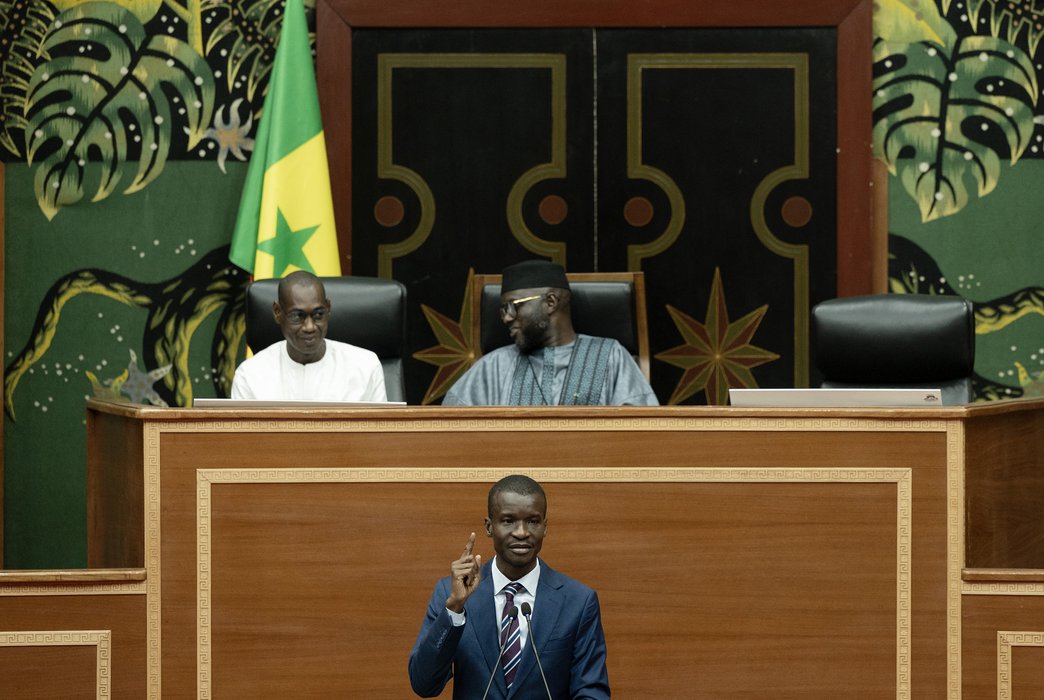
On 9th July 2026, Senegal’s Constitutional Council declared a constitutional reform proposed by the ruling party, Patriotes Africains du Sénégal pour le Travail, l’Éthique et la Fraternité (Pastef), as unconstitutional. The amendment had been approved by the National Assembly on 29th June 2026, with 129 out of 165 deputies voting in favour.
The proposed reform sought to amend 29 articles of the Constitution of Senegal. It included measures to prevent the current president from leading a political party, increase the powers of the National Assembly and the Prime Minister, replace the Constitutional Council with a nine-member Constitutional Court, and limit the dissolution of parliament to once per presidential term.
The Constitutional Council stated that the reform contravened articles 82 and 103 of the Constitution. The Constitutional Council specifically objected to the proposed increase in the “human, material, and budgetary resources” allocated to the future Constitutional Court because the reform did not specify corresponding sources of funding to cover these additional expenses. Additionally, the Council rejected the National Assembly’s refusal to grant the executive the “blocked vote” procedure, which allows legislation to be passed without amendments.
This decision came after President Bassirou Diomaye Faye requested the Constitutional Council, on 6th July 2026, to review the adopted amendments. The proposed reform in Senegal led to protest and the arrest of twelve protesters in June 2026 (see under Peaceful Assembly).
The proposed constitutional amendment comes amid a political crisis and power struggle between President Faye and former Prime Minister Ousmane Sonke over different approaches to the country’s debt crisis. Once allies within the same political party Pastef, a rift has grown between President Faye and Ousmane Sonko that has seen the President dismiss Prime Minister Sonko in May 2026, who was elected a few days later as Speaker of the Parliament. The constitutional amendment, introduced by the National Assembly, sought to limit the powers of the president.
Elected under a campaign that promoted economic sovereignty in 2024, the new administration was faced with an enormous debt burden that pushed Senegal into a crisis, exacerbated by the so-called “hidden-debt” scandal. The previous administration under Macky Sall had concealed approximately seven billion USD in borrowing, pushing Senegal’s debt-to-GDP ratio as high as 132 percent. Different approaches to the debt crisis - debt restructuring and negotiations with the International Monetary Fund (IMF), who will impose conditions, versus economic sovereignty - is at the core of the rift.
Parliament adopts draconian anti-LGBTQI+ amendment
🇸🇳 Senegal parliament doubles penalty for same-sex relations Senegal's parliament has passed legislation to double the maximum penalty for same-sex relations, making them punishable by up to 10 years in prison amid a crackdown on the country's gay community. The text is yet to be signed into law by President Bassirou Diomaye Faye
— AFP News Agency (@AFP) March 12, 2026
On 11th March 2026, Senegal’s National Assembly adopted an amendment to article 319 of the Penal Code, doubling the maximum penalty for consensual same-sex relations and criminalising promotion and support of LGBTQI+ people and organisations, with prison sentences between five and ten years. Fines also increased to between two million and ten million CFA Francs (approximately 3,500 USD to 17,600 USD), and maximum sentences imposed when the act involves a minor. President Faye promulgated the law on 31st March 2026.
As previously reported by the CIVICUS Monitor, the Council of Ministers approved the bill on 18th February 2026.
The United Nations High Commissioner for Human Rights, Volker Türk, denounced the law, stating that “It flies in the face of the sacrosanct human rights we all enjoy: the rights to respect, dignity, privacy, equality and freedoms of expression, association and peaceful assembly”.
Drissa Traoré, Secretary-General of the International Federation for Human Rights (FIDH) commented:
Senegal has today chosen to tighten legislation that targets and stigmatises a section of its population. By extending repression to those who defend the rights of LGBTIQ+ people, the Senegalese authorities are clearly violating their international commitments. Such a law protects no one: it further exposes individuals who are already vulnerable to violence, arbitrary arrest and humiliation.
- Drissa Traoré, Secretary-General of the International Federation for Human Rights (FIDH)
Arrests and prosecution of suspected LGBTQI+ people ensued. For example, on 7th August 2026, the prosecutor’s office at the Court of First Instance in Pikine-Guédiawaye, a suburb in Dakar region, formally charged 71 men with “unnatural acts” and criminal association after investigations that commenced in February 2026.
EXPRESSION
Senegal’s National Assembly adopts new media law
Réforme du Code de la presse au Sénégal : l'Exécutif enclenche la modernisation du cadre réglementaire des médias » https://t.co/aVaWCuarte #Sénégal #CodeDeLaPresse #MédiasSN #PresseSN #GouvernanceSN #JournalismeSN https://t.co/qiFaiMRtYB
— Pressafrik.com (@Pressafrik) November 24, 2026
On 3rd March 2026, Senegal’s National Assembly adopted a new law, Law 07/2026, establishing the National Media Regulatory Council (CNRM), a new national media regulator, replacing the National Audiovisual Regulatory Council (CNRA, established in 2006) and the Council for the Observance of Ethical and Professional Standards (CORED, established in 2009).
The new law grants the CNRM extensive authority to administratively close media outlets, suspend operations, block content, or restrict platform access, with enforcement occurring immediately and without provision for appeal. Article 31 of Chapter 4 further empowers the CNRM to collect information related to published content through summons or direct on-site inspection, with professional secrecy unable to be invoked against the regulator. These provisions—particularly the power to suspend media operations without prior notice—lack explicit appeal mechanisms and safeguards against arbitrary enforcement, raising substantive questions regarding their compatibility with constitutional protections and potential impacts on media independence and economic viability. The new law extends regulatory authority to encompass print media, online outlets, content creators, and foreign media accessible within Senegal.
Media professional organisations Senegalese Union of Information and Communication Professionals (SYNPICS) and Senegalese Council of Broadcasters and Press Editors (CDEPS) criticised the law, the latter calling it a “threat to press freedom”. Furthermore, SYNPICS denounced the lack of consultation in the drafting process and the absence of essential dialogue with journalists and media professionals before its adoption.
In a positive development, in its ruling on 7th April 2026, the Constitutional Council struck down certain provisions of Law 07/2026 as unconstitutional, in particular, paragraph 2 or Article 31 related to the closure of premises, and Article 33 related to the closure of newspapers and websites. Furthermore, the Council ruled that in articles 31 and 34, the use of law enforcement powers are to be subject to a warrant by the judicial authority, and Interim measures, set by Article 41, can only be valid when strictly related to the protection of honour, the reputation of others or the safeguarding of public order.
The constitutional appeal was lodged by 23 members of Parliament on 10th March 2026 and was supported by the CSOs Paradigm Initiative and the Association of Online Press Publishers and Professionals (APPEL).
Investigative journalist released after eight years in prison following presidential pardon
Good news 🎉 Senegalese journalist René Capain Bassène — an innocent man who was serving a life sentence for a murder he didn’t commit — has been released after 8 years in prison. CPJ’s Francophone Africa Representative Moussa Ngom is on the ground with Bassène to celebrate his release. This is a win for journalism, for Bassène’s innocence, and a win for press freedom. CPJ is grateful to everyone who has stood in solidarity in the fight for his release.
— Committee to Protect Journalists (@pressfreedom) May 27, 2026
On 27th May 2026, Senegalese investigative journalist and author René Capain Bassène was released from prison in Dakar, after President Bassirou Diomaye Faye granted him a presidential pardon, ending more than eight years of detention.
Bassène, a journalist and writer who dedicated years in trying to understand and stop the decades long Casamance conflict, was serving a life sentence for the murder of 14 men, in what the Committee to Protect Journalists (CPJ) calls “one of the worst miscarriages of justice in Senegalese history”.
On 6th January 2018, armed assailants, believed to be affiliated with the Mouvement des Forces Démocratiques de Casamance (MFDC), a separatist group that waged an insurgency in the Casamance region since 1982, killed 14 wood collectors and wounded seven others in the Boffa-Bayotte forest near Ziguinchor.
On 14th January 2018, armed police arrested Bassène in Ziguinchor, following his investigations into corruption and profiteering in a brutal forest massacre, along with more than 20 other suspects. At the time of his arrest, Bassène was finalising a book that examined how both the MFDC separatist group and the Senegalese government had profited financially from the ongoing Casamance conflict.
Prosecutors charged Bassène as the “planner” and “instigator” of the massacre, using his journalistic research on the Casamance conflict as the basis for their accusations while claiming he held a commanding relationship with MFDC faction leader, César Atoute Badiate.
Bassène was convicted and sentenced to life in prison in June 2022 for complicity in murder, attempted murder, and criminal association. A Court of Appeal upheld the sentence in August 2024 and Senegal’s Supreme Court subsequently dismissed Bassène’s final appeal in May 2025.
While the presidential pardon was welcomed, it does not annul the conviction.
The release of Bassène follows years of advocacy, including by CPJ, who has submitted letters to the government, organised a petition and published a six-episode podcast exploring the unjust detention and flawed trial.
Court sentences three TikTok content creators to prison for “offence to the Head of State”
On 7th August 2026, a Dakar tribunal sentenced three online content creators to prison and imposed fines following their comments in a TikTok video which went viral. The individuals involved are Mandoumbe Diop, alias Lamignou, along with Magueye Diaw, also known as Oustaz Thiep, and Moustapha Ndiaye, also known as Ndiaye Touba, content producers for the Feenal Digital platform, an online communication platform that operates primarily on Facebook.
The three had published a video on TikTok, filmed following a religious gathering, which contained prayers targeting “the greatest traitor of Senegal”, wishing for this person to suffer from paralysis, a stroke, or death. Although President Faye was not directly named in the video, the Dakar Tribunal concluded that the remarks were aimed at the president. The three TikTok creators were charged with “offence to the Head of State” and “discourse contrary to good morals.” Diop was sentenced to three months in prison, while Diaw and Ndiaye each received two-month prison terms. All three were fined 500,000 CFA Francs each (approximately 800 USD).
Television host sentenced to two months in prison for “offence to the Head of State”
On 10th March 2026, Colobane Investigation Unit, a law enforcement entity, arrested Daouda Ndiaye, a television host and journalist with Feeling Dakar TV after he reposted a caricature of President Bassirou Diomaye Faye on Facebook. Ndiaye had reposted a caricature depicting the president in traditional “Ndjuli” circumcision attire, alluding to a statement made by President Faye during the launch of his new coalition, in which he described a past political moment as marking his transition into “manhood”, prompting widespread online satirical reaction.
Although the image was not originally created by Ndiaye but sourced from another Facebook account, authorities charged him with offending the President and distributing content contrary to good morals. Appearing before the Dakar tribunal, Ndiaye apologised, acknowledging that sharing the widely circulated image was a mistake. Despite being remorseful, on 16th March 2026, the Court convicted Ndiaye and imposed a custodial sentence of two months in prison and a fine of 100,000 CFA Francs (approximately 170 USD).
PEACEFUL ASSEMBLY
Police fire tear gas, arrest a dozen of protesters during protests against constitutional amendment
Réforme constitutionnelle au Sénégal: la société civile favorable à un référendum dénué de «calculs politiques» https://t.co/clGA0EucwC https://t.co/qBU1wJVrYx
— RFI Afrique (@RFIAfrique) July 1, 2026
On 24th June 2026, law enforcement officers arrested activist Abdou Karim Gueye in Dakar while preparing a protest planned before the National Assembly against the adoption of a proposed constitutional reform (see under Introduction), without a referendum. Gueye was detained for several hours and subsequently released the same day.
Five days later, on the day of the adoption of the amendments by the National Assembly, on 29th June 2026, dozens of people gathered in front of the National Assembly to protest, which was met with tear gas fired by police. Twelve protesters were reportedly arrested, including four women who attempted to reach and access the National Assembly building, and charged with “disturbing public order and participating in an unauthorised gathering” as well as “violence and assault”. However, they were reportedly released after several hours on instruction of the competent government authority.
Trade union, opposition coalition protest over high cost of living and “broken” government promises
Sénégal: après la manifestation à Dakar, la campagne contre la vie chère grandit sur les réseaux sociaux ➡️ https://t.co/ObZC6ONBhH https://t.co/qF4Ah4vaqL
— RFI (@RFI) September 7, 2026
On 9th April 2026, hundreds of workers, union members, and opposition supporters marched in Dakar to protest a worsening cost-of-living crisis and what protesters call broken government promises amid mounting sovereign debt. The National Confederation of Senegalese Workers (CNTS), the country’s largest labour union, and the Front for the Defence of Democracy and the Republic (FDR), an opposition coalition, jointly organised the demonstration. According to Mody Guiro, secretary-general of the CNTS, the government has betrayed a deal reached the previous year for better wages and working conditions as a result of the freezing of public spending.