This update covers developments affecting the freedoms of expression, association and peaceful assembly in Turkmenistan from June to November 2025. International Partnership for Human Rights (IPHR) and the Turkmen Initiative for Human Rights (TIHR) have prepared it as part of their cooperation with the CIVICUS Monitor.
Public expressions in Turkmenistan remain tightly controlled, with the government enforcing official narratives of well-being and prosperity despite widespread economic hardship and serious ongoing rights violations. Feeding into this narrative, the Ombudsperson concluded in its annual report released in August that human rights observance is “steadily improving” thanks to the president’s “large-scale reforms” aimed at enhancing citizens’ well-being. In another example, an elder claimed at a September 2025 meeting of Khalk Maslahaty – a high-level body chaired by ex-President Gurbanguly Berdymukhamedov – that the population enjoys a “high” standard of living and proposed a freeze on wages and benefits, illustrating how citizen voices are orchestrated to reinforce government messaging.
In summer 2025, Turkmen.News reported a new escalation in Turkmenistan’s already strict internet censorship, with tens of thousands of additional sites blocked. As independent media, social networks, and other government-critical platforms have long been inaccessible, the organisation concluded that this tightening was driven less by political motives than by corruption, with cybersecurity officials reportedly operating controlled, profit-generating schemes that sell access to censorship-circumvention tools. These findings suggest that corrupt practices are further deepening Turkmenistan’s digital isolation and obstructing digital development, directly contradicting the government’s stated commitment to advancing digital transformation.
The pattern of persecution of individuals deemed “inconvenient’’ to the regime persisted. A victim of politically motivated prosecution, civil society activist Murat Dushemov was due to be released in June 2025 after serving an unjust four-year prison sentence. However, he was instead hit with new criminal charges over an alleged fight with a co-prisoner believed to have been fabricated in retaliation for his efforts to defend his rights in detention. His family was kept in the dark about his whereabouts for several days, denied visits to him in detention, and subjected to intimidation. Despite calls for his release from human rights organisations and the UN Special Rapporteur on Human Rights Defenders, Dushemov was sentenced to eight additional years in prison following a closed trial in September 2025.
Together with @nhcno.bsky.social, Turkmen.News, Turkmen Initiative for Human Rights & @ahrca.bsky.social we urge #Turkmenistan to drop new retaliatory charges against civic activist Murat Dushemov, promptly release him and stop harassing him & his family: iphronline.org/articles/tur...
— IPHR (@iphr.bsky.social) June 27, 2025 at 1:12 PM
[image or embed]
Former political prisoners continue to face pressure after their release, as illustrated by the case of journalist Nurgeldy Khalykov, who remained subject to an exit ban preventing him from travelling abroad for work. Khalykov has engaged in a legal struggle to challenge the ban. After several months of legal proceedings, in September 2025, a local court dismissed his initial complaint, which contested the imposition of the exit ban. However, the following month, the same court accepted a separate complaint he filed over the migration service’s failure to provide an official document on the ban. During the earlier hearings, the migration service had claimed that it had merely acted on instructions from a higher “competent” body (a common euphemism for the security services) when placing Khalykov on a list of individuals barred from travelling abroad and that it did not know the reasons for those instructions. Under the October court decision, the migration service is now required to disclose the legal basis of the ban, its duration, and the state body that initiated it.
Transnational repression of Turkmenistani activists has recently intensified, with authorities increasingly targeting critics abroad, including through forcible returns carried out in cooperation with foreign states, particularly Turkey and Russia. As a result, activism abroad has become increasingly dangerous, fostering fear and self-censorship among diaspora activists.
Bloggers Alisher Sakhatov and Abdulla Orusov were detained in Turkey in April 2025, ordered to be deported for allegedly threatening public security, and placed in deportation centres pending legal appeals. In July 2025, Turkey’s Constitutional Court suspended their deportation to allow further assessment of the risks they faced if returned to Turkmenistan. However, shortly afterwards the two bloggers disappeared, with unconfirmed reports suggesting they were forcibly returned to Turkmenistan, prompting serious concerns for their safety and well-being. Their fate and whereabouts remained unknown as of November 2025.
Another activist, Saddam Gulamov – also known for criticising Turkmenistani authorities on social media – was reported to have been forcibly returned from Russia in late 2023 or early 2024. According to available information, he was subsequently sentenced to a long prison term in Turkmenistan and is currently serving his sentence in inhumane conditions.
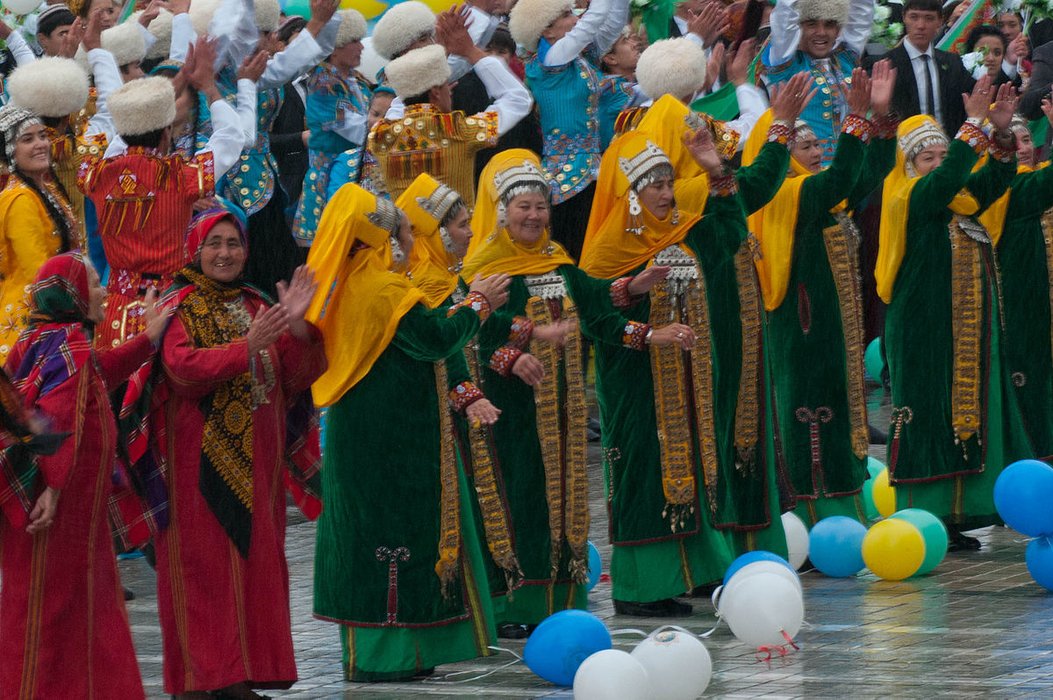
Turkmenistani authorities continue to suppress even spontaneous, economically driven expressions of frustration, reflecting their zero-tolerance approach to dissent. At the same time, they continue to forcibly mobilise citizens for state-organised mass events. Ahead of the September 2025 Independence Day celebrations, students and public sector employees were required to attend daily, multi-hour rehearsals in Ashgabat for over a month. While some welcome adjustments were made – such as avoiding rehearsals during the hottest hours and exempting public sector employees from regular work – the continued use of non-voluntary mass mobilisation remains a serious concern, negatively affecting not only those directly involved but also society more broadly through lost work and study time.
These issues are covered in more detail below.
Expression
State propaganda of prosperity persists despite economic hardship and ongoing rights violations
Public expressions in Turkmenistan remain tightly controlled, with government-orchestrated messaging presenting a picture of well-being and prosperity despite the ongoing socio-economic crisis and serious human rights violations.
The 2024 annual report of Turkmenistan’s Human Rights Ombudsperson, published in August 2025, reinforced this narrative. It concluded that “the observance of legislation in the field of ensuring human rights by State authorities in the country is improving year by year,” attributing this to “large-scale reforms” by the President aimed at “improving the well-being of citizens.”
These conclusions stand in stark contrast to the assessments of international human rights experts and organisations, with Turkmenistan continuing to rank at the bottom of international freedom ratings. Turkmenistan was again rated “not free” in the 2025 Freedom in the World survey by Freedom House, scoring only 1 out of 100 points on political and civil rights, and described as “a repressive authoritarian state where political rights and civil liberties are almost completely denied in practice.” In the 2025 Democracy Index, published in September by the International Institute for Democracy and Electoral Assistance (IDEA), the country ranked near the bottom in multiple categories: 149th in Representation (integrity and competitiveness of elections), 164th in Rights (freedoms and equality before the law), 160th in Rule of Law (judicial independence and levels of corruption), and 171st in Participation (citizen engagement in political life) out of 173 countries assessed.
Another example of the state-enforced official narrative of well-being came at a meeting on 9th September 2025 of the Halk Maslahaty – a high-level, non-elected representative body created in 2023 as a separate structure from Parliament, which is chaired by ex-President Gurbanguly Berdymukhamedov (the father of the current president). As reported by TIHR, despite ongoing shortages of basic goods at affordable prices and widespread economic hardship, an elder speaking “on behalf of citizens” claimed that the population enjoyed a “high” standard of living and proposed halting further increases to wages, pensions, benefits and stipends so that funds could purportedly be redirected to “the development of the country.” This staged endorsement of government narratives — in stark contrast to the daily realities residents face — demonstrates how public expressions are managed to reinforce official claims of prosperity and to mask the absence of genuine citizen representation.
Corruption reportedly fuels tightening of online restrictions
In July 2025, the Netherlands-based outlet Turkmen.News reported a further escalation in Turkmenistan’s already severe internet censorship, with tens of thousands of additional sites added to the national blacklist. As independent media, social networks, and other platforms featuring criticism of the authorities have long since been blocked in the country, the organisation’s investigations suggest that the latest tightening is driven less by political motivations than by corruption. Cybersecurity officials are believed to be deliberately expanding restrictions to fuel demand for circumvention tools sold through controlled, profit-generating schemes.
As part of its investigations, Turkmen.News documented more than a dozen social-media-based VPN dealers—some operating openly with Turkmenistani phone numbers, others through offshore accounts—believed to be linked to corrupt officials. These vendors offer access plans ranging from 50 manats (around 10 EUR at the official exchange rate) to 1,000 manats (over 200 EUR) or more per month. While cheaper VPNs frequently fail, the more expensive, “guaranteed” versions are reportedly supplied directly by security services, enabling both profiteering and surveillance. At the same time, foreign VPNs are aggressively blocked and independent VPN providers are targeted, leaving users with no reliable alternatives.
A Tor Project blog post commenting on these findings concluded: “This story is not only about censorship, but state-sponsored extortion, when censors become dealers. Officials of the Department of Cybersecurity are running a corruption scheme, using the tools of surveillance and control to squeeze money from a population already under tight authoritarian rule.”
The extensive censorship regime has accelerated Turkmenistan’s digital isolation, contributed to declining digital literacy, and inflicted significant economic losses – directly contradicting the government’s pledges to promote digital transformation. In November 2025, Minister of Communication Khajymyrat Khudaygulyev reiterated these promises, stating: “Turkmenistan views digital transformation as a strategic priority for national development. Under the leadership of the President, large-scale programmes are being implemented aimed at modernising the telecommunications infrastructure, developing digital services, and increasing the state's technological independence.”
Association
Persecution of ‘’inconvenient’’ individuals at home
Civil society activist Murat Dushemov was due to be released in June 2025 at the end of an unjust four-year prison sentence imposed in 2021 after he publicly criticised the authorities and sought to challenge Covid-19 preventive measures, which were enforced despite the government’s denial of a national outbreak. However, shortly before his expected release, authorities brought new criminal charges against him over an alleged fight with another prisoner – an incident believed to have been staged to incriminate him and extend his imprisonment in retaliation for his continued efforts to defend his rights while in prison. His family only learned of his whereabouts several days after his original sentence expired, were denied visits to him in detention, and were subjected to intimidation.
In a joint statement, the Norwegian Helsinki Committee, IPHR, Turkmen.News, TIHR and the Association for Human Rights in Central Asia (AHRCA) called on the Turkmenistani government to release Dushemov immediately and unconditionally. The UN Special Rapporteur on Human Rights Defenders also criticised the new charges and urged the activist’s release.
However, following a closed trial, Dushemov was sentenced to eight additional years in prison in September 2025. He is believed to have been convicted of “intentional infliction of serious bodily harm’’, although details are unclear given the lack of transparency of the legal process, where he was represented by a state-appointed lawyer.
Former political prisoners also continue to face harassment. One example is journalist Nurgeldy Khalykov, a previous correspondent for the Netherlands-based Turkmen.News, who has faced restrictions on his freedom of movement following his release in 2024. As covered before, in January 2025, he was stopped from boarding a flight to the United Arab Emirates, where he was due to start a new job, and later learned that the migration services had placed him on an exit ban list. He received no explanation and attempted to challenge the decision in court.
After a local court rejected his appeal in May 2025, the Ashgabat City Court unexpectedly sided with him in July and sent the case back for review. However, in September, the local court dismissed his complaint without consideration, citing a lack of “proper” documentation for the exit ban. During hearings, the migration service claimed it had no information about the reasons for the ban and had simply acted on a request from a higher “competent” body. Rather than directly ordering the service to obtain and present this information, the judge instructed Khalykov to seek it himself and, if relevant, file a complaint over the service’s failure to fulfil its legal obligations. Despite being disappointed by this ruling and the time lost, Khalykov nevertheless followed the judge’s advice and subsequently filed such a complaint. In late October 2025, the local court accepted his complaint and requested that the migration service provide documentation on the legal grounds for the ban, clarify the period for which it was issued, and identify the state body that initiated it. The migration service was given 30 days to appeal the decision.
Targeting of activists based abroad
Persecution also extends to activists based abroad, including through the forcible return of activists from countries cooperating with Turkmenistan, Turkey and Russia in particular, in a pattern criticised by the UN Committee against Torture.
As covered in the previous update, in April 2025, Turkmenistani bloggers Alisher Sakhatov and Abdulla Orusov were detained in Turkey and ordered to be deported for allegedly posing a threat to public order and security. They were held in deportation centres while their lawyer appealed the decision. Both had been critical of Turkmenistani authorities on social media, placing them at high risk of torture, arrest, and politically motivated imprisonment if returned. In mid-July 2025, Turkey’s Constitutional Court suspended their deportation pending further assessment of these risks. However, at the end of July, their lawyer and families lost contact with them after their reported release from detention. Claiming to have no record of the bloggers leaving the country, Turkish police failed to determine their whereabouts. According to unconfirmed reports, the two bloggers were in fact forcibly returned to Turkmenistan, raising serious concerns for their safety and well-being. However, as of November 2025, there was no verified information about their fate or whereabouts.
As also covered before, another Turkmenistani activist, Umida Bekchanova, was detained in Turkey in May 2025 on similar charges as Sakhatov and Orusov. She was transferred to a deportation centre pending appeal proceedings. Given her criticism of Turkmenistani authorities on social media, Bekchanova also faces a serious risk of torture, politically motivated prosecution, and imprisonment if returned to Turkmenistan. These risks are heightened by her previous experience of intimidation and the harassment of her family members in Turkmenistan. As of November 2025, no further information about her case was available to the organisations preparing this update.
The disappearance of Sakhatov and Orusov sparked fears among other Turkey-based activists that they could face a similar fate, leading some to record appeals for support.
In October 2025, Turkmen.News reported that Turkmenistani activist Saddam Gulamov — who had publicly expressed his civic views and criticised government policies on social media — had been forcibly returned from Russia to Turkmenistan in late 2023 or early 2024. According to the organisation, Gulamov was subsequently sentenced to a long prison term and is currently held in a facility in the Lebap region, where he has reportedly spent extended periods in solitary confinement, leading him to attempt suicide.
Assembly
Suppression of spontaneous expressions of frustration
Reflecting the authorities’ zero-tolerance approach to any dissent, even spontaneous expressions of grievances by citizens frustrated by economic hardship and arbitrary actions by those in power are swiftly suppressed. The following episode illustrates the repressive response to economically driven outbursts of anger and how no criticism or pushback against state-mandated regulations is tolerated:
According to TIHR’s sources, in June 2025 a dispute erupted between butchers and market administrators in Murghab, Mary province, after officials ordered traders to lower beef prices ahead of the Kurban Bayram festivities, setting the price at 67 manat per kilogram – well below the 75–80 manat previously charged. Enraged at the prospect of losing expected holiday income, several butchers — still in blood-stained aprons and carrying knives and axes — advanced on the market manager and his assistants, shouting threats such as “We’ll butcher you like cattle!” As tensions rose, most shoppers and traders fled in fear. Police quickly intervened, detaining at least four butchers, and a local court sentenced them to 15 days’ administrative arrest. Their meat was confiscated and sold at an even lower price than that imposed by the authorities, with the proceeds handed to representatives of the detained butchers. The men were subsequently assigned to forced municipal labour, including whitewashing kerbs and sweeping sidewalks.
Forced mass mobilisation for state events
The practice of forcibly mobilising citizens for state-organised mass events under threat of reprisals continues. While school children are no longer mobilised, students and public sector employees are regularly engaged.
TIHR recently learned that first-year students at the Turkmenabat State Pedagogical Institute have been required to “voluntarily’’ agree in writing to attend government-organised events, rehearsals for such events, and so-called subbotniki (days of unpaid labour).
TIHR’s sources also reported that, in the lead-up to the Independence Day celebrations on 27th September 2025, daily three-hour rehearsals were held in Ashgabat starting in mid-August, including on weekends. Students and public sector employees were mobilised, with students called back early from their summer break. In a change from previous years, public sector employees were exempted from their regular duties during the rehearsal period, and on the hottest days rehearsals were held in the evening when temperatures were lower.
According to the Turkmen service of Radio Free Europe/Radio Liberty, Radio Azatlyk, authorities in the Balkan region instructed performers for the Independence Day celebrations — including artists, singers, and dancers — to lose excessive amounts of weight before the holiday or risk losing their jobs and future performance opportunities. This demonstrates the extent of state control over all aspects of these orchestrated events.
As part of the celebrations, a horse-racing event took place at the Ashgabat Equestrian Centre on 28th September 2025, attended by President Serdar Berdimuhamedov. TIHR reported that students and public sector employees mobilised for the event were bussed to the venue early in the morning and allowed to leave only in the evening, although 28th September was officially a day off. Ahead of the event, educational institutions and public bodies received orders specifying the number of students and employees they were required to send, illustrating the systematic nature of the practice.