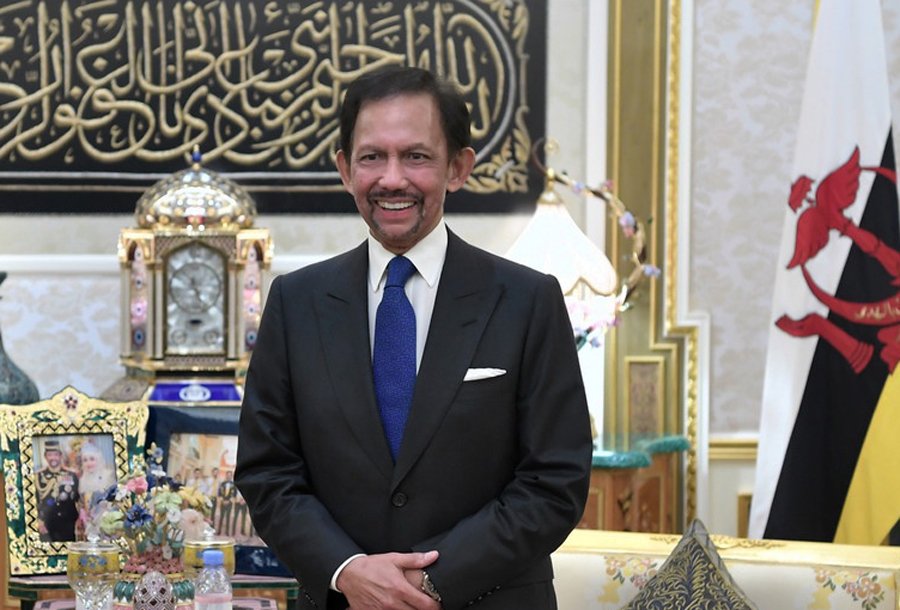
The state of civic space in Brunei is rated as ‘repressed’ by the CIVICUS Monitor and there has been no documented progress on improvements to fundamental freedoms. Brunei is an absolute monarchy in which the Sultan, the head of state, exercises executive power and in which there are no elected representatives at national level. The Sultan continues to wield power under a long-standing state of emergency.
Freedom House gave a rating of “Not Free” in its 2026 in its Freedom in the World report with an aggregate score of 27 out of 100
Sultan Hassanal Bolkiah carried out a major cabinet reshuffle in mid-2026, introducing a new governmental structure, appointing younger leaders- including giving his sons their first cabinet roles.
A new book on youth activism published in October 2026 however, found the emergence of ‘quiet activism’ in Brunei, due to the restrictions. These individuals often label themselves as “advocates,” avoiding the term “activist” to gain acceptance from the authorities. They operate in subtle, indirect, and quiet ways and to try to leave little trace of their activities and operations. They are often working on community, environmental and health issues.
Expression
Ongoing restrictions on press freedom
Brunei is ranked in 96th place out of 180 countries in the Reporters Without Borders (RSF) 2026 Press Freedom Index published in May 2026.
Press freedom is virtually non-existent. According to RSF, self-censorship is the rule for journalists working for state-owned Radio Television Brunei and for the leading daily newspapers, which are directly owned by the Sultan’s family.
Publishing any content that undermines the “prominence of the national philosophy” is punishable by three years in prison under the sedition law. Journalists face five years in prison for a post or article deemed to be “malicious”. Finally, the new penal code, adopted in 2019, provides for nothing less than the death penalty for any statement or publication deemed to be blasphemous or to have advocated apostasy.
The Newspapers Act 1958, as amended by the Local Newspapers Order 2001, allows the government to close a newspaper without giving prior notice or showing cause, and requires local newspapers to obtain operating licences and prior government approval for hiring foreign editorial staff, journalists and printers.
Restrictive laws maintain a climate of fear
As previously documented, there is an array of restrictive law that maintains a climate of fear for expression in Brunei. The Sedition Act includes a penalty of up to three years of imprisonment for publishing materials with seditious intent, while the Undesirable Publications Act empowers the minister to prohibit the importation or sale of publications deemed to be against public interests.
In May 2026, there was a report that police were investigating the spread of a viral video on social media alleging that police failed to act on a report made by a foreign woman regarding an alleged rape case. The investigation was under Section 34 of the Public Order Act, relating to acts that may disturb public order, and Section 4(1)(c) of the Sedition Act.
Peaceful Assembly
Right to demonstrations severely restricted
Long-standing emergency powers are used to restrict the right to assembly. According to the Public Order Act, police may disband an unofficial assembly of five or more persons deemed likely to cause a disturbance of the peace. Permits require the approval of the minister of home affairs. Organisers of events on sensitive topics tended to hold meetings in private rather than apply for permits, or practised self-censorship at public events.
Over the year, a march in solidarity with Palestine was documented.
Association
No space for critical civil society groups
Under the 2005 Societies Order, no more than 10 people can associate for a purpose without registering. Neither domestic nor international human rights groups can operate freely due to government restrictions. A few domestic organisations work on humanitarian issues, such as assistance for victims of domestic violence or provision of free legal counsel.