General
Argentina added to the CIVICUS Monitor Watchlist
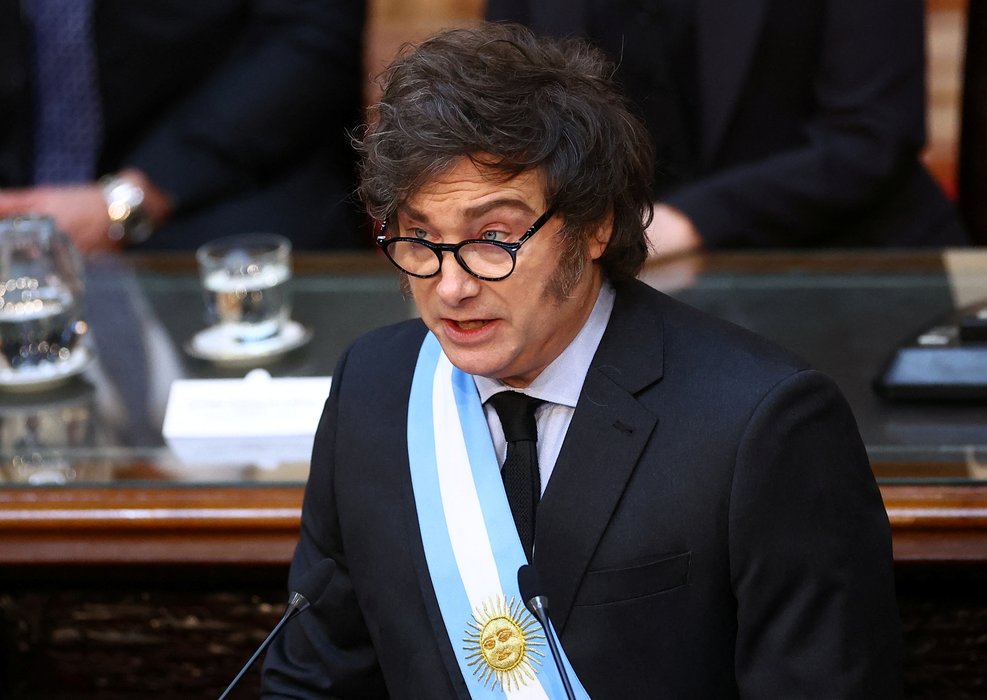
Argentina’s civic space has deteriorated since December 2023, when President Javier Milei took office, with authorities increasingly restricting civic freedoms. As a result, the country was added to the Watchlist in September 2024 due to violent repression of protests, while journalists and activists are facing heightened levels of attacks, both verbal and physical, and intimidation.
These developments mark a significant shift for a country long recognised for its democratic institutions.
🇦🇷#Argentina added to our latest watchlist:
— CIVICUS Monitor (@CIVICUSMonitor) September 23, 2024
🟢‘Anti-picket’ protocol criminalises protests involving road blockades
🟢Violent repression of protests
🟢New decree restricts access to public information
Country rated as Narrowed:https://t.co/VQzdtTAuuA pic.twitter.com/n8hYzKjINQ
Association
Smear campaign targets Indigenous rights lawyer in Jujuy amid growing tensions over lithium extraction
On 25th September 2024 organisations within the Environmental and Climate Observatory for the Implementation of the Escazú Agreement, alongside other civil society organisations, denounced a disinformation campaign and online attacks against lawyer Alicia “Lali” Chalabe, a long-standing legal representative of Indigenous communities from the Salinas Grandes and Laguna Guayatayoc basins in the province of Jujuy. Earlier, on 19th September, Indigenous communities had also publicly rejected the attacks against her.
Civil society organisations reported that Chalabe had been subjected to sustained online harassment in recent months, including mocking posts and caricatures. The situation escalated as false news spread, seeking to undermine her credibility and discourage others from opposing lithium mining projects in the region. False reports published in July 2024 by the website Litio Argentino accused her of having commercial interests in lithium extraction projects in the same region where she has legally supported communities opposing such activities.
On 25th September 2024, organisations within the Environmental and Climate Observatory for the Implementation of the Escazú Agreement, alongside other civil society organisations, ghts. The reform sparked protests, followed by judicial proceedings and detentions against community leaders and social movements, as well as reprisals against their legal representatives4
Peaceful Assembly
Police use anti-picket protocol against pensioners demonstrating over social security reform veto
On 28th August 2024, police in Buenos Aires clashed with pensioners and activists during a protest outside Argentina’s National Congress against President Javier Milei’s decision to veto a newly approved pension adjustment law. The demonstration, announced days earlier, sought to oppose the government’s stance after Congress passed the reform on 22nd August, which set a monthly update of pensions based on inflation and salaries, along with an additional 8.1 per cent adjustment.
Protesters began marching towards Plaza de Mayo, when police forces applied the national anti-picket protocol introduced by Security Minister Patricia Bullrich in December 2023, using batons and pepper spray to disperse the crowd. According to media reports, several elderly protesters and journalists covering the event were affected (see freedom of expression), although no detentions were reported. Authorities justified the intervention by citing the demonstrators’ partial blocking of Avenida Rivadavia, while civil society organisations criticised the disproportionate use of force against peaceful protesters.
The confrontations have continued. On 4th September 2024, riot police and gendarmes again intervened with irritant gas as thousands of pensioners tried to reach Plaza de Mayo. One person was detained. On 25th September, protesters marched once more, calling for the restoration of basic benefits and medicine coverage from PAMI, the national pension agency.
The incidents took place amid broader social discontent with the government’s austerity programme, which has significantly reduced pension benefits amid soaring inflation exceeding 260 per cent.
Los jubilados y jubiladas perdieron casi un tercio de sus ingresos en 7 meses.
— CELS (@CELS_Argentina) August 28, 2024
El gobierno va a vetar la posibilidad de mejorarlos y cuando protestan, la policía les pega y los gasea. pic.twitter.com/MKZ0Ekmo2b
Mass university protest challenges veto of University Financing Law
On 2nd October, over 1.5 million people joined the second Federal University March nationwide to oppose the announced veto of the University Financing Law. In Buenos Aires, students, teaching and non-teaching unions, rectors and the wider education community gathered outside Congress, joined by trade unions, social movements and opposition figures. Organisers reported policing obstacles in the run-up to the march, including bus stops from La Plata, street closures and last-minute route changes attributed to the Security Ministry.
According to civil society organisations, security forces used disproportionate force during the protest, including physical aggression and the use of chemical irritants at close range, leaving at least 16 people injured, among them three journalists covering the event and two police officers. The Public Defender’s Office of Buenos Aires confirmed at least seven arrests, six for alleged “aggravated resistance to authority” and one for property damage. One of those detained was reportedly a minor participating peacefully, who was later released near Congress.
Despite this, the mobilisation remained peaceful and large-scale, with a unified call for legislators to defend a law intended to restore university budgets through an emergency framework. Shortly after the rally, the Presidency confirmed that President Javier Milei had signed the veto, arguing the law increased public spending without identified financing and should be addressed in the 2025 budget debate. University leaders warned of salary erosion below the poverty line and risks to academic continuity and essential services.
Mass mobilisation on Feast of Saint Cajetan denounces hunger and unemployment under Milei’s government
On 7th August 2024, thousands of people joined a large mobilisation in Buenos Aires marking the Feast of Saint Cajetan, combining religious observance with political protest under the slogan “Peace, bread, land, housing and work”. Organised by the Union of Workers of the Popular Economy (UTEP), the march brought together Argentina’s main trade union centres, alongside social movements, left-wing groups such as Polo Obrero, and human rights organisations including Madres de Plaza de Mayo. Protesters denounced President Javier Milei’s economic adjustment policies and his veto of social spending, accusing the government of “condemning thousands of families to hunger and unemployment”.
The protest began in the Buenos Aires neighbourhood of Liniers, where Archbishop Jorge García Cuerva presided over a mass that called for compassion towards those “wounded by exclusion”. After the ceremony, participants marched to Plaza de Mayo, where tens of thousands gathered in front of the Casa Rosada, setting up community kitchens and collecting food donations for soup kitchens affected by government cuts.
Expression
Journalists and camera crews injured as Federal Police use pepper spray during pensioners’ protest
On 28th August 2024, several journalists were affected by pepper spray used indiscriminately by Argentina’s Federal Police during a pensioners’ protest outside the National Congress in Buenos Aires (see peaceful assembly). As police implemented the government’s anti-picket protocol, officers deployed pepper spray to disperse protesters, directly impacting journalists.
Among those affected were reporter Pablo Corso from LN+, cameraman Marcelo Baldasarre from Canal 9, and a news crew from C5N. Live footage from LN+ showed officers spraying the crowd while shouts from protesters and journalists were heard. Corso reported that police “aimed directly at our eyes” and later required medical treatment at an ophthalmology clinic.
President Milei accused of systematic online harassment and stigmatisation of journalists amid growing restrictions on press freedom
Between August and October 2024, Argentina’s President Javier Milei carried out a sustained campaign of online attacks against journalists and media outlets, according to national and international press freedom organisations.
A compilation by Clarín documented more than 100 messages of “general and personalised harassment” sent by Milei over a two-week period in August, targeting at least 45 journalists and several outlets, including Noticias, La Política Online and El Destape. Milei accused them of being “bribed”, “paid off”, “manipulative servants”, and “accomplices of the truly violent”, among other disparaging remarks he shared on social media. The president also accused the Argentine Journalism Forum (FOPEA) of hypocrisy for not condemning alleged censorship of right-wing media in the region.
Between April and July 2024, FOPEA documented a persistent pattern of state-led hostility toward the press. Its latest report recorded 37 attacks against journalists over three months, an average of one every 2.4 days, representing a 24 per cent increase compared with the same period in 2023. One in three of these incidents involved President Javier Milei directly, while four in ten were perpetrated by members of the Executive Branch, including the President himself. Most incidents consisted of public stigmatisation and online harassment aimed at discrediting journalists and media outlets.
FOPEA noted that Milei remained the main perpetrator of “stigmatising speech”, accounting for 61.5 per cent of reputation-related attacks, and named journalists Marcelo Longobardi, María O’Donnell, Ernesto Tenembaum, and Sofía Martínez among those targeted. The organisation also reported a surge in coordinated troll activity and smear campaigns online.
Concerns grew following a government call for compulsory registration of journalists and the unexplained revocation of press accreditations at the Casa Rosada. Press access to national events, including the July Independence Day celebrations in Tucumán, was severely restricted, preventing reporters from observing or questioning officials.
Legal intimidation has further contributed to a climate of fear. The Minister of Justice sent formal notices to journalists Nancy Pazos and Darío Villarruel, while other reporters faced criminal complaints regarded as strategic lawsuits against public participation (SLAPPs). FOPEA warned that when verbal attacks and legal pressures originate from the highest levels of power, they normalise hostility toward the press, fuel online harassment, and foster self-censorship.
Decree 780/2024 restricts access to public information and threatens press freedom
On 2nd September 2024, the Executive issued Decree 780/2024, amending the Law on Access to Public Information, in ways widely criticised as undermining transparency and freedom of expression. According to the press media organisation Media Defence, the decree introduced mandatory identity verification for all information requests, requiring journalists, civil society actors and citizens to register in a state-controlled system. This measure effectively eliminated the possibility of anonymous requests, raising serious concerns over privacy, surveillance and self-censorship among investigative reporters.
The national organisation Fundación Transparencia Activa filed a constitutional challenge arguing that the decree violates international standards on access to information by reclassifying public data as part of the “private sphere” of officials, thus shielding information that should remain open to public scrutiny. The case remains pending before the judiciary, leaving the decree in force and creating uncertainty over its implementation.
Civil society organisations and media advocates warned that Decree 780/2024 represents a clear step backwards for government accountability in Argentina, eroding the public’s right to know and weakening the legal safeguards that protect journalists and citizens seeking information on matters of public interest.