General
Costa Rica goes to the polls amid crime surge and democratic strain
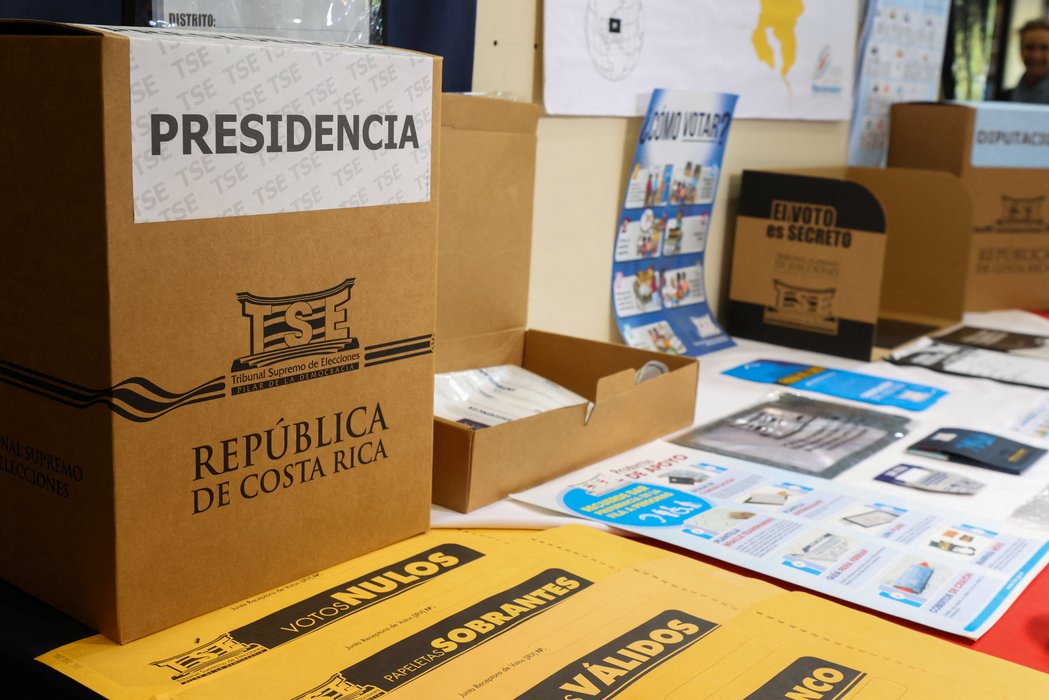
Costa Rica, long viewed as one of Central America’s most stable democracies, goes to the polls on 1st February 2026 after an unusually long and polarised election campaign. Although its constitution bars consecutive presidential terms, outgoing president Rodrigo Chaves has remained the central figure in the race, shaping it as a choice between continuity and rupture with the country’s traditional political culture. According to media reports, opposition candidates have described a climate of fear and hostility: some have avoided naming prospective cabinet members, while activists and journalists reported intimidation and self-censorship (see below).
The frontrunner, Laura Fernández of the Sovereign People’s Party (PPSO), has pledged continuity with the current administration. Fernández previously served as Chaves’ chief of staff and has held senior posts in several governments. Other candidates include Álvaro Ramos of the National Liberation Party (PLN), Ariel Robles of the Broad Front, Claudia Dobles, former first lady and candidate of the Citizen Agenda Coalition (CAC), and Fabricio Alvarado, an evangelical singer and leader of the New Republic Party (PNR). Polling indicates that nearly one-third of voters remain undecided.
Public concern has been driven by a sharp rise in organised crime. Once considered an exception in a violent region, Costa Rica has become a key transit point for cocaine trafficking, with homicides reaching over 800 in 2025, the second-highest total in its history. Chaves has responded by promoting a tough-on-crime approach inspired by El Salvador’s president, Nayib Bukele. In mid-January 2026, Bukele visited San José to launch a prison project modelled on El Salvador’s CECOT megajail, a maximum-security facility that has drawn international condemnation from human rights organisations over allegations of systematic torture, inhumane treatment and the denial of due process.
Beyond the security debate, Costa Rica’s own public institutions have raised red flags. In November 2025, the Defensoría de los Habitantes, the country’s independent human rights watchdog, presented candidates with a detailed account of democratic and social setbacks. The report cited rising violence, declining investment in health and education, long medical waiting lists, increased femicides, and persistent discrimination affecting women, Indigenous peoples, Afro-descendant communities, LGBTQI+ persons, migrants, people with disabilities and young people.
The election will test Costa Rica’s democratic institutions amid growing polarisation, security fears and the appeal of punitive policies, with implications for civic space and human rights protections.
Association
Allegations against activist spark fears of stigmatisation
On 13th January 2026, the national security chief, Jorge Torres, informed that authorities were investigating an alleged plot to assassinate President Rodrigo Chaves. Officials initially provided no details. Hours later, local media published screenshots reported to form part of a criminal complaint filed by the Dirección de Inteligencia y Seguridad Nacional (DIS), Costa Rica’s civilian intelligence agency, against Stella Chinchilla, an activist known for her criticism of the government. Media reports stated that the screenshots showed Chinchilla communicating with alleged hired killers.
She has publicly denied the allegations, describing them as fabricated and politically motivated, and said the accusations form part of a broader campaign of government harassment. Chinchilla declared that authorities filed the complaint because her platform and messaging had criticised Laura Fernández, a candidate from the PPSO (see General). She warned that the public circulation of the allegations had exposed her and her family to risk and was intended to discredit her activism.
In response, a coalition of civil society organisations issued a joint statement supporting her and criticising what they described as an unfounded accusation amplified through an intimidating media narrative. Groups including Bloqueverde, FECON, COECOCEIBA-Friends of the Earth Costa Rica, the Biodiversity Coordination Network and Frente Eco Cipreses questioned the credibility of the alleged evidence and cautioned against the use of state institutions to stigmatise and silence critics. They called on judicial authorities to respect due process and the presumption of innocence.
The case emerged amid heightened political tension. In December 2025, the Legislative Assembly rejected a request to lift President Chaves’ constitutional immunity following a petition by the Supreme Electoral Tribunal. The tribunal sought authorisation to investigate allegations of election interference ahead of the February 2026 presidential election. Although the motion secured a majority, it fell short of the 38 votes required to remove immunity.
After the vote, President Chaves publicly praised lawmakers who opposed the request and criticised those who supported it. He accused political opponents and oversight bodies, including the judiciary, the prosecutor’s office and the electoral authority, of attempting to undermine institutions. Leaders of those bodies subsequently raised concerns about escalating rhetoric and pressure on checks and balances.
Indigenous leader faces heightened risk following alleged police inaction on land dispute
On 10th August 2025, two non-Indigenous individuals entered land belonging to Pablo Sibar, a Brörán Indigenous leader and land defender, within the Térraba Indigenous territory in southern Costa Rica. The approximately 10-hectare property, which Sibar has lawfully occupied for more than 13 years, supports environmental conservation and community water management. The individuals claimed authorisation from the local Integral Development Association (ADI) of Térraba, a state-recognised community body.
According to media reports, despite requests from Sibar and accompanying community members, police officers declined to remove the occupants. Officers relied on a 7th August 2025 certification issued by the ADI that purported to grant rights to individuals who are not members of the Brörán people. Human rights organisations denounced the document as fraudulent and criticised the police response as tolerating an unlawful occupation within Indigenous territory, contrary to domestic law and international standards protecting Indigenous land rights.
On 11th August 2025, organisations submitted an urgent request seeking reinforced protection measures for Sibar. He has benefited from precautionary measures (MC 321/12) granted by the Inter-American Commission on Human Rights (IACHR) since 2015, due to repeated threats linked to his defence of Indigenous land and environmental rights. The petition argued that the incident places him at immediate and heightened risk.
The petition situates the incident within a longstanding pattern of harassment and violence against Sibar, including physical assaults, arson attacks on his property, attempted killings and repeated death threats.
Peaceful Assembly
Mass farmers’ protest meets police intervention
On 11th November 2025, thousands of farmers, teachers, students and trade union members marched peacefully through San José, Costa Rica’s capital, to protest government policies under President Rodrigo Chaves. Farmers joined the mobilisation with over 300 tractors and work vehicles. Agricultural leaders warned of a sharp decline in local output following tax reductions on rice imports introduced in 2022. The Corporación Arrocera Nacional, a national rice producers’ body, reported that domestic rice production has fallen by 59 per cent since the reforms.
According to media reports, tensions increased near the Presidential House when police erected barricades roughly two blocks away, preventing tractors and trucks from advancing. While pedestrians initially passed through, officers later pushed protesters back after some participants dismantled barriers.
Police assaulted and detained Roy Fallas, president of the Central Regional Committee of Farmers’ Markets, and transferred him to a patrol vehicle. Authorities later confirmed that Fallas was detained and would appear before a flagrancy court, citing public order and safety concerns. Media outlet Trivisión circulated video footage allegedly showing Fallas pushing a police officer during the same event.
Journalists covering the protest also reported assaults by police officers (see Expression).
Thousands march in San José over wage freezes and education funding
On 26th November 2025, at least 10,000 people marched in San José to protest government labour and budgetary policies under President Rodrigo Chaves. The mobilisation, organised by 21 trade unions, associations and social organisations, brought participants from all seven provinces. The march proceeded peacefully through central San José and reached the Ministry of Finance, where union representatives submitted a document detailing their demands.
Trade union leaders reported that public sector workers have experienced six consecutive years of wage freezes, without cost-of-living adjustments. Albino Vargas, president of the National Association of Public and Private Sector Employees (ANEP), urged the government to approve a salary increase and to reactivate the Public Sector Wage Negotiation Commission, the formal mechanism for collective dialogue.
Education unions highlighted the constitutional requirement to allocate 8 per cent of GDP to public education in the 2026 national budget. Gilda Montero, president of the National Association of Educators (ANDE), warned that any reduction would weaken the public education system.
Draft law would increase penalties for masked protesters
On 2nd November 2025, the Legal Affairs Committee of the Legislative Assembly approved a draft law that would increase criminal penalties for certain acts committed during protests, including covering one’s face and damaging property. The bill now moves to the plenary session, where all legislators debate and vote on final adoption.
Lawmakers from the Nueva República caucus, a conservative political grouping, introduced the proposal in November 2024 to amend provisions of the Criminal Code. The draft seeks to modify Article 263 bis, which currently penalises the unauthorised obstruction of vehicular or pedestrian traffic. Under the proposal, courts would increase the existing sanction - 10 to 30 days’ imprisonment - by one third when a person obstructs traffic while concealing their identity, including through the use of hoods, scarves or similar items.
The proposal would also amend Article 394(1) of the Criminal Code, which addresses damage to public or private property. The amendment would increase penalties when the person involved covers their face during the act. Current sanctions of 10 to 60 days’ imprisonment would rise, and repeat offences would carry penalties of up to 120 days’ imprisonment, compared with the current maximum of 30 days.
José Pablo Sibaja, a legislator from Nueva República, stated that the bill does not seek to restrict the rights to peaceful assembly or freedom of expression, but to reinforce constitutional requirements that demonstrations remain peaceful. He cited repeated damage to buildings and public infrastructure during protests as justification for stricter criminal sanctions.
Although lawmakers frame the bill as a public order measure, the introduction of harsher penalties linked to masking during protests risks expanding the criminalisation of protest-related conduct. If adopted, the amendments could broaden police discretion during demonstrations and disproportionately affect protesters, who rely on anonymity to protect themselves from retaliation.
Expression
Journalists report police assaults while covering farmers’ protest
On 11th November 2025, two journalists reported assaults by officers of Costa Rica’s Public Force while covering a farmers’ protest outside the Presidential House in San José, the capital (see Peaceful Assembly).
Marco Monge, a photojournalist with more than 30 years of professional experience, reported that an anti-riot officer struck him with a baton while he photographed the detention of a farmer. Monge said he identified himself as a journalist, yet the officer continued to verbally abuse him. Karen Dondi, a journalist specialising in agricultural reporting, also reported an assault. She had assisted in organising a press conference after protesters were denied access to government officials. Dondi said police pushed her into a ditch, causing visible bruising.
On 12th November 2025, the College of Journalists and Communication Sciences Professionals (Colper), Costa Rica’s professional journalists’ association, condemned the assaults and rejected all forms of violence, intimidation or censorship against journalists carrying out their work. Colper recalled Costa Rica’s obligations under the American Convention on Human Rights to respect, protect and guarantee freedom of expression and press freedom, including protection from abuses by state agents.
Cameraman reports assault by football player during live match coverage
On 30th November 2025, Carlos Umaña, a cameraman for FUTV, a main sports broadcaster in Costa Rica, stated that a football player physically assaulted him while he was reporting a first-division match between Club Sport Cartaginés and Liga Deportiva Alajuelense at the José Rafael “Fello” Meza Stadium in Cartago.
According to Umaña, the incident occurred inside the locker-room tunnel area while the match was still in progress, following a stoppage after a player was sent off. As the official rights-holding broadcaster, FUTV staff had authorisation to film match-related events. Umaña stated that when he attempted to document disturbances in the tunnel, player Marco Ureña blocked his access and struck him, causing physical harm and damage to his camera. He said he identified himself as press and requested that he not be touched, but the interference continued.
The alleged assault took place amid broader altercations involving players and team staff from both teams. A communications official from Cartaginés acknowledged heightened tensions during the match and said staff had attempted to restrict access to the area, without directly addressing the allegation.
Match commissioners formally recorded the incident and requested stadium security footage. The case was referred to the Disciplinary Tribunal of the Costa Rican Football Federation, the body responsible for enforcing sporting regulations, which will review reports from referees and officials to determine whether disciplinary sanctions apply.
Constitutional Court suspends broadcast frequency auction over pluralism concerns
On 26th November 2025, the Constitutional Chamber of the Supreme Court ordered the temporary suspension of a government-led auction of radio and television frequencies promoted by President Rodrigo Chaves. The court adopted the precautionary measure while examining constitutional challenges filed by media outlets and civil society organisations, citing a serious risk of a significant reduction in broadcasting services.
The decision came after the close of the bidding period, when technical authorities confirmed that only 25 of 85 available frequencies received bids. Broadcasters reported that they could not meet the minimum financial thresholds, which relied on international benchmarks and required substantial upfront payments, up to USD 1.6 million for national television licences and USD 386,000 for radio, excluding equipment, fees and taxes.
According to media reports, the auction framework did not differentiate between large commercial operators and regional, community, cultural or non-profit media, raising concerns about ownership concentration and the loss of local broadcasting services.
President Chaves strongly criticised the court’s decision and defended the auction as a measure to modernise spectrum concessions and address what he described as long-standing underpayment by broadcasters. The court has requested a formal response from the Executive, which remains pending. The dispute unfolded in a pre-electoral period, ahead of Costa Rica’s general elections, intensifying concerns about political pressure on the media environment.
On 2nd December 2025, the Inter American Press Association (IAPA) warned that the auction posed risks to freedom of expression and media diversity, recalling that international and inter-American standards prohibit spectrum allocation mechanisms that rely solely on economic criteria or that operate as tools to reward or punish media outlets.
🔴📣 #COSTARICA | La SIP expresa su preocupación por el proceso de subasta de frecuencias de radio y televisión impulsado por el Gobierno de Costa Rica. https://t.co/JqmStdo84h
— SIP • IAPA (@sip_oficial) December 2, 2025
Other developments
New decree removes health grounds for therapeutic abortion
On 15th October 2025, President Rodrigo Chaves signed an executive decree replacing the 2019 technical standard regulating therapeutic abortion. The new decree removes risk to the woman’s health as a legal ground and limits lawful termination of pregnancy exclusively to cases involving a risk to the life of the pregnant woman or the foetus.
President Chaves defended the decision during his weekly press conference, describing it as an “absolute commitment to life”. He argued that the previous regulation contained legal “loopholes” that enabled overly broad interpretations and said the revised framework establishes a single, restrictive criterion focused on survival.
The 2019 standard regulated Article 121 of the Criminal Code, a provision in force since 1970 that permits abortion when a woman’s life or health is at risk. That regulation relied on the World Health Organisation’s definition of health, which includes physical, mental and social well-being, and sought to clarify how the exception should operate in medical practice. It also introduced procedural safeguards for patients and healthcare professionals, including access to clear medical information, informed consent, the right to a second medical opinion, and comprehensive care to protect the patient’s health.
By eliminating the health-based ground, the new decree significantly narrows access to therapeutic abortion and removes the legal certainty framework established in 2019. The change replaces the previously applied integrated concept of health with a narrow assessment of imminent risk to life, altering the conditions under which healthcare providers may lawfully act.
The decree marks a regressive shift in sexual and reproductive rights. “Unfortunately, once again it’s the women and people with the ability to bear children who have to carry the weight that they negotiate our rights in exchange for obtaining votes or appealing to conservative groups,” said Laura Valenciano, a human rights advocate with the nongovernmental organisation Citizen Association ACCEDER, which stands for Strategic Actions for Human Rights.