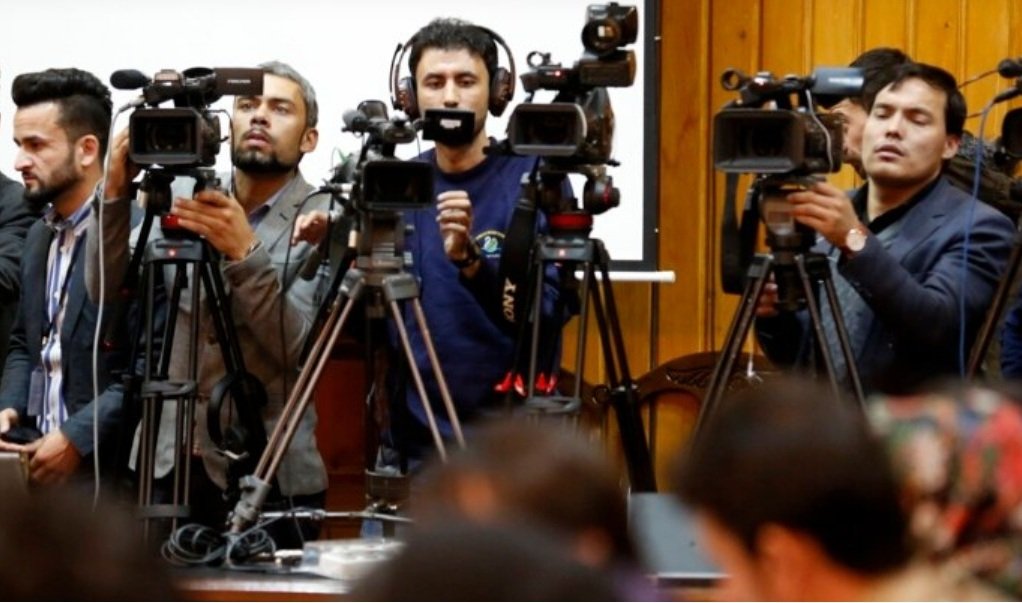
Civic space in Afghanistan remains rated as ‘closed’. Since the Taliban seized power in August 2021, the de facto authorities continue to commit human rights violations and crimes under international law against the Afghan people, especially women and girls, with absolute impunity. Civil society activists, journalists and others face severe restrictions, and activists have been arbitrarily arrested and detained for their criticism of the Taliban. Those who are detained are often denied access to urgent medical and legal assistance. Others have faced harassment, intimidation and violence, and some have been killed. The Taliban have also raided media offices and detained journalists. Some activists have been tortured and ill-treated.
In June 2025, the UN Human Rights Council convened its 59th session, during which Richard Bennett, the UN Special Rapporteur on the situation of human rights in Afghanistan, presented a report highlighting the Taliban’s systematic weaponisation of the justice sector to entrench gender-based persecution. According to Bennett, the Taliban have manipulated judicial mechanisms to target women and human rights defenders, using vague and discriminatory laws to justify arrests, prosecutions, and harsh sentences.
On 8th July 2025, the International Criminal Court (ICC) issued arrest warrants for two senior Taliban leaders - Haibatullah Akhundzada, Supreme Leader, and Abdul Hakim Haqqani, Chief Justice - on charges of crimes against humanity, specifically gender-based persecution. Human rights groups have lauded the decision as a "vital step" toward holding perpetrators accountable for the widespread and institutionalised discrimination against women and girls in Afghanistan.
The UN Committee on the Elimination of Discrimination against Women (CEDAW) set a significant precedent by conducting its first treaty body review of Afghanistan since the Taliban's return to power in 2021. This review was exceptional as it proceeded without the participation of the current de facto authorities, who were invited but did not respond. Instead, CEDAW engaged in a public dialogue with a delegation comprising former Afghan officials and women's rights leaders in exile.
On 15th August 2025, UN experts issued a statement highlighting that the Taliban continues to enforce an institutionalised system of gender oppression, crush diversity and dissent and muzzle independent media while showing outright contempt for human rights, equality and non-discrimination, and a fair and just rules-based order.
In recent months, there has been an escalation in attacks on press freedom and the detention and prosecution of journalists. There has been monitoring of political content, arrest of social media users and crackdown on music and artists. Activists and academics continue to be detained as aid cuts impact on civil society. Protests continue online despite risks and threats to activists.
Expression
Escalating attacks on press freedom
In July 2025, the Afghanistan Journalists Centre (AFJC) reported a total of 140 violations of media freedom during the first half of 2025—a 56 percent increase compared to the same period in 2024. These violations encompassed threats, arrests, closures of media outlets, and forced compliance with state media policies. At least 20 journalists were arrested, with most accused of propaganda against the de facto authorities through collaboration with external media. These detentions ranged from a few hours to several days or months. Fourteen of the detainees were released after pledging to comply with the regime’s media policies.
AFJC stated that as of July 2025, six journalists remain jailed in Pul-e-Charkhi prison in Kabul, and Bagram prison in Parwan province, serving sentences ranging from six months to one year. Additionally, three other journalists detained in Kabul and Ghazni last year are currently serving prison sentences.
Additionally, 26 media outlets - 23 of them local TV stations - were forced to cease operations; most either shut down or reverted to radio broadcasting. Additionally, two private radio stations and one television station were temporarily shut down by intelligence services on allegations of collaboration with exiled media entities.
The Taliban has also extended its ban on broadcasting images of living beings to Laghman province, making it the 20th province under this restriction.
Detention and prosecution of journalists
The situation for journalists in Afghanistan remained dire, marked by arrests, detentions, and reports of torture that highlight the Taliban’s relentless crackdown on independent media.
A Taliban court in Ghazni has sentenced Sulaiman Rahil, the editor-in-chief of Radio Khushhal in the province, to three months in prison, the Afghanistan Journalists Center (AFJC) said, condemning the act as part of a broader crackdown on independent media.… pic.twitter.com/nY2ksZ2463
— Amu TV (@AmuTelevision) May 28, 2025
On 22nd May 2025, according to the International Federation of Journalists (IFJ), Sulaiman Rahil, editor of Radio Khoshhal, received a three-month prison sentence from a Taliban court in Ghazni for “propaganda”, reportedly prompted by the journalist’s recent social media posts addressing social issues and the worsening economic conditions facing local communities. He was detained on 5th May 2025 in southeastern Ghazni Province by intelligence agents.
On 12th July 2025, it was reported that journalist Aziz Watanwal was detained by Taliban agents during a raid on his home in Jalalabad, Nangarhar province, with no official reason given. His media equipment was confiscated, and he remains in custody.
On 15th July 2025, Pixel Media Content Company’s director and deputy director in Kabul, Ahmad Nawid Asghari and Mushtaq Ahmad Halimi, were taken into custody, with the Taliban alleging the pair had dubbed an ‘un-Islamic’ television series for foreign media outlets. Both men allegedly pledged adherence to Taliban media directives on 28th July, before being released on 30th July.
On 21st July, an unidentified media worker was detained in Kabul, accused of providing technical support to exiled Afghan news outlets.
According to IFJ, the Taliban’s Ministry for the Propagation of Virtue and Prevention of Vice detained Abuzar Sarempuli, the editor-in-chief of Tawaba News Agency, along with two journalists from the outlet, Bashir Hatef and Ahmad Shekab Nazari, on 24 July 2025. The Taliban detained these three media workers on charges of receiving funding for projects supporting women.
On 7th August 2025, three staff members of Daikundi station Radio Nasim were detained and subsequently released, with equipment seized.
Monitoring of political content
According to the UN Assistance Mission in Afghanistan (UNAMA), in a meeting on 29th June 2025, the de facto Ministry of Information and Culture shared a new directive with media representatives which regulates political content in the media. The directive reinstates political talk shows, which were suspended in February 2025.
The new directive requires political analysts to adhere to Sharia and to obtain an identification card issued by the de facto Ministry of Information and Culture, under whose supervision a committee was also established to monitor all political content.
Arrest of social media users
In May 2025, it was reported that the Taliban’s Ministry for the Propagation of Virtue and Prevention of Vice had arrested several social media users, accusing them of engaging in “illegitimate” online activities.
The arrests mark a continued crackdown on digital content deemed inappropriate under the group’s strict interpretation of Islamic values.
Saif-ul-Islam Khyber, a spokesperson for the ministry, released videos of two detained TikTok users expressing regret for their actions. One of them, known online as “Haroon Pakora”, appears in what seems to be a forced video confession, stating he was detained for speaking with women during TikTok livestreams. In the video, he pledges not to interact with women again and urges women in Afghanistan and abroad not to join his live broadcasts. Some social media users have alleged that the Taliban shaved Haroon’s head during his detention.
Meanwhile, Taliban intelligence forces in Baghlan province arrested another prominent TikTok user, Sher Ali Mubarez on 13th May 2025. Mubarez was known for hosting live entertainment programmes featuring humour and satire. He was detained on charges of “inappropriate activity” on social media.
In 2023, the Taliban banned the use of TikTok and PUBG in Afghanistan, claiming the apps were corrupting the country’s youth. Despite the ban, TikTok remains widely popular, particularly among younger Afghans.
In July 2025, the Taliban arrested dozens of individuals across Afghanistan, primarily for social media content labelled “un-Islamic.” These detentions, often carried out during nighttime raids by the General Directorate of Intelligence and the Ministry for the Promotion of Virtue and Prevention of Vice, have occurred in multiple provinces, including Kabul, Ghazni, Herat, and Kandahar. Families of the detainees report being denied access to information about their loved ones’ whereabouts or legal status.
Crackdown on music and artists
Since returning to power in August 2021, the Taliban have waged an unrelenting campaign against music and cultural expression, transforming what was once a vibrant part of Afghanistan’s heritage into a punishable offence. The crackdown has intensified in recent months.
On 21st June 2025, five musicians in Taloqan’s Sixth District, Takhar province, were arrested after being found playing musical instruments inside a private home. In August 2025, a wedding celebration in Nangarhar province ended abruptly when Taliban forces raided the event, arresting seven people - including the groom- destroying the musical equipment, and releasing the detainees only after extracting promises never to play music again.
The repression is not confined to these isolated arrests. Over the last four years, Taliban authorities have detained dozens of musicians and destroyed hundreds of instruments, both in public raids and targeted operations. Their justification remains the same - claims that music leads to “moral corruption” and “public disturbance.” This sweeping ban has forced many artists into exile, while those who remain live under constant fear, driving musical expression underground or silencing it altogether.
UN report highlights restrictions on women and freedom of expression
In August 2025, UNAMA published its Human Rights Report for April to June 2025. In the report the body highlighted that the de facto authorities’ monitoring of women’s adherence to the hijab instruction appeared to intensify in some parts of the country. Women were also denied access to public recreational areas such as parks and gardens, in line with the de facto Ministry for the Propagation of Virtue and the Prevention of Vice’s November 2022 instruction barring women from using parks, gyms and public baths.
The de facto authorities have also increased their monitoring of and restrictions on social media and poetry, further curtailing freedom of expression. In May, the de facto Ministry for the Propagation of Virtue and the Prevention of Vice announced that it has extended its monitoring of social media. On 19th June, the Taliban leader approved the Law on Regulating Poetry Gatherings, which intends to regulate poetry in accordance with Islamic principles and culture.
Association
Social activist detained
On 14th May 2025, Taliban intelligence forces detained social activist Imdad-ul-Haq Tural in the Argoy district of Badakhshan province. Local sources report that the social activist was targeted for his civic activities related to the Uzbek community and the arrest was carried out without an official warrant or a clear explanation. The Taliban have not disclosed the reasons for his detention or his current whereabouts. Rights advocates view this as part of the ongoing crackdown on civic activists and the broader restrictions on civil society in Afghanistan.
Crackdown on academics
The Taliban's systematic dismissal of university staff across Afghanistan has intensified, with a disproportionate impact on female academics. Reports from various provinces indicate that hundreds, particularly women, have been removed from their positions without clear justification.
In May 2025, it was reported that at Kabul University, approximately 264 staff members were dismissed, including 60 to 70 female professors holding master's and doctoral degrees. These dismissals were communicated verbally, with official letters withheld from public view under claims of confidentiality. Similar actions were reported at Badakhshan University, where 36 female faculty members were let go, leaving many without their primary source of income.
The crackdown isn’t limited only to dismissals; others have faced imprisonment and harsh sentences.
In May 2025, the Taliban sentenced the director of the Ofuq-e Naw English language centre, Sayed Habib Roshan, and five of its teachers to prison on charges of “teaching Christian content” in Daikundi province. The group was tried by the Taliban’s primary court in Khidir district. Roshan and two teachers received five-month sentences, while the other three teachers were sentenced to three months each.
Amu TV's report on 17th July 2025, highlighted the case of Abdul Aleem Khamoosh, a high school principal in Paktika Province, who was sentenced to death by a Taliban court on charges of blasphemy. Local sources suggest that the accusation could be due to Khamoosh's advocacy for modern sciences in the school curriculum, which some found controversial. This incident underscores the broader trend of restrictions on academic freedom and freedom of expression under Taliban rule.
Aid cuts impact on civil society
The sharp decline in international aid has significantly undermined the work of human rights defenders, women activists, and journalists. By June 2025, humanitarian funding had dropped to just two-thirds of the previous year’s level, hindering the reach and effectiveness of critical protection and support services—particularly for displaced communities and women-led civil society groups.
Human Rights Watch warned that this decline in aid - coupled with mass deportations - has deepened one of the world’s worst humanitarian crises. The organisation highlighted that journalists and civil society actors faced mounting threats, limited resources, and shrinking operational space, making their work increasingly untenable.
Peaceful Assembly
Protests continue online despite risks and threats
Members of the “Spontaneous Movement of Struggling Women of Afghanistan,” in protest against the fourth anniversary of Taliban rule, have condemned four years of tyranny, repression, poverty, and the complete deprivation of women’s rights, and emphasized that the voice of Afghan… pic.twitter.com/CMA7idnpX5
— Zan TV (@ZANTV) August 14, 2025
15th August 2025 marked the fourth anniversary of the Taliban’s return to power. Activists outside the country staged protests to mark the occasion and voice their rejection of Taliban rule.
However, inside the country, exercising the right to protest is extremely dangerous. With the Taliban’s bans on public demonstrations, constant surveillance, and routine arrests of protesters, assembling publicly has become increasingly unsafe and fraught with security risks.
Activists have, therefore, shifted to methods that reduce immediate physical danger, mainly by sharing videos of small, discreet protests, short video messages expressing dissent, and statements through trusted media outlets, including those operated in exile.
However, according to a report by Kabul Now, the virtual space that serves as the main arena for public dissent has also become increasingly hostile. The Taliban have established a special digital surveillance unit to monitor the online activities of activists.
Women and civil society members face systematic online harassment, including harmful and threatening messages from Taliban and pro-Taliban actors. This targeted intimidation has led many to reduce their online engagement or withdraw entirely from public discussions to protect their safety and well-being.