General
In April 2023, fighting between the Rapid Support Forces (RSF), a paramilitary group led by General Mohamed Hamdan Dagalo, commonly known as Hemedtin and the Sudan Armed Forces (SAF), led by General Abdel Fattah al-Burhan erupted in Kharoum and spread rapidly across the country.
Since then, thousands of civilians have been killed, with many more subjected to rape and other forms of sexual violence, forced displacement, starvation, looting and the destruction of homes, health facilities, markets and other civilian infrastructure. An unknown number of Sudanese remain missing, while humanitarian workers and human rights defenders (HRDs) are being threatened, and attacked and killed. Various non-state armed groups and militias have likewise been involved in the conflict and wider violence, at times allied to either the RSF or SAF.
From the 2018 revolution to military coup
The outbreak of the war followed the Sudanese revolution, which started in December 2018 and toppled dictator Omar al-Bashir and his government, and a military coup on 25 October 2021, following ongoing tensions between military and civilian factions in the transitional government. The coup, which dissolved the Sovereign Council and the Transitional Government, sparked mass protests which were met with lethal and brutal force. Security forces arrested 63 government officials, including Prime Minister Abdalla Hamdok, six ministers and several members of the country’s civilian leadership, such as members of the Transitional Government and Transitional Sovereign Council, who were placed under house arrest or taken to unknown locations. A state of emergency was declared by General Abdel Fattah al-Burhan.
A political agreement was signed on 21 November 2021, with Abdalla Hamdok reinstated as prime minister and the transition to civilian rule restored, with an agreement for the release of political prisoners. Less than two months later, on 2 January 2022, Hamdok announced his resignation as prime minister due to political deadlock between the civilian and military factions, sparking further political uncertainty. In December 2022, a deal was signed between the military and some civilian groups.
War, atrocities and humanitarian crisis
The war that erupted in April 2023, as a result of the power struggle between Sudan’s Armed Forces (SAF) and the paramilitary Rapid Support Forces (RSF), has had a devastating impact on civilians. Both forces have a history of perpetrating serious human rights violations, including in Darfur and during the crackdown of protests during the revolution and following the 2021 military coup. According to human rights groups, both the SAF and RSF have committed war crimes and other serious violations of international humanitarian law. In July 2025, the International Criminal Court (ICC) told the UN Security Council there are “reasonable grounds” to believe war crimes and crimes against humanity are being committed in western Sudan, including targeted sexual violence against women and girls of specific ethnicities in Darfur.
In addition, the RSF has committed crimes against humanity, including in an ethnic cleansing campaign in West Darfur in 2023, and widespread acts of sexual violence in areas of Khartoum, the capital, since 2023. In January 2025, the United States formally declared that Sudan’s Rapid Support Forces had committed genocide during the conflict.
As of October 2025, no less than 150,000 people have been killed in the ongoing conflict. Nearly million people have been forcibly displaced, almost four million people have fled to neighbouring countries, and some 30.4 million people – over two-thirds of the total population – need assistance. Women and girls have been disproportionately impacted by the conflict.
The United Nations declared it to be one of the “most devastating humanitarian and displacement crises in the world.”
An emblematic case of the atrocities committed in Sudan is El Fasher, a city in North Darfur. On 26 October 2025, after a siege of 18 months, the paramilitary Rapid Support Forces (RSF) entered and captured El Fasher. Following the seizure of the city, reports of unimaginable atrocities committed by RSF forces surfaced, including the massacre of hundreds, if not thousands, of killings, including hundreds of patients and staff killed at a hospital. In the immediate aftermath, the United Nations Human Rights Office said it had received appalling reports of summary executions, including indications of ethnic motivated killings. During the siege, which lasted 18 months, CSOs had warned of systematic violations taking place against the estimated 250,000 trapped civilians, including mass killings, sexual violence, starvation and targeting of health and other civilian infrastructure. A devastating starvation campaign unfolded as vital supplies, including food and medicine, was blocked from entering the city while civilians and displaced persons were prohibited from leaving.
Despite multiple ceasefire declarations since the conflict began on 15 April 2023, fighting has continued and intensified, with civilians paying the highest price.
In this context, civic space has deteriorated rapidly, with the detention, and killing of HRDs, humanitarian workers and journalists, internet and communication shutdowns, raiding and looting of CSOs and attacks on freedom of expression, among other severe civic space violations. This update outlines civic space trends and violations since the outbreak of the war in April 2023.
Association
Systematic attack on HRDs: arbitrary detentions, abductions, enforced disappearances
Since the start of the conflict in April 2023, there has been a systematic targeting of HRDs and humanitarian workers, including through arbitrary detentions, judicial harassment and enforced disappearances, by both warring parties. Between January and June 2025, the CSO Committee of Justice documented at least 31 cases of arbitrary detention and 23 enforced disappearances of HRDs, including lawyers, doctors, journalists, teachers and humanitarian workers, who were targeted because of their activism, professional work, ethnic identity or perceived political affiliation.
Often, arbitrary detentions and arrests occur on accusations of “collaboration” with the opposing warring party. In a 2025 report, OHCHR notes that checkpoints and Starlink’ satellite internet connection (see under Expression) locations are regularly used for arrests, often following telephone searches that reportedly uncover “anti-war” content or other material deemed to indicate “collaboration” with the opposing warring parties. Among groups targeted are members and volunteers of resistance committees, neighbourhood grassroots groups who have been mobilising and organising communities since the protest movement of 2018. Members and volunteers of Emergency Response Rooms (ERR), community-led local initiatives that grew out of resistance committees and provide life-saving humanitarian assistance, also face arbitrary detentions, threats and smear campaigns. For example, in May 2025, OHCHR received information on the detention of at least 14 HRDs and members of resistance committees by security forces in Kadugli, South Kordofan. In March 2025, an ERR member in Khartoum received death threats on social media and in person from a member of an armed group. On 20 June 2025, security forces reportedly arrested Bahaa El-Din Suleiman, a member of the Third Degree Extension Resistance Committees in Khartoum. On 25 August 2025, it was reported that Barir Al-Toum, a volunteer in the Red Sea Emergency Room, providing humanitarian assistance to war-displaced communities, was arrested in Port Sudan. Between April 2023 and December 2023 alone, the General Intelligence Service and Military Intelligence arrested at least 109 members of resistance committees, according to a March 2024 report of OHCHR.
HRDs are being and have been prosecuted, with state authorities using restrictive provisions and laws such as ‘offences against the State’, ‘waging war against the State, ‘espionage’ and ‘undermining constitutional order’ under the Sudan Criminal Act 1991 and other provisions of the Cybercrimes Act and the Anti-Terrorism Act. In May 2023, the Sudanese Sovereign Council reinstated the so-called National Security Laws, which had previously been used to censor, repress and criminalise the work of CSOs and activists, and was suspended after the 2018 revolution.
On 5 October 2025, the Singa Criminal Court sentenced Abubakr Mansour Abdela, a lawyer and human rights defender, to death by hanging. The HRD was convicted for offences against the State and waging war against the State under articles 50 and 51 of the Sudan Criminal Act 1991. The charges are believed to be related to the humanitarian assistance Manour Abdela has provided since the start of the war, by handing out medicines from his brother’s pharmaceutical company, with authorities claiming he has “collaborated” with RSF. Earlier, on 30 April 2025, the Singa General Court handed down a 20-year prison sentence and a fine of 10 million Sudanese pounds (approximately USD 16,600), a sentence rejected by the HRD’s lawyers, who filed an appeal. On 1 October 2025, one of the HRD’s lawyer, Abubakr Elmahi, was also arrested.
On 20 October 2025, human rights lawyer Montasir Abdallah was released from prison after the Criminal Court of Port Sudan acquitted him of all charges under the Criminal Act, including espionage, undermining the constitutional order and waging war against the State under article 53 and 85 of the Criminal Code. Montasir Abdallah was arrested in Port Sudan on 7 September 2024, reportedly after requesting investigation records of political detainees, and was charged on 3 October 2024. However, the Criminal Court convicted him under the Cybercrimes Act and sentenced him to one year and four months in prison, in addition of a fine of one million Sudanese pounds (approximately USD 1,660), but was released due to the time he had already served since his arrest on 7 September 2024. Abdallah represents the defence team for prosecuted leaders of the Democratic Civil Forces Coalition ‘Taqqaddum’, a coalition of political parties, civil society groups and professional groups calling for an end of the war. In April 2024, acting Attorney General and the Office of the Public Prosecutor filed criminal charges against former civilian Prime Minister Abdalla Hamdok and 15 other Taqqaddum leaders, many of whom are abroad, including crimes against humanity, ‘inciting war against the state’, ‘undermining constitutional order’ with some carrying the death penalty.
Recently, on 23 September 2025, officers of the SAF General Intelligence Service arrested and disappeared HRD and trade union leader Abdelwahab Ahmed Mohamed Hashem, widely known as “Bob” from his office Al-Obeid in North Kordofan. Abdelwahab Ahmed Mohamed Hashem, the head of the Workers’ Coordination Committee, an independent body representing public sector employees, was held incommunicado for three weeks, and interrogated twice, without being charged. According to Front Line Defenders (FLD), the HRD’s arrest could be linked to an audio message, shared in a private professional group, in which he discussed the situation of the trade union movement in North Kordofan, confirming the legitimacy of the Workers’ Coordination Committee established after the repeal of the 2010 Trade Unions Act, while also expressing concerns about the non-payment of salaries for 16 months.
Meanwhile, Amnesty International said, in February 2025, they had received reports of lists being circulated in Khartoum, which include names of civilian activists, human rights defenders, medical workers and humanitarian workers to be targeted in retaliatory attacks by SAF for alleged collaboration with RSF and allied armed groups.
After the outbreak of the war in April 2023, monitoring human rights abuses became a risky endeavour. The Youth Citizens Observers network, a group founded in 2021, reported in March 2024 that it has faced harassment and threats of detention from security forces as they attempt to move across different locations to document violations. A member of the Missing Initiative, a local group with a platform that allows people to post information about missing people, also reported facing threats.
Reports on enforced disappearances and torture during detention are commonplace. On 22 December 2024, members of the RSF reportedly abducted lawyer Khaled Omar Al-Sadiq in front of his home in Khartoum, and held him incommunicado, amounting to enforced disappearance. OHCHR, in its latest report, said to have received numerous accounts of torture and ill-treatment both in formal and informal detention facilities, and regardless of the detaining party, including “severe beatings, electric shocks, burning with hot metal rods and sexual violence”. Between January and June 2025, OHCHR confirmed at least 10 deaths in custody of individuals detained by RSF and SAF, including volunteer medics and local humanitarian volunteers.
Systematic violations against women and women HRDs (WHRDs)
In May 2025, a group of independent UN human rights experts said that widespread and systematic violations were committed against women and girls in Sudan, including conflict-related sexual violence, abductions and killings. WHRD and women frontline workers have reportedly been raped, killed and harassed for assisting survivors or documenting abuses. In a statement on 14 April 2025, International Service for Human Rights (ISHR), SUWRA, and WHRDMENA Coalition highlighted that at least 25 women are imprisoned within SAF-controlled areas on accusations of ‘collaboration with the RSF’, with some receiving execution sentences. Their lawyers and families have also been threatened. They have reportedly been charged under Articles 50 and 51 of the Sudanese Criminal Law, referring to crimes of ‘undermining the State and treason.’
On 19 April 2025, military authorities arrested WHRD and journalist Imtithal Abdelfadeel at a bus station in Kassala when she was about to travel to Port Sudan. The WHRD was to travel from Port Sudan to outside of Sudan on an assignment for Aljareeda Alsudaia, the newspaper Abdelfadeel works for, often reporting on social and economic rights of internally displaced people. During the arrest, authorities covered her eyes and confiscated her phone. Abdelfadeel was held at a detention facility for three days, held incommunicado, was interrogated and finally coerced, under threats and duress, into signing an agreement which includes a travel ban.
WHRDs have also been killed. On 26 October 2023, an unidentified person shot and killed WHRD Bahjaa Abdelaa Abdelaa while she was attending a relative’s funeral in Kalma IDPs camp in Nyala, South Darfur. Bahjaa Abdelaa Abdelaa, a member of Women Revolutionary group and of the Darfur Collation of Women Human Rights Defenders (TMD), had previously reported to have received death threats due to her work.
Killing of HRDs, humanitarian workers
Since April 2023, several human rights defenders and humanitarian workers have been killed due to their work. On 4 August 2023, the tortured body of human rights defender and lawyer Ahmed Mohamed Abdella was found in Nyala, South Darfur, less than 24 hours after he was kidnapped from his house by a group of unknown armed individuals. The perpetrators called Abdell’s family on the same day to demand a ransom of SDG 30 million to release him. Abdella worked as a lawyer for the Darfur Bar Association and provided legal aid to victims of human rights violations. His neighbour, Adam Omer Jad Elrab, who used to work with the International Medical Corps (IMC) in Darfur, was also found dead. Both men had severe torture marks on their bodies.
On 17 and 18 June 2023, three HRDs were killed in El Geneina, West Darfur. Abd Elrazeg Adam Mohammed, who worked for the Darfur Network of Monitors, was killed alongside his family. Tareg Hassan Yagoub Elmalik was a member of the Darfur Bar Association and the Sudanese Bar Association. El Sadeg Mohammed Ahmed Haroun was a lawyer at the Darfur Bar Association and was part of a group of lawyers who filed cases against the RSF, accusing them of horrific attacks on the Krinding camp for internally displaced persons in El Geneina. Earlier in May 2023, the Darfur Bar Association reported that the HRDs were receiving death threats from military members.
On 28 May 2023, lawyer Mohammed Ahmed Kudia was killed, his property looted and burned down by RSF members. Ahmed Kudia defended victims of attacks on camps for internally displaced persons (IDPs) in El Geneina and provided legal aid to victims of human rights violations in Darfur. On 30 May 2023, Khamis Arabab, a lawyer and member of the Darfur Bar Association, was killed when his house in El Geneina was attacked by RSF members. On 11 June 2023, Khidir Sulieman Abdelmageed, head of the Afkar- a human rights organisation- was attacked and killed on the road in El Geneina while trying to leave his house after receiving death threats. The human rights defender worked with several national and international human rights organisations that monitored human rights violations in Sudan. The Darfur Bar Association reported that all three defenders had received death threats from militia members while working on cases related to attacks on IDP camps in El Geneina before their killings.
Humanitarian, volunteers and health workers have also been killed. According to a report by OHCHR, at least 30 humanitarian and health workers were killed and eight were injured in North Darfur, Khartoum, Al Jazirah and West and South Kordofan between January and June 2025. At least 11 of those were summarily executed in April 2025, including 10 staff members of an NGO providing health care in Zamzam IDP camp in North Darfur, who were executed by RSF fighters while seeking shelter during an attack on the IDP camp. On 2 June 2025, five aid workers were killed when their humanitarian convoy, carrying vital nutritional supplies were attacked by drones 80 km away from El Fasher, North Darfur. According to the UN Fact-Finding Mission, at least 85 Sudanese humanitarian workers have been killed between April 2023 and April 2025.
Transnational repression
The Sudanese government has extended its crackdown on dissent beyond its border, targeting anti-war figures and political opponents living abroad. This includes the prosecution of former civilian Prime Minister Abdalla Hamdok and 15 other Taqqaddum leaders, many of whom are abroad. In April 2024, the Acting Attorney General and the Office of the Public Prosecutor filed criminal charges including crimes against humanity, ‘inciting war against the state’, ‘undermining constitutional order’ with some of these charges carrying the death penalty. In January 2025, the Public Prosecutor General for Economic Crimes published a list of 24 individuals, including former leaders of the Taqqadum Coordination Committee, activists and journalists, considered fugitives under the 1991 Criminal Act and the Empowerment Removal Law. Some of these targeted individuals who have fled abroad told the Independent International Fact-Finding Mission that Sudan’s harassment extended beyond borders, including difficulties in renewal of passports, preventing them from travelling.
Other cases of transnational repression were reported, including threats to journalists, WHRDs and lawyers. On 19 May 2025, Sudanese asylum seeker and activist Mohammed Adam Arbab, also known as “Tupac”, was subjected to enforced detention for 24 hours at the Embassy of the Republic of Sudan in Tripoli, Libya. He was unlawfully handed over, without any legal procedure, to Libyan authorities in preparation for his forced deportation to Sudan. In July 2024, prominent human rights lawyer and activist Hanan Hassan Hussein, member of the group Emergency Lawyers, saw the renewal of his passport denied by the Sudanese embassy in Uganda.
Restrictions on CSO operation
The eruption of the war has led to the destruction, looting of offices and supplies, displacement of staff and CSOs ceasing operations or establishing in safer areas or abroad.
Emergency orders and other security-related measures, imposed by both RSF and SAF, constrain the work of CSOs. As of April 2025, at least 115 emergency orders had been imposed or renewed, regulating curfews, restrictions on movement, freedom of opinion and expression and peaceful assembly. Most of these orders failed to meet international human rights standards applicable to a state of emergency, including requirements of legality, necessity and proportionality. An OHCHR report published in January 2025 noted that the organisation of activities in various areas by CSOs were subject to prior approval by relevant authorities, with requests requiring an agenda and list of facilitators and participants. In some cases, approvals were denied by authorities, particularly for human rights-related activities. In other cases, the Sudanese authorities or intelligence services cancelled events, requested to be present at the activities or interrogated the organisers. In one documented case by OHCHR, a women’s rights organisation in Kordofan region was requested to suspend an activity, previously authorised, and its staff questioned by intelligence officers.
In January 2024, a decree issued by Federal Governance Minister Mohamed Saleh dissolved all grassroots committees that had been set up during the revolution. Prior, similar regulations were made by state authorities of River Nile, Northern State, Gedaref and others, reportedly on accusations of “collaborating with RSF”. This is seen as targeting ERRs, resistance committees and committees of FFC (Forces of Freedom and Change). The decree also stated alternative committees will be set up.
Meanwhile, bureaucratic administrative requirements impede the operation of CSOs and humanitarian aid organisations. The Humanitarian Aid Commission (HAC) is the government body coordinating humanitarian aid and the body issuing permits to operate. RSF set up the Sudanese Agency for Relief and Humanitarian Operations (SAHRO), a licensing and registration body in RSF-controlled areas. Both HAC and SAHRO are accused of imposing measures restricting the operations of CSOs and humanitarian organisations and weaponising humanitarian aid. For example, several organisations told OHCRC in 2024 they experienced challenges in the requirements for renewing their registration with HAC, in particular meeting the high fees for national CSOs and the associated costs of submitting the registration in person in Port Sudan. HAC registration is described as “an expensive and laborious process that can lead to further challenges” including increased state scrutiny. In May 2025, the State of Khartoum announced stated that all relief initiatives in the state must register with the Humanitarian Aid Commission (HAC), a government body overseeing humanitarian operations in Sudan. Registration with HAC would include a registration fee of 800 USD and the submitting of a list of names of employees and volunteers. In April 2025, a HAC directive suspended the operations of approximately 30 humanitarian organisations, including three international organisations. In July 2024, HAC said that all international, national and local groups in Sudan registered with SARHO would not be allowed to operate in SAF-controlled areas. Furthermore, SAF has expelled humanitarian aid workers, refused visas for humanitarian workers and tried to obstruct famine research. Both HAC and SAHRO have been accused of obstructing and impeding the delivery of humanitarian aid.
In another worrying development, authorities reportedly ordered the dissolution of the leadership of all trade unions, and replaced them with state-appointed “preparatory committees, appointed by the Registrar General of Labour Organisations, under Decision 9. Some observers commented that the decision offers no clear path or timeline for new elections, grants the Registrar undefined discretionary power and opens the door for government encroachment on union independence. The Sudanese Professionals and Syndicates Coordination, in a statement, said they had, as of July 2025, documented 290 violations against trade unionists and workers since the war broke out, including arbitrary arrests, enforced disappearances, torture, extrajudicial killings, forced labour, gender-based violence, mass dismissals and witholding of salaries. This has led to a “near-total paralysis of independent trade unions”. Abdel Fattah Al Burhan previously issued an order dissolving all trade unions and professional associations following the military coup of October 2021.
Peaceful Assembly
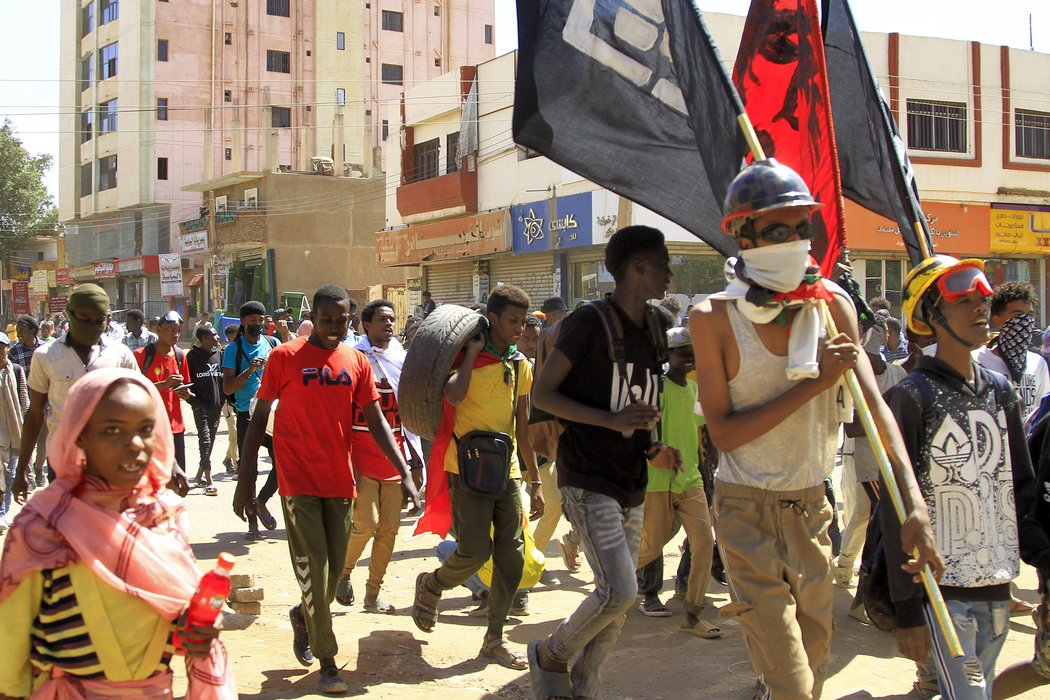
Emergency orders (also see above) imposed since the outbreak of the war, has severely restricted the right to peaceful assembly in Sudan. As of April 2025, at least 115 emergency orders had been imposed or renewed, regulating curfews and restricting movement.
On 21st July 2025, women and girls in Kadugli city, located in South Kordofan of the Nuba Mountains, organised a protest urging the Sudanese military to release food from its storage facilities to address the city’s ongoing food shortage. Sudanese police detained at least eight women for two days following the demonstration. Hunger levels have reached acute levels particularly in the hardest hit areas, which have endured a systematic starvation policy engineered through inconsistent access, targeting of humanitarian workers and supplies, while aid convoys face delays, denials and security threats.
In early June 2025, police fired tear gas and rubber bullets to disperse a peaceful sit-in in the northern city of Wadi Halfa, where residents were protesting new electricity cuts.
Expression
Destruction of Sudanese media
Media freedom and journalists have suffered greatly under the civil war that started in April 2023. According to reports, approximately 90 percent of the media infrastructure was destroyed, including 27 newspapers that have stopped operating. Both warring parties have targeted journalists, leaving no safe zones for journalists in either SAF or RSF controlled areas. While the SAF forces have been accused of arbitrary detentions, interrogations and torture of journalists they accuse of false information or collaborating with RSF, the latter has been accused of abductions, extortion and killing of journalists in areas controlled by them. The Sudan Journalists’ Syndicate (SJS) has documented over 550 violations against media workers.
While many journalists were displaced or forced to flee into exile amid the violence and the war, with the majority of media infrastructure and offices destroyed or looted, those that remained were subjected to killings, detentions, enforced disappearances, attacks and other abuses. Internet shutdowns and disruptions have restricted access to information while social media became a battleground of propaganda and misinformation by both warring parties.
The Sudan Media Forum (SMF), a network of journalists in Sudan and in exile, says that the number of active journalists inside Sudan is somewhere in between 250 and 300 journalists, while before the war an estimated 1,500 journalists were active. SMF further says that only an estimated 70 journalists are working in the conflict zones, and journalists need to hide and work anonymously. Free movement of journalists is extremely limited, in particular in the East of Sudan where journalists need special permits from the SAF army.
Killing of journalists
According to the Committee to Protect Journalists (CPJ), as of October 2025 at least 15 journalists have been killed since April 2023. Mohamed Abdelaziz, Secretary General of the Sudan Journalists’ Syndicate (SJS) told Reuters that 31 journalists have been killed. Sudan remains one of the most dangerous countries in the world for journalists since the conflict between the SAF and the RSF broke out.
Many journalists were killed in the fighting and violence between warring parties. On 4 October 2025, journalist Al Nour Suleiman succumbed to his injuries following a drone strike on his home in El-Fasher, North Darfur the previous day. The drone attack was reportedly carried out by the paramilitary Rapid Support Forces (RSF). Suleiman worked as an editor and presenter of El Fasher Radio and was previously a media director at the Governor’s Office. Also in El Fasher, on 14 April 2025, journalist Ahmed Mohamed Saleh Sayyidna was killed in a shelling attack amid ongoing fighting between RSF and RAF. Freelance photojournalist Al-Shykh Al-Samany Saadaldyn Mousa Abdullah, also known as Sheikho, was killed on 18 May 2025 in a drone strike, while he was covering an event organised by Sudan Shield Forces, a pro-RSF paramilitary group, in Al-Butna, in central eastern region. On 2 May 2025, Hassan Fadl Al-Mawla Mousa, presenter for West Kordofan Radio and a correspondent for Sudan National Radio Corporation and Beladi 96.6 FM, was killed amid gunfire when RSF forces took control of Al-Nuhud in the province of West Kordofan. According to the International Federation of Journalists (IFJ), two journalists a cameraman of the Sudanese National Television and their driver were killed on 1 March 2025 in Khartoum. Farouk Ahmed Mohamed Al-Zaher, Ibrahim Mohamed Mudawi and Magdy Abdel Rahman Fakhr El-Din were covering events were covering events at the presidential palace when they were hit by a drone attack. On 5th June 2024, journalist Makawi Mohamed Ahmed, a reporter at the official state news agency of Sudan (SUNA), and his brother Shamseddine Mohamed Ahmed, killed by the RSF during its attack on the village of Wad Al-Noura, in Al Jazirah state, which killed about 100 people.
Journalists and media workers have also been killed by or after having been targeted by RSF and RAF. On 13 February 2025, prominent journalist Yahya Hamad Fadlallah died in a hospital, one month after SAF arrested him and his son at their home in the capital, Khartoum. Fadlallah, who was reportedly tortured, was falsely accused of collaborating with the RSF and denied medical treatment for his diabetes. On 4 June 2024, RSF raided the home of journalist Muawiya Abdel Razek and shot him dead, along with three of his family members. Earlier in December 2023, the RSF detained Abdel Razek, an investigative journalist who worked with many local newspapers, accusing him of working with military intelligence. On 1 March 2024, armed soldiers in El Fasher, the capital of North Darfur state, shot and killed Khalid Balal, media director at the Sudanese government’s Supreme Council for Media and Culture, inside his home. In a statement, CPJ said it was unable to establish which paramilitary group was responsible for the killing. On 10 October 2023, journalist Halima Idris Salim, from independent news outlet Sudan Bukra, was killed by the RSF when they ran over her with a vehicle. Reporters Without Borders (RSF) called for an independent investigation into the reporter's death.
Detention, abduction, physical assault, intimidation of journalists
Since April 2023, journalists have been subjected to arbitrary arrests, abductions, enforced disappearances, threats and other abuses. Both warring partners have been accused of having perpetrated abuses against journalists. While the SAF forces have been accused of arbitrary detentions, interrogations and torture of journalists they accuse of false information or collaborating with RSF, the latter has been accused of abductions, extortion and killing of journalists in areas controlled by them.
Freelance journalist Muammar Ibrahim was reported to have been detained by RSF forces on 26 October 2025 when a video circulated on RSF social media groups showing the journalist, who identified himself and confirmed he had been detained while attempting to leave El Fasher while being under siege. According to Article 19, the journalist, who had been reporting from El Fasher while the city had been under siege for 18 months, was accused of ‘defamation’ over his coverage of atrocities.
Dozens of journalists have been detained, abducted or disappeared since the start of the war in April 2023. Some of the cases of detention documented by press freedom organisations CPJ, SJS and Reporters without Borders (RSF) include:
● In late July 2025, RSF forces abducted journalist El-Rashid Mohamed Haroun from the Ardeiba market in El-Geneina in West Darfur and detained him for unknown reasons. Prior to the arrest, RSF forces had raided Haroun’s home and confiscated his equipment. Haroun, who works as the director of local radio station Darfur 90.3, was reportedly transferred from a detention centre to Dagres Prison, southwest of Nyala in South Darfur in August 2025, despite the absence of formal charges.
● On 7th July 2025, members of the Sudan Liberation Movement – Transitional Council (SLM-TC), an armed group affiliated with SAF, arrested freelance journalists Nasr Yaqoub and Mohamed Ahmed Nazar at the Abu Shouk Camp market in El Fasher, North Darfur. The arrest came after Yaqoub alleged on social media that a member of the armed group shot at him after he refused to hand over his Starlink satellite internet device, an essential tool for internet connectivity in the region. Both were reportedly held at SLM-TC headquarters in El Fasher and were released on 9 July 2025.
● On 25 May 2025, security forces affiliated with SAF stormed the home of blogger and veteran journalist Abduljalil Mohamed Abduljalil and arrested him in the eastern city of Kassala, without a warrant. He was held incommunicado for a few hours before his family received information about his arrest. Abduljalil’s arrest is believed to be linked to his social media posts alleging corruption in the pilgrimage authority, a public body overseeing the travel, logistics and permits for Muslims traveling to Saudi Arabia for the pilgrimage.
● On 10th May 2025, SAF members arrested freelance journalist Mounir Al-Taraiki at his home in Nuri, Northern State. The journalist was reportedly held for 36 hours without charge, and was interrogated by a military investigator, who criticised his public statements calling for the end of the war.
● On 19 April 2025, SAF soldiers arrested Emthithal Abdel Fadil, journalist for local newspaper Al-Jarida, in the city of Kassala, eastern Sudan, when she was about to travel to Port Sudan. SAF soldiers reportedly blindfolded her, searched her phone and social media accounts and questioned her for three days. The journalist was released without charge but was banned from travelling outside of Kassala, as she could be summoned for questioning at any time.
● On 18 May 2024, Tarik Abdallah, editor-in-chief of independent newspaper Al-Ahram al-Youm, was arrested at his home and taken to an unknown location. On 30 April 2024, RSF soldiers arrested and raided the home of Abdelaziz Mahmoud Arja, a photographer with state-owned Sudan TV.
● On 16 May 2024, SAF soldiers arrested freelance journalist Siddiq Dalay over a social media post related to his relative, the head of a local branch of the Sudanese Congress Party- who died from injuries allegedly inflicted during his detention by the SAF. Dalay
● On 17 July 2024, the SAF military intelligence arrested Omar Mohamed Omar, after he criticised the governor of North Kordofan in the state of South Sudan on his personal Facebook page for the lack of services and the worsening water crisis in the state due to the conflict.
● On 18 January 2024, RSF soldiers arrested freelance journalist Ogail Ahmed Naime in Khartoum, without disclosing the reason for the arrest or the place of detention. He was released a few days later.
● On 22 January 2024, RSF soldiers searched the home and confiscated the cell phones of journalist Haitham Dafallah, editor-in-chief of local independent news website al-Maidan, and his brother Omar Dafallah, before arresting them both.
● On 30 May 2023, RSF soldiers detained journalist Nader Shulkawi at a checkpoint in Omdurman after he identified himself as a journalist.
In June 2025, Reporters without Borders reported they had documented the arbitrary detention of some fifteen media professionals since April 2023, with two of them remaining behind bars. The media professionals include freelance journalists and employees of the Sudanese public network SNBC, Al-Jazeera, Egyptian TV station Al-Ghad and the Lebanese website Tayyar. Most of these arbitrary detentions lasted several days, although Al-Jarida journalist Ali Tarek Arash was held for nearly ten months after his arrest by SAF soldiers for the journalist’s articles on abuses of internally displaced people. As of June 2025, Reporters without Borders said that journalists Hassan Hamed and Mamoun Hassan Hamid remained behind bars. Government forces arrested Hamed, a reporter for Independent Arabia, on 9 October 2023 while reporting from Port Sudan. RSF forces had arrested media contributor Hassan Hamid in January 2024, as is being held in an unknown location.
In some cases, armed groups abducted journalists and demanded ransom for their release. On 23 August 2024, armed men affiliated with RSF took freelance journalist Aladdin Abu Harba from his home in the East Nile region of Khartoum and detained him in an unknown location. They initially demanded a ransom of one million Sudanese pounds (approximately US$400). After receiving the ransom, they demanded another million and threatened to kill the journalist. Earlier on 16 August 2024, a group of armed men raided the home of freelance journalist Abdulrahman Haneen in East Nile, held him at gunpoint, and stole his belongings, including his laptops, mobile phones and money.
The safety of journalists has been a major concern with physical attacks, intimidation, surveillance and cyberattack campaigns documented. On 1 May 2023, the RSF shot Sudanese photographer Faiz Abubaker in the back while he was covering clashes in Khartoum. They held him for three hours at a checkpoint, where he was threatened at knife point and beaten. Between 16 and 18 May 2023, RSF beat and robbed three journalists: Ahmed Fadl, a reporter for Qatari broadcaster Al-Jazeera, Rashid Gibril, a photographer for the outlet, and freelance journalist Eissa Dafaallah and detained Fadl and Gibril overnight.
According to information received by Reporters without Borders, at least 15 journalists have been subjected to cyber-harassment campaigns due to their reporting. Furthermore, foreign journalists who have reported from Sudan told the organisation that RSF soldiers were monitoring their movements.
Internet shutdowns severely hamper access to information
Since April 2023, the RSF and SAF have imposed internet shutdowns as a means to block information flows. Besides deliberate disruptions by warring parties, widespread internet infrastructure failures and power outages have affected access to internet. This has worsened the humanitarian crisis, hampered the delivery of aid and prevented residents and civil society, media and journalists from documenting human rights violations and crimes against humanity. For example, the frontline humanitarian work of Emergency Response Rooms (ERR), spontaneously created to help coordinate support for Sudanese people impacted by the war and provide life-saving services to communities, was impacted. ERR’s important work, which processes humanitarian requests via Whatsapp groups and other social media platforms, was paralysed through the shutdowns. In addition, Sudanese people in the diaspora and those coordinating emergency responses in the country were unable to send or transfer money to Sudan and within Sudan via mobile banking applications.
A months-long internet shutdowns began on 2 February 2024, after the RSF had seized control of the data centres of several internet service providers in Khartoum, resulting in “nationwide, months-long disruptions”. Even as connectivity was partially restored in some areas controlled by SAF after two months, most areas controlled by RSF lack consistent internet connectivity through Sudan’s mobile network operators. Beyond the February 2024 shutdown, there were reports of other internet access disruptions. For example, in April 2023, just hours after the conflict between SAF and RSF broke out, MTN Sudan reportedly cut off internet services at the request of the government telecommunications regulator. Between 7 and 10 July 2025, regular drops in internet traffic were observed a Sudatel, and near-complete outages at SDN Mobitel and MTN Sudan. Furthermore, localised internet disruptions in areas of ongoing armed conflict occurred have occurred, for example between June 2023 and May 2024 in Khartoum, Omdurman, and cities across the Darfur and Kordofan regions, with some shutdowns lasting months.
On 21 July 2025, the Sudanese Telecommunications and Post Regulatory Authority (TPRA) announced the blocking of WhatsApp’s voice and video call features, starting from 15 July until further notice. TPRA cited “security concerns” and the need to protect the “higher interests of the state”.
In response to the severe restrictions accessing internet, many, including journalists and aid groups, started relying on satellite internet systems such as Starlink, the satellite arm of billionaire Elon Musk’s Space X. However, reports indicate that RSF weaponised Starlink in the areas it controls, charging high prices – a staggering 3,000 Sudanese pounds, equivalent of nearly 5 USD, per hour - to residents to connect. RSF reportedly gained access to Starlink through black markets in the United Arab Emirates, despite Sudanese authorities having requested Space X for proper regulation. The threat by Musk to suspend Starlink’s use, on 30 April 2024, on grounds of ‘violations of the terms of use’ was met with protest by humanitarian and human rights groups. In a statement, 94 groups, including Islamic Relief Worldwide and Sudan Human Rights Network, issued a statement warning of a complete communication blackout calling it “a collective punishment” and as “the potential shutdown of Starlink would have a disproportionate impact on civilians and the aid organisations who are trying to reach them”.
Disinformation and misinformation campaigns, hate speech
Social media became a battleground of propaganda and misinformation by both warring parties.
In its Freedom of Net report 2024, Freedom House noted how the RSF and RAF have weaponised the online space by spreading disinformation and propaganda through social media channels.
While disinformation is not new in Sudan, both SAF and RSF engaged in a virtual, parallel war on social media and other platforms, to shape opinion to their advantage, improve their image and whitewash their role in the derailment of the transition to civilian rule. According to a recent study on the media ecosystem in Sudan by Internews, published in October 2025, both SAF and RSF maintain sophisticated media operations, funding television stations, social media campaigns and digital platforms. A wide range of media manipulation techniques is being used by both, including deepfakes, recycled footage, false casualty reports and propagandistic content, including graphically horrifying images of violence. Meanwhile, ethnic-based incitement, particularly targeting Darfuri and Nuba communities, is circulating widely on social media.
According to the same study, disinformation campaigns, orchestrated by multiple actors, including SAF, RSF and remnants of the former regime, aims to undermine opposition voices, discredit journalists and media outlets and spread misleading content about both the conflict and the humanitarian conditions throughout Sudan’s digital ecosystem:
● Traditional online authoritarian tactics are being used by SAF, in particular using Facebook and X (formerly Twitter) to overwhelm users’ feeds through mass tweet production and retweets. SAF often produces reactive content, countering RSF statements, and includes exaggerations of military victories, and them protecting unity and sovereignty of Sudan. According to the authors, they have also published misleading information on safe zones and understated the extent of atrocities.
● RSF produces, according to the study, more high-quality multimedia content, reportedly with assistance from lobbyists and public relation firms. Their Facebook presence was removed in August 2023 by Meta due to violating policies regarding dangerous organisations. However, they still have an active presence on social media platforms, including X (formerly Twitter), TikTok, WhatsApp and Telegram. RSF tactics include systematic trolling operations targeting pro-revolution accounts, flooding the latter with hashtags such as “the battle for democracy” and “guardian of the glorious revolution, and deploying bot networks. The RSF has been accused of appropriating over 900 dormant X accounts used for their disinformation campaigns and they publish in English using the language of democracy and liberalism, to attract the attention of the international community.
Meanwhile, the study also states that Islamist groups have intensified propaganda, with coordinated messaging strategies and systematic campaigns targeting political leaders and civilian organisations, accusing them of collaboration with RSF and pursuit of political power, branding actors advocating for an end of hostilities and advocating neutrality as “traitors” and “conspiracy” with foreign powers.
A February 2025 report by Ground Truth Solutions demonstrates how online harassment and disinformation campaigns that falsely portray humanitarian actors in Sudan as being in line with the RSF are becoming more prevalent. In December 2023, SAF forces allegedly opened fire on two Red Crescent vehicles, killing two and wounding three, while later claiming the vehicles were part of an RSF convoy. These false narratives put aid workers at greater risk, erode trust, and interfere with the delivery of aid. In response, many humanitarian groups have been forced to limit public communication about their services, reducing their ability to reach affected communities.
Some of the displaced people do not know the date of the distribution, and when they come to the distribution point, they find that the aid has run out
- A displaced woman living in Ar Rahad. (Ground Truth Solutions, 2025.)
Media outlets suspended, taken over
On 3 April 2024, Sudan’s Ministry of Media and Culture suspended the Abu Dhabi-based Sky News Arabia news channel and Saudi Arabia’s state-owned channels Al Arabiya and Al Hadath for allegedly failing to renew their licenses and for “their inability to uphold necessary standards of professionalism and transparency”.
On 15 April 2023, the RSF forces raided and took control of the state television headquarters in Omdurman and stopped its broadcast. The Sudanese Journalists Syndicate (SJS) reported that the RSF had turned buildings owned by the Sudan Broadcasting Corporation into detention facilities, and had been selling its broadcasting equipment in local markets.
Similarly, on 15 April 2023, Hala 96, a local independent radio station, shut down due to signal interruptions. In a statement to CPJ, the station’s employees reported that RSF forces occupied the building weeks later, when a widely circulated video showing armed individuals inside using the office equipment and threatening the military.
The SJS also reported that the equipment of local independent television channels Sudania 24, Al-Balad, Al-Neel Al-Azraq, and British broadcaster BBC was looted from their offices and sold in local markets.