Georgia Watchlist 2026
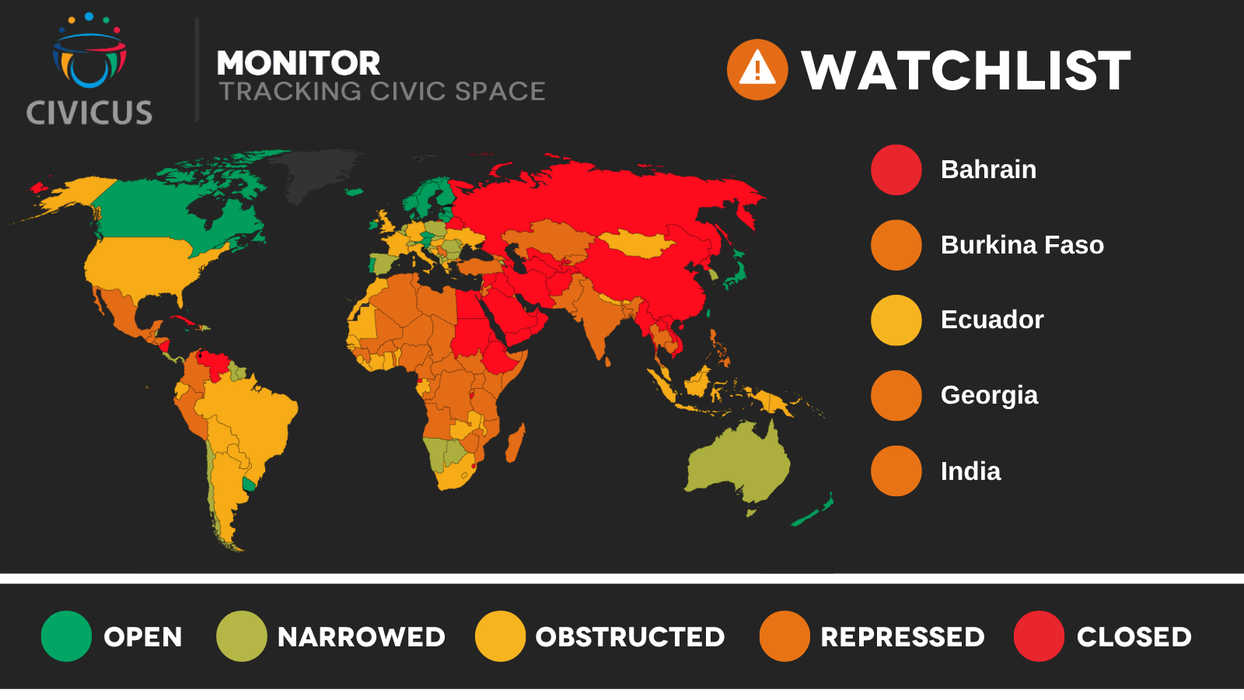
Georgia remains on human rights watchlist as government enforces sweeping new restrictions on protest and dissent
- Protesters jailed and hit with massive fines
- Authorities expand powers to prosecute critics and monitor online speech
- Devastating toll of funding restrictions on civil society
29 July 2026 – Georgia remains on the latest CIVICUS Monitor Watchlist as authorities expand their crackdown on civic freedoms amid the ongoing political crisis. Since Georgia’s inclusion on the Watchlist in March 2026, authorities have continued their assault on civic space, jailing protesters, cracking down on online speech and pushing civil society to the brink of collapse.
The CIVICUS Monitor currently rates Georgia as “Repressed”, the second worst rating a country can receive, indicating severe restrictions to the freedoms of expression, peaceful assembly, and association. Georgia’s rating fell two levels – from the second-best, “Narrowed,” to its current rating – in just two years, marking one of the steepest declines ever recorded by the research platform. Alongside Georgia, the latest Watchlist also includes Bahrain, Burkina Faso, Ecuador and India.
The current crisis began following the government's decision to halt progress towards European Union accession in late 2024, triggering mass protests across the country, which were met with violence from police and masked thugs. As public anger refused to subside, authorities adopted a sequence of laws targeting protesters, independent media and civil society organisations.
These laws are being used to devastating effect. Successive amendments to protest laws have given the courts power to hit protesters with draconian fines or even imprisonment for repeat protest-related offences, including blocking roads, obstructing pedestrian movement and wearing face coverings. In May 2026, a 61-year-old protester was sentenced to nine months in prison for repeatedly blocking roads—the first criminal sentence for entirely peaceful protest activity.
Beyond prison sentences, protesters are also being hit with crippling financial penalties. One individual has reportedly accumulated protest-related fines totalling the equivalent of USD 270,000, while several people reported having their bank accounts seized over fines they had never been formally notified about, totalling tens of thousands per person.
“The right to protest has been systematically dismantled in Georgia.” said Tara Petrović, Europe researcher for the CIVICUS Monitor. “The overwhelming fines and prison sentences for entirely peaceful protest have nothing to do with public order. Authorities are using the justice system to send a message: speaking out against the government can cost you your livelihood and your freedom.”
In May and June 2026, courts handed down judgments against more than 60 people charged in connection with protests and clashes surrounding the October 2025 municipal elections. Twenty-nine individuals received multi-year prison terms on charges including organising or participating in “group violence”, “incitement against the constitutional order” and “attempting to seize facilities of strategic importance”.
Among those convicted was a woman sentenced to seven years in prison who has alleged ill-treatment and sexual harassment while in detention. A 72-year-old doctor who maintains he was providing medical assistance to injured protesters was also sentenced to five years in prison.
Freedom of expression has also come under growing pressure. In June 2026, the government established a new Interior Ministry department tasked with proactively monitoring and prosecuting online speech. This has allowed authorities to crack down on criticism of the government at scale: in its first month of operation, the unit reportedly referred around 150 cases to the courts. Several individuals have already been fined more than USD 1,000 for comments directed at political figures. Courts reportedly hear several cases daily, with some hearings lasting only minutes.
Civil society organisations are also facing mounting restrictions that threaten their very survival. Since 2024, the government has introduced a series of laws targeting foreign-funded organisations. Under legislation adopted in March 2026, any foreign funding deemed intended to influence public policy is subject to government approval, with violations punishable by imprisonment. This is on top of organisations already needing to register under stigmatising “foreign agent” labels and disclose sensitive information about their beneficiaries.
“As many had warned, the relentless campaign of vilification, combined with broad and arbitrary restrictions on foreign funding, now pose an existential threat to Georgian civil society,” said Petrović. “Most organisations now face an impossible choice between abandoning their work or risking severe legal consequences.”
The impact on NGOs and other civil society organisations has been devastating. According to research published by Human Rights Watch in July 2026, 96 percent of surveyed organisations reported acute financial difficulties, while 94 percent had reduced their activities, with some forced to cease operations altogether. Authorities have also frozen the bank accounts of organisations linked to support for protesters and reportedly blocked funding for election monitoring initiatives and services for LGBTQI+ communities.
NOTES TO THE EDITOR
On Georgia’s civic space rating of Repressed:
In countries with this rating the civic space is significantly constrained. Active individuals and civil society members who criticise power holders risk surveillance, harassment, intimidation, imprisonment, injury and death. Although some civil society organisations exist, their advocacy work is regularly impeded, and they face threats of de-registration and closure by the authorities (see full description of ratings). See Frequently Asked Questions about the Watchlist here.
There are a total of 50 countries in the world with this rating (see all).
About the CIVICUS Monitor:
The new watchlist is released by the CIVICUS Monitor, an online platform that tracks the latest developments to civic freedoms, including the freedoms of expression, association and peaceful assembly, across 198 countries and territories.
პროტესტისა და განსხვავებული აზრის გამოხატვაზე დაწესებული მასშტაბური შეზღუდვების ძალაში შესვლის შემდეგ, საქართველო ადამიანის უფლებათა მონიტორინგის სიაში რჩება
- პროტესტის მონაწილეთა ნაწილი ციხეშია, ნაწილს კი არაპროპორციულად მაღალი ჯარიმები დაეკისრა;
- გაიზარდა ხელისუფლების ძალაუფლება, კრიტიკოსთა დევნისა და ინტერნეტში გამოხატვის ზედამხედველობისთვის;
- დაფინანსების მიღებაზე დაწესებულმა შეზღუდვებმა დამანგრეველი გავლენა იქონია სამოქალაქო საზოგადოებაზე.
29 ივლისი, 2026 - სამოქალაქო უფლებების შემზღუდავი ზომების გატარებისა და მიმდინარე პოლიტიკური კრიზისის ფონზე, საქართველო კვლავაც “სივიკუს მონიტორის” დასაკვირვებელი ქვეყნების ჩამონათვალში რჩება. 2026 წლის მარტში დასაკვირვებელი ქვეყნების სიაში საქართველოს შეყვანის შემდეგ, ქვეყნის ხელისუფლებამ განაგრძო თავდასხმა სამოაქალაქო სივრცეებზე, აპატიმრებს პროტესტის მონაწილებს, ატარებს მკაცრ ზომებს ინტერნეტში გამოხატვის თავისუფლების წინააღმდეგ და ცდილობს, სამოქალაქო საზოგადოება ჩამოშლამდე მიიყვანოს.
ამჟამად, “სივიკუს მონიტორის” რეიტინგში საქართველოს “რეპრესირებული” ქვეყნის სტატუსი აქვს. ეს ნიშნავს, რომ საქართველოს მხოლოდ ერთი საფეხური აშორებს რეიტინგის ყველაზე ცუდი მაჩვენებლისაგან, რაც მიუთითებს გამოხატვის, მშვიდობიანი შეკრებისა და გაერთიანების თავისუფლების კუთხით მკაცრი შეზღუდვების არსებობაზე. სულ რაღაც ორ წელიწადში საქართველო რეიტინგში ორი საფეხურით ჩამოქვეითდა - “შეზღუდულიდან”, რომელიც რეიტინგის საუკეთესო ნიშნულს ერთი საფეხურით ჩამორჩება, ამჟამინდელ ნიშნუალმდე - რაც კვლევითი პლატფორმის ისტორიაში რეიტინგის ყველაზე მკვეთრი ვარდნაა. საქართველოსთან ერთად, დასაკვირვებელი ქვეყნების სიაში არიან ბაჰრეინი, ბურკინა ფასო, ეკვადორი და ინდოეთი.
არსებული კრიზისი მას შემდეგ დაიწყო, რაც საქართელოს მთავრობამ ქვეყნის ევროკავშირში გაწევრების პროცესის შეჩერების შესახებ გააკეთა განცხადე 2024 წლის ბოლოს. მთავრობის გადაწყვეტილებას ქვეყანაში მასობრივი პროტესტი მოჰყბა, რასაც პოლიციისა და ნიღბიანი ბანდფორმირებების მხრიდან ძალადობა დაუპირისპირდა. მას შემდეგ, რაც საზოგადოებაში უკმაყოფილების ჩაცხრობას ვერ მიაღწია, მთავრობამ მიიღო კანონთა წყება, რომლებიც მიმართულია პროტესტის მონაწილეების, დამოუკიდებელი მედიისა და სამოქალაქო ორგანიზაციების წინააღმდეგ.
აღნიშნული კანონები საპროტესტო მუხტის გაქრობის მცდელობაა. პროტესტის გამოხატვასთან დაკავშირებულ კანონმდებლობაში შეტანილი ცვლილებები სასამართლოებს შესაძლებლობას აძლევს, რომ პროტეტესის მონაწილეებს დააკისროს დრაკონული ჯარიმები ან საპატიმრო სასჯელი, კანონდარღვევის გამეორების შემთხვევაში, მათ შორის გზის გადაკეტვის, ფეხით მოსიარულეთათვის გადაადგილებაში ხელის შეშლისა და სახის დაფარვის გამო. 2026 წლის მაისში, პროტესტის ერთ-ერთ მონაწილეს, 61 წლის მამაკაცს, 9-თვიანი პატიმრობა მიესაჯა გზის გადაკეტვის ბრალდებით. ეს არის პირველი შემთხვევა, როდესაც სისხლისამართლებრივი სასჯელი დადგა სრულიად მშვიდობიანი პროტესტის გამოხატვისათვის.
გარდა საპატიმრო სასჯელებისა, პროტესტის მონაწილეებს ასევე ეკისრებათ განსაკუთრებით მძიმე ფინანსურ ჯარიმები. როგორც ცნობილია, ერთ-ერთ მოქალაქის პროტესტთან დაკავშირებული ჯარიმების ოდენობამ 270 000 აშშ დოლარი შეადგინა. გარდა ამისა, რამდენიმე ადამიანმა განაცხადა, რომ მათ საბანკო ანგარიშებს ყადაღა დაედო ჯარიმების გამო, რომელთა შესახებაც მათ შეტყობინება არ მიუღიათ და რომელთა ოდენობაც ათობით ათას ლარს აღემატება თითოეული მათგანის შემთხვევაში.
“ადგილი აქვს პროტესტის გამოხატვის უფლების სისტემურ გაუქმებას”, - აღნიშნავს ტარა პეტროვიჩი, “სვიკუს მონიტორის” ევროპის მკვლევარი, - “სრულიად მშვიდობიანი პროტესტისათვის არაპროპორციულ ფინანსურ ჯარიმებსა და საპატიმრო სასჯელებს არაფერი აქვს საერთო საზოგადოებრივ წესრიგთან. ხელისუფლება მართლმსაჯულების სისტემას იყენებს, რათა მოქალაქეებამდე მიიტანოს მესიჯი: ხელისუფლების წინააღმდეგ ხმის ამოღება შესაძლოა კეთილდღეობისა და თავისუფლების ფასად დაგიჯდეთ.”
2026 წლის მაისსა და ივნისში სასამართლომ განაჩენი გამოუტანა 60-მდე ადამიანს, რომელთა წინააღმდეგ წაყენებული ბრალიც კავშირში იყო პროტესტსა და 2025 წლის ოქტომბრის ადგილობრივ არჩევნებზე მომხდარ დაპირისპირებასთან. 29 ადამიანს რამდენიმეწლიანი საპატიმრო სასჯელი მიესაჯა, მათ შორის “ჯგუფური ძალადობის”, “კონსტიტუციური წყობის შეცვლის მცდელობისა” და „სტრატეგიული ან განსაკუთრებული მნიშვნელობის ობიექტის ხელში ჩაგდების“ ორგანიზებისა და მასში მონაწილეობის გამო.
მსჯავრდებულებს შორისაა ქალი, რომელსაც 7-წლიანი პატიმრობა მიესაჯა და რომელიც პატიმრობისას არასათანადო მოპყრობისა და სექსუალური შევიწროვების შესახებ ავრცელებდა ცნობებს. 5-წლიანი პატიმრობა მიესაჯა 72 წლის ექიმს, რომელიც ამტკიცებს რომ სამედიცინო დახმარების გაწევას ცდილობდა პროტესტის დაზარალებული მონაწილეებისთვის.
ქვეყანაში წნეხის ქვეშაა მოქცეული გამოხატვის თავისუფლება. 2026 წლის ივნისში, მთავრობამ შინაგან საქმეთა სამინისტროში შექმნა ახალი დეპარტამენტი, რომლის მიზანიცაა ინტერნეტში აზრის გამოხატვის პროაქტიული მონიტორინგი და კონტროლი. ამან ხელისუფლებას შესაძლებლობა მისცა, რომ მთავრობის კრიტიკის წინააღმდეგ მასშტაბური ზომები გაეტარებინა: შექმნიდან პირველივე თვეში, დეპარატმენტმა სასმართლოში 150 საჩივარი გააგზავნა. რამდენიმე მოქალაქე უკვე დაჯარიმდა 1000 აშშ დოლარზე მეტი ოდენობის ჯარიმით, პოლიტიკური ფიგურების მისამართით გაკეთებული კომენტარების გამო. როგორც ცნობილია, სასამართლოები დღეში რამდენიმე ასეთ საქმეს განიხილავენ, რომელთაგან ზოგიერთს მხოლოდ რამდენიმე წუთს უთმობენ.
უფრო და უფრო მეტი შეზღუდვის ქვეშ მოექცნენ სამოქალაქო ორგანიზაციებიც, რაც მათ არსებობას პირდაპირ ემუქრება. 2024 წლიდან მოყოლებული, მთავრობამ მიიღო არაერთი კანონი, რომელიც პირდაპირ არის მიმართული საზღვარგარეთიდან მიღებული დაფინანსების მქონე ორგანიზაციების წინააღმდეგ. 2026 წლის მარტში მიღებული კანონის თანახმად, საზღვარგარეთიდან ნებისმიერი დაფინანსების მისაღებად, რამაც შეიძლება საჯარო პოლიტიკაზე ზეგავლენა მოახდინოს, საჭიროა მთავრობის ნებართვა. ნებართვის აღებისგან თავის არიდებას კი, შესაძლოა პატიმრობა მოჰყვეს. ეს ყოველივე ზემოდან ემატება უკვე არსებულ საკანონმდებლო მოთხოვნას, რომ ორგანიზაციები უნდა დარეგისტრირდნენ მასტიგმატიზირებელი “უცხოეთის აგენტების” სიაში და ვალდებულები არიან, რომ თავიანთი ბენეფიციარების შესახებ სენსიტიური ინფორმაცია გასცენ.
“როგორც მოსალოდნელი იყო, დამცირების უწყვეტმა კამპანიებმა, უცხოური დაფინანსების შერჩევით და ფართომასშტაბიან შეზღუდვებთან ერთად, ქართული სამოქალაქო საზოგადოების არსებობას საფრთხე შეუქმნა,” - აღნიშნავს პეტროვიჩი, - ”ორგანიზაციების უმეტესობა ამჟამად წარმოუდგენელი დილემის წინაშე დგას, მიატოვოს საკუთარი საქმიანობა თუ გარისკოს კანონის დარღვევა.”
ამ ყველაფერს დამანგრეველი შედეგები მოაქვს არასამთავრობო თუ სხვა სამოქალაქო ორგანიზაციებისთვის. Human Rights Watch-ის 2026 წლის ივლისში გამოქვეყნებული კვლევის თანახმად, გამოკითხული ორგანიზაციების 96% აღნიშნავს, რომ უმწვავესი ფინანსური გამოწვევების წინაშე დგას, ორგანიზაციების 94%-მა საკუთარ საქმიანობასთან დაკავშირებული აქტივობები შეამცირა, ხოლო ზოგიერთს მუშაობის საერთოდ გაჩერება მოუწია. გარდა ამისა, მთავრობამ საბანკო ანგარიშები გაუყინა ზოგიერთ ორგანიზაციას, რომელიც მხარს უჭერდა პროტესტს და დაბლოკა დაფინანსებები, რომლებიც გამიზნული იყო არჩევნებზე სადამკვირვებლო ინიციატივებსა და ლგბტქი+ თემის სერვისებისათვის.
შენიშვნა რედაქტორებისთვის
საქართველოს სამოქალაქო სივრცის როგორც “რეპრესირებულის” შეფასებასთან დაკავშირებით:
აღნიშნული რეიტინგის მქონე ქვეყნებში, სამოქალაქო სივრცე მკვეთრად არის შეზღუდული. ინდივიდები და სამოქალაქო საზოგადოების წევრები, რომლებიც აქტიურად აკრიტიკებენ ხელისუფლებას დგანან თვალთვალის, შევიწროვების, დაშინების, დაპატიმრების, ფიზიკური ზიანისა თუ სიკვდილის რისკის ქვეშ. მიუხედავად იმისა, რომ ცალკეული სამოქალაქო ორგანიზაციები აგრძელებენ არსებობას, მათ მუშაობს მუდმივად ეშლება ხელი, დგანან რა ხელისუფლების მხრიდან რეგისტრაციის გაუქმებისა და დახურვის საფრთხის წინაშე (იხ. რეიტინგების სრული აღწერა). დასაკვირვებლი ქვეყნების სიის შესახებ ხშირად დასმული შეკითხვები იხილეთ აქ.
მსოფლიოში ამ რეიტინგის მქონე 50 ქვეყანაა სულ (იხ. ჩამონათვალი).
“სივიკუს მონიტორის” შესახებ:
დასაკვირვებელი ქვეყნების სიას ამზადებს “სივიკუს მონიტორი”, ონლაინ პლატფორმა, რომელიც შეისწავლის სამოქალაქო თავისუფლების, მათ შორის გამოხატვის, გაერთიანებისა და მშვიდობიანი შეკრების მხრივ არსებულ მდგომარეობას 198 ქვეყანასა თუ ტერიტორიაზე.