Serbia
DECEMBER 9, 2025
Serbia downgraded in global ratings report on civic freedoms
- Country downgraded from “Obstructed” to “Repressed”
- Fundamental freedoms in crisis as authorities clamp down on persistent protests
- Protesters face violence from police and ruling party-linked groups, mass detentions, and intimidation
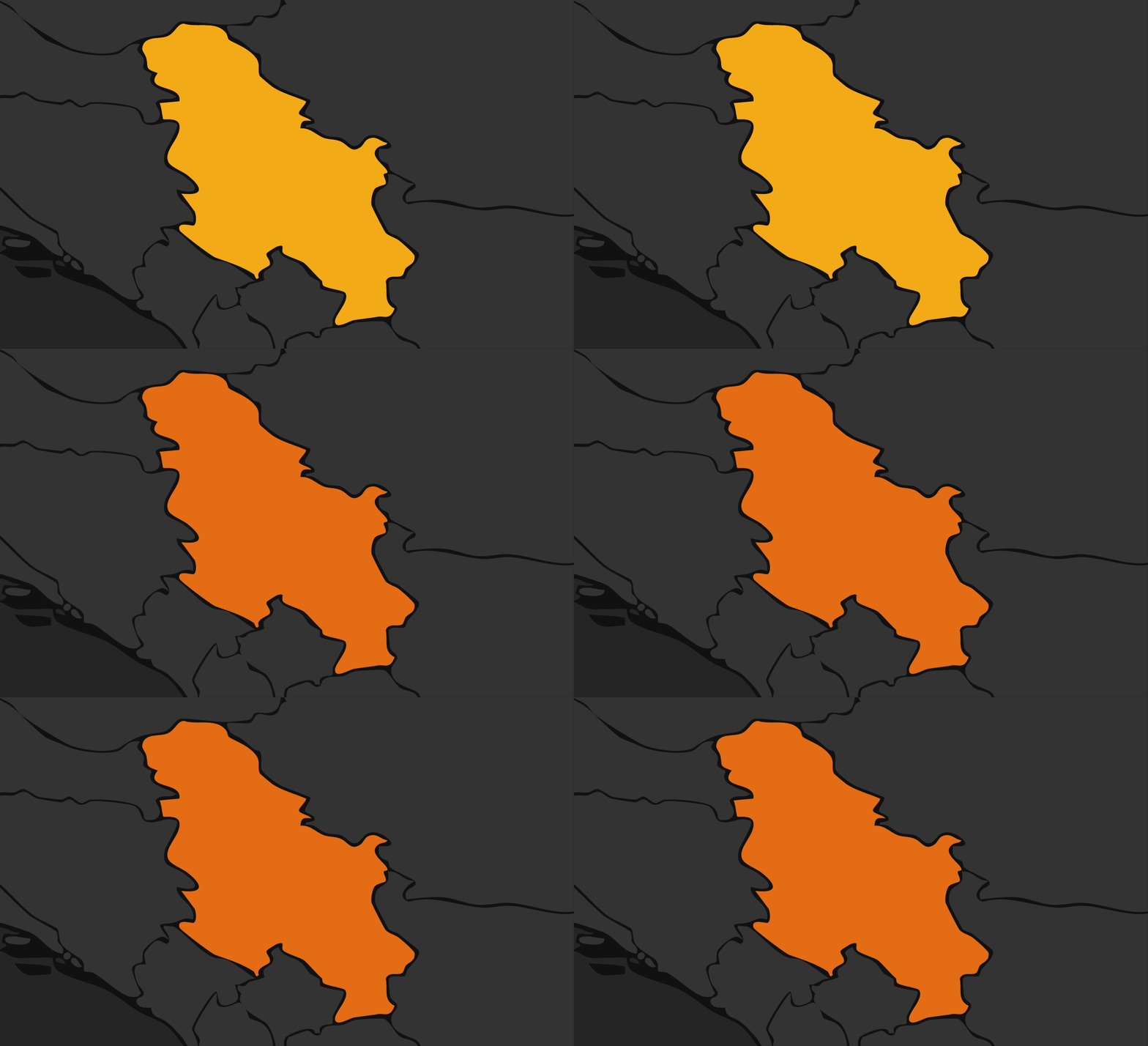
The CIVICUS Monitor announced in a new report that it has downgraded Serbia’s civic space to “Repressed” in its annual ratings, marking a watershed moment after years of escalating attacks on fundamental freedoms. This category – the second worst globally – refers to countries where civic space is severely restricted and dissent faces serious repercussions, including violence, judicial harassment, and imprisonment. Serbia now joins 50 other countries rated “Repressed” in 2025, including Georgia, Zimbabwe, Pakistan, and El Salvador.
“Serbia’s downgrade reflects a turning point,” said Ine Van Severen, CIVICUS Monitor Research Lead. “Authorities have moved from restricting criticism to actively dismantling the right to speak, organise, and protest. A country with democratic aspirations should not be persecuting its own citizens for demanding accountability.”
Student-led demonstrations, sparked by a deadly train station collapse attributed to corruption, have continued since November 2024, and fundamental freedoms are in crisis as authorities clamp down. Protesters and supporters face violence from police and ruling party-linked groups, mass detentions, and intimidation, while those who attack them enjoy near-total impunity.
According to watchdogs, more than 1,000 people have been detained since protests began. While most were released quickly, others remain under house arrest or subject to movement restrictions. Twelve civic and opposition activists – six now in exile – are being prosecuted on dubious charges of plotting to overthrow the constitutional order.
In July, President Aleksandar Vučić pardoned individuals accused of severe violence against protesters, including four men linked to his party who brutally assaulted a female student, and a woman charged with attempted murder after driving a car into a crowd of demonstrators. The authorities have refused to seriously investigate allegations of police abuse, from excessive force at protests to the beating and threats of sexual assault reported by student Nikolina Sinđelić. They have likewise failed to probe the alleged use of a sonic weapon at a protest on 15th March or reports of spyware targeting journalists and human rights defenders.
The government has also fuelled confrontation by organising counter-protest encampments around key institutions in Belgrade. Investigative journalists have identified individuals with links to organised crime among the participants. Supported by local authorities and provided with police protection, these camps have become hotspots for clashes between residents and anti-government demonstrators.
“The ruling party now permeates every segment of public life, making pressure unavoidable,” says Uroš Jovanović, Civic Initiatives. “Serbia has become a country where speaking a single critical word invites retaliation. This retaliation can take the form of job loss in the public or publicly funded sectors, targeted inspections by state authorities, smear campaigns in pro-ruling-party media, arbitrary detentions or various forms of administrative harassment.
The threat to peaceful assembly is set to worsen. A proposed amendment to the Criminal Code, presented in September 2025, would classify any road blockade as a criminal offence punishable by up to one year in prison. Civil society organisations warn that the change would effectively criminalise peaceful protest.
Freedom of expression is also under sustained attack. Outspoken supporters of the protests face smears, intimidation by authorities, and dismissal from their jobs, with more than 100 school employees removed for supporting student strikes. Independent media have also come under pressure: reports have emerged that President Vučić personally influenced the takeover of critical media outlets N1 and Nova, while partisan and legally flawed appointments to the media regulator have ensured the body remains firmly under ruling party control.
“This downgrade is not unexpected. For years, civil society has warned that benchmarks for civil society must be central to the EU accession process. Serbia’s situation proves this point.” said Simona Mladenovska, Balkan Civil Society Development Network. “When justice is delayed, it is denied – for grieving parents, journalists, activists, and all silenced by repression. The EU must seize this moment to protect civic space and ensure accountability.”
CIVICUS calls on the Serbian authorities to immediately end violence and politically motivated prosecutions, withdraw amendments that would criminalise peaceful assembly, and guarantee independent investigations into police abuses and unlawful surveillance.
Notes to the Editor
The CIVICUS Monitor is a research tool that tracks the state of civic freedoms in 198 countries and territories, generating both quantitative and qualitative assessments of civic space. Its data is compiled in collaboration with more than 20 civil society research partners and independent human rights evaluations. Countries are rated in five categories: Open, Narrowed, Obstructed, Repressed, and Closed.
For more information or to arrange an interview, please contact: media@civicus.org