GENERAL
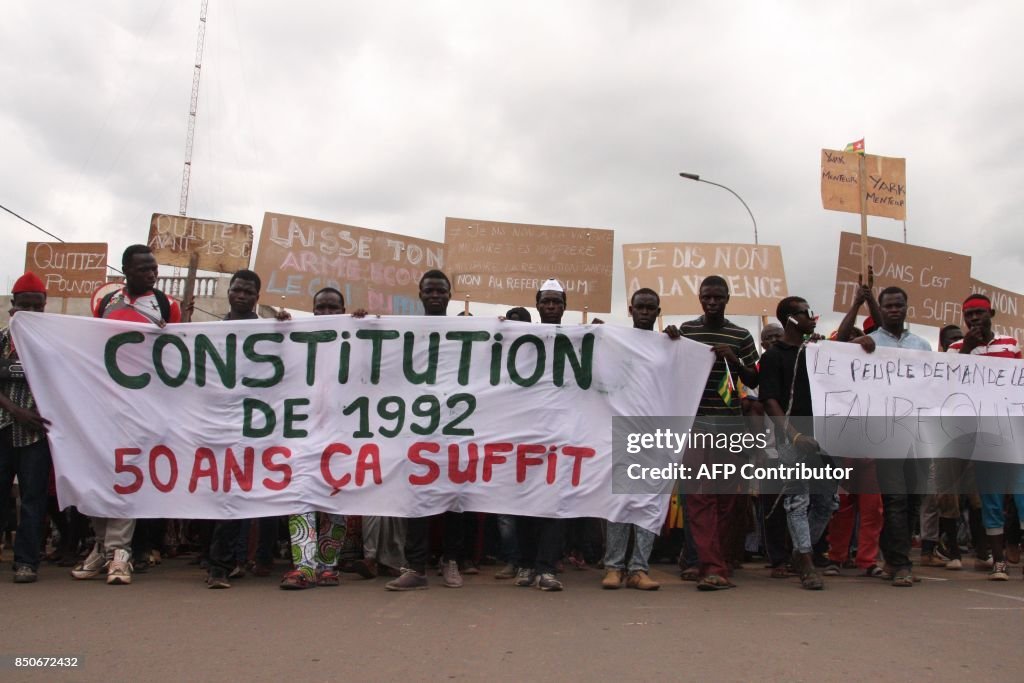
Since the beginning of 2025, civic space violations have soared, primarily as resistance against constitutional amendments continues. The promulgation of a new Constitution on 6th May 2024, which shifted the country to a parliamentary regime, allowing President Faure Gnassingbé to rule indefinitely, continues to spark widespread dissent among activists, opposition, and civil society. On 23rd March 2025 in Lomé, opposition and civil society actors, including activists such as David Dosseh and Jean-Pierre Fabre, gathered to protest and express their disapproval of the new Constitution.
President Faure Gnassingbé’s inauguration as President of the Council of Ministers on 3rd May 2025, a new powerful executive position established by the May 2024 constitutional amendment, and hight cost of living sparked series of protests in June 2025, which were met with repression, including arbitrary arrests and the use of lethal force, killing at least seven people.
The crackdown on protests is the latest in a long-standing pattern of repression, as previously reported by the CIVICUS Monitor.
PEACEFUL ASSEMBLY
GOVERNMENT BANS PEACEFUL PUBLIC MARCH
On 6th August 2025, Togo’s Minister of Territorial Administration, Awaté Hodabalo, banned a peaceful march planned by l’organisation Novation Internationale and its partners, scheduled for 9th August 2025. The march was intended to honour the victims of the 26th, 27th, and 28th June protests and denounce violence. The minister justified the decision by citing a tense national climate, marked by “calls for hatred, mob justice, and attacks on security forces.”
AT LEAST SEVEN KILLED AND DOZENS INJURED IN PROTESTS AGAINST FAURE GNASSINGBÉ’S EXTENDED RULE
From 26th to 28th June 2025 in Lomé, online activists and youth-led movements led public protests to oppose the constitutional changes that would allow President Faure Gnassingbé to remain in power indefinitely. These protests arose amid increasing demands from critics for President Faure Gnassingbé’s resignation. The initially peaceful demonstrations on June 26th escalated when demonstrators burned tyres and hurled projectiles at police security forces who intervened, beating protesters and making arbitrary arrests. This aggressive response triggered further violent confrontations on June 27th and 28th, with demonstrators engaging in street battles and throwing stones. Security forces reportedly used tear gas, clubs, ropes, and other means to disperse the protests. Witnesses noted the presence of both hooded and unhooded thugs who appeared to act alongside or in support of the law enforcement officers. At least seven people were reportedly killed and dozens were wounded during the three-day protests. According to witnesses interviewed by Amnesty International, they reported additional human rights violations, including torture, ill-treatment, and enforced disappearances involving one man and one woman by unidentified individuals. On 29th June 2025 the government denied the allegations regarding the seven reported deaths, claiming that forensic evidence showed these individuals had drowned. In a joint press release, civil society organisations, including Front Citoyen Togo Debout and Tournons la Page Togo, called for a national mobilisation to end impunity and restore the rule of law.
DOZENS DETAINED IN HIGH COST OF LIVING PROTESTS
On 6th June 2025 in Lomé, hundreds of young people gathered in peaceful demonstrations against the high cost of living and the constitutional changes. The protest followed the announcement of an increase in the cost of electricity and the arrest of rapper and artist Aamron for a video he released. During the protests, security forces, including gendarmes, officers of the anti-gang brigade, and militia, used disproportionate force against protesters, including through the use of batons to beat protesters and spraying water. According to the International Federation of Human Rights (FIDH), at least 81 demonstrators, including human rights defenders, were arbitrarily arrested and detained at various police stations, with seven of them reporting having been subjected to torture and ill-treatment during custody and/or protests. While the majority of those arrested were released the following day, at least six protesters appeared before a court on 10th June 2025. Three were officially charged with ‘aggravated disturbance of public order’. The crackdown on the protests was heavily criticised by a group of civil society organisations and political parties in Togo.
EXPRESSION
TOGO SUSPENDS MEDIA OUTLETS RFI AND FRANCE 24
On 16th June 2025, the High Authority for Audiovisual and Communication (HAAC) suspended French media outlets Radio France Internationale (RFI) and France 24 for a period of three months. In a statement, the HAAC cited “repeated breaches…in terms of impartiality, accuracy, and fact-checking” as reason for the suspension. The HAAC referred to recent broadcasts as having “relayed inaccurate, tendentious remarks, even contrary to established facts”, and accused RFI and France 24 of harming the “stability of republican institutions and the image of the country”. A few hours after the suspension, the management of France 24 and RFI expressed surprise and denied allegations made by the HAAC.
FRENCH JOURNALIST DETAINED, FOOTAGE DELETED DURING LOMÉ PROTESTS
On 6th June 2025, gendarmes detained French journalist Flore Monteau in Agbalépédogan, Lomé, while she was filming police clearing barricades erected by protesters during the anti-government protests of 6th June 2025 (see under Peaceful Assembly). Despite presenting valid press credentials issued by the HAAC, gendarmes confiscated her equipment and took her to Djidjolé police station, where she was forced to delete footage of the protests. Monteau was released without charge after a few hours, and her phone and camera were returned.
JOURNALIST FORCED TO DELETE PHOTOS DURING VOTER REGISTRATION COVERAGE IN TSÉVIÉ
On 8th April 2025 while reporting on the voter registration process at the Saint Jean Catholic Primary School in Tsévié, Albert Agbeko, the editor of Togoscoop, was halted by a police officer who demanded that he delete the photographs he had captured. Albert was subsequently taken to the Tsévié police station for his refusal to comply. Even after presenting his press credentials issued by the HAAC, a police officer insisted that Agbeko erase the images before allowing him to leave.
TOGO IMPOSES NATIONWIDE INTERNET BLACKOUT AMID JUNE 2025 PROTESTS IN LOMÉ
Since mid-June 2025 and in response to the protests in Lomé from 26th to 28th June 2025 (see under Peaceful Assembly) the government of Togo has imposed severe Internet restrictions across the nation, hoping to suppress a growing wave of anti-government protests. The increasing internet disruptions have caused limited access to major social media platforms and search engines, including Facebook, Signal, Telegram, YouTube, and DuckDuckGo. The government of Togo has a history of shutting down the Internet during public protests, as previously reported by the CIVICUS Monitor.
ASSOCIATION
TOGOLESE RAPPER AAMRON ARRESTED
On 26th May 2025, dozens of national intelligence officers arbitrarily arrested Tchalla Essowe Narcisse, popularly known as the rapper Aamron, at his family residence in Lomé. His arrest is believed to be related to a video released on 26th May 2025, in which the rapper said that Faure Gnassingbé, the President of the Council of Ministers, was to receive a ‘special gift’ for his birthday, on 6th June 2025, considered by authorities as a veiled call for mobilisation to protest that day (see under Peaceful Assembly). After his arrest, Aamron was taken to Zébé psychiatric hospital where he was detained until his release on 21st June 2025. In an interview with France 24, Aamron said he was subjected to torture during his internment. Aamron’s attorney stated that the public prosecutor had personally informed him that no legal action had been initiated against him.