Introduction
Justin Trudeau resigns
Following growing pressure from his Liberal Party amid economic malaise and political scandal, in January 2025, Prime Minister Justin Trudeau announced his resignation. On 15th March 2025, Mark Carney was sworn in as the new prime minister after being elected as leader of the Liberal Party of Canada. Shortly after, he called a snap election. Ahead of the elections, Amnesty International Canada called on party leaders and candidates to place human rights at the centre of their campaigns, especially in light of steep tariffs on Canadian goods and calls for annexation by US President Donald Trump.
Association
Supreme Court confirms Charter rights violations against Indigenous land defenders
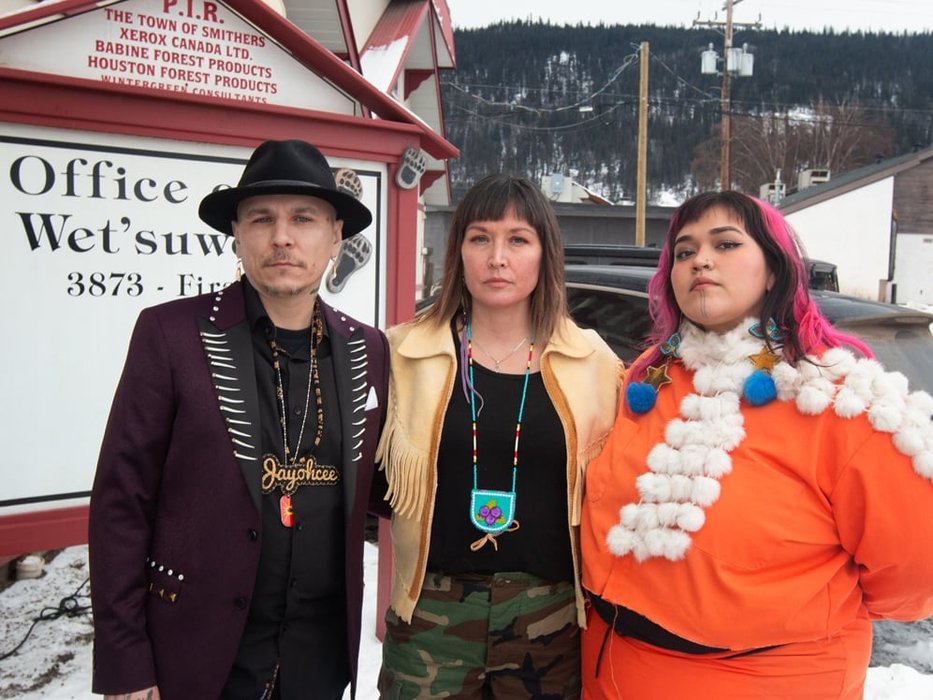
On 18th February 2025, the Supreme Court of British Columbia ruled that officers of the Community-Industry Response Group (C-IRG) had violated the Indigenous land defenders’ Canadian Charter rights during their arrest in 2021 along the Coastal GasLink pipeline protest.
As previously reported by CIVICUS Monitor, on 12th January 2024, the British Columbia Supreme Court convicted three Indigenous land defenders—Sleydo’ (Molly Wickham) of the Gidimt’en Clan, Shaylynn Sampson of the Gitxsan Nation and Corey Jocko of the Haudenosaunee—for criminal contempt of court. Their conviction stemmed from a peaceful protest camp in November 2021 that opposed the pipeline project, during which they were found guilty of breaching an injunction order.
Following this, Sleydo’ Molly Wickham, Shaylynn Sampson and Corey Jayohcee Jocko filed an abuse of process application. They argued that C-IRG officers had used racist language, engaged in harassment, and employed disproportionate force during the militarised raid on the pipeline construction site.
Audio recordings presented in court captured officers making dehumanising racist remarks, comparing the land defenders to “orcs” and “Uruk-Hai” from The Lord of the Rings. The court recognised that such conduct violated the defenders’ Charter rights. While the judge reduced their sentences, he refused to dismiss the charges.
The judge also rejected several additional claims, including Jocko’s argument that police had relied on a “stereotypical view” of Mohawks, and claims that the defenders had been subjected to excessive transportation following their arrests.
Civil society organisations welcomed the decision but raised concerns over the continued criminalisation of the three Indigenous defenders. Amnesty International noted that the ruling validated the defenders’ testimonies and the broader pattern of colonial violence Indigenous Peoples have faced for more than a century at the hands of the police. However, the court’s refusal to stay all charges underscored the ongoing risks they face. Likewise, on 11th March 2025, the UN Special Rapporteur on Human Rights Defenders, Mary Lawlor, stressed that criminalisation continues despite the court’s finding.
The ruling also renewed scrutiny of the C-IRG itself, since its creation in 2017 by the Royal Canadian Mounted Police (RCMP) for the policing of disputes around resource-extraction projects. Journalists, land defenders and communities have accused it of violence, racism and other human rights violations. Additionally, civil society sustains that it has played a central role in the ongoing criminalisation of Indigenous Peoples. Several organisations have called for its abolition.
Activist faces criminal charges for pro-Palestinian speech
On 21st February 2025, activist and author Yves Engler turned himself in to the Montreal police after learning he faced charges of harassment and indecent communication linked to his social media posts about Israel’s genocide in Palestine.
The charges originated from his responses on X to posts by pro-Israel personality Dahlia Kurtz, which he characterised as racist and anti-Palestinian: “I had described Kurtz as a ‘genocide’ supporter and ‘fascist’ on Twitter. Guilty as charged”. In his post, Engler also alleged that over the past 15 months, Kurtz had positioned herself as a prominent far-right voice in Canada, framing anti-genocide activists as a “mob” that should be deported. He further accused her of promoting state violence against those opposing Canadian policies on Gaza.
According to the independent news outlet, Mondoweiss, instead of using the platform’s blocking function, Kurtz pursued criminal charges through a legal firm reportedly linked to a Conservative Party candidate.
Following his arrest, Engler was held in detention overnight after the Crown Council (the State’s prosecutor) opposed his release without giving reasons. Police subsequently added further charges of intimidation and harassment after he wrote publicly about the case, raising concerns over the criminalisation of political speech. Civil society organisations, including the Canadian Foreign Policy Institute, mobilised in support, with thousands of people contacting police to demand the charges be dropped.
Political figures also spoke out. Quebec Green Party leader Alex Tyrrell described the case as an attack on democracy, while Senator Yuen Pau Woo called on authorities to explain the charges and guarantee that Engler’s rights were not being infringed.
Three days later, on 24th February, Engler was released on bail after refusing the prosecution’s attempt to bar him from naming Dahlia Kurtz. While he agreed not to tag her on social media, he remains free to speak openly about his case and those behind it.
The case reflects a broader pattern of repression against pro-Palestinian voices in Canada. In recent months, activists have faced arrests, suspensions and public campaigns designed to silence dissent.
Tomorrow the Montreal police will arrest me for posting to social media against Israel’s genocide in Gaza.
— Yves Engler (@EnglerYves) February 19, 2025
Today I received a phone call from a Montreal police officer by the last name of Crivello. She asked me to come to a downtown police station where I will be charged for… pic.twitter.com/7fcheB20To
Quebec introduces Bill 89 restricting strike rights
In February 2025, the Quebec government introduced Bill 89, which seeks to amend the Labour Code by expanding restrictions on strikes and lockouts. The bill would permit the Administrative Labour Tribunal (ALT) to limit the right to strike of some employees providing “services ensuring the well-being of the population”, a category broader than traditional essential services such as policing or firefighting and potentially covering sectors like public transport, cemeteries and schools.
It would also grant the Minister of Labour power to refer disputes to arbitration if a work stoppage threatens to cause “serious or irreparable harm” to the public. Although health and public services are excluded, the provision grants broad discretionary powers and could significantly limit the scope of strike action in other sectors.
Bill 89 is only at the very beginning of the process, but there has already been a strong reaction, especially from civil society. The Canadian Civil Liberties Association stated that the bill eroded the right to strike and freedom of association, protected by section 2(c) of the Canadian Charter of Rights and Freedoms and section 3 of the Quebec Charter of Human Rights and Freedoms.
Pride Toronto faces sponsor withdrawals amid fallout from USA rollback of diversity programmes
In late February 2025, Pride Toronto, one of North America’s largest LGBTQI+ events, announced that three major sponsors had withdrawn their support. Executive director Kojo Modeste said the companies, which also operate in the United States of America (USA), acted out of fear of being perceived as backing LGBTQI+ rights following Donald Trump’s dismantling of diversity, equity and inclusion (DEI) programmes.
Although Modeste confirmed the festival would go ahead with the same scale and quality, he warned the loss of funding could signal a broader rollback of support for LGBTQI+ initiatives. Civil society in Canada noted that Trump’s federal order against DEI programming, which has already led to mass layoffs in the USA, appears to be having a chilling effect across the border.
The trend is visible in Canada. Shopify, an Ottawa-based ecommerce platform, has scaled back diversity work. Academics also warned that businesses risk prioritising short-term savings or reputational concerns over long-term benefits.
Amazon closes Quebec warehouses amid union drive
On 22nd January 2025, Amazon announced the closure of all seven of its warehouses in Quebec and the outsourcing of operations to third-party contractors. The decision will cut 4,700 jobs, including 1,900 Amazon employees and 2,800 delivery subcontractors. Among those affected are the 230 workers at the DXT4 facility in Laval, which became the first Amazon warehouse in Canada to unionise in May 2024.
The Confédération des syndicats nationaux (CSN), representing 330,000 members, accused Amazon of acting to avoid signing its first collective agreement in North America, in violation of Quebec labour law.
The closures follow a history of anti-union practices in Quebec. In 2023, Amazon managers at the YUL2 warehouse in Lachine posted anti-union messages.
The government launches an initiative to strengthen Canada’s efforts abroad to protect human rights
On 11th February 2025, Foreign Affairs Minister Mélanie Joly announced the creation of Canada’s first Standing Table on Human Rights. The new body will advise the minister and senior officials on integrating human rights considerations across Canada’s foreign policy.
The Standing Table brings together civil society leaders, academics and international law experts, including representatives from Amnesty International Canada, Human Rights Watch, IFEX, Dignity Network Canada and Lawyers Without Borders.
According to the minister, the initiative aims to ensure that Canadian foreign policy reflects human rights priorities at a time of global uncertainty and increasing attacks on human rights defenders.
Expression
Online harassment against journalist
In March 2025, journalist Rachel Gilmore faced online harassment after she hosted an election fact-checking segment on CTV, the largest privately owned television network. The harassment was prompted by a critical post by Conservative Party spokesperson Sebastian Skamski, who called her a “disgraced disinformation peddler”. Following the online harassment, CTV cut Gilmore’s segment.
This is not the first time that Gilmore has been targeted. On 28th November 2024, she was publicly harassed while attending a concert by an individual who demanded she reveal her sources. The interaction was filmed and shared online, escalating the harassment.
Journalists face restrictions at political events
In January and February 2025, journalists reported restrictions on access to political events.
On 16th January, Western Standard journalist James Snell was denied entry to a federal Liberal leadership campaign event in Edmonton hosted by candidate Mark Carney. Campaign staff refused to allow Snell in, despite him identifying himself as a journalist and press gallery member, and requested police escort him from the venue. The Canadian Association of Journalists criticised the incident, stating that political parties should not decide who qualifies as a journalist.
On 15th February, journalists at a Federal Conservative Party rally in Ottawa were confined to a designated area and prevented from moving freely to conduct interviews. Days later, on 20th February, Conservative leader Pierre Poilievre limited questions at a Toronto press conference to selected outlets. These incidents follow a pattern, as several journalists were also denied access to the party’s national convention in September 2023, including reporters from The Maple and The Real News Network, Xtra, Pivot and The Breach.
The Canadian Association of Journalists (CAJ) expressed concern about what it described as increasing and persistent efforts by political actors to restrict journalistic access, noting recent cases of reporters being barred, threatened or prevented from asking questions: “Democratic society is built on the foundation that political leaders are held accountable. Political leaders who try to shirk that fundamental responsibility by evading fair questions from journalists are performing a crime against the democratic process” said Brent Jolly, CAJ president.
In recent weeks, we've noted there have been many journalists barred from covering events, threatened, or had unjust restrictions based on their ability to pose questions to politicians.
— Canadian Association of Journalists (@caj) March 10, 2025
That's no bueno for democracy. https://t.co/Ya9oNhQzm6 pic.twitter.com/ODzHl34tHS
New rules limit media access to ministers in Nova Scotia legislature
On 14th February 2025, the Nova Scotia government introduced a new policy which prevents ministers from answering questions from journalists in the provincial legislature building. Under the policy, announced by Premier Tim Houston, interviews can now only take place in a designated media room located in a separate building. Previously, reporters had access to ministers in the lobby and other common areas.
Journalists from outlets including the Halifax Examiner, CBC and allNovaScotia have refused to participate in briefings under the new system, describing it as a break with a longstanding tradition of open access.
On 25th February, CBC reported that Minister Leah Martin refused to speak with journalists in the legislature, citing the new rules.
Government officials defended the move, arguing it would broaden access by ensuring more outlets could question the premier and cabinet. However, CAJ condemned the restrictions as a “frontal assault on press freedom” in a province with a record of limited transparency.
As documented by the CIVICUS Monitor, the policy follows another decision in December 2024, when journalists were denied access to the swearing-in of new cabinet members.
RCMP apologises for detaining journalist after oversight body finds systemic press freedom violations
On 20th February 2025, the RCMP issued a formal apology to journalist Jerome Turner and his editor Ethan Cox for detaining Turner while he reported on the Wet’suwet’en pipeline conflict in 2020. Turner was held for eight hours across two locations, in what the Civilian Review and Complaints Commission (CRCC), the RCMP’s civilian oversight body, later described as “unreasonable interference” with press freedom.
According to the independent media outlet Ricochet, the apology followed a five-year investigation by CRCC, which upheld a complaint that the RCMP had obstructed Turner’s reporting, threatened him with arrest and imposed unlawful restrictions on his movements. The 70-page report found that RCMP actions breached the Canadian Charter of Rights and existing jurisprudence, including the Supreme Court of Canada’s ruling in Fleming v. Ontario.
RCMP commissioner Michael Duheme accepted almost all of the CRCC’s 14 findings and four recommendations, acknowledging errors at leadership and policy levels. The force committed to policy changes to safeguard press freedom, including limiting exclusion zones and ensuring escorts do not interfere with journalists’ work. However, the RCMP rejected a recommendation to create a journalist accreditation system, noting the Supreme Court has affirmed that “journalists should be defined by their actions, not formal affiliations.”
Press freedom organisations welcomed the decision. Brent Jolly of the Canadian Association of Journalists called it a “historic acknowledgment” of systemic flaws in RCMP practices and stressed that secrecy undermines democracy. The ruling is expected to influence future cases involving restrictions on media access to protest and injunction zones.
RCMP formally apologize for violating journalist’s rights, commit to changes in wake of explosive oversight report https://t.co/zQxYv28kQJ @ricochet_en @EthanCoxMtl
— Canadian Association of Journalists (@caj) March 12, 2025
Peaceful Assembly
Grassy Narrows renews calls for action on mercury poisoning as Ontario election approaches
On 25th February 2025, dozens of members of Grassy Narrows First Nation held a vigil outside Ontario’s legislature to demand action on mercury poisoning that has affected the community since industrial waste was discharged into the English-Wabigoon River in the 1960s and 1970s, impacting at least 90 per cent of residents. Experts warned that mercury contamination is causing physical, psychological and cultural harm, describing the government’s inaction as a form of colonialism.
Community leaders called on the provincial government to halt industrial discharges, address ongoing contamination and compensate those harmed. They invited Premier Doug Ford to meet them, but he did not attend. Chief Sherry Ackabee criticised delays in government responses, noting that both Ontario and federal commitments to remediation and care facilities have moved slowly.
Despite limited progress, community members pledged to continue their advocacy work. In 2024, the community filed a lawsuit alleging treaty violations, participated in a hearing before the Inter-American Commission on Human Rights, and organised a large rally at Queen’s Park in September.
Thousands mobilise against Trump’s attacks on Canada
In March 2025, large rallies were held across the country in response to US President Donald Trump’s tariffs on Canadian goods, and remarks suggesting Canada could be annexed as the “51st state.” These included the grassroots “Elbows Up, Canada!” campaign, drawing on a hockey phrase symbolising readiness to fight.
On 9th March, about 1,000 people gathered on Parliament Hill in Ottawa for the first rally, followed by another large demonstration at Nathan Phillips Square in Toronto on 22nd March. Protesters carried Canadian flags, displayed slogans such as “Canada is not for sale” and called for boycotts of US goods and travel.
Organisers stressed the rallies were non-partisan but aimed at showing unity in the face of perceived US hostility. The movement continues to expand, with calls for rallies in cities nationwide.
Wave of demonstrations against Tesla over CEO’s political role
In March 2025, Tesla dealerships across Canada became the focus of protests linked to opposition to CEO Elon Musk’s close role in the administration of US President Donald Trump. On 29th March, protesters joined a “Global Day of Action” against Tesla, staging demonstrations in cities including Ottawa, Vancouver, Saskatoon and Edmonton. They accused Musk of using his wealth and political influence to undermine democracy and of supporting Trump’s tariffs on Canadian steel.
Beyond peaceful rallies, some Tesla properties were vandalised. In Hamilton, Ontario, more than 80 cars were scratched, while a Montreal dealership was spray-painted. Other dealerships reported protesters gathering outside and calling on Canadians to sell their vehicles and divest from Tesla.
Protests also reflected wider discontent with Musk’s rhetoric towards Canada, including remarks describing the country as the “51st U.S. state” and its then-prime minister as a “governor”.
Mass protest against Bill 89
On 14th March 2025, over 1,000 unionised workers gathered in downtown Montreal to protest Bill 89, which would allow the government to limit the duration of strikes and lockouts and intervene to maintain services in sectors such as schools and municipalities (see association). Nine unions organised the demonstration, arguing that Bill 89 undermines collective bargaining and the constitutional right to strike.
Quebec Labour Minister Jean Boulet was scheduled to address the Chamber of Commerce of Metropolitan Montreal at Plaza Centre-Ville, but the event was cancelled after police reported a hotel window smashed and a minor assault on an officer. No arrests were made.
Filipino activists in Ottawa rally after Duterte handed to ICC
On 15th March 2025, Filipino human rights defenders in Canada held a rally outside the Embassy of the Philippines in Ottawa following confirmation by the International Criminal Court (ICC) that former Philippine President Rodrigo Duterte had been arrested and transferred to its custody in March 2025. Police were present during the demonstration. Duterte was arrested in Manila in March 2025 on an ICC warrant over killings in the “war on drugs” and transferred to The Hague.