General update
On 18th March 2025, Al-Shabaab militants launched a bomb attack targeting Somali's President Hassan Sheikh Mohamud’s motorcade as it departed the presidential palace en route to the airport in Mogadishu. The armed group, which claimed responsibility via its Telegram channel, said it expressly aimed to assassinate the president. Witnesses, including soldiers and residents, confirmed the convoy was hit. While President Mohamud was confirmed safe by senior officials and a presidential adviser, the attack marks the first direct assassination attempt on him since 2014.
Expression
On 17th December 2024, National Intelligence and Security Agency (NISA) officers assaulted journalist Shukri Aabi Abdi of Risaala Media Corporation. They detained her cameraman, Ali Hassan Guure, while covering a public protest in Mogadishu’s Daljirka area. The officers confiscated Ali’s camera, briefly detained him, and deleted all footage of the protest. Meanwhile, three officers violently attacked Shukri, dragging her through the street, tearing off her headscarf, kicking and beating her, and threatening her at gunpoint. A group of local women intervened to stop the assault, and Shukri was later hospitalised for her injuries. Despite the severity of the attack, no action has been taken against the officers, who remain free.
On 25th January 2025, NISA agents abducted freelance journalist Sharif Abdi after raiding his home and tracking his phone. The agents took him to Godka Jilaow, NISA’s notorious detention and torture facility, where they repeatedly interrogated him about his critical Facebook posts, particularly those criticising NISA chief Abdullahi Mohamed Ali. Sharif was held for 10 days in harsh conditions. He was detained without a court order and released on 9th February 2025. After his release, Sharif revealed that officers had told him his detention was meant to “discipline“ him and make him “soft” so that he “won’t write critically in the future.”
On 7th February 2025, a government-affiliated clan militia in Lower Shabelle kidnapped Omar Yusuf Mohamed, a reporter for Nabad Somali TV, as a result of his coverage of local community grievances about militia raids and detentions in the KM50 area. The militia interrogated him about his report on the disappearance of a local clan elder, who was taken during a raid on his home on 31st January 2025. Omar was released later the same day.
On 6th March 2025, Somalia’s Minister of Information, Daud Aweys, imposed new restrictions on media outlets, journalists, and the public, prohibiting any reporting on security incidents in the capital. The directive, issued under a previously enacted law - Somalia Media Law (Article 12) - warned against the “misuse or fabrication of information” through all forms of media, including social media. Violators face prosecution and severe legal penalties. The minister’s statement followed two security alerts from the U.S. Embassy, including a 4th March 2025 warning of potential imminent attacks targeting multiple locations in Somalia, such as Mogadishu’s Aden Adde International Airport. These alerts, widely reported by Somali journalists, prompted several airlines to suspend direct flights to the capital.
On the same day, Banadir Regional Police Commissioner Mahdi Omar Mumin threatened to detain anyone reporting on security issues. These threats and the media blackout have severely undermined press freedom and left the public without access to critical information about security threats. As Al-Shabaab escalates attacks near the capital, particularly in Middle and Lower Shabelle, the government’s crackdown on independent reporting further endangers civilians and silences those working to inform the public.
On 15th March 2025, NISA officials arrested and later released Bahjo Abdullahi Salad, a journalist with RTN TV, after she reported on a viral video exposing piles of rubbish and leftover food dumped in Mogadishu’s Wardhiigley district. In her report, Bahjo raised alarm over the health risks to the local community, especially children, and urged government officials to take responsibility and address the issue. Her arrest highlights the continued harassment of journalists who expose governance failures and defend the public’s right to information.
On 18th March 2025, armed police officers stormed the Risaala Media station in Mogadishu’s Hamar Jajab district, forcibly taking it off-air and arresting five journalists without a court warrant. The arrested media workers included Ali Ibrahim Abdullahi Suheyfa, Hamda Hassan Ahmed, Mohamed Said Nur, Liban Abdullahi Hussein, and Abdalla Sharif Ali, who were taken to Hamar Jajab police station and subjected to intense interrogation about their coverage of a bombing earlier that day. Risaala Media had been the first outlet to report on the attack targeting President Hassan Sheikh Mohamud’s convoy at the entrance to the presidential palace, which resulted in casualties. The raid came just one week after Minister of Information Daud Aweis issued a public warning threatening legal action and severe punishment against journalists who report on security failures in Mogadishu.
Journalist Mohamed Abukar Dabashe, a former reporter for Radio Risaala, was among several people killed in the 18th March 2025 bombing attack targeting President Hassan Sheikh Mohamud’s convoy in Mogadishu. Dabashe’s death marks the first killing of a journalist in Somalia in 2025.
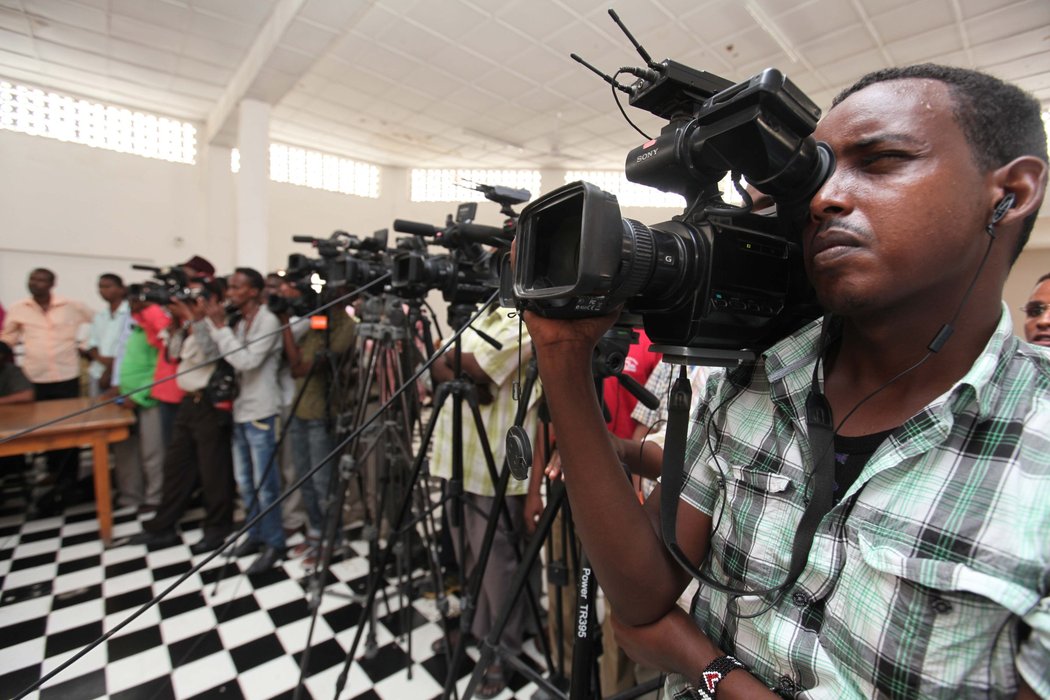
On the same day as the bombing attack, Mogadishu police launched a targeted crackdown on journalists who had arrived at the scene to report. Nineteen journalists were rounded up, forced onto a police truck, and taken to Hamar Jajab police station. There, officers confiscated their equipment and deleted all footage and photographs related to the attack before releasing them.
On 26th March 2025, ten armed police officers raided the home of Mohamed Ibrahim Bulbul, Secretary of Information and Human Rights at the Somali Journalists Syndicate (SJS), allegedly harassing his family while demanding to know his whereabouts. The raid came after Bulbul published an interview on 8th March with a former inmate who described torture and sexual violence inside the NISA underground prison, Godka Jila’ow, where government critics and journalists are often detained. Following the publication, Bulbul reported receiving threats from police and NISA officers demanding he take the interview down, a request he refused. He also reported on residents’ concerns about the presence of Al-Shabaab near Mogadishu, urging authorities to act. On 24th March 2025, Mogadishu Police Commander Mahdi Omar Mumin called Bulbul, pressuring him to stop reporting on police and security failures.
On 29th March 2025, Somali police officers arrested five journalists who were reporting on a peaceful protest demanding justice for two girls who survived sexual violence (see peaceful assembly section). The officers forcefully dispersed the demonstrators and ordered the journalists to stop filming before arresting them. The journalists taken into custody were Abdirazak Haji Sidow Nor, a cameraman for Himilo TV; Abdullahi Abdukadir Ahmed, a reporter for Himilo TV; Abdirizak Abdullahi Adan, a reporter for Radio Mustaqbal; Abdirahman Barre Hussein, a cameraman for Radio Mustaqbal; and Anisa Abdiaziz Hussein, a reporter for Himilo TV. Police confiscated the journalists’ cameras and deleted the footage at the time of the arrest. Although they were released shortly afterwards, they were warned not to cover protests in the future. Their equipment was eventually returned.
Peaceful Assembly
On 29th March 2025, authorities forcefully dispersed a peaceful protest in Mogadishu, where Somali women were demanding justice for two alarming cases of sexual violence. Women organised the rally in response to the reported gang rape of a young Somali woman in Nairobi and the alleged forced marriage of an underage girl to an older man in Puntland. These incidents have sparked widespread public outrage across Somali communities, both at home and in the diaspora, drawing renewed attention to the pervasive violence faced by women and girls. During the demonstration, women protesters marched and chanted “We want justice, and we do not consent to be raped”, calling for accountability and urgent action to protect the rights and dignity of women and girls.