Introduction
Gaza genocide
As previously documented, in December 2024, Amnesty International’s research found sufficient basis to conclude that Israel has committed and is continuing to commit genocide against Palestinians in the occupied Gaza Strip. In November 2024, the International Criminal Court issued warrants of arrest for Israeli Prime Minister Benjamin Netanyahu and former Defence Minister Yoav Gallant, for crimes against humanity and war crimes committed from at least 8th October 2023 until at least 20th May 2024.
Israeli occupation forces have engineered and implemented a systematic starvation policy over nearly 600 days of genocide by blocking the entry of food and humanitarian aid into the Gaza Strip, deliberately starving over two million people, including more than one million children. On 16th April 2025, Defense Minister Katz declared Israel would continue to block the entry of food and aid into Gaza, effectively admitting it is using starvation as a method of warfare. In a statement, B’Tselem, The Israeli Centre for Human Rights in the Occupied Territories said:
“The Israeli government and other decision-makers continue to deliberately and openly order the commission of war crimes and crimes against humanity that exacerbate the humanitarian catastrophe in Gaza. They must be held accountable for their actions and face justice.”
In addition, the Israeli government continues to persecute Palestinians citizens in Israel. On 8th May 2025, the Israeli government announced that it would begin deporting Palestinian citizens of Israel, under a 2023 amendment to the Citizenship and Entry into Israel Law. The law authorises the revocation of the citizenship or permanent residency of individuals convicted of an “act of terrorism” as defined by Israel’s overly broad Counter Terrorism Law or other specified offences, and that, according to the interior minister, received monetary benefits from the Palestinian Authority. Thus far, four people are already in advanced stages of revocation of citizenship and deportation proceedings, with hundreds more being targeted.
Judicial independence
As previously reported on the Monitor, Israel’s Justice Minister announced a series of judicial reforms, which sparked nationwide protests. In January 2025, the Knesset’s Constitution Committee resumed discussions on the proposal to change the structure of the Judicial Selection Committee, which is responsible for appointing judges to Israeli courts. The proposal is an amended version, part of earlier judicial reforms. According to the proposal, two representatives on the committee from the Bar Association will be replaced with politically affiliated lawyers, and the majority required for selecting Supreme Court justices will be reduced from seven to five, eliminating the veto power of Supreme Court justices in the committee. The Association for Civil Rights in Israel (ACRI) stated that this would weaken the separation of powers, judicial independence, the right to a fair trial and judges' ability to protect human rights. On 27th March 2025, the Knesset’s Constitution, Law, and Justice Committee approved the proposal to change the composition of the Judicial Selection Committee amid protests.
Association
Several legislative proposals being introduced in the Knesset would significantly limit the space for human rights organisations in Israel and beyond. In a statement, Adalah, the Legal Centre for Arab Minority Rights in Israel, said:
“Through legislative and policy measures, Israel is weaponising financial, legal, and administrative tools to silence organisations documenting and litigating human rights violations, to obstruct justice, and to stifle dissent. These measures are part of a broader strategy to entrench impunity and shield Israel from scrutiny as it continues its assault on the Palestinian people, amidst what many reputable international organisations have described as a genocide.”
The legislative proposals include:
- The NGO Taxation bill amends the Law on Association to impose an 80% tax on foreign government funding for civil society organisations registered as NGOs in Israel. The bill further seeks to prohibit organisations primarily funded by so-called "foreign state entities" from petitioning Israeli courts and grants the finance minister discretionary power to exempt favoured organisations.
- The ICC Cooperation bill threatens to criminalise any cooperation with the International Criminal Court (ICC), imposing up to five years in prison for those individuals who provide documentation or testimony of Israeli war crimes.
- INGO Registration Bill: a new directive granting Israeli authorities the power to deny or revoke registration in Israel of INGOs operating in the Occupied Palestinian Territory (oPt) and deny work visas to international personnel based on vaguely defined political criteria.
- Denial of Entry for Support of International Accountability: The legislation, enacted in February 2025, expands entry restrictions by barring non-citizens from entering or residing in Israel based on broadly defined political positions. For instance, under this law, individuals or organisations that have, according to Israeli authorities, denied the events of 7th October or the holocaust, or have expressed support for legal accountability efforts against members of Israel’s armed forces in international courts, can be denied entry.
In a joint call to action, several organisations, including Human Rights Watch, stated that these measures “pose existential threats to the survival and mandate of human rights organisations in Israel.”
Criminalisation of humanitarian aid
On 28th October 2024, the Israeli Knesset passed a law which bans the United Nations Relief and Works Agency for Palestine Refugees (UNRWA) from operating in Israel. Founded in 1949, the UNRWA is a UN agency that supports the relief and human development of Palestinian refugees. In a statement, Amnesty International said that the law amounts to criminalisation of humanitarian aid and will worsen a catastrophic humanitarian crisis in Gaza. It added the law violates the measures outlined in the International Court of Justice order in the case of South Africa v. Israel. On 29th January 2025, Israel’s Supreme Court rejected a request for an interim injunction filed by Adalah along with its petition challenging the laws aimed at shutting down the operations of UNRWA.
On 1st June 2025, 12 humanitarians and activists – including Member of the European Parliament Rima Hassan and climate activist Greta Thunberg departed on the Madleen, a vessel launched by the Freedom Flotilla Coalition (FFC), toward Gaza, Palestine, aiming to challenge Israel’s unlawful blockade of the territory. The mission was initiated in response to the complete shutdown of aid access since 2nd March 2025, which has led to the death by starvation of dozens of children. The vessel was carrying essential aid, including medicine, food, and infant supplies, destined for a Palestinian population subjected to an illegal blockade and ongoing genocide. On 2nd June 2025, UN experts expressed serious concern for the safety of participants in the Freedom Flotilla, given Israel’s repeated violent attacks on HRDs and UN and civilian humanitarian missions. The Coalition sent a similar ship in early May, which was bombed by a drone off the coast of Malta.
On 8th June, Israel intercepted the vessel nearly 185 km outside of Gaza in international waters. Four activists, including Greta Thunberg, were deported back to Europe, while the remaining ones who refused to consent to their deportation were held in an Israeli detention centre. Amongst those detained were French journalists Yanis Mhamdi, from the independent media outlet Blast, and Omar Faiad, a reporter for Al Jazeera and French-Palestinian Member of the European Parliament, Rima Hassan. In a statment Adalah said:
“Israel’s interception of the Madleen and the arrest of peaceful, unarmed activists delivering humanitarian aid violate international law….Activists have a legitimate right to deliver humanitarian aid to Gaza’s starving civilians, and preventing the ship from reaching Gaza while detaining its volunteers breaches Israel’s binding legal obligations.”
Peaceful Assembly
Protests were staged at the end of March 2025 in response to the government's latest judicial reform (see above). In a statement, Association for Civil Rights in Israel (ACRI) reported that it filed a complaint to senior police officials to demand that they investigate the violent conduct of Border Police (Magav) officers during protests that took place in Jerusalem the week before. The organisation documented “police punching protesters’ faces and genitals, dragging protesters across the street by their hair, intentionally smashing protesters' mobile phones to prevent them from documenting the violence.”
At the end of April 2025, ACRI raised its concerns in writing to the police commissioner over two separate protests in which citizens were subject to verbal and physical violence by organised right-wing groups. The first took place on 28th April 2025, Be’er Sheva, where police ordered the peaceful protesters to disperse instead of protecting them and then days later, at a screening of the joint Israeli-Palestinian Memorial Day Ceremony at a Reform synagogue in Ra’anana. In both cases, there were earlier warnings and incitement on social media leading up to the events.
Protests against the Gaza genocide
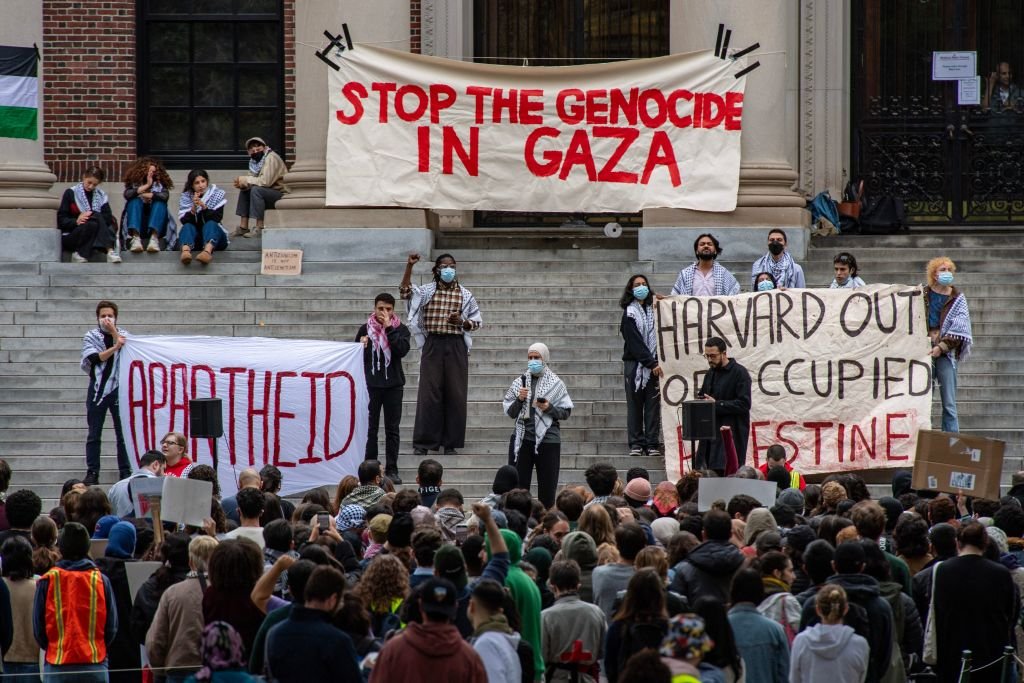
As reported previously on the Monitor, several protests have taken place calling for the release of all hostages, an immediate ceasefire and an end to the brutal violence against the Palestinian people.
The coalition "Partnership for Peace" experienced challenges in its request to the Haifa police for a permit to hold a march and demonstration on 31st May 2025 under the slogan "Enough of war, yes to peace." While the planned protest went ahead, the mayor of Haifa initially intervened and prohibited the protest from taking place after pressure from far-right groups. However, he later backtracked on the decision. While the authorities approved the protest to go ahead, they imposed several conditions, which, according to ACRI were “unusual and highly unreasonable”. Days before the planned protest, ACRI submitted a petition to the police, emphasising that they “are required to refrain from directly or indirectly influencing the content of the protest or the political and ideological affiliation of the organisers and participants.”
Earlier in January 2025, Adalah sent an urgent letter to the Israeli Attorney General, the State Attorney, the Police Commissioner, and the Commander of the Haifa Police Station, demanding an immediate end to the police’s illegal conduct and unlawful suppression of peaceful protests against the genocide in Gaza. According to Adalah and a legal center based in Haifa, more than 400 Palestinian citizens were arrested or detained from October 2023 until the end of March 2024. Later, between May and July 2024, at least 34 protesters were arrested for taking part in peaceful demonstrations against the war. Furthermore, it explained that Palestinian citizens of Israel have been disproportionately targeted, a stark contrast to the impunity shown toward far-right counter-demonstrators.
In another case, police blocked a planned demonstration set to take place on 10 January 2025, on the main street of Sakhnin, a Palestinian city in northern Israel. Adalah petitioned the Supreme Court on the matter, arguing that the police’s motivations were clearly “political and unlawful, meant to silence opposition to the war”. In its earlier decision, the police initially claimed that the protest had the potential for “incitement” and “would undermine the operations of Israeli soldiers in their war.” During the court hearing the police retracted their claims and instead argued that the protest could not proceed along the proposed route because they were unable to maintain public order. While the court issued its decision to “approve” the demonstration, along a heavily restricted proposed route, the demonstration was cancelled as the restricted route would undermine the protest’s purpose of delivering a clear political message.
On 5th May 2025, police dispersed protesters outside the Israeli parliament after the government announced plans to seize all of Gaza. Protesters called for a deal with Hamas to secure the release of the hostages still being held in Gaza.
Measures restricting peaceful assembly
In a concerning development, on 31st October 2024, the police updated the "Deployment and Use of Stun Grenades" policy, which would lead to further powers for police to restrict protests. The new version permits officers to throw stun grenades in close proximity to protesters, expands officers’ discretion in the field, and does not require officers to undergo training in crowd dispersal methods. On 27th November 2024, the ACRI, filed a petition to the Legal Advisor to the Government and the Legal Advisor to the Police, demanding that they immediately instruct the police to revoke the policy update and completely prohibit the use of stun grenades in protests and demonstrations. Related to the use of excessive force, on 18th December 2024, ARCI sent legal correspondence demanding an immediate end to the use of mounted police as a means of dispersing demonstrations and protests. This comes after the police modified and expanded their procedures regarding the use of mounted police at demonstrations in September 2023.
On 25th November 2024, ARCI submitted a petition to the Supreme Court, demanding a ban on police officers from photographing demonstrations and protesters using their mobile phones. It asked the court to declare police photographing demonstrations and protesters, and storing these photographs, illegal. According to ACRI, officers have “used their personal phones to photograph individuals at peaceful protest vigils; brought their personal phones close to protesters' faces; shared photos of protesters on WhatsApp; used photos to identify protesters, detain them, arrest them, or remove them from protests without cause; brandished mobile phones as an act of intimidation towards protesters.”
Expression
Palestinian women living in Israel have been targeted due to their social media posts. In November 2024, Palestinian actress Maisa Abd Elhadi was released following one year of house arrest, after she was accused of expressing “support for a terror organisation” and “incitement to terrorism” due to her social media posts. During her initial detention, she was strip-searched, physically assaulted, verbally abused with derogatory terms including ‘terrorist, and photographed in front of an Israeli flag. This photo was circulated online, and the actress was doxed. In another case, Intisar Hijazi, a 41-year-old Palestinian teacher, was arrested on 7th October 2024, for sharing a video of herself dancing to an English song on social media. The video, filmed at her school in Nazareth a year earlier, contained no reference to the Hamas attacks of that day. She was accused of endangering public safety, but was shortly released after police could not substantiate the charges against her. National security minister Ben Gvir posted images of Hijazi during her arrest, blindfolded in a police vehicle. Another unauthorised photograph of the teacher in front of an Israeli flag was circulated on social media.
Computer data intrusion law
On 28th November 2024, the Computer Data Intrusion law was discussed by the ministerial committee for legislation. The law gives the Israeli police unprecedented powers to secretly spy on and remotely search the electronic devices of citizens. Under the pretext of combating crime, it also allows the police to use cameras and microphones in personal electronic devices, such as mobile phones and computers, and to access stored materials by installing spyware such as "Pegasus" after obtaining a court order, without the knowledge of the device owner. 7amleh, the Arab Centre for the Advancement of Social Media, raised concerns that the law violates fundamental rights.
“This proposed law poses an unprecedented threat to the right to digital privacy and data protection, especially for Palestinian citizens in Israel, in a context where racism and fascism are on the rise, particularly within the police led by Ben Gvir, since the onset of the genocidal war on Gaza. Empowering the police to use spying tools legally will exacerbate ongoing violations and deepen the policy of mass surveillance specifically targeting Palestinians in Israel."
Political interference and legal harassment
ACRI raised its concerns over several proposed laws which aim to shut down, limit activities, or transfer control of the Public Broadcasting Corporation to political bodies. One of the proposed laws requires the Public Broadcasting Corporation to submit its annual financial and activity reports to the Knesset's Economic Committee, which would hold discussions about them in the presence of the Broadcasting Corporation Council Chairman and its CEO. According to ACRI, the law poses a major threat to freedom of expression and press freedom, since its gives the Knesset oversight of the corporation's work and content, paving the way for political interference
Five years ago, Bnei David Pre-Military Academy filed a defamation and copyright infringement lawsuit against activist and publicist Yair Nehorai for an article he wrote criticising videos uploaded by the academy. The videos in question revealed that its rabbis continually lecture against equality for women, Arabs, and LGBTQ+ community members; express tolerance for Jewish terrorism; and attack the secular public and the political left in Israel.
After the case dragged on, it was dismissed without costs by the court due to the owner of the academy withdrawing it because of a medical condition. However, the outcome is being appealed. On 14th January 2025, ACRI requested to join the case and argued that it should be recognised as a Strategic Litigation Against Public Participation (SLAPP) since the court failed to do so. It argues that significant legal costs should be imposed on the academy to prevent further abuse of the legal system.
‘No Other Land’ movie ban
The Minister of Culture and Sports, Miki Zohar, sent a letter to the directors of movie theatres and institutions supported by the ministry requesting that they "not provide an Israeli platform" for the No Other Land movie, which won the Oscar Academy Award for Best Documentary in 2025. The minister claimed that the film is propaganda, distorts reality, defames Israel, and damages its reputation. He said that the theatres and institutions must "ensure that State funds are not directed toward financing content that harms the State and serves its enemies."
On 6th April 2025, the Dean of Law at the University of Haifa revoked permission for the screening of No Other Land. The move came after Btsalmo" – a right-wing organisation that specialises in political harassment and the cancellation of events it opposes, demanded that the university cancel the screening. It argued that screening the documentary required the approval of the Film Review Council. However, in a letter to the university, ACRI clarified that the Film Review Council's regulations explicitly state that only films intended for commercial screenings require its approval. It stated that “requests from political entities seeking to silence voices are not sufficient reason for an academic institution, entrusted with freedom of expression, to cancel a film screening and student activity." This was confirmed by the Culture Ministry, after which the film screening was permitted by the university.
Crackdown on academic freedom
On 17th December 2024, Adalah filed a petition to the Israeli Supreme Court against a law that grants the Education Ministry authority to dismiss teachers over alleged “support of terrorism” and revoke funding from ‘recognised but unofficial’ schools on similar grounds. The law authorises the Ministry’s Director-General to dismiss or suspend teachers and revoke their teaching licenses based on the determination that a teacher has expressed identification with or support for an act or organisation labelled as ‘terrorist’. The minister can also cut funding if a school has expressed “identification with an act of terrorism or a terrorist organisation, or support for them, exist within the institution, and that the management of the school knew or should have known of their existence.” The law gives broad powers to the minister without any limitations.
There have been attempts to crack down on academics for their expression of criticism against the Israeli government. For example, in March 2025 Dr. Sebastian Ben Daniel was suspended from his position at Ben Gurion University due to social media posts he made under the pseudonym “John Brown. In a series of social media posts, Gurion criticised the IOF, calling them “baby murderers”. The university's announcement of the academic suspension contributed to further attacks against him, with more than 1,300 students signing a letter calling for his dismissal. Gurion was later reinstated after he apologised for the posts.
In May 2025, Tel Aviv University issued a directive to academic staff members to refrain from expressing political positions and to limit themselves to positions based on "broad public consensus." IN a statement, ACRI said that such a directive “creates a chilling effect and intimidates students and academics into silence; harms minority groups.”