Introduction
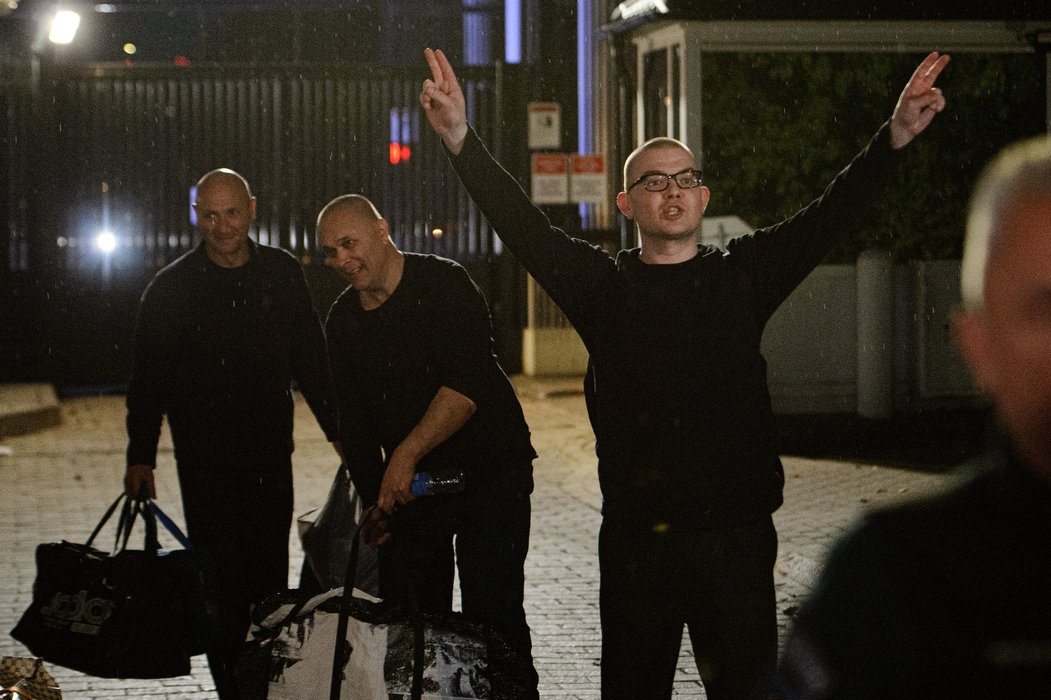
On 11th September, Belarus released 52 prisoners, including 14 foreign nationals and nine journalists, following a visit by a US delegation to Minsk. It was one of the largest prisoner releases under Alexander Lukashenko’s rule. Those freed reportedly included dual British-Belarusian citizen Julia Fenner, former presidential candidate Nikolai Statkevich, and philosopher Vladimir Matskevich. The move came as Washington agreed to ease sanctions on Belarus’s national airline, Belavia. Analysts say Lukashenko is seeking to improve relations with the United States and secure economic relief while maintaining close ties with Moscow — using political prisoners as leverage to restore international legitimacy without softening his repression at home.
According to the Viasna Centre, all those released were forcibly deported to Lithuania. Statkevich reportedly refused to cross the border, and his whereabouts remain unknown. Despite these releases, Viasna noted that as of September 2025, 1,197 political prisoners remained in Belarus. The same month saw the ninth documented death of a political prisoner in custody: Andrei Padniabenny, sentenced to 16 years and 8 months for offences linked to the 2020 protests, including property damage, insulting the President, and extremism-related charges. Radio Free Europe/Radio Liberty reported that he died from asphyxiation, though the exact circumstances remain unclear.
Freedom of association
A report published by the Viasna Centre on 3rd September 2025 highlights that the human rights situation in Belarus remains critical, with continuing persecution of participants in the 2020 protests and critics of the regime. Repressive measures persist against activists, journalists, civil society members, and political opponents, many of whom are detained for prolonged periods on politically motivated or “extremism” charges.
The Law Trend report on “Monitoring the Freedom of Association” for August and September 2025 confirms that the remaining civil society organisations in the country face heightened scrutiny, severe financial control, and threats of dissolution or designation as “undesirable” or “extremist” organisations. This climate of intimidation has further restricted civic space and undermined the ability of civil society to operate independently.
The already restrictive legal framework governing civic space in Belarus was slightly amended during the reporting period. On 26th August, the Ministry of Justice adopted Resolution No. 63, imposing additional reporting obligations on foundations, public associations, and political parties. Foundations are now required to provide documentation confirming the address of their governing body and details of any representative offices or branches. A week later, on 2nd September, the Council of Ministers issued Resolution No. 476, which formalised procedures for enforcing online restrictions. It defines the roles of law enforcement, government agencies, and internet providers in blocking access to specified online resources, further helping tighten state control over public communication and digital space.
Law Trend also reported the resumption of the campaign to forcibly liquidate non-governmental organisations, which had slowed earlier in 2025 after nearly 2,000 groups were dissolved through court orders or self-liquidation following the 2020 crackdown. Between June and the end of September, at least 20 more non-profit organisations faced liquidation through new lawsuits.
Criminal prosecutions of civil society representatives continued. In August, the Minsk City Court sentenced Alexander Mazur, Pavel Karanyukhin, and Alexander Lykshin to between three years and six months and three years and seven months in prison for their involvement in pismo.bel, an initiative enabling the sending of letters to prisoners (according to media reports, only 10% of the letters were addressed to political prisoners), later designated an “extremist group.” On 8th August, sociologist Yevgeny Krasnyansky received a seven-and-a-half-year sentence for alleged treason and financial offences, accused of producing a study for a foreign organisation containing what authorities called false information about Belarus’s COVID-19 policies.
Repression also extended to activists within and outside Belarus. On 5th September, social activist Valentina Naumova was detained in Grodno, and criminal proceedings were opened against her. Later that month, on 26th September, BY_Help Foundation head Alexey Leonchik and BYSOL Foundation founder Andrey Strizhak were added to the list of individuals involved in terrorist activity, following their earlier sentencing in absentia to 18 years in prison.
Freedom of peaceful assembly
On 9th August 2025, Belarus marked five years since mass protests erupted following the widely condemned presidential elections. The Viasna Centre recalled that the authorities responded with mass arrests, torture, and other forms of inhuman treatment. Repression continues, with new criminal cases opened against participants and many opposition leaders who organised political activity still detained. Viasna also noted that, as the statute of limitations on offences related to the 2020 protests is about to expire, the authorities are more likely to reclassify them as “mass riots”, an offence which carries stricter sanctions and longer statutes of limitations.
Human rights organisations describe these measures as part of a systematic strategy to intimidate and suppress dissent. Reports note that torture and ill-treatment remain common in prisons, and political prisoners are routinely denied fair conditions of detention and access to justice. The regime has also broadened the use of “extremism” legislation to criminalise civic or critical activity.
On the anniversary, the exiled opposition, civil society groups, and international actors held solidarity events to highlight ongoing abuses. Opposition leader Svetlana Tsikhanouskaya called for global mobilisation to maintain international attention on Belarus. Although a few political prisoners, including her husband and opposition blogger Sergei Tsikhanousky, have been released, more than 1,000 remain in detention, highlighting the limited impact of symbolic gestures against the continued repressive apparatus.
Authorities have also stepped up their efforts against Belarusian citizens participating in pro-democracy rallies abroad, using provisions allowing for trials to be held in absentia on a variety of politically motivated charges. On 5th August, the Investigative Committee announced it had identified 207 individuals involved in 25th March events (the anniversary of the Belarusian People’s Republic’s declaration of independence, unofficially celebrated as Freedom Day) in Poland, the U.S., Lithuania, Canada, and the U.K. Authorities conducted raids, seized property, and opened criminal cases under Part 2 of Article 361-4 for “facilitating extremist activity.”
Freedom of expression
In September 2025, Belarusian authorities announced the release of 52 political prisoners, including nine journalists, describing the move as a “humanitarian measure.” The releases included reporters and editors arrested in 2020 and 2021 for their coverage of post-election protests and work in independent media. While the International Federation of Journalists (IFJ) and Reporters Without Borders (RSF) welcomed the development, they emphasised that it did not signal a genuine shift in policy, but rather an image-driven manoeuvre by the Lukashenko regime aimed at gaining external support.
Rights group Viasna identified the nine journalists released with U.S. mediation: Ihar Losik Aleksandrovich, Pavel Mozheiko Ivanovich, Alexander Mantsevich Borisovich, Elena Timoshchuk Petrovna, Irina Slavnikova Aleksandrovna, Larisa Shchiryakova Fedorovna, Pavel Podobed Vasilievich, Vyacheslav Lazarev Dmitrievich, and Evgeniy Merkis Aleksandrovich. Among them, the case of Ihar Losik, a Radio Free Europe/Radio Liberty collaborator, remains particularly emblematic of the regime’s harshness. A popular Telegram blogger, Losik was arrested in June 2020 and sentenced to 15 years in a maximum-security colony on charges including “organisation of mass riots” and “incitement to social hatred.” During his imprisonment, he endured hunger strikes, incommunicado detention, property seizures, and threats of further punishment; his wife, Darya Losik, was also jailed.
Despite the releases, repression of independent media continues. According to updated figures from the Belarusian Association of Journalists (BAJ), an IFJ affiliate, 27 journalists remain imprisoned, including prominent figures such as Andrzej Poczobut, Katsiaryna Andreeva, and Andrei Aliaksandrau. New arrests and charges, frequently framed as “extremism” or “dissemination of prohibited materials”, illustrate that the crackdown persists.
A recent example is journalist Kiryl Pazniak, recognised as a political prisoner. On 13th September 2025, the Council of Europe Platform for the Safety of Journalists reported that Pazniak had been detained in early September in connection with the YouTube channel Platforma 375, which authorities designated as “extremist.” Pazniak, who hosted discussions between government and opposition supporters until 2022, was charged with extremism and placed in pretrial detention, according to an anonymous BAJ representative.
The Belarusian authorities continue to exploit “extremism” legislation to intimidate and control the media. On 8th August 2025, Brest journalist Oleg Suprunyuk was sentenced to three years’ imprisonment under Part 3 of Article 361.1 of the Criminal Code for “participation in an extremist group.” The Brest Regional Prosecutor’s Office stated that Suprunyuk had contributed articles to the Belarusian Association of Journalists, which has been officially designated an extremist organisation.