Peaceful Assembly
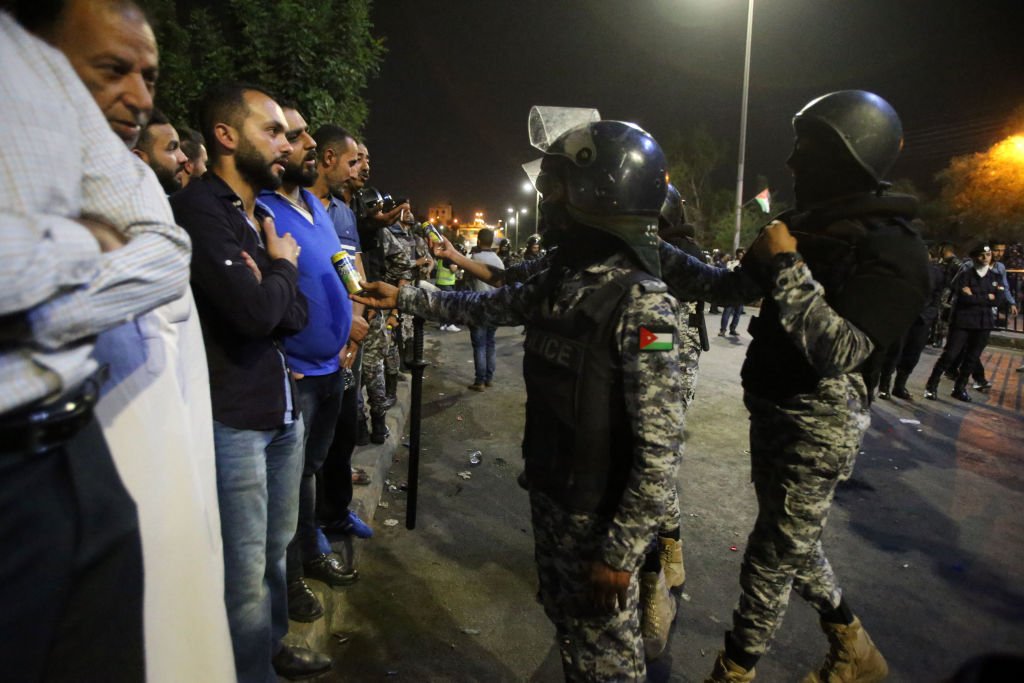
On 2nd April 2026, the U.S. Embassy in Amman issued a security alert advising individuals to avoid demonstrations and public gatherings due to expected protest activity and rising regional tensions. In this context, and in anticipation of such mobilisations, the Ministry of Interior in Jordan banned planned demonstrations in early April 2026 in Amman and other key urban areas, particularly those organised in solidarity with Palestine and in response to the ongoing regional conflict sparked by the US/Israel war on Iran. The decision was framed as a measure to preserve public order and security, with authorities warning that unauthorised gatherings would not be permitted, especially in sensitive or central locations of the capital. As a result, several planned mobilisations were either cancelled, restricted, or closely monitored, preventing the emergence of larger protest gatherings during this period. However, a limited demonstration still took place shortly thereafter under these constrained conditions.
Following this period of heightened caution around public gatherings, a demonstration nevertheless took place on 10th April 2026 in Amman after Friday prayers near Al-Husseini Mosque, where participants expressed support for the official positions of the country’s King Abdullah II, defending the Hashemite custodianship of Jerusalem’s Islamic and Christian holy sites. The march, organised with the participation of political parties and trade unions, brought together various segments of society. Demonstrators reiterated their rejection of measures affecting Al-Aqsa Mosque or any attempts to alter the status of Jerusalem, while affirming alignment with the King’s recent statements in regional and international forums.
Expression
Freedom of expression in Jordan has been increasingly restricted in the context of the regional conflict, with authorities using security justifications to curb dissent. According to the UN Human Rights Chief Volker Türk, in April 2026, at least four government critics were arrested in Jordan during the current wave of hostilities, including three members of the Jordanian Communist Party, two of whom remained detained without clear legal grounds being publicly disclosed. These arrests are part of a broader regional pattern in which governments have intensified repression through vaguely defined security-related charges, contributing to a chilling effect on public expression, particularly regarding opinions on the war and political developments.
In parallel, freedom of expression continues to be constrained through the application of cybercrime legislation targeting online speech. On 9th April 2026, a Jordanian court sentenced journalist Hiba Abu Taha to two years in prison over social media posts expressing views on the regional conflict, including criticism of official narratives. The ruling followed her re-arrest shortly after a previous release and was based on accusations that her online content undermined national security.
Similar patterns were reported in May 2026, reflecting the ongoing use of legal and security frameworks to regulate both offline and online expression. Human rights monitoring organisations documented at least five additional cases of arrest and detention during this period targeting activists, union figures, and individuals engaged in peaceful expression. Among these were the detention of former Teachers’ Syndicate leader Hussam Mashah on 11th May 2026 and the arrest of Dr. Rami Ayasrah on 13th May 2026, alongside three other reported cases involving individuals detained in connection with political expression or solidarity-related activities. In several instances, charges were not immediately disclosed at the time of arrest, with authorities reportedly relying on broadly interpreted provisions of the Cybercrime Law and security-related legislation.