General Update
In August 2025, GCHR published a comprehensive overview of human rights violations in Bahrain. The report highlighted that although Bahrain accepted some of the UN’s recommendations during the Universal Periodic Review (UPR) process held every four and a half years, most recommendations have never been implemented. Despite continuous recommendations made during the UPR process, the Bahraini Government has refused to abolish the death penalty which, in Bahrain, is not just reserved for the most serious of crimes, but has been increasingly deployed in politically motivated cases.
In submissions to Bahrain’s UPR in 2022, human rights organisations noted a troubling lack of progress on key elements to promote civic space, including freedom of expression and association, and reported on violations against human rights defenders, including women, and a lack of fair trials and the use of torture in detention.
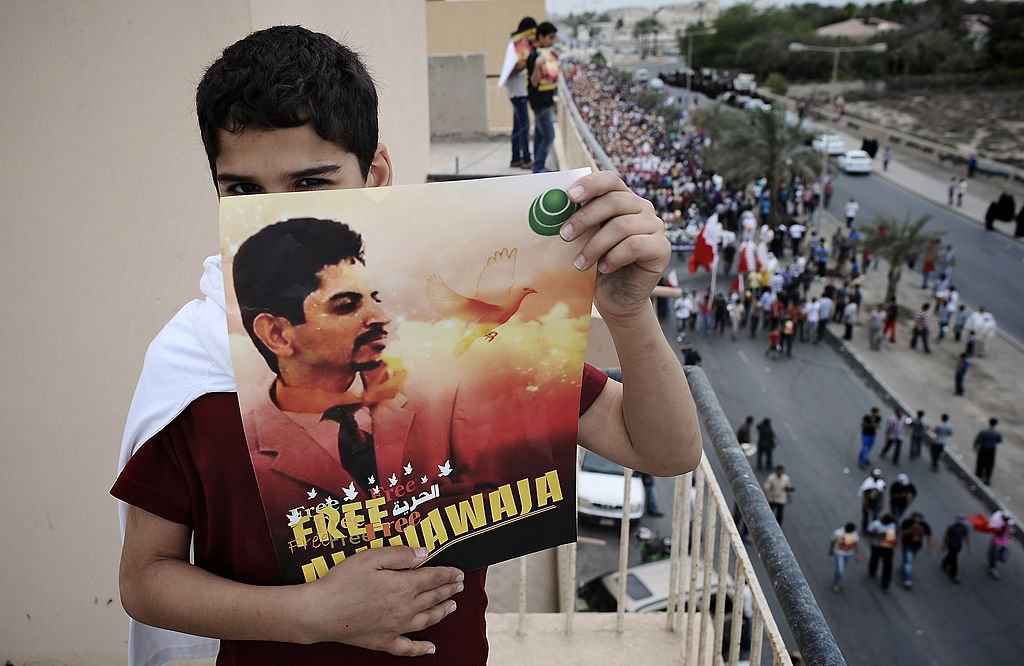
Separately, during the 60th session of the United Nations Human Rights Council (UNHRC) in Geneva, which was held between 8th September to 8th October 2025, the Gulf Centre for Human Rights (GCHR) and the Bahrain Center for Human Rights (BCHR), in cooperation with other international and regional partners, co-sponsored a side-event on Bahrain’s ongoing human rights crisis. The panel brought together civil society leaders, UN experts, and international organisations to highlight urgent concerns around political repression, discrimination, civic space, and the treatment of prisoners of conscience. Panellists focused on the urgent need to secure the release of political prisoners, with particular emphasis on the case of Abdulhadi Al-Khawaja. Panellists noted that Al-Khawaja’s continued detention, despite his deteriorating health, symbolises the Bahraini government’s relentless crackdown on dissent and its disregard for international calls for his release.
Since 2014, the Kingdom has also banned access to its territory for human rights observers including GCHR, Amnesty International, Human Rights Watch and UN human rights bodies (such as the Special Rapporteur on Extreme Poverty and Human Rights).
The report notes the concerning pattern of Bahrain’s flagrant violations of fundamental freedoms, appearing to be covered up and protected by the Kingdom’s relations with certain Western countries. In addition, Bahrain hosted the Formula 1 World Championship event for the 22nd consecutive time during the 22nd edition of the Bahrain Grand Prix, which took place from 11th to 13th April 2025. These events underline the Kingdom’s influence on the international stage, even though some activists, such as Najah Ahmed Yusuf, had called on the championship directors to take action for years. During the Grand Prix in April 2017, tear gas was used against protesters. Yusuf was arrested following her online criticism of Bahrain’s Grand Prix, and has been subjected to arbitrary detention and torture. She was sentenced to three years’ imprisonment in June 2018. In 2012 and 2016, protesters were killed during demonstrations against the F1.
In addition, the UK police have earned millions of pounds by training officers from several Middle East countries that retain the legal death penalty. In 2017, Bahrain provided around £0.5 million of the £1.3 million provided to the Anglo-Welsh College of Policing since 2012 by the combined governments of Bahrain, the UAE, Oman and Kuwait. The UK Home Office justified its decision by stressing that this training could only facilitate judicial reform and respect for human rights in countries that have not abolished the death penalty: 89% of the money earned by the college came from countries where the death penalty still exists.
HRD Abdulhadi Al-Khawaja is now on a life-threatening hunger strike in Jau Prison #Bahrain, wrongfully imprisoned for almost 15 years for advocating for #democracy, #HumanRights & freedom of speech. @regeringDK @DanishMFA @larsloekke @vonderleyen @eucopresident @kajsaollongren… pic.twitter.com/HwfuJBQbko
— CIHRS (@CIHRS_Alerts) October 30, 2025
Association
On 29th October 2025, prominent human rights defender Abdulhadi Al-Khawaja, who has been behind bars for over a decade, began a new hunger strike in protest against his arbitrary detention. However, he suspended it after two days on 31st October, after receiving replies to his letters from the EU and Danish authorities. The Free Al-Khawaja Campaign said, “For nearly 15 years, efforts by Danish authorities, the European Union, and international partners to secure Abdulhadi Al-Khawaja's release have not succeeded. His imprisonment has taken a severe toll on his health and family, yet his commitment to human rights and freedom remains firm.”
In the meantime, in October 2025, more than 90 prisoners in buildings 12 and 2 at Jau started a hunger strike, "freedom or death". Maryam Al-Khawaja highlighted the hunger strike and the ongoing imprisonment of her father during the Manama Dialogues in Bahrain.