Introduction
On 20th March, the Swedish government announced plans to tighten citizenship requirements following an inquiry into “questionable” decisions. Proposed measures include extending residency from five to eight years, introducing language and culture tests, requiring applicants to be self-sufficient with a gross monthly salary of SEK 20,000 (€1,815), and demonstrating an “honest and responsible lifestyle.” The proposals form part of a broader shift towards restrictive migration policies, including reduced asylum permits, stricter family reunification rules, and higher income thresholds for work visas. According to InfoMigrants, asylum approvals fell in 2024 to their lowest level in 40 years, with fewer than 10,000 applications recorded. The government is also considering measures to prevent rejected asylum seekers from reapplying without leaving the country, alongside financial incentives and proposals for “return hubs” outside the EU to encourage people to leave.
On 19th February, Sweden’s Supreme Court ruled inadmissible a landmark climate lawsuit filed by hundreds of youth activists, including Greta Thunberg. The plaintiffs had argued that the government’s inadequate climate policies violated their rights under the European Convention on Human Rights. The court found that individuals lacked standing to bring such claims and stressed that it could not compel political branches to adopt specific measures, though it left open the possibility that an association-led case seeking only a declaration of rights violations could proceed. Activists have vowed to continue pressing for accountability on Sweden’s climate commitments.
Freedom of association
Swedbank ceases loans to fossil fuel companies following protests
After months of pressure from clients and campaign groups, Swedbank has largely stopped issuing new loans to fossil fuel companies. The shift followed shareholder resolutions and mass mobilisation by organisations such as Fair Finance Guide Sweden and the Swedish Society for Nature Conservation, which criticised banks for financing oil and gas expansion incompatible with climate goals.
In its statement celebrating the victory, Fair Finance International highlighted that, while Swedbank and Handelsbanken have now halted lending to fossil fuel expansion, other major banks—including SEB, Nordea and Danske Bank—have continued to provide over SEK 60 billion in loans, including to projects in the Norwegian Arctic and offshore Africa. Campaigners point to Swedbank’s move as evidence of the power of coordinated client activism, but warn that far stronger action is needed across the sector to curb fossil fuel financing.
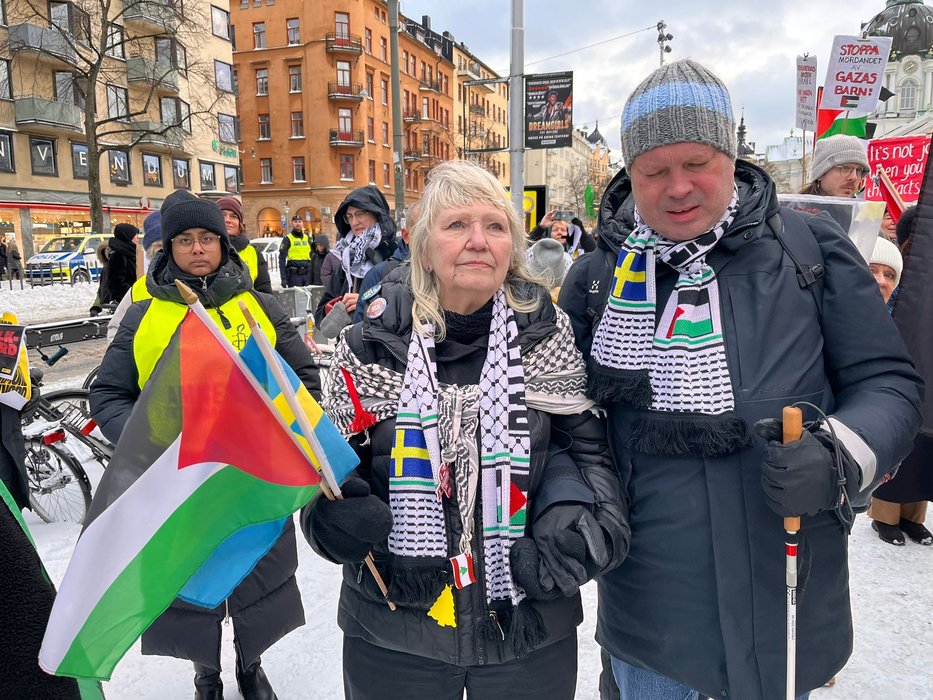
Dockworkers’ Union blocks military trade with Israel, vice-chair dismissed
On 14th January, the Swedish Dockworkers’ Union announced it would block all military trade with Israel from 28th January, in solidarity with Palestinian trade unions amid the ongoing Gaza war. The decision, taken by union vote before Christmas, cited suspected war crimes and human rights violations. The union pledged to apply the precautionary principle, refusing to handle goods of uncertain military or civilian status, including Swedish military purchases from Israeli defence companies.
Pushback against the action came in the form of a legal challenge from the employer association, Ports of Sweden. However, after a hearing, the country’s specialised labour court authorised the union’s six-day boycott of military cargo.
In February, on the same day the court issued its ruling, Swedish Dockworkers’ Union national deputy chair and spokesperson Erik Hegelson was dismissed by his employer DFDS. The company claimed the dismissal was based on “national security”, citing Sweden’s 2018 Security Protection Act. Since Sweden’s NATO accession in 2024, port workers have been given enhanced security responsibilities. Speaking to Equal Times, Hegelson, however, said DFDS failed to provide evidence: “Management was very vague [...] they implied the military had been in contact with them – but they wouldn’t provide any specifics, details or evidence. Our view, then and now, is that this was a smokescreen.” Both the police authority and Sweden’s Chancellor of Justice rejected DFDS’s request for an investigation, finding no grounds for criminal suspicion.
The company’s press release nevertheless triggered harassment against Hegelson, including death threats, and the case has raised broader concerns about the use of national security laws against union activists. According to Equal Times, the Dockworkers’ Union—backed by international observers, including UN rapporteur Francesca Albanese—defended the blockade as a legitimate act of solidarity. Swedish dockworkers are now considering strikes to secure collective bargaining protections and prevent similar reprisals in the future.
Reprisals against climate activists
A report by Le Monde has revealed a growing pattern of reprisals against Swedish civil servants engaged in climate activism or NGO work, reflecting what observers describe as a government-led crackdown on environmental advocacy under the centre-right coalition, backed by the far right.
In April 2024, Marie, a gas coordinator at the Swedish Energy Agency, was terminated from her position after her social media activity revealing an affiliation with the climate group Rebellmammorna (“Mothers’ Rebellion”) was reported to her superiors and leaked to journalists. Her security clearance was revoked, her work devices confiscated, and a right-wing weekly branded her a “risk to national security”, despite no evidence of wrongdoing. The minister for civil defence, Carl-Oskar Bohlin, publicly took credit for directing the Energy Agency to investigate Marie. Similarly, in February 2023, a Public Health Agency employee who raised concerns about climate change (writing in a group email that she feels “terror” and suggesting to “do more”) was reprimanded along with colleagues, and the agency’s Climate Initiative—running since 2018—was suspended. Other civil servants have reported pressure when proposing ambitious climate goals or engaging in activism outside work, leaving many reluctant to discuss environmental issues.
In March 2025, the ST trade union announced that it would sue the Swedish government for violating the constitution by dismissing Marie, demanding 200,000 Swedish kronor (around 18,000 EUR) in damages on her behalf.
Climate activists outside the government have also faced severe repercussions. Clara, a researcher from another EU country teaching at a Swedish university, was arrested in 2023 with 16 other members of Scientist Rebellion during a peaceful protest at Bromma Airport against private jet emissions. Police apprehended all 17 participants on suspicion of airport sabotage, a crime carrying a maximum sentence of four years in prison.
While in custody, Clara reported being forced to strip naked and undergo a degrading search before being released nine hours later. The protest later became controversial after false claims circulated in the media—amplified by an MP—that it had diverted an ambulance flight.
Video evidence confirmed that Clara had only held a banner and had not taken part in acts of civil disobedience, such as spraying paint on the terminal building. Nevertheless, she was denied Swedish citizenship in August 2024 due to ongoing investigations linked to the demonstration.
In March 2025, Marie and Clara’s cases drew criticism from UN Special Rapporteur Michel Forst, who denounced Sweden’s treatment of the two women as part of a broader pattern of suppressing peaceful environmental activism.
Rising food prices spark supermarket boycott
In March 2025, thousands of Swedes mobilised in a week-long boycott of major supermarkets, including Lidl, Hemköp, Ica, Coop, and Willys, to protest sharply rising food prices. The action, organised via social media as part of the 'Bojkotta vecka 12' (Boycott Week 12) campaign, followed years of escalating costs, with families facing an estimated £2,290 annual increase in food bills since January 2022. The protesters accused supermarket chains and large-scale producers of prioritising profit over the consumer in the absence of competition, while the supermarkets cited broader factors such as geopolitics, commodity prices, and climate issues. The boycott sparked a nationwide debate and calls for government intervention. The organisers are planning further actions targeting major food chains and dairy producers.
Freedom of peaceful assembly
Northvolt bankruptcy and workers’ protests
In October 2024, Swedish battery-maker Northvolt declared bankruptcy and laid off hundreds of employees in Skellefteå, including many non-EU migrant workers. The collapse sparked months of mobilisation over the impact on workers and migration policy.
Civil society groups such as Migrantmän warned that the bankruptcy exposed structural flaws in Sweden’s labour migration system, leaving skilled non-EU workers at risk of deportation. Many faced immediate loss of housing and residency status under the “three-month rule”, which requires third-country nationals to secure new employment within 90 days or leave the country. Political parties, including the Social Democrats and the Centre Party, as well as local officials in Skellefteå, called for urgent suspension of the rule and broader legal reforms to prevent economic shocks from triggering forced removals.
Migrantmän and Northvolt unions organised a demonstration in Skellefteå, demanding the abolition of the rule and stronger protections for migrant workers. Union leaders also highlighted the importance of retaining skills during the green transition. Peter Hellberg, president of Unionen, stressed the need for coordination between government, municipalities, industry and regional authorities. Marie Nilsson, chair of IF Metall, underlined the union’s priority to support members and investigate how the bankruptcy unfolded.
The Swedish Migration Agency, however, confirmed that no exemptions to the three-month rule were planned, though a broader reform of the law is under discussion, with implementation expected in May 2026.
Protests against Elon Musk and Tesla, six detained
On 31st March, environmental activists from Restore Wetlands spray-painted Tesla stores in Stockholm and Malmö to protest CEO Elon Musk’s “undemocratic actions and statements” and raise awareness of peatland destruction. Police detained two suspects in Stockholm and four in Malmö on suspicion of serious vandalism. Similar actions were reported the same day at Tesla dealerships in Ottawa, Canada, as part of a coordinated global campaign.
The protest coincided with a labour action outside Tesla’s Stockholm showroom by IF Metall, which has been striking for nearly 18 months over the company’s refusal to sign a collective bargaining agreement.
Students at the University of Gothenburg end encampment after their demands were met
On 10th April, students at the University of Gothenburg announced they were ending their 192-day encampment—the longest in Sweden—after securing access to documents on the university’s collaborations with Israeli institutions. The protests, supported by staff and wider civil society, led to commitments for greater student influence over international partnerships, the creation of a research network in solidarity with Palestine, and a union vote supporting a boycott of Israeli institutions.
Despite these concessions, students and allies continue to call for the resignation of Vice-Chancellor Malin Broberg over her defence of the collaborations.
Freedom of expression
Assassination of Quran-burner and legal backlash against far-right incitement
In late January 2025, one of Sweden’s most prominent anti-Islam agitators, Salwan Momika, an Iraqi-born asylum seeker, was shot dead during a TikTok livestream in Södertälje. As covered in previous CIVICUS Monitor reports, Momika gained global notoriety in 2023 for burning Qurans in a series of provocative demonstrations, sparking criticism and debates about the limits of free expression, both in Sweden and across the Muslim world.
Police arrested five suspects and are investigating possible foreign involvement. Citing intelligence, Prime Minister Ulf Kristersson warned that “a foreign power may be connected”. Prominent Gothenburg Mullah Sheikh Abdul Rashid Mohamed condemned the killing, stating: “Violence cannot be justified, even against those who provoke us”.
Days later, Stockholm District Court convicted Salwan Najem, an associate of Momika, of hate speech over Quran-burning protests in 2023. The court ruled that his repeated desecration of the Quran amounted to “agitation against a national or ethnic group”. Presiding Judge Göran Lundahl stressed that freedom of expression is protected in Sweden, but it is not a “free pass to do or say anything”.
This followed the November 2024 conviction of Rasmus Paludan, the Danish-Swedish far-right extremist who initiated the Quran-burning wave. Malmö District Court sentenced him to four months in prison for incitement against an ethnic group, ruling his actions had “clearly crossed the line” of protected speech. Civil Rights Defenders consistently condemned Paludan’s actions, reporting him to police as early as February 2023 and arguing that Quran burnings “constitute hate crimes” and violate protections for minorities.
Public broadcaster targeted with vandalism, cyberattacks
On 27th December 2024, an individual threw a foul-smelling red substance at the Stockholm headquarters of Sveriges Television (SVT). According to SVT’s head of security, Camilla Josephson, the broadcaster takes the incidents seriously and has increased security, though details were not disclosed. The attack followed similar acts of vandalism in September and October. Police are investigating, but the perpetrators remain unidentified.
On 3rd February 2025, SVT was targeted once more when red paint was thrown at its main entrance and a window was smashed – the fourth such incident in six months. Josephson told the Committee to Protect Journalists that these were “acts of aggression against the free press, as a fundamental part of democracy”, adding that enhanced security measures had already been introduced.
Between 8th and 11th June, SVT was hit by three major distributed denial of service (DDoS) attacks. The third, beginning on 10th June, was described by SVT’s technical director as the most severe overload attack the broadcaster had ever faced, rendering its website and app inaccessible. SVT pledged cooperation with the Swedish Civil Contingencies Agency to prepare for further incidents.
Prime Minister Kristersson condemned the cyberattacks in parliament, noting they also affected agencies such as the Swedish Employment Agency. Without naming a culprit, he referred to past intelligence identifying Russia, China and Iran as frequent sources of cyber operations against Sweden. Cybersecurity expert Måns Jonasson of the Internet Foundation suggested the attacks were part of a coordinated campaign to test Sweden’s resilience.
On 5th June, the Journalists’ Association (SJF) also reported its website down. While initially uncertain if it was a DDoS attack, the timing and similarity to the SVT incidents suggested a likely connection.
Building housing multiple media outlets vandalised
On 8th January 2025, a man broke into the Tidningshuset office building in Stockholm, which houses the editorial offices of Expressen, Dagens Nyheter and Dagens Industri. He vandalised the reception area, smashing windows and furniture, before being arrested for aggravated vandalism. No injuries were reported, and his motive remains unclear.
Man sentenced to one month in prison for threatening journalist
On 22nd May 2025, a man was sentenced to one month in prison and ordered to pay SEK 8,000 in damages for sending repeated death threats to former Dagens Kalmar editor Anders Blank in February 2023. The threats, linked to Blank’s reporting on the man’s weapons offences arrest, included violent and graphic messages. Despite his denial, police uncovered messages in which he confessed to a friend.
The district court noted the gravity of threats against journalists, ruling that imprisonment was necessary given the man’s prior conviction and probation status. Blank welcomed the verdict, saying: “There is no end in itself to sending someone to prison, but this issue is bigger than him and me.”