North Korea is one of the world’s most repressive states, where civic space is rated ‘closed’ by the CIVICUS Monitor. The government restricts all civil and political liberties for its citizens, including freedom of expression, peaceful assembly, association and religion. It prohibits all organised political opposition, independent media, civil society and trade unions.
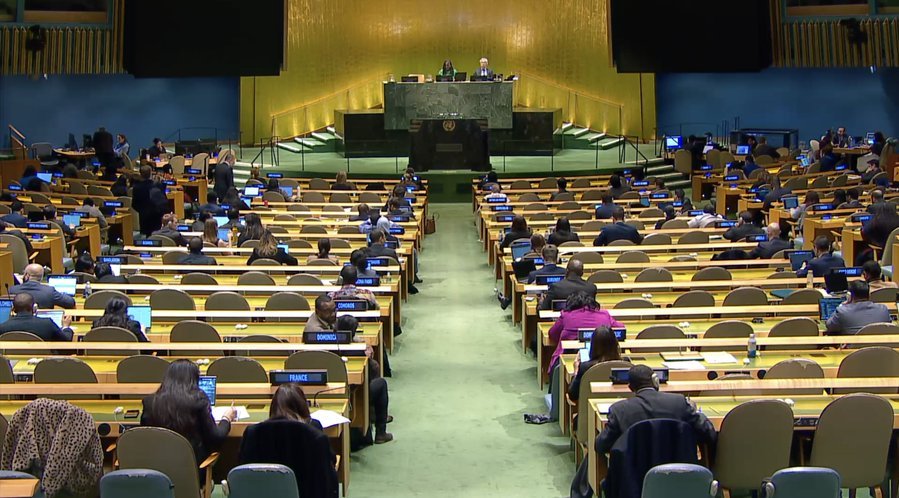
The UN General Assembly adopted a resolution condemning North Korea’s human rights abuses for the 21st consecutive year, with the U.S., South Korea and Japan among the 61 countries that sponsored the measure. The resolution, passed by consensus on 19th December 2025, raised concerns on the grave human rights situation, the pervasive culture of impunity and the lack of accountability for human rights violations and abuses in the country. It highlighted the all-pervasive and severe restrictions, including an absolute monopoly on information and total control over organised social life.
In recent months, the UN published a new report on the situation of human rights over the last decade, while civil society and the media reported increasing restrictions on religious freedom.
Expression
UN report highlights 10 years of repression
Free #NorthKorea
— Benedict Rogers 羅傑斯 (@benedictrogers) September 13, 2025
DPRK: UN report finds 10 years of increased suffering, repression and fear https://t.co/pciI98tzqG
Prior to the resolution, on 12th September 2025, the UN Human Rights Office (OHCHR) published a report finding that the human rights situation in North Korea has not improved over the last decade.
Covering the period following the 2014 UN Commission of Inquiry, the latest findings point to the introduction of more laws, policies and practices that are subjecting citizens to increased surveillance and control in all parts of life.
The report says political prison camps continue to operate. The fate of hundreds of thousands of disappeared people, including abducted foreign nationals, remains unknown.
Enjoyment of freedom of expression and access to information have significantly regressed, with the implementation of severe new punishments, including the death penalty, for a range of acts including the sharing of foreign media such as TV dramas.
Since 2015, the Government has adopted several laws or amendments to laws, including the amendment of 2015 to the Criminal Law, the Law on Rejecting Reactionary Thought and Culture (2020), the Youth Education Guarantee Law (2021) and the Law on Protecting the Pyongyang Cultural Language (2023), that criminalise access to unauthorised foreign information and prohibit the consumption or dissemination of information (through, for example, publications, music and movies) from “hostile” nations and the use of linguistic expressions that do not conform to prescribed socialist ideology and culture. These laws raise serious concerns of unlawful restrictions on the right to freedom of opinion and expression.
The surveillance of the population has become even more pervasive, aided by advances in technology.
The Office of the Prosecutor and the Workers’ Party of Korea increasingly carried out inspections of computers, radios and televisions, and house searches without prior notice or warrants, aimed at finding “anti-socialist” materials. Access to the Internet is almost totally unavailable to the public. A tightly controlled national intranet is available, primarily for research institutions and government officials.
All media is controlled by the Government and any independent news or opinion piece contrary to the State’s official position is treated as “counter-revolutionary” and as a punishable crime under the country’s broadcasting and publishing laws.
Association
No independent civil society while foreign agencies forced to leave
The OHCHR report in September 2025 highlighted that there are no independent civil society organisations in the country. People are required to join one of the organisations affiliated with the Workers’ Party of Korea, such as the women’s union, whose role is to propagate government ideology, undertake surveillance and mobilise the public for government-initiated construction, farming and labour. Every person is required to participate in weekly self-criticism sessions, primarily aimed at collective surveillance and indoctrination.
The December 2025 UNGA resolution stated that the lack of independent civil society organisations in North Korea meant there were no groups that could independently monitor, document and report on human rights violations in the country.
It also noted with concern that the government restrictions have compelled the international staff of humanitarian agencies to leave the country and suspend assistance projects, and the effect that these restrictions may have had on the levels of malnutrition and access to health services, water and sanitation.
Increasing restrictions on religious freedom
On 27th October 2025, the North Korea Human Rights Database Center (NKDB) published a new white paper revealing that North Korea's extreme restrictions on religious freedom have worsened since the start of the pandemic.
Based on a survey of 15,303 defectors living in South Korea, 99.6 percent reported that free religious activities are impossible in the country Nearly half of the respondents (47.5 percent) said that those caught engaging in religious activities would be sent to political prison camps.
Despite the extreme restrictions, NKDB's analysis, based on over 146,000 records of human rights violations, indicate that violations of the right to freedom of belief and expression have surged since the pandemic.
In November 2025, the Daily NK reported that the authorities are claiming that “organised underground services and secret prayer groups have almost disappeared.” The primary targets of the crackdowns are Protestants and Catholics. As a matter of internal policy, such people are “sent straight to political prison camps.” Buddhists and people engaged in folk beliefs are also targeted, but they receive lighter punishments. The crackdowns are based on tips and intelligence from informants. When suspicious activity is detected, the authorities conduct operations to collect evidence.