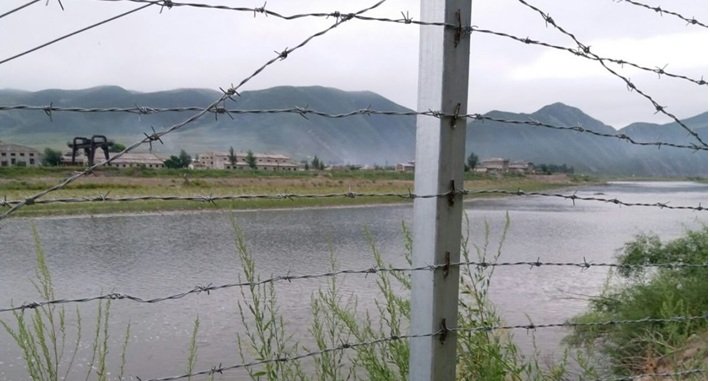
North Korea is one of the world’s most repressive states, where civic space is rated ‘closed’ by the CIVICUS Monitor. The government restricts all civil and political liberties for its citizens, including freedom of expression, peaceful assembly, association and religion. It prohibits all organised political opposition, independent media, civil society and trade unions.
In May 2025, Amnesty International reported that thousands of people, including those accused of dissent or attempting to flee the country, were detained in prison camps. Prisoners were subjected to torture and other ill-treatment. Further, the government tightly controlled all forms of communication, including by monitoring phone calls, text messages and internet activity, and prohibiting contact with the outside world. Foreign media, particularly South Korean news, television programmes and music, were banned; the government imposed severe punishments, including years of “reform through labour”, on individuals who accessed or distributed such content.
In the same month, a first-ever public high-level session was convened at the UN General Assembly to discuss human rights abuses and violations in North Korea. The UN Special Rapporteur on human rights for the country, Elizabeth Salmón, said that North Koreans have been forced to exist in “absolute isolation” for many years, while human rights activist Eunju Kim - who escaped starvation in North Korea in 1999 - pleaded with delegates and UN officials to take action. A civil society coalition representing 300 groups highlighted the connection between North Korea’s repression and its military production.
The vast majority of human rights groups focused on North Korea face an existential crisis after receiving notices from the US government in February 2025 that their grant funds have been frozen. The freeze threatens to devastate an already fragile collection of North Korea human rights groups, potentially wiping out vital sources of advocacy and research. The UN Special Rapporteur has raised concerns on the financial constraints to civil society that will have long-term consequences on efforts to improve the human rights of people in North Korea. Civil society groups are calling for urgent pressure on the State Department to preserve North Korea funding.
In June 2025, the Multilateral Sanctions Monitoring Team (MSMT), which oversees the enforcement of UN sanctions against North Korea, issued its first report detailing "illegal" military cooperation carried out between North Korea and "Russia in violation of the UN Security Council resolutions" against Pyongyang’s nuclear and missile programs.
In recent months, defectors’ families have faced intensifying surveillance and harassment. A report highlighted that the regime captures mobile user screens every five minutes and the authorities have been targeting clothing and fashion trends. The regime has revamped its information technology law and radio wave law to increase control.
Association
Defectors’ families face intensifying surveillance and harassment
The surveillance of North Korean defectors’ relatives by security agencies is intensifying.
According to Daily NK, in April 2025, one defector’s family attempted to travel to North Hamgyong province, a border region, in March 2025 for a relative’s wedding but had to turn back after being followed by security agents.
Defectors’ families are treated as “dangerous elements” and face much heavier surveillance than ordinary citizens. They’re often denied travel papers to visit regions outside their homes, with travel to border regions being particularly restricted.
Security agencies monitor them closely in case they might attempt to defect themselves or engage in prohibited activities like receiving outside information or foreign remittances when visiting border areas.
The outlet also reported that security officials in the northern border city of Hoeryong are pressuring families of defectors to confess to receiving money from relatives abroad and to surrender those funds. Officers from the Ministry of State Security are threatening defectors’ families with relocation to remote mountain areas if they don’t cooperate.
The intimidation has led some families to surrender substantial sums. Last month, one family handed over 10,000 Chinese yuan (approximately USD 1,970) while another surrendered 6,000 yuan (USD 1,180).
Expression
UN report details extreme restrictions on expression
In February 2025, the UN Office of the High Commissioner published a report detailing North Korea’s ongoing and worsening human rights crisis. The report, which consists of numerous interviews with North Korean escapees and former officials, and detailed accounts of human rights crises developed from consultations with human rights organisations, documents the abuses of human rights and dire living situations North Koreans face.
The report highlights extreme restrictions on access to information and the suppression of freedom of expression in North Korea. Invasive surveillance and arbitrary arrests and detention to stifle freedom of expression carried out by the Ministry of Social Security and the Ministry of State Security are well documented. They described the recent intensification of such repression, including through the introduction of new laws and the operation of ad hoc government task forces known as Sangmu.
In furtherance of restrictions on freedom of expression and access to information, several laws were enacted between 2020 and 2023 to strengthen control and surveillance, as well as to impose harsher punishments for infractions. Those include the Law on Protecting the Pyongyang Cultural Language (enacted on 18 January 2023), the Law on Rejecting Reactionary Thought and Culture (enacted on 4 December 2020) and the Youth Education Guarantee Law (enacted on 29 September 2021).
Regime captures mobile user screens every five minutes
Fascinating insights into the paranoia and censorship of #KimJongUn's #NorthKorea
— Benedict Rogers 羅傑斯 (@benedictrogers) June 1, 2025
Inside a phone smuggled out of North Koreahttps://t.co/kSfxml3CVi
In May 2025, it was reported that a smartphone smuggled out of North Korea has revealed the alarming extent of digital surveillance enforced by the regime. Every five minutes, the phone covertly captures screenshots, storing them in an inaccessible folder for later state inspection. The BBC, working with Daily NK, a Seoul-based outlet focused on North Korean affairs, examined the phone and confirmed that its surveillance and censorship features are deeply embedded in its operating system.
The device not only monitors but actively shapes user behaviour. Typing of terms associated with South Korean culture prompts automatic censorship. For instance, the word “oppa,” a familiar Korean term for older brother or boyfriend, is replaced with “comrade.” The phrase “South Korea” becomes “puppet state,” mirroring state propaganda. Such software illustrates how the regime controls language to reinforce ideological conformity.
Authorities target clothing and fashion trends
Enforcement squads of local youth are patrolling Chongjin, targeting people wearing “inappropriate” clothing. These squads have sparked public anger by even cracking down on children’s attire. https://t.co/coneGc7uH3 pic.twitter.com/8SyEvj1yNG
— The Daily NK (@The_Daily_NK) April 2, 2025
In March 2025, it was reported that enforcement squads of local youth were patrolling Chongjin, North Hamgyong province, targeting people wearing “inappropriate” clothing.
The Socialist Patriotic Youth League enforcement squads made up of high school and university students conduct these operations. Each person serves on a squad every five or six days, but if you don’t catch anyone during your shift, you have to go out again the next day. The unwritten rule is that squads should catch at least 10 people daily, pushing members to aggressively seek out offenders.
Their primary targets were people not wearing badges with portraits of late leaders Kim Il Sung and Kim Jong Il, along with those wearing jeans or clothing with English text. Those caught face consequences ranging from writing self-criticism letters to public shaming via local broadcasts. In severe cases, they are sentenced to forced labour.
The authorities have intensified crackdowns on young people’s clothing and hairstyles since enacting the Youth Education Guarantee Act. However, young people are reportedly defying these controls as various new fashions and hairstyles are spotted in South Hamgyong province.
Regime revamps information technology law to maintain control
In a sweeping move to tighten its grip on the digital realm, North Korea has unveiled a dramatically enhanced information control system through its revised Information Technology Law, signalling the regime’s determination to maintain absolute authority over its technological development.
According to Daily NK, which has obtained the complete text of the law, all institutions, enterprises, and organisations must prepare and submit information technology plans for approval by state planning agencies, register with the information technology guidance agency, and provide reports on implementation status.
Through these measures, North Korea has established an institutional framework to control all aspects of information technology, from planning and implementation to operations. The revised law also includes more detailed punishment provisions for violations.
Revised radio wave control law increases suppression
A revision to the DPRK's Radio Wave Control Law expands the legal framework around the use of radio adn electronic equipment to accommodate for the growing range of digital communications devices inside North Korea. https://t.co/fwrhtn5XZA
— 38 North (@38NorthNK) July 8, 2025
In July 2025, 38North reported that the regime has revised the Radio Wave Control Law that previously only covered radio equipment, to include electronic devices, including computers.
The revisions add a lot more detail to the legal framework around the use of radio and electronic equipment. Gatekeeping information consumed by citizens is vital to the state’s control system and digital communications technologies present new challenges to that regime.
The revised law also details penalties for both individuals and organisations, indicating that it is not just end users who attempt to skirt information control laws, but also organisations that sell and import devices.
The 2023 revision includes a new provision, Article 14, that says organisations that sell, supply or repair radios and TVs now need permission from the agency, and reception equipment such as TVs, digital TV converters and radios “must adopt anti-broadcasting blocking certification methods and undergo technical inspection before sale and supply.” Another new addition to the law is a specific prohibition on using foreign wireless networks while on North Korean soil.
One of the most interesting aspects of 2023 revisions is its expanded reference to radio jamming. The law calls it “enemy broadcasting suppression equipment” and says the clearance and specifications for its use are issued by the radio wave supervision agency.