The state of civic space in Nepal is rated as ‘obstructed’ by the CIVICUS Monitor. Documented violations of fundamental freedoms include the targeting of journalists, including through harassment, attacks and criminalisation, and arbitrary arrests and the use of excessive force with impunity during protests.
At least 1,400 people were killed, including 84 children, and nearly 5,300 people are still missing, after a mountain of glacial ice and rock collapsed into the Bhotekoshi, Upper Trishuli and Narayani-Gandak rivers on 26th August 2026, unleashing a massive flood. It affected communities and critical infrastructure across Rasuwa, Nuwakot, Dhading, Gorkha, Chitwan and surrounding areas. The flood swept through riverside settlements, damaging homes, roads, bridges, hydropower facilities and other essential infrastructure. Nearly two months later, communities are still struggling to rebuild their lives.
In recent months, there has been lack of accountability for the 2025 protests. Journalists continue to be targeted for their reporting, with arrests, raids, harassment and attacks. Police arrested a political analyst for his social media comments and detained a protester at a government event. A comedian reported threats over his political satire, while a centralised “one-door” aid system creates obstacles for civil society response to floods.
Peaceful Assembly
Lack of accountability for 2025 protests
One year on from the mass protests in September 2025 that brought a change of government but led to 76 deaths and hundred of injuries, there has been a lack of accountability.
The inquiry commission led by former Supreme Court justice Gauri Bahadur Karki recommended criminal prosecution, concluding that citizens had died due to negligence by those in positions of political leadership. While Home Minister Sudan Gurung and others directed the arrest of Oli and Lekhak the day after Shah took the oath of office. Although Oli and Lekhak were released about two weeks after their arrests, the criminal investigation against them remains pending.
In March 2026, police arrested former Prime Minister KP Oli and former Home Affairs Minister Ramesh Lekhak for their alleged involvement in the deadly crackdown on the protesters. Both men were released in April 2026 and have not been formally charged. However, police have not proceeded with questioning other people linked to the incident, collecting additional evidence or examining documents.
Although the Karki commission and the National Human Rights Commission investigated the incident, detailed documents identifying those involved in the use of force and analysing their accountability are not publicly available. Further, the recommendations have yet to be implemented.
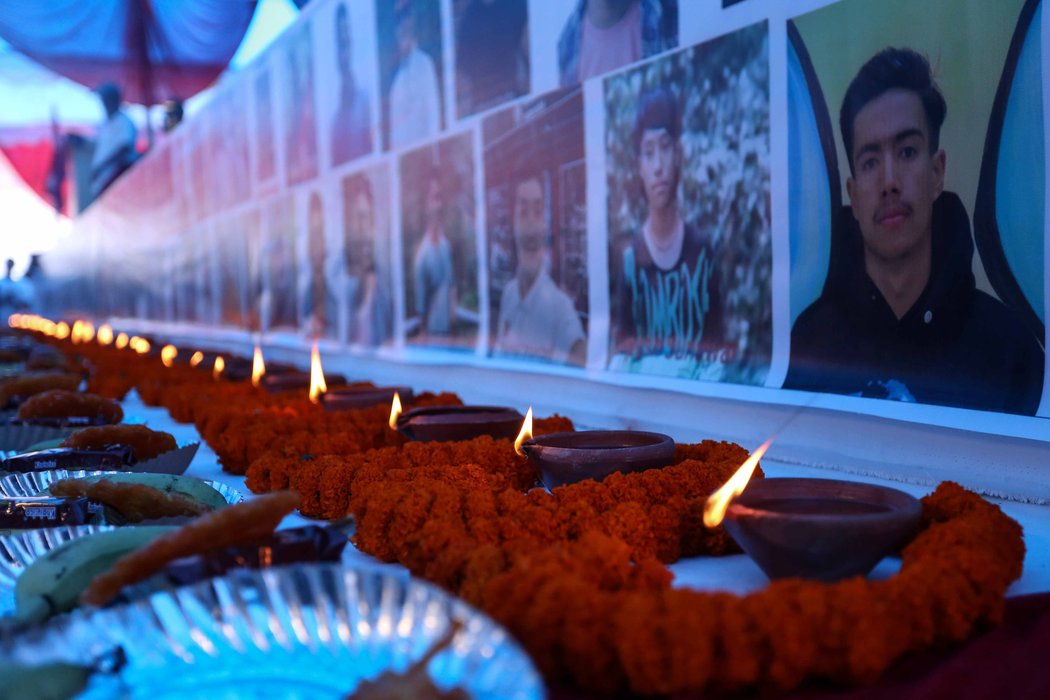
At a memorial marking the first anniversary of the protests, speakers accused the government of failing to honour commitments made to injured protesters and the families of those killed. They demanded action against those responsible for the shootings, proper treatment for the injured, and the release of young protesters who remain in jail for their involvement in the movement.
Committee submits report on withdrawal of criminal cases against protesters
A committee formed to study the withdrawal of criminal cases filed against Gen Z protesters completed its study and submitted a report to Home Minister Sudhan Gurung on 1st October 2026.
According to some reports, there are about 900 still in detention.
Some individuals involved in the protest are in pre-trial detention. The committee has suggested that approximately 100 cases with insufficient evidence, weak evidence, or unspecified compensation amounts can be withdrawn.
Expression
Journalist arrested and equipment seized by police
Kishor Shrestha, editor-in-chief of the weekly newspaper Jana Astha, was taken to the Cyber Bureau of Nepal Police on Friday for discussion following a complaint filed against him. https://t.co/x2MyOTsrjo
— Onlinekhabar English (@OnlineKhabar_En) October 17, 2026
In August 2026, Kathmandu police raided the Jana Aastha Weekly newsroom after editor-in-chief Kishor Shrestha was arrested over a privacy complaint.
Police arrested journalist Kishor Shrestha on 12th August 2026 in Lalitpur, after a complaint alleged a photograph and news report published by Jana Aastha Weekly violated Nepal’s Privacy Act, 2018. The photograph pictured lawmaker Amarkant Chaudhary with the complainant and was reportedly sourced from her public Facebook page. Police subsequently raided Shrestha’s home and the Jana Aastha office, seizing communication devices, CPUs and computers as evidence.
Shrestha is known for his investigative journalism, with Jana Aastha having a reputation for independent and critical reporting. He serves as vice president of the World Press Council and was Press Council Nepal’s former chairperson. In a statement on his release, the journalist said he was not allowed to meet with his lawyer during his detention.
He was released on bail, with the investigation ongoing, after the Supreme Court ruled the investigation no longer warranted continued custody. Supreme Court justices also ordered news content complaints be managed through Nepal’s Press Council, which has an existing protocol to address grievances while ensuring press freedom is upheld.
The Federation of Nepali Journalists (FNJ) deplored “the government’s abuse of state mechanisms to bypass the Press Council and arrest senior journalist Kishor Shrestha. The police raids on his home and Jana Aastha offices are an attack on democratic values and global norms of a free press.”
Media Action Nepal said it was gravely concerned about the police action. They added: “Entering a newsroom and seizing technical equipment without following established procedures raises serious concerns regarding democratic norms, press freedom, and constitutional safeguards.”
On 16th October 2026, Kishor Shrestha was taken to the Cyber Bureau of the police following a complaint filed against him by Rastriya Swatantra Party central committee member Himesh Pant. The dispute stems from a Jana Aastha report alleging that Pant’s family had grabbed land belonging to Tilak Prasad Bidari of Thakre Rural Municipality-10 in Dhading.
Journalists targeted for their reporting
Since August 2026, journalists have continued to be targeted for their reporting, including being barred, harassed and attacked.
On 11th July 2026, it was reported by Freedom Forum that journalists were barred from reporting on the situation of displaced people at government holding centres in Kathmandu, Bagmati Province. They had been displaced following the demolition of riverside settlements for alleged encroachment on government land. Several journalists shared incidents of intimidation and obstruction during their reporting.
In August 2026, Editor of Nepalkarma.com, Sushil Khadka, was harassed over his reporting in Surkhet, Karnali Province. He had covered a news story about alleged violence against women that was published on the portal on 29th July. However, he was later threatened and accused of publishing false information.
On 25th September 2026, journalists were verbally abused and manhandled while covering an event in Morang, Koshi Province. Makalu Television reporter Dilip Agrawal told Freedom Forum that he and two colleagues were covering a municipal assembly. While taking a statement from municipal chief Bikash Siwakoti, he pushed Agrawal and verbally abused him. Municipal Chief Siwakoti also manhandled Chandan Paswan, a reporter for Koshi Awaj online.
Police arrest political analyst for his social media comments
Bharat Mani Dahal arrested on cybercrime charges https://t.co/F4msL63DfP
— Setopati (@setopati) September 20, 2026
Political analyst Bharat Dahal was arrested by police in Belbari, Morang on 20th September 2026 and brought to Kathmandu for investigation under Section 47 of the Electronic Transactions Act.
Dahal, who is also chair of the Trimool Nepal Party, had made political comments and gave interviews in which he alleged that the Gen Z movement and some of its leaders had been influenced or mobilised by foreign powers. Dahal had cited material published by The Grayzone while making claims about the Gen Z protests and alleged external influence. He was arrested after such content circulated on social media.
On 21st September 2026 the Kathmandu District Court had granted police a three-day remand to investigate Dahal.
Freedom Forum said it was “concerned over the arrest and detention of Dahal. Arresting an individual solely for sharing a report on social media is a sheer violation of freedom of expression and opinion. Resorting to cybercrime offence merely for sharing a news report and expressing political views on social media risks misuse of the Electronic Transactions Act (ETA) and has a chilling effect on freedom of expression.”
On 24th September 2026, the Supreme Court observed that Dahal’s recent statements amounted to an exercise of his freedom of thought and expression and ordered that he be released from custody. The court said the investigation file did not show sufficient grounds for keeping Dahal in custody.
The Supreme Court therefore said that if further investigation was required, it could be conducted while Dahal remained outside custody.
Protester detained after raising his voice at a government event
In September 2026, Pawan Khadka, an activist involved in the 2025 protests, was taken into police custody.
He was detained by security personnel after protesting at a programme attended by ministers including the Home Minister at the old parliament building in New Baneshwor. Khadka had raised his voice at the event, stating that the government had done nothing for the youth injured during the Gen-Z movement. It is reported that he was taken into police custody after protesting and demanding to be allowed to speak.
Khadka was injured during the protests. He stated that the government had not worked effectively on the issues of the injured and affected during the movement.
Comedian reports threats over political satire
Comedian Amarendra Yadav has reported receiving threats and feeling unsafe after roasting political leaders in a recent episode of Comedy Baaj which featured UML leader Surya Bahadur Thapa and former RSP leader Mukul Dhakal as guests. The show’s director, Sundar Khanal, called for artists to be allowed to perform freely and urged audiences to treat satire as satire. The incident raises concerns about freedom of expression and the safety of comedians and content creators.
Association
Centralised “one-door” aid system creates obstacles for civil society response to floods
According to EU SEE, civil society organisations and youth groups seeking to respond to the flood disaster have faced restrictions under the government’s centralised “one-door” system for disaster relief.
Under this approach, financial and material assistance is only channelled through government-designated mechanisms and distribution points, limiting the ability of independent organisations to collect and distribute assistance directly. This has raised concerns about delays in getting specialised supplies, including hygiene products, to affected communities.
By restricting independent resource mobilisation and relief delivery, the one-door system reduces CSOs’ flexibility and autonomy at a time when rapid local action is particularly important. This can weaken the enabling environment by narrowing the space for CSOs to contribute effectively, particularly when local organisations are close to affected communities and can complement government responses when adequately resourced and coordinated with public authorities.