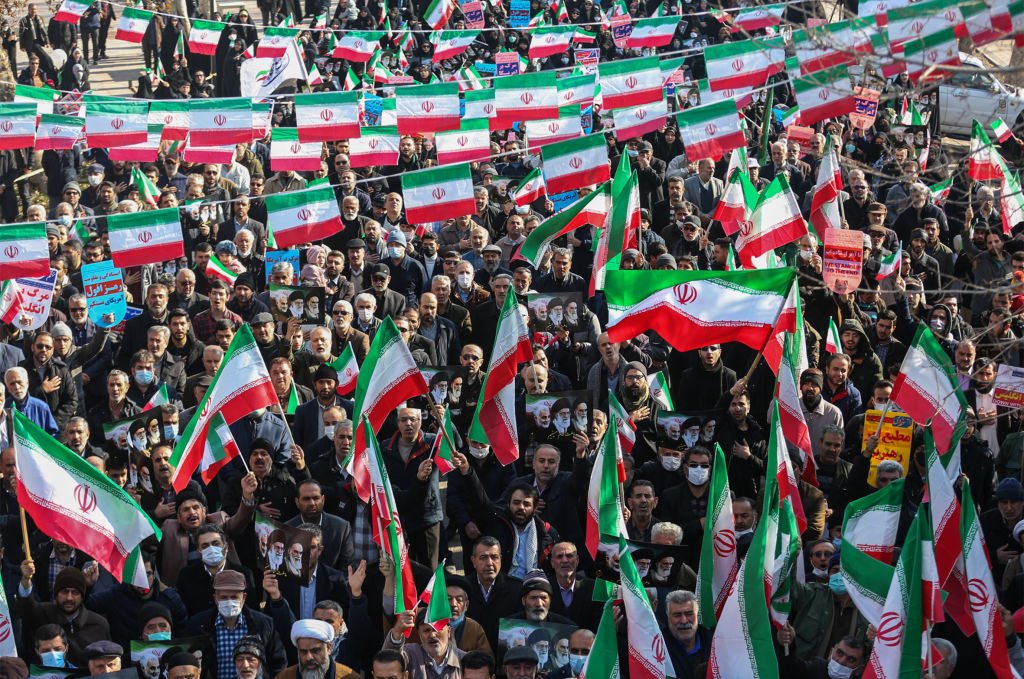
Iranian authorities have unleashed a deadly crackdown on protesters across the country since December 28, 2025, marked by security forces’ unlawful use of force and firearms and mass arbitrary arrests.
— Human Rights Watch (@hrw) January 9, 2026
New from HRW and @Amnesty: https://t.co/nmY9CCLTX2
Peaceful Assembly
In early January 2026, demonstrations which began on 28th December 2025 over deteriorating economic conditions since the sudden slide of the country’s currency and general economic instability, and which expanded into calls for political reforms, reached all 31 provinces as the protest movement showed no signs of abating. News outlets such as The Guardian and the BBC have described the protests as the biggest that the country has seen since 2009 when millions of Iranians took to the streets of major cities after a disputed presidential election.
On 9th January 2026, Iran’s supreme leader vowed that authorities would “not back down” in the face of growing protests, and blamed the US for instigating the demonstrations. In his first comments since the beginning of the protests, the supreme leader, Ayatollah Ali Khamenei, signalled that a greater crackdown was coming, describing protesters as “vandals” and “saboteurs” who work on behalf of foreign agendas. Furthermore, in a worrying insight into forthcoming judicial harassment, the head of Iran’s judiciary, Gholamhossein Mohseni Ejei, threatened that consequences for demonstrators would be “decisive, maximum and without any legal leniency”.
Between 8th and 11th January, state forces reportedly mass-killed thousands of protesters using overwhelming firepower, including DShK and other mounted machine guns, in an attempt to put an end to the uprising. Numerous Iranian cities reported high levels of security and military presence in their cities. Authorities allegedly imposed martial law-like restrictions on public activity and movement as night fell.
In further retaliation, authorities also plunged the country into a complete internet blackout and have shut down phone and mobile networks since 8th January 2026. ARTICLE 19 criticised the blackout as putting lives at risk and violating human rights.
Iran Human Rights (IHRNGO) Director, Mahmood Amiry-Moghaddam said:
“Horrifying eyewitness accounts of protesters being shot dead while trying to flee, the use of military-grade weapons, and the street execution of wounded protesters all point to a planned and widespread crime carried out with the aim of mass killing civilians. Ali Khamenei and the individuals and institutions acting under his authority have committed one of the gravest crimes of our time. The international community has a duty to act immediately to prevent the continuation of this killing. The people of Iran urgently need help... The international community must pursue Ali Khamenei and all other perpetrators and those who ordered these crimes through judicial processes and bring them before a court of law.”
In mid-January 2026, Iran’s supreme leader publicly admitted that thousands of people had died during the protests. Although some activist groups estimate the number to be much higher, US-based Iranian Human Rights Activists News Agency (HRANA) reported that at least 3,308 people were killed. On 19th January 2026, Reuters reported that authorities had verified that at least 5,000 people had been killed in the protests, including about 500 security personnel. According to HRANA, more than 24,000 arrests have been made during the period.
The nationwide internet shutdown has made it very difficult to verify accurate details. Notably, blanket internet shutdowns have been criticised by the UN Human Rights Council for being incompatible with international human rights standards as they fail to meet the strict tests of legality, necessity, and proportionality required under international law.