Introduction
Sergei Tikhanovsky freed after five years in prison
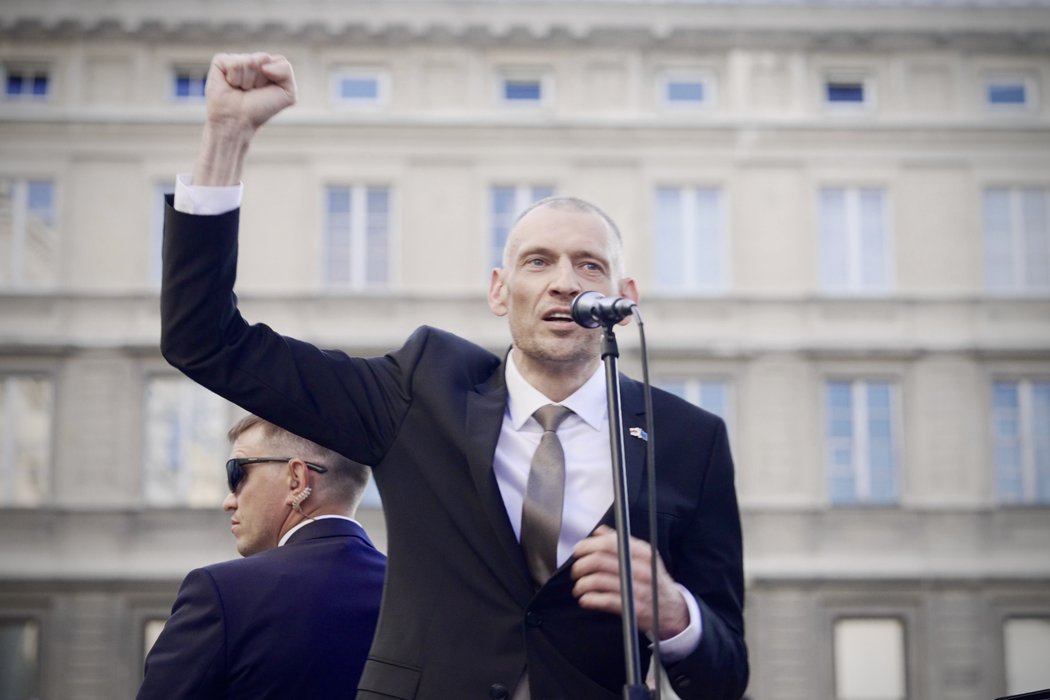
Belarusian opposition blogger Sergei Tsikhanousky was unexpectedly released on 30th June 2025 after more than five years in solitary confinement. Detained in May 2020 while attempting to challenge Alexander Lukashenko in the presidential election, he was later sentenced to 18 years for “organising mass unrest”. Following his detention, his wife, Sviatlana Tsikhanouskaya, ran in his place. His release, along with 13 other political prisoners, followed a rare visit by a senior US delegation to Minsk. Now in exile in Lithuania, Tikhanovsky has said that he lost half his body weight in prison but remains determined.
Among those freed was veteran journalist Ihar Karnei, a former correspondent for Radio Free Europe/Radio Liberty’s Belarusian Service, who had been imprisoned since 2023 on “extremism” charges. Both releases were reportedly facilitated by US–Lithuanian diplomatic efforts and represent the largest prisoner release in Belarus since the post-election crackdown of 2020. However, more than one thousand political detainees remain behind bars.
UN experts call on Belarus to investigate prisoner deaths
On 16th July 2025, UN human rights experts urged Belarus to conduct independent and transparent investigations into the deaths of several political prisoners in custody or shortly after their release. The cases cited included businessman Valiantsin Shtermer, opposition activist Vitold Ashurak, and artist Alés Puškin, all of whom reportedly faced ill-treatment and denial of medical care.
Freedom of association
Five years after the mass protests of August 2020, the Belarusian authorities continue to exert severe pressure on civil society. Despite the release of Sergei Tsikhanousky, over 1,184 political prisoners remained in detention in Belarus as of the end of July, according to the Viasna Human Rights Centre. Observers note that Tsikhanousky’s release does not indicate a policy shift but rather an attempt to improve the regime’s image and engage with Western governments.
A new draft law on the registration of non-governmental organisations (NGOs) was submitted to parliament, purportedly to “simplify” registration procedures. Experts, however, warn that the proposed changes will have minimal practical effect in an already restrictive environment. According to CSO Meter, the legislative update is largely technical, stemming from the need to align with constitutional amendments introduced in 2022. The bill, like the existing decree, regulates the registration and liquidation of a wide range of legal entities, including non-commercial organisations (NCOs) such as institutions, unions of legal entities, consumer cooperatives, and gardeners’ communities. However, the forms of NCOs which have been the target of the regime’s relentless crackdown on civil society — including foundations, public associations, political parties, religious organisations, and trade unions — will continue to be governed by separate, more restrictive laws.
The draft law also allows for the compulsory liquidation of certain NCOs (institutions and unions of legal entities) if their activities are deemed inconsistent with their stated objectives, continuing the trend of arbitrary dissolutions. Additional amendments introduce mandatory email addresses for official correspondence, electronic registration forms, and are generally aimed at the removal of paper-based procedures.
According to Law Trend, registration of non-profit organisations in Belarus remains rare and selective. Approximately 15 new non-profit organisations were registered in the first half of 2025, while two non-governmental institutions were forcibly liquidated in June. This continues a pattern that has seen nearly 2,000 organisations forcibly closed or compelled to self-dissolve since 2021. Among the political prisoners currently detained are dozens of representatives of human rights groups, civil society organisations, religious communities, and trade unions.
Independent NGOs that survived the mass liquidations of 2021–2022 now operate largely informally, in exile, or under constant threat of persecution. Civic initiatives supporting political prisoners, independent media, or human rights advocacy are routinely labelled “extremist” and targeted by the authorities.
Freedom of peaceful assembly
Five years after the 2020 presidential election, widely denounced as neither free nor fair, the Belarusian authorities continue to prosecute participants in the mass protests that followed. In July 2025, the Viasna Human Rights Centre and the exiled law enforcement group BELPOL reported a new wave of arrests targeting individuals involved in the 2020 demonstrations. They linked the renewed detentions to the expiration of the statute of limitations for Article 342 of the Belarusian Criminal Code, which criminalises participation in actions “violating public order”.
According to BELPOL representative Vladimir Zhigar, the authorities are seeking to detain “everyone who has ever been involved in protest activity, even when the evidence is practically non-existent”. Viasna’s sources suggest that a recently released Polish documentary about the 2020 protests has been cited as a basis for some arrests, as it reportedly shows the faces of demonstrators. This follows similar cases in 2023, when security forces used footage from a Lithuanian documentary to identify protesters.
On 27th June, the Zavodski District Court in Minsk convicted Maksim Urbanovich under Article 342 for participating in the 2020 protests. According to Belsat, he was sentenced to 18 months in a correctional facility.
In July, activist and blogger Palina Zyl from Mahilioŭ was sentenced to one year in prison under the same article for her participation in the 2020 protests. She had previously been subjected to administrative detention and was arrested again in February 2025. She is now being held in Remand Prison No. 3 in Homieĺ pending trial.
Freedom of expression
Despite the recent release of 14 political prisoners, including journalist Ihar Karnei, these isolated actions are not seen as signalling a relaxation of repression. Analysts interpret them as part of a calculated effort to improve the regime’s international image. Journalists, media professionals and bloggers continue to face repression, with 37 journalists imprisoned as of the end of July.
In addition to media and bloggers, ordinary citizens who share so-called “extremist” materials or participate in banned digital platforms are also subject to prosecution. Arrests have continued in connection with the February 2025 data leak from a chat group linked to the Belaruski Hajun military monitoring project, reported in previous CIVICUS Monitor updates. According to Viasna, by late July at least 35 individuals had been detained, though this represents only part of the total number of defendants. At least six have already been convicted. The first sentence in the case was handed down in June, when Vital Chavusau received a four-year prison term. Since 2022, at least 40 people have been convicted for sharing information on military movements with the Belaruski Hajun initiative.