Peaceful Assembly
Use of lethal and excessive force at youth-led protest in Lima
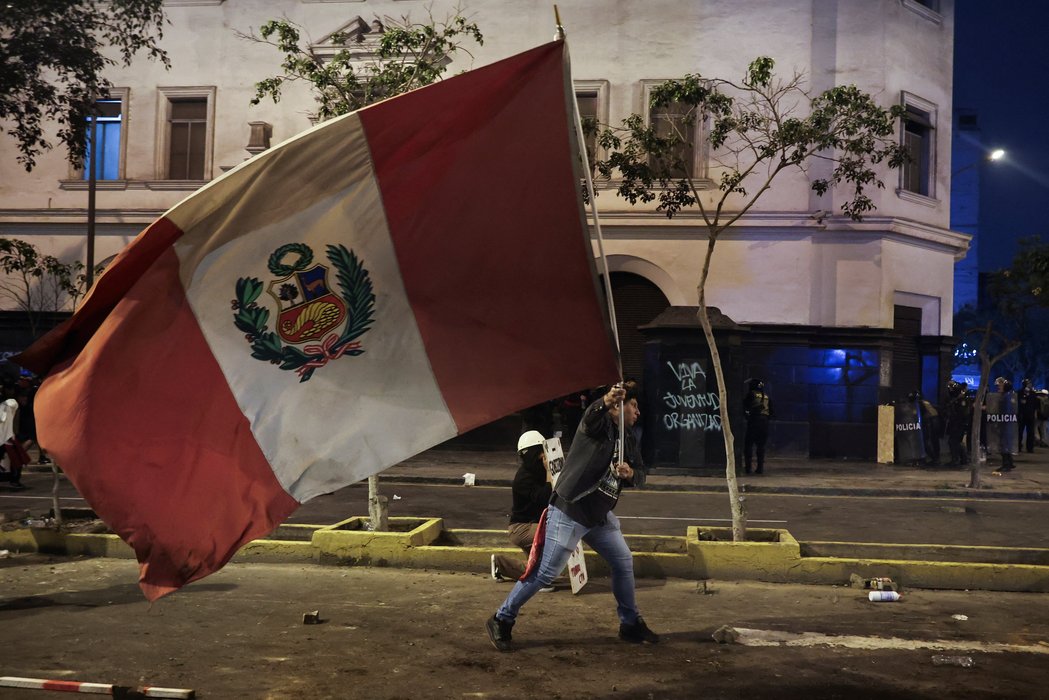
On 15th October 2025, police officers used force against a mass, youth-led protest in Lima, resulting in the death of protester and hip-hop singer Eduardo Mauricio Ruiz Sanz and injuries to more than 100 people, including protesters, journalists and police officers. According to official information, Ruiz Sanz sustained a fatal gunshot wound near Plaza Francia in central Lima. According to media reports, police fired tear gas while some protesters hurled fireworks, rocks and burning objects.
Authorities have opened an investigation, specifically the Third Supra-Provincial Prosecutor’s Office specialising in human rights cases. Prosecutors subsequently requested preliminary detention for two police officers in connection with the killing.
Civil society organisations, including Amnesty International, called for prompt, independent and impartial investigations and urged authorities to refrain from the disproportionate use of force in line with international human rights standards. The Inter-American Commission on Human Rights (IACHR) also condemned the killing and called for an independent investigation.
The protest took place in a context of political upheaval following the removal of President Dina Boluarte by Congress on 10th October 2025 and the subsequent assumption of office by José Jerí. Demonstrations formed part of a broader wave of protests led by Gen-Z activists since September 2025, expressing concerns over corruption, economic insecurity and rising crime.
On 21st October 2025, President José Jerí declared a 30-day state of emergency in Lima and Callao, authorising the deployment of the armed forces to support police operations. Authorities stated that the measure aimed to address insecurity and unrest. However, civil society organisations warned that repeated emergency measures have not reduced violence and may further restrict civic freedoms, particularly the right to peaceful assembly.
🇵🇪#Peru: In recent months, laws curtailing fundamental rights have been passed, fuelling widespread discontent. This has sparked youth-led protests against corruption, insecurity & pension reforms.
— CIVICUS (@CIVICUSalliance) October 1, 2025
The Peruvian government must respect people’s #RighttoProtest #PeacefulAssembly pic.twitter.com/Af7HVjvE0n
Association
Regulations implementing the APCI law may constrain civil society work
On 14th September 2025, following the adoption of Law No. 32301, the government of President Dina Boluarte issued Supreme Decree No. 032-2025-RE, regulating its implementation and establishing a system of mandatory registration, prior approval and increased oversight over civil society organisations receiving international cooperation.
Under Article 12, organisations must complete a constitutive registration process through an electronic sworn declaration, providing detailed information on their legal status, projects, funding sources, budgets and planned activities, as well as periodic reports and contractual arrangements with the State. Upon compliance, the Peruvian Agency for International Cooperation (Agencia Peruana de Cooperación Internacional, APCI), the authority responsible for supervising international cooperation, issues a formal resolution authorising organisations to manage such resources.
In parallel, on 13th September 2025, the government also adopted Supreme Decree No. 033-2025-RE, approving the Regulation on Infractions and Sanctions (RIS), which establishes a sanctioning framework for non-compliance. For example, Article 13.c classifies as a “very serious offence” the use of funds to “advise, assist or finance” administrative or judicial actions against the state, whether at the domestic or international level. This provision may restrict access to justice by limiting the ability of organisations to support victims of human rights violations, including through litigation before national courts and international mechanisms.
While Article 13.e clarifies that the expression of technical opinions before public authorities does not constitute an offence, ambiguity remains. Similar activities, including legal submissions or amicus curiae briefs, may fall within the scope of prohibited conduct depending on how authorities interpret them.
The combination of broad supervisory powers, ambiguous provisions, and severe sanctions raises concerns about potential arbitrary enforcement and compatibility with international standards on freedom of association.
New law risks impunity for abuses during Peru’s internal armed conflict
On 13th August 2025, President Dina Boluarte enacted Law No. 32419, granting a broad amnesty to members of the armed forces, police and civilian self-defence committees for crimes committed during Peru’s internal armed conflict (1980-2000). The law excludes only individuals accused or convicted of terrorism or corruption, and introduces additional amnesty provisions for persons over 70 years old on humanitarian grounds. The measure follows earlier legislative developments, including Law No. 32107 adopted in 2024, which introduced statutes of limitations for certain international crimes committed before July 2002.
The amnesty covers crimes committed during the conflict between the Peruvian state and armed groups such as Sendero Luminoso and the Movimiento Revolucionario Túpac Amaru. According to the Truth and Reconciliation Commission of Peru, the official body established to investigate abuses during the conflict, the violence resulted in more than 60,000 deaths, including violations attributed to both insurgent groups and state agents, many of which have been subject to judicial proceedings over the past two decades.
International human rights bodies reacted. For example, on 3rd October 2025, the Inter-American Court of Human Rights ordered, as an urgent measure, that the law should not be implemented. The Court reaffirmed its established jurisprudence, including in Barrios Altos v. Peru and La Cantuta v. Peru, which holds that amnesty laws preventing the investigation and punishment of serious human rights violations are incompatible with the American Convention on Human Rights.
Supporters of the law cited structural deficiencies in Peru’s justice system, including prolonged criminal proceedings, as justification. However, international human rights standards establish that such concerns do not justify blanket amnesties for serious violations. The law does not provide alternative accountability mechanisms and applies broadly to a 20-year period, raising concerns that it may result in generalised impunity.
The adoption of Law No. 32419 has significant implications for civic space and the rule of law in Peru. By restricting avenues for accountability and access to justice for victims, it risks undermining public trust in institutions and weakening safeguards for human rights. It also signals potential resistance to international oversight and raises concerns about the state’s willingness to comply with its obligations under international human rights law.
🇵🇪"Peru is experiencing a setback, while the regional trend is of progress in transitional justice processes." - Nadia Ramos Serrano @ramosnadia, founder & researcher at @CLMAmericas on Peru’s new amnesty law
— CIVICUS (@CIVICUSalliance) September 26, 2025
🔗https://t.co/RKMglvmRqJ #CIVICUSLens pic.twitter.com/VkPtrPBETE
Court upholds convictions in Saweto killings after decade-long quest for justice
On 25th August 2025, the First Criminal Appeals Chamber of the Superior Court of Ucayali, a regional appellate court in the Peruvian Amazon, upheld the convictions of four individuals for the 2014 killings of Indigenous Ashéninka leaders from the Alto Tamaya-Saweto community. The court confirmed prison sentences of 28 years and three months for timber businessmen José Estrada and Hugo Soria, identified as intellectual authors, and logging workers Josimar and Segundo Atachi, convicted as material perpetrators.
The case concerns the killing of environmental defenders Edwin Chota, Jorge Ríos, Leoncio Quintanísima and Francisco Pinedo, who had denounced illegal logging in their territory since 2008. The leaders disappeared in August 2014 while travelling to a meeting in Brazil, and authorities found their bodies days later with signs of violent death.
The appellate decision upholds a first-instance ruling issued in February 2023, which had not been enforced pending appeal. As the convicted individuals failed to appear at the sentencing hearing, the court ordered their immediate arrest, while a fifth suspect remains at large. The court also increased civil reparations from 200,000 to 400,000 soles (around USD 28,500), recognising harm not only to the victims’ families but also to the wider community.
Despite this judicial outcome, community members reported ongoing threats and insecurity linked to illegal logging and other illicit activities. According to Mongabay, Indigenous leaders indicated that several families have been displaced and that women have assumed leading roles in defending the territory amid continued risks. Civil society organisations also identified persistent challenges, including limited State presence and insufficient resources for prosecutors operating in remote areas.
The Saweto case represents a significant judicial development in recognising the role of Indigenous defenders in protecting land and environmental rights.
¡Histórico! La Corte Superior de Justicia de Ucayali confirmó la sentencia condenatoria contra los responsables del crimen de los líderes de Saweto.
— AIDESEP (@aidesep_org) August 26, 2025
Los acusados deberán cumplir 28 años y 3 meses de prisión efectiva, con orden inmediata de captura. pic.twitter.com/REB5T3Bgot
Court orders government to adopt protection protocol for human rights defenders
On 24th October 2025, the Seventh Constitutional Court of Lima ordered the Ministry of the Interior (MININTER), in coordination with the Ministry of Justice and Human Rights (MINJUSDH), to adopt operational guidelines to ensure that the National Police of Peru provides specialised protection to human rights defenders facing threats, attacks or risks.
The ruling responds to a compliance lawsuit filed in August 2022 by a coalition of civil society organisations, including the Federation of Native Communities of Ucayali and Tributaries, the Federation of Native Kakataibo Communities, the Federation of Kichwa Indigenous Peoples of Chazuta Amazonia and the Instituto de Defensa Legal (IDL). These organisations represent Indigenous peoples in regions affected by violence linked to illegal logging, drug trafficking and other illicit economies.
The court found that MININTER failed to comply with its legal obligation under existing regulations to adopt a protocol for implementing protection measures under Peru’s Intersectoral Mechanism for the Protection of Human Rights Defenders, a government framework designed to prevent and respond to attacks. It ordered authorities to (i) approve and publish the guidelines through a ministerial resolution, (ii) include financing strategies to ensure implementation, and (iii) establish operational plans to enable timely police responses in high-risk cases. The court also set an 11-day deadline for authorities to report on compliance.
Civil society organisations welcomed the ruling, noting that delays in adopting protection protocols have left defenders exposed to serious risks. According to reports, at least a dozen Indigenous leaders have been killed since the filing of the lawsuit in 2022. Indigenous representatives emphasised that effective police protection remains critical in regions such as the Amazon, where defenders face threats from organised crime and illegal resource extraction.
Expression
Journalists injured and obstructed during anti-government protests
On 20th and 21st September 2025, police used force against at least 16 journalists covering protests in Lima against President Dina Boluarte. According to the ANP, officers fired rubber pellets, deployed tear gas and, in some instances, threw stones while attempting to disperse protesters. The ANP also reported that police blocked exit routes and confiscated journalists’ mobile phones.
As a result, at least seven journalists sustained injuries. For example, journalist Jahaira Pacheco and camera operator Percy Grados from Exitosa Noticias required hospital treatment for leg injuries caused by rubber pellets. Other injured media workers included freelance photographer Juan Mandamiento, César Zamalloa from Hildebrandt en sus Trece, Diego Quispe from Ojo Público, and journalists from Reuters, indicating that both national and international media workers were affected.
The Committee to Protect Journalists (CPJ) condemned the incidents and called for a prompt and thorough investigation, emphasising that journalists covering demonstrations must be able to operate without violence or obstruction.
#PERÚ @pressfreedom insta a las autoridades peruanas a investigar la violencia policial contra 16 periodistas que cubrían las protesta contra el Gobierno los días 20 y 21 de septiembre en Lima, y a tomar medidas para garantizar que los miembros de la prensa puedan informar con…
— CPJ Américas (@CPJAmericas) September 23, 2025
On 15th October, police officers attacked journalists covering mass anti-government protests in Lima and Arequipa. The demonstrations, led primarily by young people, took place amid a political crisis following the removal of President Dina Boluarte and the appointment of José Jerí (see above). According to the ANP, all 25 recorded incidents involved police officers, including 14 cases of rubber pellet use and 11 cases of physical assaults or obstruction against journalists while performing their reporting duties. Media workers from outlets such as Ojo Público, El Comercio, Wayka, Exitosa Arequipa, El Foco, and other independent media outlets were among those affected. Several journalists were clearly identifiable as press, wearing helmets, vests and official credentials at the time of the incidents.
The most serious incidents occurred in central Lima, particularly around Avenida Abancay, Nicolás de Piérola, Plaza San Martín and Plaza Francia, where police used tear gas and rubber pellets to disperse protesters. Journalists reported that officers fired directly at their bodies, pushed and struck them with shields and batons, restricted their movement and interfered with their reporting, indicating direct obstruction of journalistic work. Some journalists required hospital treatment for pellet wounds and other injuries.
Grenade attack on journalist’s home follows repeated threats
On 14th October 2025, unidentified assailants targeted journalist Carlos Mesías Zárate, director of the outlet Central de Noticias, in a series of attacks in Huaral, in the Lima region, culminating in a grenade explosion at his home. According to the National Association of Journalists of Peru (ANP), two individuals on a motorcycle threw an explosive device at his residence, causing significant material damage to the property, neighbouring homes and nearby vehicles.
The attack followed earlier incidents targeting the journalist. On 24th August 2025, an individual placed a lit stick of dynamite at the entrance of his home, which did not detonate. Four days later, a separate explosion targeted the home of his brother, causing property damage and leading to the detention of one suspected perpetrator, who remains in pretrial detention.
Despite these repeated attacks, Mesías Zárate reportedly has not received police protection. Although he filed complaints with local authorities, his requests for personal protection measures remain pending.
Journalists face threats, surveillance and judicial harassment
Between July and September 2025, at least eight journalists reported threats, surveillance and judicial harassment linked to their investigative reporting on corruption. For example, on 31st August 2025, journalist Karla Ramírez Camarena, head of investigations at the programme Panorama on Panamericana TV, publicly denounced that she had received threats of attacks disguised as street violence after exposing alleged corruption involving Justice Minister Juan José Santiváñez, Nicanor Boluarte and police officials.
On 10th September 2025, Lima mayor and presidential candidate Rafael López Aliaga reportedly issued defamatory statements and death threats against investigative journalist Gustavo Gorriti, director of IDL-Reporteros, following his reporting on corruption cases, including investigations linked to the Odebrecht scandal and alleged money laundering.
On 4th September 2025, a prosecutor requested access to the communications data of journalists Rodrigo Cruz Arana (Latina Noticias) and César Prado Malca (IDL-Reporteros), both of whom had reported on corruption involving individuals linked to the presidency and the judiciary. The Public Prosecutor’s Office authorised the request, raising concerns about potential interference with source confidentiality and the protection of journalistic communications.
In response, on 16th September 2025, over 290 journalists, legal experts, human rights defenders and academics from 25 countries condemned the reported attacks against journalists in Peru and called on authorities to ensure respect for press freedom as a constitutionally protected right.