Civic space in Laos is rated as ‘closed’ by the CIVICUS Monitor. The fundamental freedoms of association, expression and peaceful assembly remain severely restricted while impunity persists in cases of enforced disappearance, attacks and extrajudicial killings of human rights defenders and activists. Additionally, laws criminalising expression and media freedom create a climate of fear and self-censorship.
Laos’ human rights record was reviewed by the UN Human Rights Council in May 2025. Ahead of the review, FORUM-ASIA, CIVICUS and Amnesty International jointly submitted a report which focuses on civic space concerns including arbitrary detention, enforced disappearance, attacks and killings of human rights defenders, civil society activists and journalists, and restrictions on the media and access to information.
The government received a number of recommendations on civic space from the UN Human Rights Council including to conduct independent, impartial and transparent investigations into all alleged cases of enforced disappearance, including that of Sombath Somphone; ensure the comprehensive protection of human rights defenders and activists from human rights violations, and conduct prompt, effective, impartial, thorough and independent investigations into all cases of intimidation, attacks, disappearance and killings of human rights defenders.
Other recommendations were to ensure full respect for freedom of expression and media freedom; to amend existing laws and regulations in order to promote the exercise of freedom of expression, including online, and to fully enable the functioning of NGOs and civil society.
The government must respond to the UN Human Rights Council on the recommendations by September 2025.
In recent months, an exiled democracy activist was attacked, the repression of the Hmong community has persisted, as well as strict control of the press.
Association
Democracy activist seriously wounded in knife attack in France
#Laos: Exiled human rights activist Joseph Akaravong seriously wounded in knife attack in France https://t.co/YHKhjOw2R9
— AG (@ag_fidh) June 17, 2025
In June 2025, an exiled Lao democracy activist was stabbed in France, in a case many believe could be an incident transnational repression.
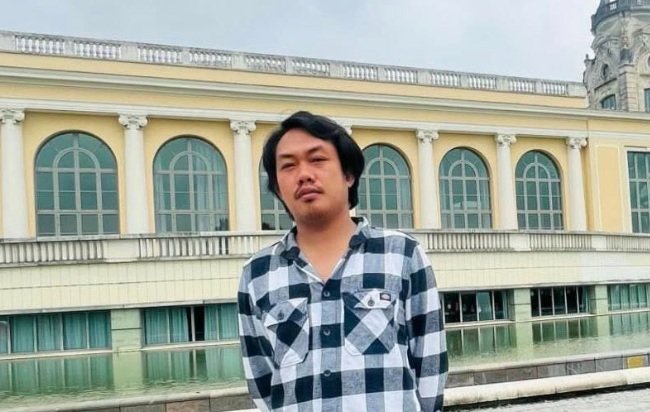
Lao democracy activist Joseph Akaravong was stabbed in southwestern France on 14th June 2025. The attack took place in Pau, where Akaravong has lived since receiving political asylum in 2022. He suffered multiple stab wounds to his throat and torso and underwent emergency surgery
Akaravong is a well-known critic of the Laos communist government, which has ruled for nearly five decades. He regularly shares commentary on social media highlighting socio-economic issues and criticising government policies. He fled Laos in 2018 after speaking out against the deadly collapse of the Xe-Pian Xe-Namnoy hydropower project in Attapeu province, which killed dozens.
On 18th June 2025, French police arrested four individuals in connection with the attack, including the suspected attacker, according to local media reports. The main suspect was arrested in Nîmes - approximately 480 kilometres from Pau. The identities of the suspects have not been disclosed.
Manushya Foundation said: “The attack on Joseph is part of a dangerous and escalating pattern, in which authoritarian regimes continue to monitor, pressure, and even harm activists across borders, sometimes using fear or coercion to reach even those who have already suffered behind bars.”
Just days after his attack, Meta (Facebook) suspended Akaravong's account.
This is not the first incident of targeting of activists in exile by the Lao People’s Revolutionary Party (LPRP). Od Sayavong, a member of the Free Lao group and a UN-recognised Lao refugee living in Thailand, went missing in August 2019. He is believed to have been forcibly disappeared after he took part in a protest that called for democracy and human rights in Laos and for an international inquiry on the disappearance of Sombath Somphone. The body of Bounsuan Kitiyano, a human rights defender and UN-recognised refugee, was found with three gunshot wounds in a forest in Ubon Ratchathani, Thailand, in May 2023. Bounsuan was a member of the Free Lao group.
Repression of the Hmong community
UNPO & CWHP raised concerns at #EMRIP: the Hmong in Laos face denial of recognition, isolation & reprisals, while global protection mechanisms are increasingly under strain. pic.twitter.com/fUtRWkxHK9
— Unrepresented Nations and Peoples Organization (@UNPOintl) July 30, 2025
In February 2025, the Unrepresented Nations and Peoples Organization (UNPO) – which provides a platform of solidarity and knowledge exchange for unrepresented peoples worldwide - took part in the UPR Info Pre-Session on the Lao People’s Democratic Republic in Geneva, where it delivered a statement on behalf of the Hmong community.
The statement shed light on the ongoing and grave human rights violations faced by the Hmong, including systematic persecution, land seizures, and enforced isolation, which have been consistently overlooked by the Lao government despite growing international concern. Furthermore, despite prior recommendations from the UN Human Rights Council during the third cycle of the Universal Periodic Review, Laos has not taken meaningful steps to protect the rights of the Hmong people.
As a result, Hmong communities continue to face forced displacement to accommodate economic development projects. UNPO emphasised the urgent need for Laos to implement tangible reforms—specifically, the official recognition of the Hmong as indigenous peoples, an end to military violence, and the unrestricted access of international observers to the Phou Bia region in Xaisomboun Province.
In March 2025, Genocide Watch released a Country Report on Laos, highlighting severe persecution of Christian minorities - particularly among the Hmong population.
The report said that the Hmong, branded as “hostile dissenters” for their U.S. alliance during the Vietnam War, are denied indigenous status, stripping them of legal protections. Since the late 1970s, military offensives have killed thousands and displaced around 300,000. Those remaining, particularly in Phou Bia and Xaisomboun, endure attacks, arbitrary arrests, enforced disappearances, extrajudicial killings, and military blockades.
Driven by development and Chinese-funded projects, the government has seized Hmong ancestral lands. Reports indicate the use of heavy artillery, chemical weapons and starvation tactics to displace the Hmong. Villages and resources are destroyed, and civilians are subjected to (gender-based) violence and forced labour. Hmong families have been forcibly relocated to military-controlled villages, stripped of land rights, and impoverished.
Christian minorities, especially Hmong Christians, face harassment, violence, forced renunciations, arrests, village expulsions, and church destruction. Christians are often denied education and government jobs. The government bans unregistered religious activities, framing Christianity as a foreign threat to communist national ideology.
Expression
Strict controls of the press
Laos is ranked at 150th place out of 180 countries in the latest Reporters Without Borders (RSF) press freedom index issued in May 2025.
According to RSF, the government essentially controls all press and they are all required to follow the party line dictated by the People’s Propaganda Commissariat. A growing number of Laotians, aware of restrictions on official media, are turning to social networks.
The Lao Popular Revolutionary Party (LPRP) keeps the press under close surveillance and makes the creation of independent media impossible. Foreign media have been tolerated since 2016 on the condition that they submit their content to the prior censorship of the LPRP.
The penal code provides for imprisonment of journalists who criticise the government, a provision extended in 2014 to internet users. Information is so tightly controlled that journalists have very little room to manoeuvre.