INTRODUCTION
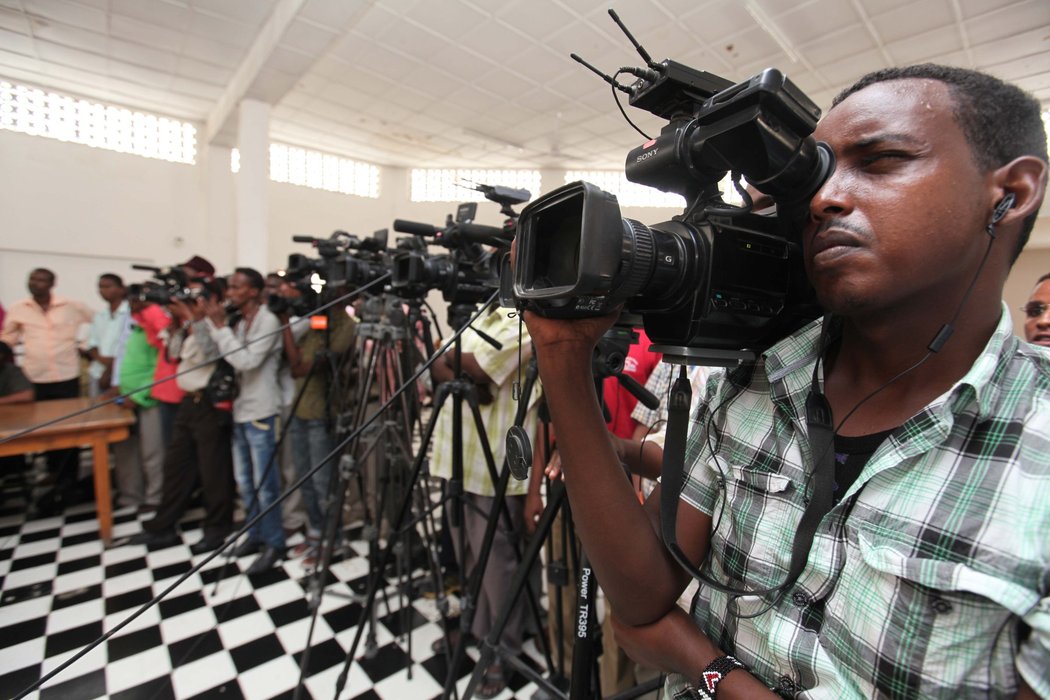
Somalia’s press freedom ranking improved in Reporters Without Borders’ 2026 World Press Freedom Index, rising from 136th to 126th out of 180 countries. Nonetheless, Somalia remains one of the most dangerous countries for journalists, who continue to face targeted attacks and intimidation by both state and non-state actors.
Peaceful Assembly
According to Amnesty International and subsequent reporting by The Guardian, on 12th April 2026, officers from Somalia’s National Intelligence and Security Agency (NISA) arrested 27-year-old Sadia Moalin Ali - also known as Saida Bajaj, a woman human rights defender and tuktuk driver - in Mogadishu following her participation in a peaceful protest by tuktuk drivers against rising fuel prices and taxes. She was initially detained at Hamar Jajab Police Station before being transferred to Mogadishu Central Prison on 14th April, where she remains detained. On 6th May, the Office of the Attorney General of Somalia announced that it was investigating Sadia on allegations of “defamation” and “public incitement.” On 1st June, she was charged before the Banadir Regional Court under the Somali Penal Code with “insulting government institutions” and “public incitement.” While in detention, Sadia told media outlets that she had been tortured, held in solitary confinement for two days and denied access to food and basic necessities. Rights groups and media reports linked Sadia’s detention to her use of social media platforms, including TikTok and Facebook, to publicly criticise the federal government, particularly in relation to alleged corruption, youth unemployment, nepotism among senior government officials, taxation and fuel prices.
Expression
According to the National Union of Somali Journalists (NUSOJ), on 7th September 2026, Bashir Mohamed Abdullahi, a reporter with Arlaadi Media Network, died from injuries sustained after he was shot in Baidoa on 3rd September 2026. Based on information from local journalists, NUSOJ reported that Bashir was at his home in the Al-Ahmaar neighbourhood when fighting broke out between government forces and militias loyal to Abdiaziz Hassan Mohamed. Although he had reportedly been advised to remain indoors until conditions became safer, he left his residence and was stopped by unidentified armed men in uniform whose faces were covered. Following questioning, the men shot him twice in the back. He later died from his injuries.
In separate developments, on 6th May 2026, journalist Shukri Aabi Abdi and Abdullahi Abdifatah Sidow, a Shabelle TV cameraman, were arrested by armed police officers in Hamar Jajab district, Mogadishu, while covering forced evictions. NUSOJ reported that Shukri was allegedly assaulted and sustained an injury to her finger; her phone was confiscated, and the team’s camera equipment was seized before both journalists were taken to Hamar Jajab Police Station. They were released later the same day without charge.
According to NUSOJ, also on 6th May 2026, Ja’far Mohamed Jim’ale, a journalist with Kalsan TV, and Noradin Hasan Ali, a cameraman, were arrested by police while covering clashes between residents and security forces in Mogadishu’s Dayniile district. NUSOJ reported that the journalists were transferred between police stations without prior notice, allegedly to conceal their whereabouts from their families and colleagues. During their detention, they were allegedly subjected to degrading treatment, and their camera equipment and phones were confiscated. They were released without charge the following day.
According to the Somali Guardian and media-freedom organisations, on the evening of 8th May 2026, three journalists; Mohamed Bulbul, Abdihafid Nor Barree and Abdishakur Mohamed Mohamud, were arrested by Somali authorities, detained and allegedly assaulted before being released in the early hours of 9th May. Media organisations alleged that Bulbul’s detention was linked to his critical reporting on alleged abuse inside detention facilities. While in police custody, the three journalists stated that they were threatened by the Mogadishu police chief and warned against continuing to cover planned protests and other politically sensitive developments in Mogadishu.