Introduction
Russian drones violate Romanian airspace
On 11th November 2025, the Russian Federation launched new air strikes on Ukrainian ports on the Danube. Fragments from a Russian drone that struck Ukraine landed on Romanian territory overnight, according to a statement from Romania’s Ministry of Defence. The Romanian government vowed to adopt new measures against Moscow following the incident.
Previously, in September 2025, a Russian drone violated Romanian airspace for 50 minutes during an attack on Ukraine, according to Romania’s Ministry of Defence, prompting Romania to summon the Russian ambassador.
Rule of Law Index 2025
In late October 2025, it was reported that Romania had fallen two places in the World Justice Project’s (WJP) Rule of Law Index. Romania ranks 44th out of 143 countries and jurisdictions evaluated worldwide, and 27th out of 31 in the region. Romania’s ranking dropped from 32nd place in 2020 to 44th in 2025.
Freedom of Expression
Human rights watchdog warns proposed fines could silence citizens
In September 2025, Romanian civil liberties watchdog Association for the Defense of Human Rights in Romania – Helsinki Committee (APADOR-CH) criticised a draft bill backed by MPs from the Democratic Alliance of Hungarians in Romania (UDMR) and other minority parties that would fine citizens up to 20,000 lei (€4,000) for “disrespectful” behaviour towards public institutions or officials. The organisation warned the vaguely worded proposal could be abused to punish legitimate criticism or petitions and would have a chilling effect on citizens’ ability to challenge authorities, arguing the proposed penalties are disproportionate compared to those foreseen for far more serious offences.
Sports journalist accuses owner of top football club of intimidation
Sports journalist Decebal Rădulescu said he received homophobic insults and a direct threat from Mihai Rotaru, president of CSU Craiova, after a live debate on 26th September 2025 in which the journalist suggested that attendance at an upcoming match against Dinamo Bucharest was being organised with help from local authorities. Rădulescu said Rotaru sent him abusive private messages, including the vague threat “I will come after you”, but he has chosen not to file a legal complaint.
Romanian NGOs condemn Constanța mayor’s treatment of journalists
On 2nd October 2025, a coalition of Romanian civil society groups led by ActiveWatch sent an open letter condemning the conduct of Constanța mayor Vergil Chițac towards journalists during a press conference in September 2025. The organisations accused the mayor of inappropriate behaviour, insults and intimidation after he refused to answer questions of public interest and verbally attacked reporters, including journalist Emil Tatu, over questions about his legal residence. They described his remarks as unacceptable for an elected official and warned that such behaviour undermines press freedom and democratic accountability. One of the signatories, APADOR-CH warned that, unfortunately, the type of attitude displayed by the Constanța mayor is not an isolated case, but increasingly common among politicians from the National Liberal Party (PNL), the country’s third largest political party.
Former presidential candidate Georgescu faces trial over alleged fascist propaganda
In November 2025, Romanian prosecutors opened court proceedings against former presidential candidate Calin Georgescu, accusing him of promoting fascist ideas and praising extremist figures linked to Romania’s inter-war far-right.
A Bucharest court has begun preliminary hearings to decide whether the case will proceed to a full trial. Prosecutors allege that, between 2020 and 2025, Georgescu repeatedly endorsed fascist ideology in interviews, online posts and public appearances. If convicted, he could face up to three years in prison. Georgescu has denied the charges, claiming the case is politically motivated and infringes free speech. He is already under investigation for other offences, including undermining the constitutional order and spreading false information, which carry potential sentences of up to 20 years.
As reported earlier on CIVICUS Monitor, Georgescu won the first round of Romania’s presidential election in 2024, but the vote was annulled by the Constitutional Court of Romania over alleged foreign interference. He was later barred from participating in the re-run.
Superior Council of Magistracy submits criminal complaint against Deputy Prime Minister over criticism of “special pensions”
On 10th November 2025, the Superior Council of Magistracy (CSM), the central governing body of Romania’s judiciary, filed a criminal complaint against Deputy Prime Minister Oana Gheorghiu for alleged incitement to violence and hatred. The complaint followed her comments on magistrates’ “special pensions”, in which she argued that Romania could no longer afford these benefits and stated that the funds “are taken from the mouth of a child or from the budget of a hospital”.
Her remarks came in the context of a broader debate on judicial pension reform, as the government has proposed changes aimed at reducing the scale of magistrates’ retirement benefits and increasing age requirements. Currently, Romanian magistrates can retire well below the national standard of 65, with many judges and prosecutors retiring at around 48 or 49 years old. Reportedly, some magistrates receive pensions worth up to 80% of their final gross salary, which may exceed the income many workers earn while still employed.
Romanian President Nicușor Dan described the Deputy Prime Minister’s statement as “unfortunate” but called the CSM’s reaction “greatly exaggerated”. He refused to approve the prosecution request, stating that “there can be no question of an opinion constituting a criminal act”.
In response to the controversy, thousands of people signed an open letter titled ‘Sign for normality: Magistrates are not a vulnerable or disadvantaged category’, launched by several civic organisations in support of Gheorghiu. The proposed pension reform remains under consideration, despite strong opposition from the CSM.
ECHR rules in case concerning judges’ right to free expression
On 15th December 2025, the European Court of Human Rights (ECHR) delivered a judgement in favour of Romanian judge Vasilică-Cristi Danileţ, concluding that the disciplinary measure imposed on him by the Romanian authorities for a message posted on his Facebook profile violated his right to freedom of expression under Article 10 of the Convention. In its judgment, the ECHR reiterated the principle that judges and prosecutors have the right – and sometimes, an obligation – to speak out critically on issues concerning the constitutional order and judicial independence.
The case centred on two posts published on the judge’s public Facebook profile in 2019 which drew significant public attention and were widely discussed in the media. Disciplinary proceedings were brought against him, with authorities claiming that his posts had impaired the honour and image of the justice system. One of the posts responded to a public controversy over the President’s extension of the Army Chief of Staff’s mandate and was deemed by the disciplinary body to have cast doubt on the credibility of state institutions. The other post was linked to a press interview with a prosecutor and included a complimentary remark about the prosecutor, which the disciplinary body considered excessive.
The judge was sanctioned with a 5% salary reduction for failing to comply with his duty of discretion. These findings were upheld by the High Court of Cassation and Justice. Ultimately, the ECHR held that the applicant’s remarks did not upset the fair balance between the extent to which a judge may participate in public debate, the need to defend the constitutional order and state institutions, and the requirement that judges be perceived as independent and impartial in the exercise of their judicial functions.
The judgment coincided with mass protests against corruption in the judiciary, sparked by a documentary from the investigative platform Recorder (see under Freedom of peaceful assembly).
Investigative documentary faced with coordinated smear campaign; post exposing the smear campaign removed by Facebook
On 18th December 2025, investigative outlet Context.ro accused Facebook of restricting the distribution of its journalism after a post promoting an investigation into online disinformation was removed by the platform.
Context.ro said the post linked to an article analysing an alleged coordinated online smear campaign against the documentary “Justice Captured,” produced by the investigative platform Recorder. Facebook reportedly claimed the post had breached its rules by “manipulating algorithms”, an allegation the outlet strongly denied. Context.ro also pointed out that the post was in fact aimed at exposing and analysing such deceptive practices, as the investigation into the smear campaign documented signs of coordinated inauthentic behaviour, including mass posting by multiple accounts and amplification by pro-Russian channels, and was conducted with the support of digital interference experts.
Context.ro said it was unable to appeal the decision through Facebook’s internal mechanisms and noted that similar restrictions affected a Facebook group focused on exposing disinformation. The outlet has requested an official explanation from the platform, while pointing out that scam content and violent posts continued to circulate unchecked.
Earlier, on 10th December 2025, Liana Arsenie, President of the Bucharest Court of Appeal, criticised TVR’s broadcast of the Recorder documentary Justice Captured, claiming it incited against the constitutional order and amounted to an “institutionalised political attack”.
Stricter rules on totalitarian ideas and symbols
On 17th December 2025, the lower chamber of the Romanian Parliament passed the controversial so-called “Vexler Law”, which bans and imposes heavy penalties for disseminating antisemitic speech and glorifying Holocaust perpetrators. Under the new provisions, individuals who distribute materials promoting “fascist, legionary, racist, and xenophobic” content online could be punished with prison sentences ranging from 1.5 to 7.5 years.
This law, which expands existing hate speech legislation in Romania, is among the most stringent of its kind in Europe. The legislation is popularly called the “Vexler Law” after its initiator Silviu Vexler, an MP and representative of Romania's Federation of Jewish Communities.
Supporters of the law argue that it was a necessary update to existing hate speech legislation, addressing gaps that previously allowed open praise of extremist ideologies, including on social media. Meanwhile critics, including The Association for the Defense of Human Rights in Romania – Helsinki Committee (APADOR-CH) argue that the law’s broad definitions undermine legal certainty.
The amendments were first adopted in 2025, but president Nicușor Dan expressed concerns regarding clarity, proportionality, and potential impacts on freedom of expression, referring the law to the Constitutional Court and returning it to Parliament for reconsideration. This prompted sharp criticism from Jewish community leaders and Vexler himself, who feared the decision could encourage the promotion of extremist narratives.
On 16th January 2026, a protest was organised against the newly adopted law. While initially driven by opposition to the controversial legislation, the demonstration evolved into a wider outpouring of discontent with the Romanian government and its policies. The event started at University Square in Bucharest, a symbolic site in the fall of communism in Romania, but quickly splintered, reflecting divisions between nationalist and anti-establishment groups.
The protest was initiated by Romanian MEP Claudiu Târziu, founder of the newly established Conservative Action party, and former key figure in the far-right Alliance for the Union of Romanians (AUR).
Romanian journalist files complaint after defamatory TikTok video
On 22nd January 2026, investigative journalist Emilia Șercan filed a complaint with Romania’s National Audiovisual Council after a defamatory and threatening video about her was posted on TikTok, days after she published an investigation into alleged plagiarism by Romania’s justice minister. The video, shared on 15th January, was disseminated by Cristian Rizea, a former MP previously convicted of corruption-related offences. Șercan said the video contained false and violent allegations and was aimed at discrediting her work.
Her investigation, published by PressOne on 12th January, examined alleged plagiarism in the PhD thesis of Justice Minister Radu Marinescu. She said the attack was part of a long-running campaign of harassment, including death threats, linked to her reporting on high-level plagiarism cases (see previous CIVICUS Monitor updates). Șercan warned that a lack of accountability in earlier cases has contributed to a climate of impunity and enabled further attacks against journalists.
Freedom of Assembly
Vigil ends with fine for organisers
On 30th October 2025, Marian Rădună, one of the organisers of a march dedicated to the 10th anniversary of the tragedy at the Colectiv nightclub, was fined 3,000 lei (around 590 EUR) for “exceeding the end time of the event” and “not taking measures to conclude the public gathering.” The explanation provided by the gendarme in the misdemeanour report stated that around 25 people were still in the square lighting candles and laying flowers at 11:30 PM, half an hour after the event was scheduled to end.
According to Rădună, there were two separate events and authorities received advance notice of both, despite the Public Assembly Law providing an exception from notification for commemorative events. One was a commemorative gathering at the site of the nightclub itself, and the other was the march organised by Rădună, which ended after arriving to join the other gathering.
On 31st October 2025, the Inspector General of the Romanian Gendarmerie publicly apologised on behalf of the institution for the incident. He expressed regret over the incident and announced internal measures to prevent similar situations.
Demonstrations for women’s safety
On 18th and 19th October 2025, demonstrations were held across the country under the title “Together for Women’s Safety”. Demonstrators demanded the Government, among other things, amend the law to prevent gender-based violence by introducing timely risk assessment and immediate protection measures, criminalise forced marriage as a distinct offence, and incorporate gender equality education into the school curriculum.
In early August 2025, over 15,000 people signed a petition initiated by the civic group “Schimbarea Suntem NOI” to urge the authorities to protect women. The petition was launched in May 2025, after a young mother, Teodora Marcu, was murdered by her ex-partner. The signatories demanded 13 concrete measures from the authorities, including guaranteed non-discriminatory protection for women, a public registry of repeat offenders, and reforms to the way the police handle domestic abuse.
At the end of July 2025, Minister of Justice Radu Marinescu said authorities were considering introducing femicide as a criminal offence. In 2025, Romania was reported to be among the EU countries with the highest rates of intimate partner violence against women.
Workers and education unions protest against austerity measures
On 12th November 2025, thousands of protesters marched in Bucharest, demanding higher wages, measures to curb inflation, and tax reductions for workers. The National Trade Union Bloc (Blocul Național Sindical), which comprises dozens of professional federations, organised the rally in response to the government’s austerity measures, which include cuts in public sector spending, a freeze on public sector wages and pensions, and job cuts in the civil service. Representatives of the Bloc later stated that the ruling parties had invited them for discussions.
In 2024, Romania's budget deficit reached over 9%, one of the highest rates in the European Union. In 2025, Romania agreed with the EU to reduce the deficit to 8.4%.
On 8th September 2025, the first day of the new school year was marked by a large-scale protest, as thousands of teachers took to the streets to express their dissatisfaction with austerity measures affecting the education system. Such measures include reduced overtime pay, larger class sizes and the merger of small schools, which have led to “the worst crisis in education in the last 35 years”, according to the protesters.
Additionally, protesters demanded the resignation of the Minister of Education, Daniel David. In August 2025, teachers had already protested for several weeks in front of the Ministry of Education.
Judges protest against pension cuts
On 29th August 2025, the Superior Council of Magistracy (CSM) announced that all district courts and tribunals in the country would suspend their activity indefinitely to protest against cuts to magistrates’ special pensions. Although urgent cases continued to be heard during the strike, individuals and companies were affected. Earlier, on 29th July 2025, the Romanian Prime Minister, Ilie Bolojan, presented a plan to reform the magistrates' retirement system, raising the retirement age to the standard level of 65 and limiting pensions to 70% of net wages.
Dismissal of the president of HCCJ demanded in the streets
On 14th November 2025, over 500 people gathered in front of the High Court of Cassation and Justice (HCCJ) to call for the removal from office of the president of the HCCJ, Lia Savonea. The protesters accuse her of supporting legislative changes that have weakened the fight against corruption, and some NGOs have criticised the procedure by which she was appointed. The protest also followed the Superior Council of Magistracy (CSM)’s criminal complaint against Deputy Prime Minister Oana Gheorghiu (mentioned above), which had already sparked public criticism of the judiciary. Some protesters held banners, one of which read: "We want fair justice back. Wrong decisions, overcrowded cemeteries".
The CSM described the rally as “an unprecedented escalation of the campaign against the judicial system”.
Protest against corruption in the judiciary
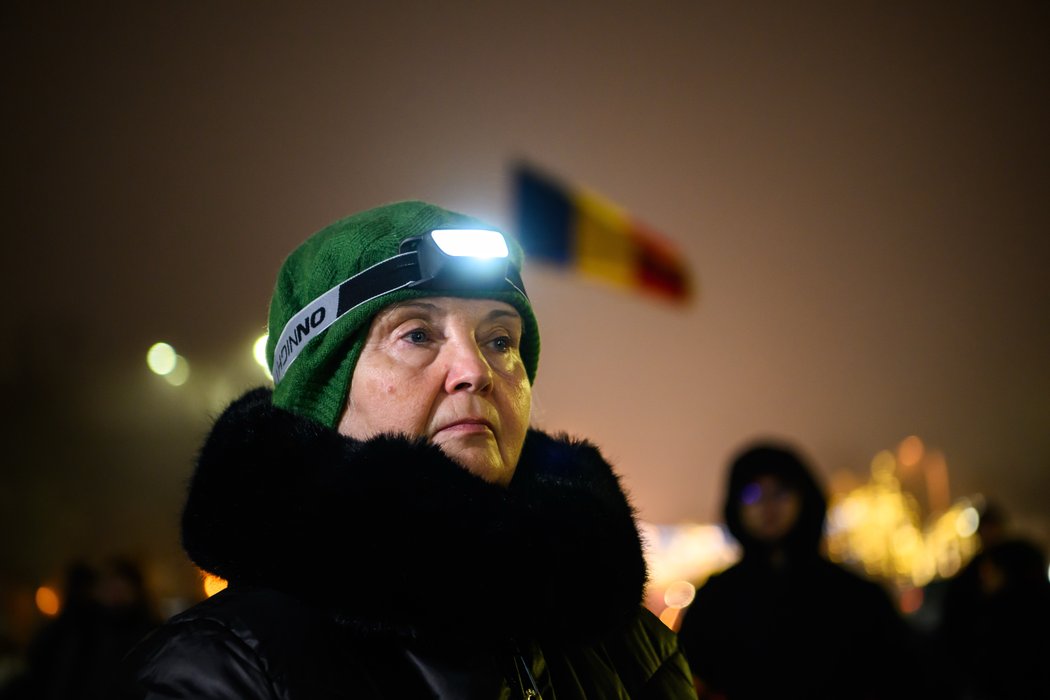
In December 2025, protests took place in several Romanian cities, at times lasting for days, after a documentary on judicial corruption sparked public outrage. Demonstrators in Bucharest held signs reading “All for justice!”, rallying for judicial independence after the investigative piece allegedly showed how a high-ranking judge was politically controlled. The aim of the documentary “Justice Captured”, published by the investigative platform Recorder, was to show how major corruption cases were shelved, and how prosecutors and judges who sought to do their jobs with integrity were reprimanded and punished by their superiors. It also alleged that politicians and civil servants had embezzled millions.
During the protests, thousands demanded changes to the laws governing the justice system to ensure independence and limit opportunities for abuse. Protesters also called for the resignation of the Minister of Justice, the Interior Minister, the head of the National Anticorruption Directorate, and the president of the High Court of Cassation and Justice.
Romanian farmers protest against the EU’s new trade agreement
On 20th January 2025, around 200 Romanian farmers joined their European counterparts to protest against the EU’s trade agreement with the Mercosur bloc. They demanded that the agreement be postponed until professional farmers’ organisations accept its terms and until agriculture is treated as a strategic sector, rather than as a bargaining chip in geopolitical negotiations.
Farmers also called for agricultural and trade policies that function in practice, not just on paper, supported by effective enforcement tools. They further demanded a strong Common Agricultural Policy after 2027, the exclusion of agriculture from the EU’s Carbon Border Adjustment Mechanism (CBAM), the rejection of a “Single Fund” that could dilute sector-specific support, transparent labelling showing the true origin of imported products, and stronger rules to prevent unfair competition from imports that do not meet EU standards, among other demands.
Freedom of Association
Human rights watchdog APADOR-CH warns draft legislation threatens civil society
On 29th August 2025, human rights group APADOR-CH warned that a draft order on supervising NGOs, proposed by the National Office for the Prevention and Combating of Money Laundering, could enable abuse and impose an undue burden on civil society if its provisions remained unclear.
The draft aimed to prevent terrorist financing but would have allowed NGOs to be labelled “vulnerable” based on non-public risk indicators and would have imposed new internal control and reporting duties.
Following public consultations in August 2025, the authority agreed to revise the text, accepting all of APADOR-CH’s recommendations. The final version, adopted in September, removed the most contentious provisions and clarified the oversight rules.
In October 2025, the organisation drew attention to another draft law considered prone to misuse. APADOR-CH urged the Ministry of Development, Public Works, and Administration to drop provisions in a draft Administrative Procedure Code that could force NGOs to comply with public information disclosure rules designed for state bodies. The organisation warned that the vaguely worded proposal could classify any NGO as a holder of public interest information, imposing heavy administrative and financial obligations that many groups would be unable to meet, and risking serious disruption to civil society operations.