Introduction
On 29th January 2025, the U.S. Embassy in Tirana informed Albania’s Ministry of Foreign Affairs about the suspension of funding for various Albanian institutions, following an Executive Order issued by U.S. President Donald Trump. On 24th January 2025, the U.S. State Department ordered a freeze on new funding for nearly all American international aid programmes, as part of efforts to align foreign assistance with the administration’s policy objectives. The freeze affects new funds allocated to foreign governments, NGOs, international organisations and contractors, and will remain in effect until the review is complete.
In January 2025, the International Republican Institute (IRI) released its latest national survey for Albania, revealing strong public support for the Special Prosecutor’s Office, which continues to be the most trusted institution in the country. John Fluharty, IRI’s Director for Albania, noted that citizens support anti-corruption efforts as a means to improve their quality of life.
On 22nd January 2025, fourteen activists, including two from Albania, were detained and expelled from Serbia. The Serbian authorities had labelled the activists as a “security threat”. Albania’s Ministry for Europe and Foreign Affairs summoned the Serbian Ambassador, demanding a review of the decision and assurances against future such incidents. Civil society organisations warned that such targeted actions against activists reflect democratic backsliding and undermine regional stability and EU integration efforts.
Freedom of association
Opposition announces plans to ban Soros Foundation activities in Albania
Former Prime Minister and chairman of the opposition Democratic Party Sali Berisha announced plans to ban the activities of the Soros Foundation in Albania, describing it as a “real national threat”. In a public speech, Berisha likened his plans to the decommunisation efforts of the 1990s and called for a “de-Sorosization” of the country. Berisha criticised the current government for impoverishing citizens and mismanaging national resources, highlighting that 45 percent of Albanians have emigrated, which he characterised as a significant loss for the nation. He asserted that a special law would prohibit any cooperation between state institutions and organisations linked to the Soros Foundation.
Freedom of peaceful assembly
During the reporting period, several protests were held on socio-economic issues and the rights of vulnerable populations in the society, among other issues.
On 2nd December 2024, a group of Italian citizens held a protest in Tirana to oppose the Rama-Meloni agreement on immigration. Carrying banners with slogans denouncing the Gjadër camp—constructed to accommodate migrants—the demonstrators gathered in front of the Prime Minister’s Office. The agreement, a joint initiative between Albanian Prime Minister Edi Rama and Italian Prime Minister Giorgia Meloni, has faced significant setbacks.
On 3rd December 2024, a group representing people with disabilities gathered in Elbasan to voice their demands and concerns. Marking the International Day of Persons with Disabilities, the protest aimed not to celebrate, but to highlight ongoing rights violations and difficult living conditions faced by this community. Participants spoke about the inadequacy of the financial support they receive, which many say does not cover basic living expenses. Caregivers also raised concerns, pointing out the intense demands of providing 24-hour care and the inadequate compensation.
In a protest held in front of the Prime Minister’s Office on 11th December 2024, pensioners called for an increase in pensions and greater institutional attention to their needs. They demanded increases in both the pension amounts and the minimum basic salary. On 27th November 2024, the Albanian Council of Ministers approved a year-end bonus for pensioners, allocating a total of 100 million euros for the fund.
Dozens of long-time taxi drivers in the city of Elbasan protested on 18th December 2024, raising concerns over what they consider unfair competition from electric taxis. They claim that the lower prices offered by electric taxi services are driving them into bankruptcy. The drivers are calling on the Municipal and Traffic Police to take action to ensure that licensed taxi stands are respected.
On 23rd December 2024, the opposition held a protest, described as an act of “civil disobedience”. Protesters blocking off roads at five key locations in Tirana led to heightened tensions, with around 15 people reportedly taken into police custody. In the area of Willson Square, Democratic Party MPs Luan Baçi and Gazment Bardhi clashed with police officers attempting to disperse the protesters. MP Ilda Dhori also claimed that she was mistreated by the police. Another incident took place near Pallati me Shigjeta, where MP Agron Gjekmarkaj was rushed to the Trauma Hospital after fainting during the protest. In the Pallati me Shigjeta area of Tirana, a confrontation occurred between protesters and a driver who attempted to pass through. A verbal exchange broke out between one of the protesters and the driver, but another protester stepped in, approached the driver, and managed to diffuse the situation. The protest caused significant traffic disruptions, which were further exacerbated by heavy rainfall throughout the day. Over 1,400 police officers were deployed to maintain order and oversee the protest.
Freedom of expression
Government moves to ban TikTok
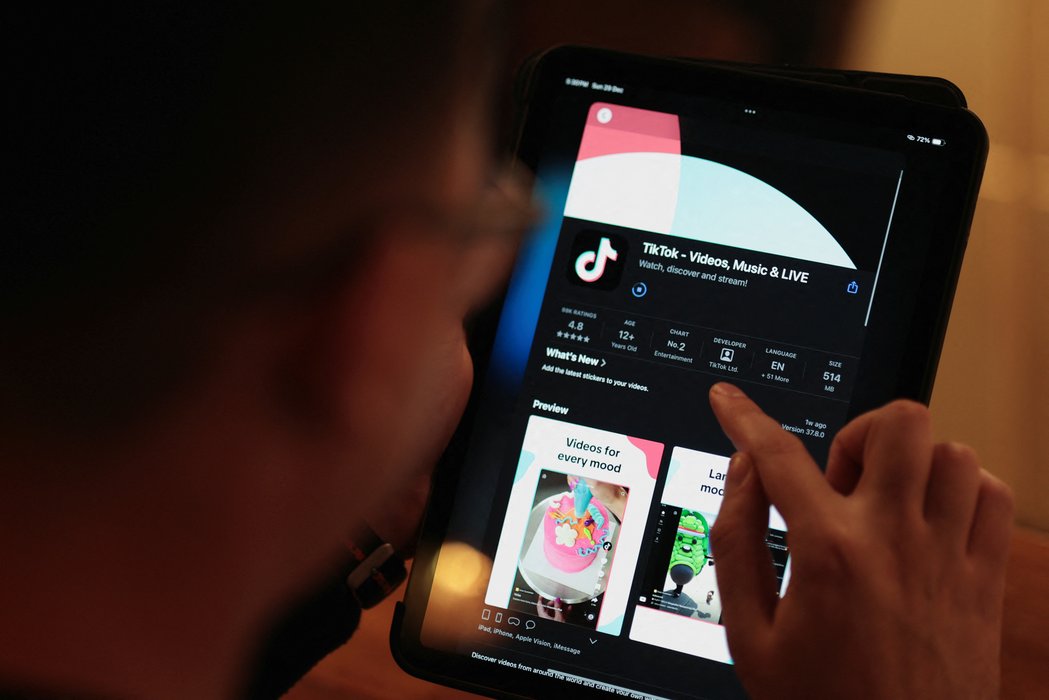
On 22nd December 2024, Albanian Prime Minister Edi Rama announced a one-year ban of the social media platform TikTok, set to take effect in January 2025. The decision follows the tragic stabbing death of a 14-year-old boy in Tirana, reportedly stemming from a confrontation between young individuals on social media, specifically TikTok and Snapchat. However, a spokesperson for the platform stated that they found no evidence that the perpetrator or victim had TikTok accounts. Nevertheless, the incident has heightened concerns over the influence of social media on youth behaviour. Prime Minister Rama criticised TikTok, calling it “the thug of the neighbourhood,” and voiced his concerns about the platform’s content and its potential negative impact on children. The SafeJournalists Network has announced that it is closely monitoring this development and has emphasised the importance of addressing harmful online behaviour in ways that respect democratic principles, particularly the right to freedom of expression.
SCiDEV also expressed concern about the decision and published initial recommendations to address the problems it raises in a systematic manner. On 22nd December 2024, Albanian Prime Minister Edi Rama announced the decision during the presentation of the New Action Plan for Strengthening School Safety Mechanisms. While the announcement was made, an official document outlining the decision has yet to be released. Civil society actors warned that any such restrictions should be evidence-based, transparent, and carefully considered to avoid setting a dangerous precedent for digital censorship.
Civil society aims to improve dialogue between media and state actors
In 2024, the General Prosecutor approved a circular for investigating cases against journalists and media workers and appointed a special contact point. Although media prosecutors have been designated throughout the country, studies indicate that the number of cases reported by journalists remains low. To improve dialogue and cooperation between the media and prosecution, SCiDEV, together with Free Press Unlimited and in coordination with the General Prosecutor’s Office and the Association of Journalists of Albania, organised a one-day workshop to assess the current legal framework and challenges to media freedom.