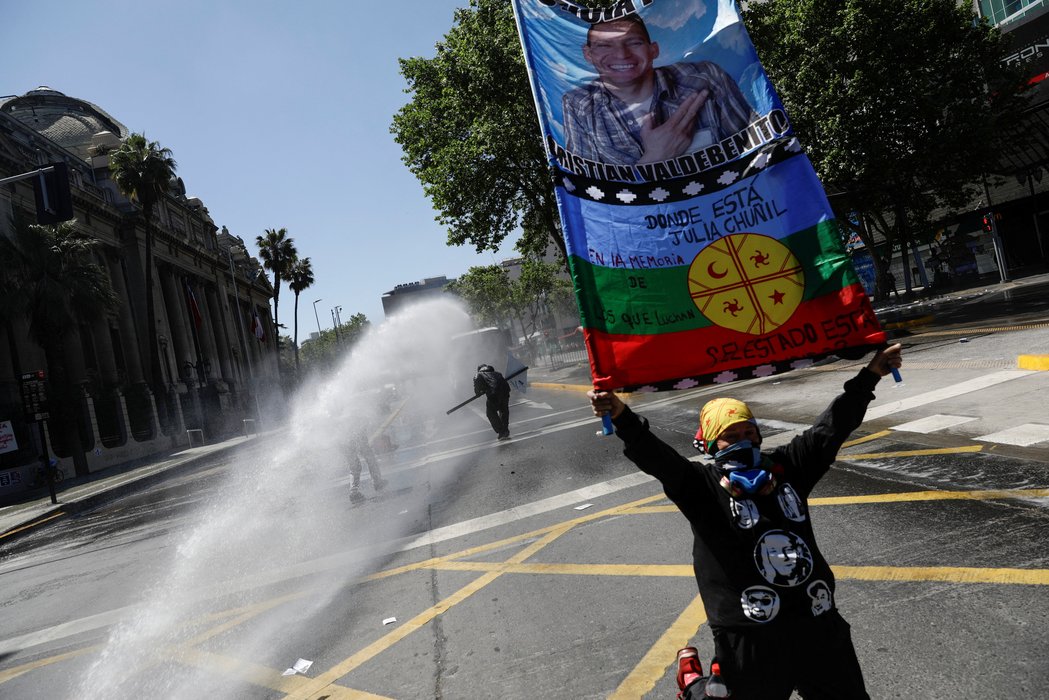
This update covers developments relating to the freedoms of expression, association and peaceful assembly in Chile from June 2025 to October 2025.
General
UN expert urges comprehensive protection for freedoms of assembly and association
At the conclusion of an official visit to Chile in July 2025, Gina Romero, the UN Special Rapporteur on the rights to freedom of peaceful assembly and of association, welcomed the resilience of civil society and acknowledged the institutional steps taken to protect these rights. At the same time, she stressed that urgent, unfinished work remains to prevent a repetition of human rights violations committed during the 2019 social unrest.
Romero highlighted the formal charging of three senior commanders of the national police (Carabineros de Chile) as an unprecedented step towards accountability that could serve as a regional reference point. However, she warned that impunity remains a serious concern and that the absence of effective, comprehensive reparations continues to affect victims and their families, including people living with irreversible harm, such as loss of vision. She underlined the need for truth-telling and memorialisation, alongside justice, reparations and institutional reform, to meet Chile’s obligation of non-repetition under international law.
The Special Rapporteur described Chile’s reparations framework as fragmented. While welcoming efforts by the Ministry of Justice and Human Rights to develop a national victims’ register, she relayed criticism that the methodology lacks sufficient inclusivity and participation, underscoring the need for an integral reparations policy.
Romero warned that the exercise of peaceful assembly should not depend on discretionary administrative controls and noted the absence of robust legal protection for protest in Chile. She reported receiving testimony suggesting arbitrary or discriminatory application of existing rules, which may protect some assemblies while restricting others.
She also expressed concern about reprisals and insufficient guarantees for certain groups exercising freedom of association and called on the state to ensure a safe and inclusive environment for participation.
Association
Mapuche leaders face criminalisation for opposing hydropower project
On 26th June 2025, officers of the Investigative Police (Policía de Investigación, PDI) arbitrarily detained Juan Pichún, a Mapuche spiritual leader (lonko) from the Temulemu Indigenous community in Chile’s Araucanía region. Police arrested him while he returned home with his family after celebrating We Tripantu, the Mapuche New Year, executing a detention order issued by the Purén Guarantee Court. Witnesses reported that officers attempted to break the windows of the family vehicle during the arrest, which took place in front of his children and caused distress to those present.
The following day, the Purén Court of Letters and Guarantee ordered pretrial detention, accusing Pichún of acting as the intellectual author of two arson attacks that occurred in 2021. The court relied on Article 140 of Chile’s Criminal Procedure Code, which permits pretrial detention only in limited circumstances, such as when detention proves necessary to secure the investigation or prevent flight. Human rights organisations stated that the court did not demonstrate such necessity.
Pichún had previously sought clarification of the investigation through a constitutional challenge (recurso de amparo) in December 2024, after learning informally that police were searching for him. Authorities issued a confidential arrest warrant in November 2024, which they never formally notified him of, preventing him from challenging it in court.
The detention occurred one day after Pichún addressed the UN Human Rights Council in Geneva, where he spoke on behalf of civil society during an interactive dialogue with the UN Special Rapporteur on the independence of judges and lawyers. In his statement, he raised concerns regarding Indigenous peoples’ access to justice and land rights in Chile.
The International Federation for Human Rights (FIDH) expressed concern that the timing of the detention may indicate retaliation for his international advocacy. The case fits within a broader pattern of criminalisation of Mapuche land and environmental defenders.
The Observatory for the Protection of Human Rights Defenders also documented the arbitrary detention of Jaime Javier Uribe Montiel, a Mapuche-Williche defender and supporter of the spiritual authority Machi Millaray Huichalaf – representing over 150 Indigenous communities – on 12th May 2025. Police carried out the detention without a warrant during a stop. Authorities later charged him with minor offences linked to ceremonial activities in defence of the Pilmaiquén River, in opposition to the Los Lagos hydropower project.
In a separate incident, on 25th April 2025, police arbitrarily detained Felipe Trunci González, a human rights defender and member of the Aylla Rewe, an Indigenous territorial and spiritual structure of the Mapuche people. Officers carried out the detention without a warrant, held him incommunicado for several hours, and pressured him to provide DNA samples. Authorities had not filed any charges against Trunci González at the time of reporting.
These incidents relate to a long-standing socio-environmental conflict surrounding hydroelectric projects promoted by Statkraft, a Norwegian state-owned energy company. Indigenous communities have repeatedly denounced the lack of free, prior and informed consent, as well as cultural and territorial impacts. Since a complaint was filed in September 2023 before Norway’s National Contact Point alleging breaches of the OECD Guidelines for Multinational Enterprises, defenders have reported increased criminalisation.
Frente a su familia.
— FIDH (@fidh_es) July 7, 2025
Así detuvieron al líder indígena Juan Pichún en #Chile, un día después de denunciar ante Consejo DDHH-ONU #HRC59 la discriminación contra el pueblo Mapuche y criminalización de la justicia chilena.
Buscan callar su voz. Hoy, lamentablemente, está en prisión… pic.twitter.com/mSJk9kyEHX
Death threats against Williche leader
On 26th July 2025, the environmental organisation Defendamos Patagonia issued an urgent alert after receiving reports of death threats against Miguel Raín, a Williche Indigenous leader from the Cerro Colorado community on Isla Caucahué, in the Chiloé archipelago in southern Chile. Raín said the intimidation intensified over time, caused serious psychological distress, and left him fearing for his safety.
The threats related to Raín’s role as an environmental defender advocating for the creation of an Espacio Costero Marino para Pueblos Originarios (ECMPO), a legal mechanism under Chilean law that recognises and protects Indigenous coastal territories and ancestral marine use.
In response, on 28th July 2025, the Ministry of Justice activated the Human Rights Defenders Protection Protocol, a mechanism designed to coordinate preventive and protective measures for defenders at risk. Authorities referred the case to the Public Prosecutor’s Office, notified the National Institute of Human Rights (INDH) – Chile’s independent national human rights institution – and contacted local authorities to assess protection measures.
The Ministry requested an expedited investigation, treated the threats as potentially criminal acts, and asked the INDH to consider legal action, including a constitutional protection remedy (recurso de protección), to safeguard Raín and his family. Members of Chile’s Congress also intervened, with deputy Jaime Sáez requesting additional institutional protection through the INDH and the provincial presidential delegation of Chiloé.
Civil society organisations called on regional and municipal authorities to strengthen safeguards for defenders in line with Chile’s obligations under the Escazú Agreement, a regional treaty that guarantees access to information, public participation and protection for environmental defenders.
Intimidation of activist sparks urgent civil society response
On 9th June 2025, an anonymous telephone threat against Claudio Escobar Cáceres, a long-standing environmental and human rights defender in Chile, prompted a rapid mobilisation by civil society organisations. Escobar received the threat one day after he participated in a public demonstration at Cerro Huelén in Santiago, where protesters demanded justice for Julia Chuñil, an Indigenous land and forest defender who remains disappeared.
The caller referenced personal information about Escobar and his family and warned that he would not be “allowed to pass unchallenged”. Human rights organisations interpreted the call as an act of intimidation linked to his public activism.
In response, civil society organisations launched a public declaration titled “Let Us Defend the Defenders” (Defendamos a los Defensores). Within 48 hours, the declaration gathered 417 signatures, including 131 organisations and 286 individuals from across Chile, as well as supporters abroad. Signatories represented environmental, human rights, feminist, cultural, territorial and media organisations, and committed to legal action and public advocacy to press State institutions to protect defenders and guarantee fundamental rights.
The declaration framed the threat against Escobar within a broader pattern of intimidation and judicial harassment affecting environmental and human rights defenders. They also warned that these incidents coincided with fast-tracked legislative reforms promoted under the government of President Gabriel Boric. According to environmental organisations, these reforms risk weakening environmental safeguards in favour of large-scale development projects.
Chile advances first law to protect environmental defenders amid rising attacks
On 8th October 2025, Chile’s Chamber of Deputies approved the Environmental Human Rights Defenders Protection Bill (No. 16886-12), marking the country’s first comprehensive legal framework to recognise and safeguard the rights of those who defend the environment and nature. The proposal now moves to the Senate for further deliberation.
This development followed the bill’s initial approval by the Environment and Natural Resources Committee in April 2025, after sustained civil society advocacy and in line with Chile’s commitments under the Escazú Agreement, a 2022 regional treaty that provides safeguards for environmental defenders.
If adopted, it would establish binding obligations to ensure environmental defenders can carry out their work free from violence. It also sets out guiding principles, including accountability, equality, non-discrimination, progressiveness and transparency. Civil society organisations have welcomed the step as a long-overdue response to escalating attacks on environmental defenders, particularly in regions affected by environmental degradation, extractive industries and forestry disputes.
The legislative advance occurred amid a deeply concerning national context. As previously reported, data compiled by the environmental organisation Escazú Ahora underscores the broader pattern: physical attacks against environmental defenders in Chile tripled in 2024, with over 90 per cent linked to the forestry sector and 70 per cent affecting women. Indigenous defenders remain disproportionately targeted. In July 2025, Escazú Ahora stated that the government has implemented only 15 per cent of Escazú’s protection measures since its ratification in March 2022.
On 22nd October 2025, the Escazú Agreement’s rapid response mechanism was activated for the first time in the region. The treaty’s Committee to Support Implementation and Compliance ordered Chile to adopt immediate protective measures for relatives of Julia Chuñil (case A-CHL-20250729), following a petition submitted by her son, Pablo San Martín Chuñil, with support from the International Service for Human Rights (ISHR) and Escazú Ahora. The Committee found that Chile breached Article 9 of the Escazú Agreement, which obliges States to protect environmental human rights defenders.
Julia Chuñil, a 73-year-old leader of the Mapuche community Putreguel, had faced years of harassment linked to her efforts to protect ancestral forest lands. Nearly one year after her disappearance, authorities had not clarified her whereabouts. Her family reported intimidation and stigmatisation, as well as an investigation marked by delays and failures to pursue key evidentiary leads.
In July 2025, the Inter-American Commission on Human Rights (IACHR) granted precautionary measures in favour of Chuñil, citing a situation of gravity and urgency and the risk of irreparable harm. While acknowledging state efforts, the Commission expressed concern over investigative delays and ordered Chile to intensify search efforts and prevent repetition.
In mid-October 2025, Chile’s government also launched a National Awareness Campaign on Human Rights Defenders, coordinated by the Ministry of the Environment, the Ministry of Justice and Human Rights, and the UN Office of the High Commissioner for Human Rights. The campaign forms part of the Participatory National Implementation Plan of the Escazú Agreement (PIPE) 2024-2030 and aims to promote the Protection Protocol for Human Rights Defenders.
Expression
Judges reject surveillance request targeting reporters covering corruption case
On 27th August 2025, the 4th Guarantee Court of Santiago rejected a request by Paulina Díaz Obilinovic, head prosecutor of the High Complexity Unit of the Western Metropolitan Prosecutor’s Office, to access confidential communications data belonging to 11 journalists from five media outlets. The journalists had reported on the Hermosilla case, a high-profile corruption investigation in Chile. The prosecutor later pursued the same request through an appeal before the same court and a procedural challenge (recurso de hecho) before the Santiago Court of Appeal, which also rejected the measures.
The request formed part of an investigation initiated after a complaint filed by Juan Pablo Hermosilla, a lawyer and brother of Luis Hermosilla, who faces investigation for bribery, influence peddling, money laundering and tax offences. The complaint alleged a breach of secrecy after media outlets published excerpts from private messages found on Luis Hermosilla’s mobile phone. The Public Prosecutor’s Office assigned the case to Regional Prosecutor Marco Pastén, who delegated it to Díaz Obilinovic.
Despite public assurances reported in January 2025 that prosecutors would not target journalists or undermine professional secrecy, the prosecution later sought intrusive surveillance measures. The request covered call records, mobile data traffic, geolocation data, cell-tower connections, GPS coordinates, signal strength and metadata from November 2023 to September 2025. It also sought information on third-party phone numbers connected to journalists’ devices, a measure that could have exposed confidential sources.
The prosecutor’s request named reporters from La Bot, La Tercera, The Clinic, Ciper and Reportea, and listed their full names, national identification numbers, phone numbers and mobile providers, without explaining how authorities obtained this information. A separate list included seven prosecutors whose communications data prosecutors also sought, reportedly to identify contacts or co-location with journalists.
Courts rejected the measures, finding no plausible justification to authorise surveillance against journalists who acted as third parties or potential witnesses, and noting the absence of any evidence indicating criminal conduct. Judges also highlighted the lack of safeguards to prevent access to journalistic sources.
Chile’s Press Law (Law No. 19.733) explicitly protects the confidentiality of journalistic sources, stating that journalists may not be compelled to reveal sources or identifying materials, even by court order (Article 7).
In early November 2025, the Chilean Journalists' Association condemned the prosecutor’s actions, warning that attempts to obtain call records and geolocation data pose a serious threat to press freedom and risk intimidating investigative journalism. The association welcomed the court rulings as reaffirming constitutional protections for source confidentiality and expressed solidarity with the affected journalists.
Court acquits journalist in criminal defamation case
On 24th June 2025, the Seventh Guarantee Court of Santiago acquitted journalist Josefa Barraza, former director of El Ciudadano, in a criminal defamation (injurias) case filed by Claudio Vargas Palma, a former municipal council candidate for Renovación Nacional in Santiago.
According to media reports, the court found that the facts alleged by the complainant did not constitute injurious conduct under Chilean criminal law and acquitted Barraza of all charges. After the ruling, Barraza welcomed the decision publicly, stating that the court had confirmed that no offence had occurred.
El 7mo Juzgado de Garantía de Santiago me acaba de absolver en querella presentada por excandidato RN. Se acreditó que no hubo injurias y confirmó mi inocencia. Aguante el periodismo independiente!
— Josefa Barraza (@masterjosefa) June 24, 2025
Senate committee advances “Gag Law 2.0”, raising concerns over press freedom
On 21st August 2025, Chile’s Senate Constitution Committee approved in general a bill amending several laws to criminalise the unauthorised disclosure of investigative material (No 17484-07). Lawmakers formally presented the proposal as a reform to protect confidential elements of criminal investigations. Civil society organisations commonly refer to the bill as “Gag Law 2.0”.
The Senate plenary authorised the committee to debate the bill both in general and in detail during its first report. The committee held hearings with legal experts, academics and representatives of the journalism profession. After these sessions, senators introduced amendments that increase penalties for public officials who leak investigative information. The revised text establishes a graduated sanctions regime, imposing the harshest penalties on public officials, while also creating penalties for any person who “illegitimately” disseminates information from a criminal investigation.
The proposal would also tighten investigative time limits, create a separate confidential annex for non-essential investigative acts, and restrict access to that annex to parties under strict conditions, without allowing them to copy or record materials. In addition, the bill introduces rules governing the destruction of certain records, including communications data. A key amendment would delete the final paragraph of Article 226 J of the Criminal Procedure Code and relocate and expand its content within the Criminal Code, thereby strengthening criminal sanctions.
As drafted, the bill would criminalise the disclosure of information from investigations declared confidential, with penalties of up to 541 days’ imprisonment or substantial fines. Its scope extends beyond public officials directly involved in investigations to include journalists, lawyers, activists, researchers, and any person who communicates or shares such information. The bill would therefore cover reporting on matters of public interest, including corruption cases.
In response, civil society organisations warned that the proposal fails to comply with international human rights standards, which require any restriction on freedom of expression to meet tests of legality, necessity and proportionality. Media freedom organisations cautioned that the bill could enable prior censorship and chill investigative journalism. The Committee to Protect Journalists urged Chilean senators to withdraw the bill, warning that it could undermine press freedom, deter whistleblowers, and restrict the public’s right to information.
El @pressfreedom está muy preocupado por el hecho
— CPJ Américas (@CPJAmericas) June 12, 2025
de que los senadores chilenos consideran un proyecto de ley que socavaría la libertad de prensa y el acceso a la información de interés público al criminalizar a los denunciantes y periodistas que sacan a la luz irregularidades.… pic.twitter.com/U2AZExhbMw
Chile faces ongoing challenges on freedom of expression
On 15th October 2025, the Inter-American Commission on Human Rights (IACHR), through its Office of the Special Rapporteur for Freedom of Expression (RELE), published its Special Report on the Situation of Freedom of Expression in Chile, following a country visit conducted in March 2024.
The report documented persistent risks faced by journalists, including physical violence, particularly during public demonstrations, as well as threats, intimidation, judicial harassment and criminalisation. It also identified gender-based violence as a specific risk affecting women journalists. While the RELE acknowledged state measures, such as training programmes for public officials and progress on a proposed Journalists’ Protection Bill, it identified significant implementation gaps.
The report stressed that effective protection requires an integrated approach combining prevention, investigation, accountability and reparation, in line with inter-American and international human rights standards.
On access to information, the RELE recognised Chile’s relatively robust legal framework and highlighted the role of the Council for Transparency (Consejo para la Transparencia, CPLT), the independent body responsible for overseeing compliance with transparency obligations. However, the report raised concerns about recurring restrictions on access to information requests, including blanket refusals and repeated extensions of response deadlines, practices that undermine transparency and public oversight.
In the digital sphere, the RELE welcomed the creation of the Advisory Commission against Disinformation in 2023, but identified ongoing challenges related to organised disinformation, regulation of online platforms, and persistent digital divides. The report emphasised the need for regulatory responses that address these risks without disproportionately restricting freedom of expression, while promoting pluralism and meaningful access to information online.
The report also identified structural barriers to media pluralism, including media concentration, limited access to broadcasting licences for community media, unequal spectrum allocation, and the financial fragility of independent outlets. Although some public support initiatives exist, regulatory, economic and technical barriers continue to affect the sustainability of community and independent media. The RELE further noted challenges in ensuring the representation of historically marginalised groups, given the persistence of discriminatory discourse and practices in media spaces.
El informe de #LibertadExpresión en #Chile recomienda adoptar medidas para proteger a periodistas, con protocolos de riesgo diferenciados, en cumplimiento de las obligaciones estatales de prevenir, proteger y garantizar #DDHH.https://t.co/43WqbJCsW1 pic.twitter.com/bPr0xqCVeV
— Relatoría Especial p/la Libertad Expresión (CIDH) (@RELE_CIDH) October 20, 2025
Peaceful Assembly
Indigenous protest in Santiago followed by detentions
On 12th October 2025, Indigenous organisations held a demonstration in Santiago, titled the “March for the Resistance of Peoples”, to mark the anniversary of the date officially known in Chile as the “Encounter of Two Worlds”, a commemoration widely contested by Indigenous peoples across the Americas due to its association with colonisation. The march began at the intersection of Miraflores and Alameda avenues and proceeded through central Santiago to Plaza Los Héroes.
During the demonstration, relatives of Julia Chuñil, a Mapuche environmental defender who disappeared in November 2024, addressed protesters. Speaking to the media, Chuñil’s son stated that the family continues to demand truth and justice and expressed concern that new information strengthens their belief that authorities forcibly removed Chuñil from her community.
According to Carabineros de Chile, minor disturbances occurred during the march. Police reported that Public Order Control units intervened to prevent an attempted looting of a commercial premises on San Antonio Street. Officers also alleged that unidentified individuals threw blunt objects and fireworks at police during the demonstration. Carabineros also confirmed that four people were detained: one due to an outstanding arrest warrant and three in connection with the reported disturbances. Authorities stated that the events did not result in serious injuries.
Environmental reforms spark coordinated protests across Chilean cities
On 18th and 19th July 2025, socio-environmental organisations held coordinated protests across Chile against a package of legislative reforms that organisers labelled the “Environmental Chainsaw” (“Motosierra Ambiental”). The mobilisations followed Congress’s approval in early July 2025 of the Framework Law on Sectoral Authorisations, which introduces changes to environmental permitting for public and private investment projects.
Demonstrations took place in cities including Iquique, Antofagasta, Copiapó, Valparaíso, Santiago, Concepción, Temuco and Ancud. Protesters also opposed a wider set of proposed or recently approved measures, including reforms to the Maritime Concessions Law, amendments to the Environmental Framework Law, and a Regulatory Simplification Law. Organisers argued that, taken together, these initiatives weaken environmental safeguards and reduce public oversight of projects with potential environmental and social impacts.
The government stated that the reforms aim to stimulate investment and support economic recovery. Civil society networks, including Red de Acción por los Derechos Ambientales, countered that the changes could accelerate high-impact projects in environmentally sensitive areas, such as native forests, water sources, coastal zones and sites linked to toxic waste management, without adequate safeguards.
Students mobilise against restrictions on public transport benefit
On 8th August 2025, secondary and university students marched together in Valparaíso, gathering at Plaza Sotomayor before proceeding to the regional offices of the Transport Secretariat in response to a restrictive interpretation issued by the Office of the Comptroller General of the Republic (Contraloría General de la República), Chile’s supreme audit and oversight authority.
The interpretation limited the use of the Tarjeta Nacional Estudiantil (TNE), a state-subsidised student public transport pass, to journeys strictly linked to educational activities. Student groups warned that the measure could significantly affect daily mobility and effective access to education, particularly for students outside major urban centres.
Student groups also highlighted inconsistent official guidance. While regulations issued by the Ministry of Transport refer to academic purposes, the official TNE Rights and Duties Guide states that students may use the card 24 hours a day, seven days a week, throughout the year and across the country, regardless of destination or the academic calendar. According to student organisations, these conflicting norms create legal uncertainty that disproportionately affects students.
Lenient sentencing raises questions about accountability for protest abuses
On 9th September 2025, the Third Oral Criminal Court of Santiago convicted three officers of the national police force (Carabineros) for unlawful coercion (apremios ilegítimos) committed during the October 2019 social protests in the Ñuñoa district of Santiago. The case concerned the violent assault on Moisés Abraham Órdenes Corvalán, who participated peacefully in a cacerolazo protest in Plaza Ñuñoa on 21st October 2019.
According to the judgment, the officers exited a police vehicle and jointly assaulted Órdenes using batons, fists and kicks, despite the absence of any serious threat. The court concluded that the officers used unnecessary and disproportionate force. As a result of the attack, Órdenes suffered multiple fractures, severe chest injuries, and irreversible trauma to his left eye, causing permanent loss of vision and lasting functional and aesthetic damage.
The court further established that, hours after the assault, Blanc Cabrera knowingly provided false information to prosecutors. He claimed that Órdenes had resisted arrest and threatened officers, a false account that diverted the investigation towards alleged offences against police and delayed accountability for the assault.
The court found Martín Reinaldo Blanc Cabrera, Gabriel Ignacio Fernandois Soto and Eduardo Andrés García Rivera guilty as co-perpetrators. It sentenced each officer to between 540 and 541 days’ imprisonment, but substituted the custodial sentences with conditional release under Chile’s alternative sentencing regime. The court also sentenced Blanc Cabrera to an additional 100 days’ imprisonment for obstruction of justice and falsification of public documents, while it acquitted Fernandois Soto of those charges.
The decision was not unanimous. In a dissenting opinion, Judge Ruby Sáez argued that the evidence met the threshold for aggravated unlawful coercion, citing the severity of the injuries and the officers’ failure to provide medical assistance following the attack.
The National Institute of Human Rights (INDH), Chile’s independent human rights body, and Amnesty International observed the proceedings. Both organisations criticised the sanctions as inadequate, warning that suspended sentences for serious police violence risk reinforcing de facto impunity and do not reflect the gravity of the harm inflicted, as required under inter-American human rights standards.
The case forms part of a broader pattern of police violence and limited accountability linked to Chile’s 2019 social unrest. While the convictions formally acknowledge wrongdoing, civil society organisations have stressed that lenient sentencing and the continued refusal to apply more serious legal classifications, such as torture, undermine victims’ access to effective justice and weaken protections for the right to peaceful assembly.
Other developments
First conviction for lesbophobic femicide sets judicial precedent
In July 2025, the Third Oral Criminal Court of Santiago, a criminal trial court in Chile, delivered the country’s first conviction for lesbophobic femicide. The court found Cristofer Arnoldo Pino Pino guilty under Article 390 ter No. 4 of the Criminal Code, as amended by the Gabriela Law. This provision expands the offence of femicide to include killings motivated by sexual orientation, gender identity or gender expression, moving beyond a definition limited to intimate or family relationships.
The case concerned the death of Sandra Almeida Lizama, a 58-year-old woman who died in December 2023 after spending six days in a coma. Almeida sustained fatal injuries during a violent assault in Lo Barnechea, a district of Santiago. According to the court, the attacker targeted Almeida while she intervened to defend a group of women who were being harassed in a public space. Witnesses and evidence indicated that the assault included explicit lesbophobic insults, which the court considered central to the motive for the crime.
Prosecutors sought a life sentence. Civil society organisations, including the Movimiento de Integración y Liberación Homosexual (Movilh), described the conviction as a legal and symbolic milestone, noting that it marked the first time Chilean courts had applied the femicide offence to a killing motivated by hatred based on sexual orientation.
According to legal experts, the ruling represents a significant development in Chilean jurisprudence, as it departs from a purely relationship-based understanding of femicide and explicitly recognises the role of gender-based and sexual-orientation-based bias in lethal violence against women. While the court did not explicitly cite international or Inter-American human rights standards, its reasoning aligns with obligations related to non-discrimination, equal protection of the law and due diligence in investigating bias-motivated crimes.
By applying a discrimination-based aggravating factor, the judgment strengthens accountability for hate-motivated violence and establishes an important precedent for future prosecutions. At the same time, the case underscores persistent gaps in prevention, particularly within Chile’s broader anti-discrimination framework, and highlights the continued risks faced by lesbian and gender-diverse women in public spaces.