Association
Environmental defenders detained and prosecuted
Cases of judicial harassment of environmental defenders have been recorded in Paso Yobái, Guairá Department, where three yerba mate producers currently face prosecution. As of August 2025, three defenders, including Vidal Brítez Alcaraz, president of the Association of Yerba Mate Growers of Paso Yobái (Asociación de Yerbateros de Paso Yobái), remain under house arrest.
On 26th March 2025, police arbitrarily detained Brítez Alcaraz on charges of alleged grave coercion. On 2nd April 2025, a court in Villarrica ordered house arrest after defence lawyers argued that pretrial detention was disproportionate given his asthma, his role in the yerba mate harvest, and his strong community ties.
The charges arise from a January 2025 incident when a judicial order linked to mining operations authorised trucks carrying waste to enter the property of a yerba mate producer opposed to mining. Police escorted the trucks, triggering a confrontation in which residents reportedly threw stones. Despite evidence confirming that Brítez was at home five kilometres away, prosecutors charged him and five others.
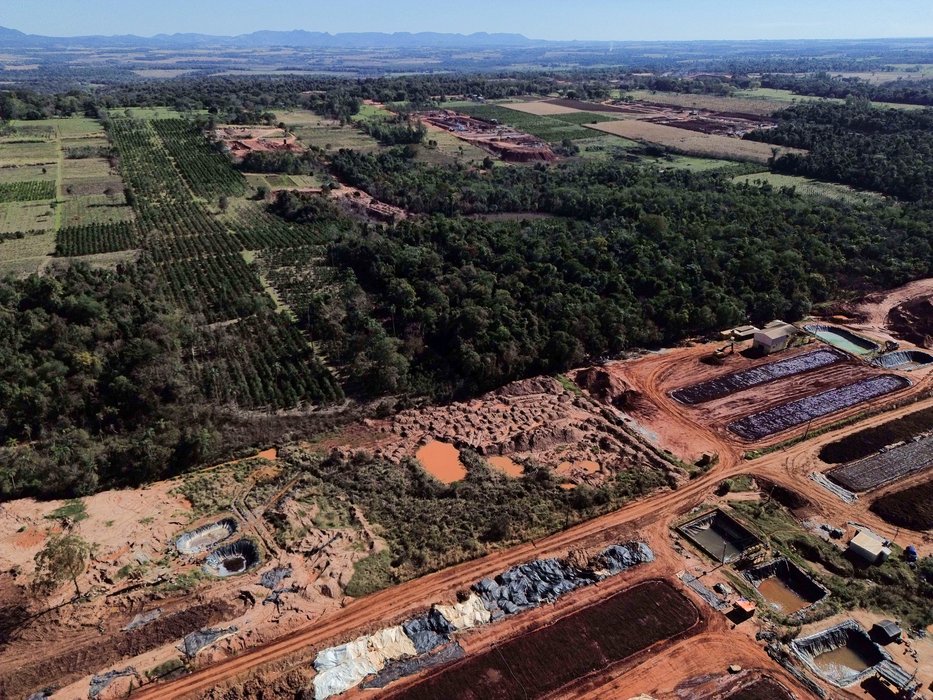
Paso Yobái is home multinational mining companies, including Latin American Minerals Paraguay (Lampa SA) and CEMA SA. In 2022, the UN Special Rapporteur on toxics and human rights, Marcos Orellana, verified that the use of mercury and cyanide in gold mining had caused severe contamination. Studies carried out between 2018 and 2019 found mercury in miners’ families to be above safe levels, and fish from the Tebicuarymi River contained concentrations four times higher than United States Environmental Protection Agency standards.
Since 2010, more than 840 hectares of forest have been cleared for mining and agriculture. Pollution has damaged yerba mate production, a crop with cultural and economic significance in Paraguay, resulting in substantial losses for producers. Despite repeated complaints, authorities have not acted to stop these damaging practices.
Draft law risks sidelining civil society in allocation of public funds
On 26th June 2025, Deputy José Ramón Rodríguez Maciel—member of the caucus of the National Republican Association ANR— introduced Bill No. 178886/25. The bill seeks to create a National Single Account to manage funds from alternative measures in criminal proceedings. The money would be directed exclusively to government-run initiatives in sports, security, education and health.
Civil society organisations warned that the bill sidelines non-profits (OSFLs), despite their longstanding work in supporting vulnerable communities. In a joint statement, they highlighted major concerns: exclusion as beneficiaries, over-centralisation in state institutions, lack of citizen oversight, duplication of efforts and inflexible funding distribution. Many non-profits already deliver programmes in community sports, addiction prevention, alternative education, and health. Ignoring these contributions, organisations said, could waste resources and weaken service delivery.
On 18th August 2025, the Committee on Economic and Financial Affairs of the Chamber of Deputies rejected the proposal in preliminary debate. The bill remains pending final consideration by the plenary.
Expression
Journalist assaulted while covering an event outside prison
On 25th August 2025, journalist Jessica Martínez, a reporter with Ñandutí, suffered physical aggression while covering an event outside the Penal de Emboscada Antiguo. According to the Paraguayan Journalists’ Union (SPP), a bodyguard of Justice Minister Rodrigo Nicora struck her in the chest with a closed fist.
SPP condemned the incident and demanded respect for journalists and their right to carry out their professional duties without interference. The union called on the authorities to guarantee the safety of media workers and to ensure that incidents of aggression against the press are promptly investigated.
Ante la agresión sufrida por la compañera Jessica Martínez, cronista de Ñanduti. pic.twitter.com/iT9GCrd9vb
— SPP (@PeriodistasPy) August 25, 2025
Journalist faces death threats after exposing interference in murder probe
On 29th August 2025, Aníbal Gómez Caballero, based in Pedro Juan Caballero, reported a series of threatening WhatsApp messages. The messages, aimed at him and his family, followed his revelations that a member of parliament had intervened in the investigation into the killing of journalist Leo Veras in 2020, attempting to pressure Veras’s widow on behalf of a suspect.
Gómez Caballero, who has long reported on corruption and organised crime, already had state protection measures due to previous threats. Following the latest messages, his case has been accompanied by the Mesa para la Seguridad de Periodistas. The SPP and the International Federation of Journalists (IFJ) condemned the threats and urged authorities to guarantee his safety.
Pedro Juan Caballero, a city on Paraguay’s border with Brazil, has a grim record of journalist killings (see subheadline below: Decades of impunity perpetuate violence against journalists).
#Paraguay🇵🇾: Nuevas amenazas de muerte al periodista Aníbal Gómez en Pedro Juan Caballero
— FIP - América Latina y El Caribe (@FIP_AL) August 29, 2025
🚨El periodista Aníbal Gómez Caballero recibió nuevas amenazas de muerte relacionadas con su trabajo periodístico y sus denuncias sobre posibles casos de corrupción en la política local. pic.twitter.com/iQxxKlwEae
Decades of impunity perpetuate violence against journalists
On 8th July 2025, Forbidden Stories, in collaboration with the Organised Crime and Corruption Reporting Project (OCCRP) and media partners from Latin America and Europe, published the results of Alianza Paraguay, a months-long investigation into the risks faced by journalists in Paraguay. The consortium, formed to continue the work of reporters who were killed, imprisoned or abducted, examined systemic failures in the prosecution of crimes against journalists and the broader links between organised crime, corruption and state institutions.
The report revisits the killing of radio journalist Humberto Coronel, who was shot dead in September 2022 as he left his workplace at Radio Amambay in Pedro Juan Caballero. Coronel became the 18th journalist killed in Paraguay since 1991. The investigation also details the death of Santiago Leguizamón, murdered in 1991 while covering organised crime in the same city, whose case led to a 2022 ruling by the Inter-American Court of Human Rights declaring Paraguay responsible for failing to investigate. Other cases include the killing of radio journalist Yamila Cantero in 2002 and Lourenço “Léo” Veras in 2020. Family members of the victims reported that prosecutors failed to take basic investigative steps, mislaid case files, and rarely provided updates.
The consortium also documented how prosecutors regularly disregarded requests for cooperation from neighbouring countries in cross-border crime investigations. In the case of Veras, his wife, a direct witness, stated she was never called to testify. His colleague, journalist Cándido Figueredo, faced constant death threats and eventually fled the country after Veras’s murder.
The Committee to Protect Journalists (CPJ) reported no new killings of journalists in Paraguay since 2023. However, the Mesa de Seguridad para Periodistas, a non-profit organisation in Asunción, has recorded more than 400 attacks against journalists since 1991. Its director, José “Pepe” Costa, noted that intellectual authors remain unidentified in nearly 90 percent of cases. He highlighted that the risks remain acute for those reporting on organised crime, particularly in border areas.
Paraguay ranks 84th out of 180 countries in the 2025 World Press Freedom Index of Reporters Without Borders. Journalists continue to face structural risks, with many resorting to self-censorship as a protective measure. Despite these conditions, investigations into organised crime and corruption continue to be pursued, often in the absence of adequate protection mechanisms.
Data Protection Bill risks rolling back transparency
On 6th August 2025, the Senate of Paraguay approved the Bill on Personal Data Protection (D-2162170) with modifications, sending the bill back to the Chamber of Deputies. While the law aims to establish a framework for personal data protection and create a new national agency, Article 24 allows public institutions to withhold information when it is deemed to involve sensitive data.
Critics said this could conceal details such as officials’ salaries or performance records. The Sociedad de Comunicadores del Paraguay (SCP) warned that the provision will restrict journalists’ access to essential public records and could facilitate corruption.
In late July 2025, Paraguayan civil society organisations—including SPP, the Association of Technology, Education, Development, Research, Communication (TEDIC) and Alma Cívica, raised concerns that legislators are working with an outdated draft and ignoring international standards.
They emphasised that transparency and privacy are complementary rights. By defining “sensitive data” broadly and allowing public institutions themselves to decide what qualifies, the law grants the state-wide discretion to limit access to information. Moreover, they argued that without significant revision, the law could erode accountability and weaken the fight against corruption.
Appeal court overturns ban on reporting councillor’s cattle rustling case
On 2nd July 2025, an appeal court revoked a precautionary measure that had banned journalists César Candia and Alberto Núñez from reporting on judicial proceedings involving municipal councillor Julio Vera, accused of alleged cattle rustling. The ruling restored the journalists’ ability to publish information on the case, which they had obtained from official records. As previously reported, the order, issued on 26th June 2025 by a judge in Curuguaty, had barred both journalists from covering the proceedings.
Peaceful Assembly
Students injured as police fire rubber bullets during protest
On 28th August 2025, university students in Canindeyú staged a protest to denounce shortcomings in public transport. Units of the National Police, including the riot police, intervened to disperse the demonstration and fired rubber bullets at the crowd. Reports confirmed that several students sustained injuries as a result.
Students reported unsafe vehicles and insufficient routes connecting rural areas to educational centres, which directly hinder access to classes and academic activities.
Indigenous communities stage weeks of protests demanding dismissal of Indi President
Indigenous communities in Paraguay have staged a series of protests over the past two months, underscoring deep frustrations with state institutions and renewed calls for respect for their rights.
On 8th July 2025, around 750 members of indigenous communities gathered at the headquarters of the Paraguayan Institute for Indigenous Affairs (Instituto Paraguayo del Indígena, Indi) in Asunción, demanding the dismissal of its president, Juan Ramón Benegas. They blocked a major section of Avenida Artigas, one of the capital’s busiest arteries, forcing the municipality to introduce traffic diversions.
Protesters travelled overnight from across the country, camping outside the institution in a show of endurance. “We ask the president of the Republic to remove him, because we come with our demands but receive no response or support”, one protester told local media in Guaraní.
📌 Nueva protesta de comunidades indígenas frente al INDI exigiendo la destitución de su titular, Juan Ramón Benegas
— NPY Oficial (@npyoficial) July 8, 2025
♦️ La avenida Artigas se halla bloqueada entre General Santos y Perú desde anoche
🗣️ "Al presidente de la República-pe rojerure ikatu haguaicha ko presidente del… pic.twitter.com/GbQ8D7qRut
The action marked the beginning of a sustained mobilisation that spread beyond the capital. On 18th and 20th August 2025, in the town of Guayaybí, indigenous groups escalated their protest, again demanding Benegas’s removal. According to reports, protesters refused to end their blockade, signalling a hardening of positions as weeks passed without government concessions.
The blockades continued on 1st September 2025, when communities obstructed Cruce Guiará in the Santaní District, again demanding Benegas’s dismissal and also citing the government’s failure to fulfil previous commitments made to indigenous peoples. Indigenous leaders stressed that the protest would continue until authorities delivered concrete responses.
The continuation of the blockade highlighted ongoing mistrust between indigenous communities and state institutions, with demonstrators denouncing unkept promises and lack of consultation.
Victims of “Mafia de los Pagarés” demand justice and accountability
On 15th July 2025, members of the Coordinator of Victims of the Promissory Notes Mafia (Coordinadora de Víctimas de la Mafia de los Pagarés) protested in front of the Supreme Court in Asunción. They delivered a note requesting an audience with the Court’s ministers and announced a vigil to begin next week, after two previous requests went unanswered. Protesters said they represent around 17,000 alleged victims nationwide, with at least 15 reported suicides linked to the financial scheme.
The “Mafia de los Pagarés” refers to a practice in which individuals sign promissory notes (pagarés) that are later manipulated, inflated, or enforced through abusive judicial proceedings. Victims allege that creditors and legal actors collude to trap borrowers in cycles of unpayable debt, resulting in loss of property, harassment, and in extreme cases, suicides.
Pedro Coronel, the group’s spokesperson, said the protesters did not expect to match the legal knowledge of judges but insisted they were forced to use every means available to be heard. “The situation obliges us to request audiences, to be listened to”, he told reporters.
Police intervention in religious pilgrimage
On 16th July 2025, members of the Conference of Religious Men and Women of Paraguay (Conferpar) held a pilgrimage in which they combined prayer and public witness with calls for social justice, including the reform of the country’s deficient public transport system. During the peaceful march, participants carried signs highlighting these concerns. According to Conferpar, police officers intervened in an attempt to censor one of the banners, prompting strong criticism from the organisers.
In a public statement, Conferpar rejected official claims that the display of a sign demanding transport reform “contaminated” the religious act. They stressed that the pilgrimage was both spiritual and social, reflecting the daily struggles of the Paraguayan people. According to the organisation, integrating songs, prayers, silences and banners into the march formed part of their expression of faith and commitment to the most vulnerable.
Conferpar condemned the police intervention as an attempt to curtail a legitimate act of protest in a peaceful, religious and respectful context. The organisation also criticised authorities for denying the occurrence of the intervention and for failing to investigate the incident ex officio, effectively shifting the burden onto citizens.