Introduction
The report “Analysis on Gender and Security in North Macedonia” was published in 2024 by the United Nations Entity for Gender Equality and the Empowerment of Women (UN Women). It assessed national legislation, policies, and practices related to Women, Peace, and Security (WPS) within North Macedonia’s security sector. The analysis included interviews with stakeholders from security institutions to gauge the progress of gender mainstreaming. One notable finding was the identification of significant gaps in effectively integrating gender perspectives in security institutions, despite existing legal frameworks, pointing to the need for further institutional reform and capacity-building to promote women’s empowerment and gender equality in this sector.
North Macedonia scored 40 out of 100 on Transparency International's Corruption Perceptions Index (CPI), a decline of two points from the previous year. This placed the country 88th out of 180 nations, reflecting ongoing challenges in public sector corruption and governance. The score is slightly below the global average of 43, indicating persistent issues with transparency and accountability in government and public institutions. The decline highlights systemic problems, including weak democratic institutions and rule of law, exacerbated by political instability and limited effectiveness of anti-corruption measures. Compared to regional neighbours, North Macedonia ranks above Serbia (35 points, 105th place) and Bosnia and Herzegovina (33 points, 114th place), but below Albania and Kosovo.
Freedom of Association
Women’s association criticises decision not to fund feminist culture and activism festival
In February 2025, Tiiiit! Inc., an association promoting women’s activism in Skopje, publicly condemned the Ministry of Culture and Tourism of North Macedonia for excluding the 13th edition of the feminist culture and action festival PRVO PA ŽENSKO from funding. The organisers lamented that the festival, which has been held continuously for 12 years, has received international recognition and is the only interdisciplinary event in the country promoting feminist culture and activism, was denied support despite its role in advancing gender equality and critical cultural discourse. Tiiiit! Inc. accused the Ministry of disregarding marginalised groups, including women, LGBTQI+ communities, and feminists, and criticised the decision as discriminatory and contrary to national cultural strategies aligned with EU priorities.
CSOs forced to suspend operations due to U.S. funding cuts
In February 2025, civil society in North Macedonia warned of severe impacts on services for marginalised communities due to the U.S. government’s global funding freeze targeting organisations and projects that support gender identity or diversity programmes.
On 17th February, the Safe House shelter in North Macedonia announced it had temporarily suspended its operations and the provision of social services for victims of gender-based violence. The decision followed a careful evaluation of the shelter’s current circumstances. Despite the closure, Safe House committed to continuing support for the most marginalised members of the LGBTQI+ community, maintaining its helpline and active social media presence. The team expressed deep regret over the interruption of services and thanked collaborators, supporters, and service users for their understanding during this difficult period.
That same month, the Association for Educational Development Equalis announced a severe crisis caused by budget cuts from the U.S. government, which led to the abrupt closure of its premises and the layoff of all staff. Equalis halted all its education programs, safe spaces for marginalised youth, advocacy for inclusive education policies, and initiatives supporting democracy, civic participation, and public space protection. Despite losing the solid foundation built over seven years, the Association expressed commitment to sustaining its vision for a just and equal society through other forms of activism.
The Margins Coalition, a civil society organisation focusing on the human rights of marginalised communities—particularly LGBTQI+ people, people who use drugs, sex workers, people living with HIV, and marginalised women—announced that it would have to discontinue several programmes providing psychosocial support to women victims of violence and to LGBTQI+ people. It further stated that the future of its legal aid programmes and ongoing court cases was jeopardised by the funding cuts.
The organisation warned that these cuts are especially dangerous amid the rise of anti-gender movements in Macedonia, which oppose gender equality and the rights of the LGBTQI+ community—particularly transgender people—and frequently target activists and journalists. It emphasised that such movements, often supported by authorities, increasingly rely on disinformation campaigns to foster hostility towards human rights defenders and marginalised groups.
The Coalition cited the case of a young queer artist who had collaborated with the organisation and was subjected to a coordinated smear campaign that led to police harassment. After a childhood photo of the artist was posted on the Skopje Pride Weekend festival’s social media profiles, hundreds of anti-gender activists reported the post for alleged paedophilia. As a result, the festival’s website administrator was twice summoned by police for “informational interviews”, with the artist also possibly facing an investigation.
Civil society advocacy leads to withdrawal of worrisome amendments
North Macedonia’s Ministry of Interior withdrew proposed amendments to the Law on Police following strong opposition from civil society and human rights organisations. The amendments would have weakened protections for victims of domestic violence by removing immediate police measures for confiscating officers’ service weapons and eliminating mandatory psychological evaluations for police officers accused of family violence. These changes would have exposed victims to greater risk and conflicted with national laws and international commitments, including the Istanbul Convention.
The withdrawal of the amendments came after coordinated advocacy efforts by the Platform for Gender Equality, the National Network to End Violence Against Women and Domestic Violence, and the Macedonian Helsinki Committee, among others, which highlighted that the amendments endangered victim safety and undermined legal safeguards designed to prevent revictimisation. The Ministry’s decision reaffirmed the state’s commitment to uphold existing protections for domestic violence victims and ensure law enforcement accountability under current legal frameworks.
Council for Cooperation with civil society renewed
In early 2025, North Macedonia’s government undertook a structured process for renewing the Council for Cooperation between the government and civil society, which serves as a key advisory body promoting dialogue and partnership with civil society organisations representing diverse interests, including marginalised groups.
On 5th February 2025, the General Secretariat’s Department for Cooperation with NGOs published a public call inviting eligible civil society organisations to submit candidates for election to the Council for Cooperation. Subsequently, a comprehensive list of participating organisations and candidates was compiled and shared alongside a call for active civil society organisations to vote for their preferred nominees. The voting period lasted until 27th February 2025, with ballots submitted electronically or by mail as per instructions. The Department published the official ranked list of elected members and deputies, reflecting a transparent selection based on the votes received.
Freedom of Peaceful Assembly
During the reporting period, a number of protests took place on labour issues, animal rights, and stricter enforcement against reckless driving.
On 14th January 2025, employees from the Ministry of Environment and Spatial Planning, Ministry of Digital Transformation, Ministry of Forestry and Water Management, Ministry of Justice, Ministry of Culture and Tourism, Ministry of Economy and Labour, Ministry of Transport, the State Statistical Office and the State Archive organised a protest in Skopje. For over four years, employees have been requesting a 30 per cent salary increase, which would add 6,000 denars (around 100 EUR) to their wages. However, even with this increase, they would still remain below the national average salary. Despite years of protests and strikes, no government has yet addressed their demands.
In late January 2025, tragedy struck Skopje when 22-year-old Frosina Kulakova, a promising fashion designer and student, was fatally struck by 20-year-old Vasil Jovanov while crossing a pedestrian crossing on Partizanski Odredi Boulevard. Jovanov was driving under the influence of alcohol, speeding, and ran a red light. The impact killed Frosina instantly. The driver had a prior criminal record, including drug-related offences, and had previously been detained in a juvenile facility but had not served a full prison sentence due to ongoing appeals and leniency in the justice system. The incident ignited widespread outrage across North Macedonia. Thousands of citizens, with young people especially prominent, took to the streets in multiple protests throughout February under slogans such as “Justice for Frosina”, “Who's Next?” and “Streets are not a racetrack”. Protests began at the site of the accident and proceeded to key institutions such as Parliament, the Prosecutor's Office, and the Basic Criminal Court, where demonstrators demanded institutional accountability, systemic reforms, and stricter enforcement against reckless driving.
A protest was held in front of the Basic Criminal Court in Skopje on 26th February demanding justice for Feliks, a stray dog who was brutally beaten to death. Activists and citizens gathered under the slogan “For Feliks. For the animals. For the rule of law.” They called for the strictest possible sentences, without any mitigating circumstances, for those responsible. The protest followed news that the court hearing had been postponed because one of the accused had not yet received the indictment. Protesters condemned the ongoing leniency in legal practice, as previous perpetrators of animal cruelty received only conditional or small fines instead of prison sentences. The activists emphasised that such leniency encourages further violence against vulnerable animals.
Freedom of Expression
Self-regulatory body rules in media ethics case based on CSO complaint
In January 2025, the Commission for Complaints at the Council for Media Ethics in Macedonia reviewed a complaint from the Queer Centre Skopje against the online media outlet News24live regarding a 13 December 2024 article titled “Young Skopje woman reported for something that almost every mother in Macedonia does”. The Commission found that the article's headline manipulated the content by sensationalising and downplaying the seriousness of the topic, which concerned family violence and child upbringing, thereby violating professional and ethical journalism standards. According to the ruling, the headline falsely generalised and normalised violence by suggesting it was common maternal behaviour, breaching Articles 1 and 10 of the Macedonian Journalists' Code and Section 9.1 of the Online Media Ethical Guidelines.
Media faces pressure and discreditation, investigative journalists targeted
In February 2025, Dr. Karolina Simonovska, Acting Director of the University Clinic for Respiratory Diseases in Children “Kozle”, issued a public statement prohibiting the mention of her name in media reports. The Association of Journalists of Macedonia (AJM) condemned this directive as a form of public pressure targeting media outlets, describing it as direct censorship that undermines freedom of expression and media independence. AJM reminded all public officials that if they have objections to published media content, they may request corrections or retractions and use self-regulatory media bodies to assess ethical and professional standards. AJM stressed that such public statements foster intimidation and distrust, contradicting democratic values and the public interest.
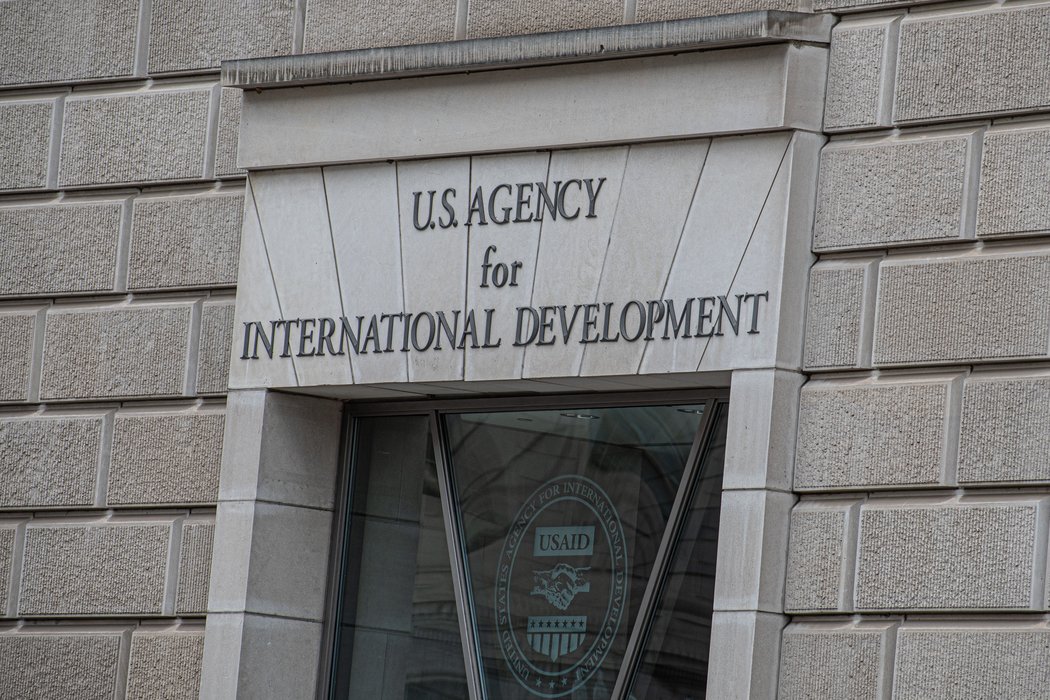
In February 2025, the Association of Journalists of Macedonia (AJM) and the Independent Trade Union of Journalists and Media Workers (SSNM) condemned what they described as a coordinated campaign to discredit independent and critical media in North Macedonia. The campaign, which intensified on social media, sought to delegitimise journalists exposing corruption and abuses of power by falsely claiming they had received USAID funding to undermine democracy. It also fuelled hate speech, including misogynistic attacks and threats against female journalists, creating a climate of fear that endangered free and professional journalism.
Investigative journalists Sashka Cvetkovska and Denica Chadikovska from the Investigative Reporting Lab were among those targeted in a coordinated hate campaign led by Dragan Pavlovikj Latas, manager of the Večer portal. Over several hours on 25th February 2025, Latas published a series of social media posts falsely accusing them of criminal activity linked to USAID funds and subversive actions, accompanied by their photographs to facilitate identification and intimidation. The posts incited widespread online hate, including misogynistic threats and calls for lynching and sexual violence against the journalists.