Introduction
Conservative Candidate Wins Polish Presidency, Raising Concerns Over Reform Prospects, Supreme Court Working on Complaints
In the first round of presidential elections held on 18th May 2025, centrist Civic Platform (PO) candidate Rafał Trzaskowski received 31.36% of the vote, just ahead of Law and Justice (PiS) candidate Karol Nawrocki, who secured 29.54%. However, on 1st June 2025, in the decisive second round run-off between the two leading candidates, Nawrocki narrowly defeated Trzaskowski by winning 50.89% of the vote.
As president, Nawrocki holds significant veto powers that could be used to block legislative initiatives from the pro-European government. Following the win, Prime Minister Donald Tusk called for a vote of confidence, which the pro-European coalition government won on 11th June 2025. Despite this, the government’s reform agenda is expected to face significant obstacles, as President Nawrocki is widely anticipated to veto legislation that contradicts the ideological stance of right-wing parties, for example on the right to abortion or on legally recognising same-sex partnerships.
On 23rd June 2025, it was reported that two judges were removed from Poland’s Supreme Court chamber tasked with validating the presidential election, after refusing to participate on grounds that the chamber is not independent. Their stance echoes a 2023 EU court ruling declaring the Chamber of Extraordinary Oversight and Public Affairs illegitimate due to political interference in judicial appointments under the former PiS government. Despite confirming some miscounted ballots, the Supreme Court says the number is too small to affect the result. However, over 50,000 election complaints have been filed, and key figures, including Justice Minister Adam Bodnar, warn that ongoing doubts over the chamber’s legitimacy could undermine public trust in the election outcome. The Court must rule on the election’s validity by 2nd July 2025.
Russian Consulate Closed After Agents Linked to Arson
On 12th May 2025, Polish Foreign Minister Radosław Sikorski announced the closure of a Russian consulate after the government reported that it had established Russian agents were responsible for the arson attack on Warsaw’s Marywilska 44 shopping centre in May 2024.
Prime Minister Donald Tusk confirmed that some of the suspects have been detained and that a search has been set up to locate their accomplices.
Polish officials regard the incident as part of Russia’s broader hybrid warfare strategy targeting countries supporting Ukraine. The Russian Foreign Ministry has condemned the closure of the consulate and warned that Poland can expect “an appropriate response.”
Last “LGBT-Free Zone” Abolished
On 20th April 2025, after six years in effect, Poland's last “LGBT-free zone” was abolished in the South-Eastern Polish town Łańcut. Under the previous populist conservative PiS government, in office from 2015 to 2023, about 100 local councils declared themselves as “LGBT-free zones” and banned “LGBT ideology”. Polish local authorities faced strong criticism and financial consequences after adopting anti-LGBTQI+ resolutions, which rights groups and the EU deemed discriminatory. Brussels froze billions in cohesion funds, and Polish courts later ruled the declarations unconstitutional. The Supreme Administrative Court affirmed in 2022 that the resolutions violated the dignity and rights of LGBTQI+ residents and stressed the state's duty to protect all citizens. Following these developments, most resolutions were repealed, Łańcut remaining as the last such zone.
Poland Suspends Asylum Rights at Eastern Border
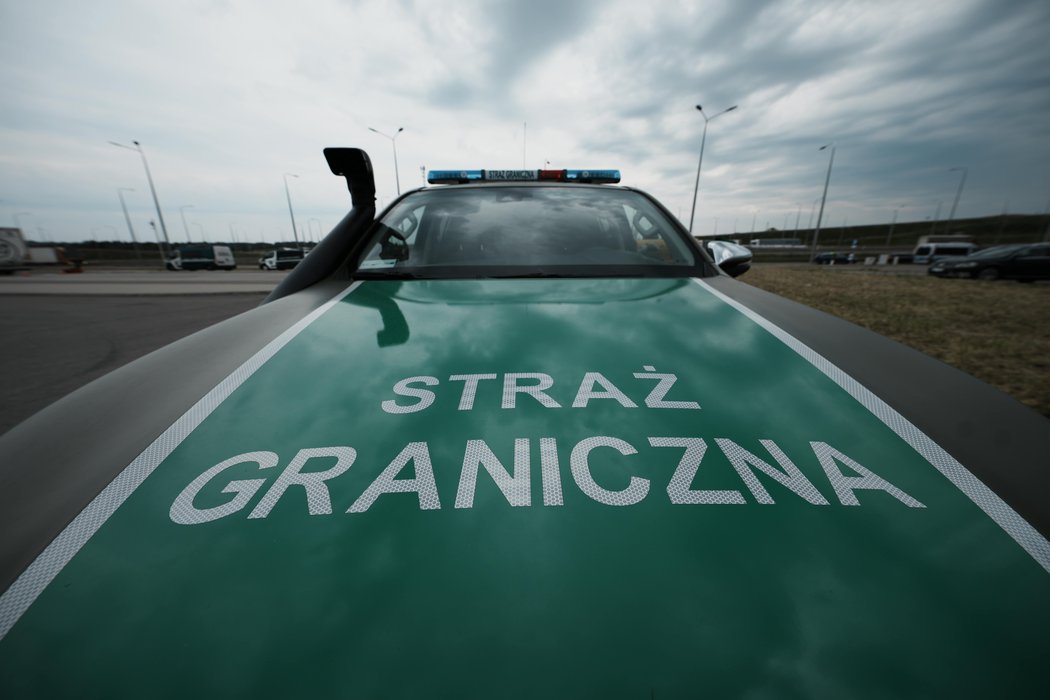
On 26th March 2025, Poland adopted a law temporarily suspending the right to apply for asylum at its eastern border, citing national security threats linked to migration flows from Belarus. The government claims the measure is a response to hybrid tactics by Russia and Belarus aimed at destabilising the EU.
The move has drawn criticism from human rights groups, among them the Polish Helsinki Foundation, Human Rights Watch and Amnesty International, who argue it violates international and European asylum obligations. In May 2025, the suspension was extended for another 60 days, with exemptions added for the most vulnerable groups, like children, pregnant women and people with pressing healthcare needs.
The European Commission is supposed to review the law to assess whether it complies with EU rules. In April, the European Commissioner for internal affairs and migration, Magnus Brunner, expressed support for Warsaw’s decision. Civil society organisations continue to raise concerns about the law’s implementation and its potential impact on fundamental rights.
Freedom of Assembly
Hundreds March in Solidarity With Imamoğlu
On 30th March 2025, hundreds of people marched in Warsaw waving Turkish and Polish flags to show their solidarity with Turkish protesters and to denounce the arrest of Istanbul mayor Ekrem Imamoğlu and the broader erosion of democratic freedoms in Turkey. İmamoğlu, widely seen as the strongest potential challenger to President Erdoğan in the 2028 presidential election, was arrested on charges of corruption and alleged ties to the outlawed Kurdistan Workers’ Party (PKK). Opposition and international observers consider his arrest an attempt to eliminate a key rival from the race.
Thousands Rally with PiS to Mark National Anniversaries
On 12th April 2025, thousands of people marched in Warsaw to celebrate the 1000th anniversary of the Kingdom of Poland and the 500th anniversary of another significant historical event, the Prussian Homage. The rally was marked by people dancing the Polonaise, a traditional Polish dance, historic costumes, Polish flags, the singing of the national anthem and the chanting of conservative slogans, and slogans supporting Karol Nawrocki, a conservative candidate who later won the presidential elections.
The march was organised by the Polish Heritage and Identity Association and strongly supported by the nationalist opposition party Law and Justice (PiS). Senior PiS figures, including party leader Jarosław Kaczyński and presidential candidate Nawrocki, addressed the crowd. The annual event has increasingly become a platform for expressing Eurosceptic sentiments and support for the nationalist right. This year, organisers estimated a participation of 100.000 people, while city authorities placed the figure closer to 20,000.
Thousands March in Support of Both Presidential Candidates
On 25th May 2025, tens of thousands of people took to the streets of Warsaw to attend two simultaneous marches organised by the two finalists in Poland’s presidential elections, Rafal Trzaskowski, representing the centrist ruling party, and Karol Nawrocki, representing the conservative opposition. The opposing marches were held simultaneously in different parts of the city. The second round of presidential elections took place on 1st June 2025.
Anti-Immigration Demonstrations Escalate
On 10th May 2025, just days before the first round of presidential elections, thousands took to the streets of Warsaw to protest against immigration. The march was organised by Robert Bąkiewicz, a former PiS parliamentary candidate. Protesters carried banners reading “No to migrants from Germany,” “Stop the invasion,” and “I want to feel safe in my own country,” accusing the current centre-right government of prioritising German interests and enabling migration.
Earlier, on 8th and 24th March 2025, a demonstration took place at the Polish-German border to protest Germany’s deportation of asylum seekers to Poland under the Dublin Regulation. While few attended the first protest, the second drew hundreds. During the 24th March event, some protesters held banners such as “Germany, don’t leave your guests on our doorstep”, “Stop relocations”, “Christian Poland, not Muslim”, and “Down with the European Union.” Clashes erupted between demonstrators and a small group displaying extremist symbols, including the Celtic cross and “white front” slogans. Bąkiewicz later distanced himself from this group on social media, alleging their presence was a provocation orchestrated by Germany.
Steelworkers Demonstrate Against EU Green Deal
On 21st May 2025, Polish steelworkers demonstrated in Warsaw to oppose EU climate policies, which they argue threaten the viability of the domestic steel industry. Protesters criticised both the EU and the Polish government, demanded a halt to mass layoffs, and a capped electricity price of 60 EUR per megawatt-hour for energy-intensive industries. They are also calling for a revision of the Green Deal to protect the European market from the influx of steel products from non-EU countries that are not restricted by EU rules and tariffs.
Medical Workers Demand Safety Measures
On 10th May 2025, hundreds of medical professionals demonstrated in Warsaw demanding stronger legal protections for healthcare staff. The protest was called in remembrance of Tomasz Solecki, an orthopedist who was murdered by an unhappy patient in Krakow on 29th April. After his death, a series of violent attacks on medical staff by patients have been reported nationwide.
Consequently, medical workers now demand the improvement of access controls at medical facilities and the prosecution of aggression against medical staff.
Freedom of Expression
Slawa Journalists Harassed
On 9th May 2025, Nataliya Volosatska, a journalist from the Polish state-funded Ukrainian-language broadcaster Slawa TV, was harassed by anti-Ukrainian activists when she was reporting on a protest against Russian Victory Day commemorations in Warsaw.
During her live reporting, Volosatska and her crew were surrounded by several dozen anti-Ukrainian demonstrators. The group obstructed her reporting, shouted anti-Ukrainian and pro-Russian slogans, and pushed the camera operator.
The situation escalated when a Ukrainian protester was struck on the head with a stick. Police detained one suspect at the scene, but he was reportedly released shortly afterwards. Human rights observers have raised concerns about the growing hostility toward Ukrainian voices in Poland and the safety of minority-language journalists operating in politically charged environments.
Ban on Photographing Critical Infrastructure
On 17th April 2025, a new law came into force prohibiting the photographing and filming of Polish military facilities and critical infrastructure without authorisation. The legislation introduces a permit system and mandates the installation of ‘no photography’ signage at approximately 25,000 sites across the country. The ban applies to all forms of photography, including drone and airborne imagery.
Violations of the law may result in fines, imprisonment, and equipment confiscation. The government has justified the measure on national security grounds, citing increased foreign intelligence activity targeting Poland’s defence infrastructure.
However, critics, including civil liberties organisations and media watchdogs, have questioned the law’s practical enforceability in the age of satellite surveillance and widespread drone use. Concerns have also been raised about potential overreach, with the risk that ordinary citizens and journalists could face heightened surveillance or criminalisation under vague definitions.
Freedom of Association
Commission Will Investigate Attacks on Civil Society Under PiS
In April 2025, Poland’s justice and interior ministers announced the “establishment of a commission that will look into cases of abuse of power against civil society under the former Law and Justice (PiS) government.” The ministers said that the body will collect documentation on attacks on freedom of expression, assembly, and association.
Justice Minister Adam Bodnar and Interior Minister Tomasz Siemoniak confirmed the commission will develop recommendations to protect civil society and explore compensation mechanisms for victims. Sylwia Gregorczyk-Abram, a prominent human rights lawyer and chair of the 11-member commission, described the PiS-era crackdown as a “systemic attack” intended to intimidate and silence dissent.
Proposed Reform Threatens Civil Society’s Access to Administrative Courts
On 17th June 2025, Citizens Network Watchdog Poland and the Helsinki Foundation for Human Rights (HFHR) jointly criticised a proposed amendment to Poland’s Code of Administrative Court Procedure, warning it would significantly limit civil society’s ability to participate in judicial review processes.
The draft law sought to restrict the right of NGOs to file cassation appeals to the Supreme Administrative Court, citing alleged abuse of this legal tool. Both organisations rejected the justification, noting that NGO-filed cassation appeals make up only 1.3% of total complaints, a proportion far too small to warrant such a drastic limitation. They also condemned the non-transparent legislative process, led by a so-called “deregulation” team operating outside the usual public administration channels. HFHR lawyer Marcin Wolny stressed that the proposal undermines the fair trial guarantees enshrined in both the Polish Constitution and the European Convention on Human Rights.
On 20th June 2025, the Ministry of Justice announced that it would withdraw the proposed changes to the appeals system and consult with civil society stakeholders on future deregulation efforts.
Volunteer Prosecuted for Assisting Asylum Seeker at Border
On 30th July 2025, the District Court in Białystok will hear the case of Bartosz, a volunteer charged with “influencing public officials” after attempting to assist a Somali asylum seeker at the Polish-Belarusian border. The individual had declared their intent to seek protection and authorised Bartosz as their legal representative. Despite this, the asylum seeker was expelled without due process, and Bartosz was forcibly removed from the Border Guard facility.
Prosecutors allege Bartosz used verbal threats that are punishable by law, though he describes his statements as a reaction to an unlawful pushback. Human rights organisations, including the Helsinki Foundation for Human Rights, warn the case reflects broader efforts to criminalise humanitarian aid and obstruct access to legal representation for refugees at the border.