This update covers developments relating to the freedoms of expression, association, and peaceful assembly in Canada from April 2025 to June 2025.
General
Federal elections amidst acceleration of online disinformation
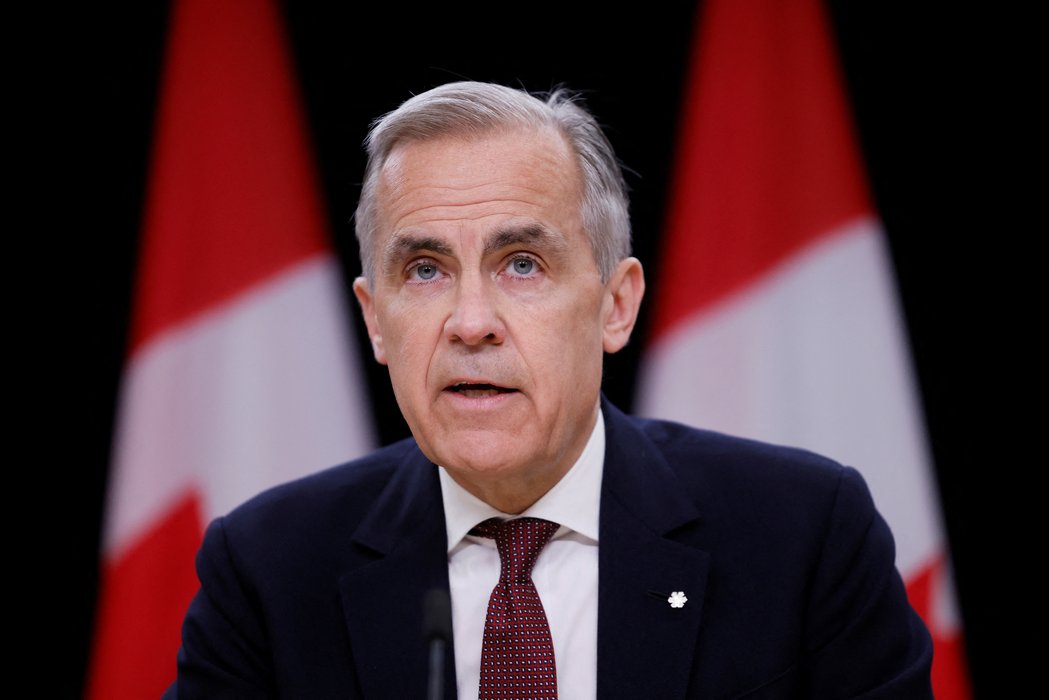
On 28th April 2025, Prime Minister Mark Carney’s Liberal Party won the federal election, beating Pierre Poilievre’s main opposition Conservative Party. U.S. politics and, in particular, President Donald Trump’s tariff threats, had a profound effect on the election. The Liberals won 169 seats but needed 172 for a majority. The Conservatives remain in opposition with 144 seats. Women’s representation in the Canadian Parliament reflects a certain stability, but not progress toward parity.
It was the first national vote in which Canadian news were not permitted to be shared on products owned by Meta, including Facebook and Instagram. The ban is a result of a standoff with tech-giant Meta due to the Online News Act adopted in 2023 that required digital news intermediaries such as Meta to compensate journalism outlets for sharing their content.
Despite this ban, more than half of Canadians still say they get political news from Facebook, and media researchers found that more than a quarter of Canadians have been exposed to fake political content. According to the Media Ecosystem Observatory and the Digital Forensic Research Lab, since the beginning of the 2025 Canadian election campaign, a large number of Facebook ads have been found impersonating legitimate news sources while promoting fraudulent investment schemes. According to researchers, the scale and political nature of these ads have intensified and appear even more problematic in the context of an election campaign.
Despite having run a campaign insisting that “Canada is a nation of values. We champion human rights, democracy, and the rule of law”, civil society organisations observed that since April, the government has pushed forward legislative packages restricting rights (see below).
Civil society organisations demand public consultation on the notwithstanding clause
The notwithstanding clause is the common name for section 33 of the Canadian Charter of Rights and Freedoms. Governments can invoke this clause when they want to pass legislation that violates rights and freedoms protected by several sections of the Charter, such as freedom of expression, freedom of peaceful assembly or freedom of association, and it prevents courts from striking down laws despite serious Charter violations.
For decades, governments refrained from using it and the federal Government has never resorted to it. In recent years however, governments are using the clause more and more to intentionally pass laws that they know violate Charter rights.
On 14th April 2025, Conservatives’ leader Pierre Poilievre promised to use the notwithstanding clause to impose consecutive life sentences on multiple murderers. In 2022, the Supreme Court of Canada ruled that imposing consecutive life sentences violates a person’s Charter rights.
Over 50 civil society organisations and law professors signed a joint letter to discourage the use of the clause and to call on federal leaders to commit to a national conversation on the notwithstanding clause within six months of forming a new government.
When government restricts rights and freedoms in a free and democratic society, it has an obligation to justify the restriction on a standard that demonstrates a respect for the very rights in issue. The notwithstanding clause is being used to deprive aggrieved citizens of the ability to require any such justification from their governments.
- Peter L. Biro, Founder and President of Charity Section 1.
Association
New Ontario omnibus legislation tramples Indigenous groups’ rights
On 17th April 2025, Ontario Premier Doug Ford and Minister Stephen Lecce introduced Bill 5, Protect Ontario by Unleashing our Economy Act, 2025, an omnibus legislation intended to reduce regulatory processes across major infrastructure, mining, and resource projects.
The legislation impacts several other Acts, such as the Ontario Heritage Act and the Environmental Protection Act. Concretely, it empowers the government to designate special economic zones and exempt companies or projects from having to comply with any provincial law, provincial regulation or municipal bylaw in these zones. The bill does not contain criteria for deciding which locations would be eligible to be a special economic zone.
First Nations strongly opposed the legislation, explaining that it infringes their rights. They expressed particular concern for the Ring of Fire, a region in Northern Ontario rich with critical minerals such as chromite, copper and titanium. Amnesty International Canada urged the Government to halt the bill and engage in transparent, inclusive consultations with Indigenous Peoples and civil society before tabling new development legislation.
The Canadian Civil Liberties Association called on Ontario’s legislature to reject Schedule 9 of Bill 5 as key terms empowering the executive branch are not sufficiently defined and enable it to unilaterally do away with legal safeguards. Environmental groups Ecojustice Canada, Environmental Defence and the Wildlife Conservation Society Canada also denounced the risks of the bill, as permits could be delivered even if the project causes severe decline or extinction of a species.
Bill 5 is a direct attack on our Nations, our people, our Treaties, and our future generations. Ontario is claiming they are fast-tracking this legislation and eliminating red tape to respond to tariffs and global economic instability. However, it is clear their goal is to fast-track development in our territories and eliminating red tape really means eliminating our rights. Our Treaty is not red tape. Our rights are not red tape. The rights of our children to a prosperous future are not red tape.
- Grand Chief Alvin Fiddle.
The law was passed on 4th June 2025 after being fast-tracked and disregarding the free, prior and informed consent required by the United Nations Declaration on the Rights of Indigenous Peoples (UNDRIP). Moreover, the attempt to amend the bill to explicitly include duty to consult provisions failed.
Premier Doug Ford has said the Ring of Fire region would be the first such zone. Ontario is insisting it will consult with First Nations. Energy and Mining Minister Stephen Lecce said that the law’s preamble would be clarified to reinforce the province’s duty to consult with Indigenous people. After the law was passed, First Nations denounced that they would rather have been consulted before rather than after the law was passed.
On 18th June 2025, Premier Doug Ford, during remarks aimed at defending the bill, claimed that First Nations “can’t just keep coming hat in hand all the time to the government.” He later apologised for these harmful remarks. Amnesty International Canada stated: “Though Premier Ford has since apologised, his words cannot be brushed aside as a mere misstep. They revealed a worldview in which Indigenous Peoples are seen as obstacles to economic development, rather than as sovereign Nations with constitutionally and internationally protected rights. An apology does not erase that harm. And it will not undo the impact of Bill 5, which, not unlike the federal government’s recently passed Building Canada Act, poses a direct threat to the rights of First Nations across Ontario.”
The right of Indigenous Peoples to make decisions on projects affecting their lands and waters is not optional. The right to free, prior and informed consent is protected under Canadian and international human rights law.https://t.co/7lgrqGWCgM
— AmnestyCanada (@AmnestyNow) July 30, 2025
Indigenous communities oppose fast-tracked federal project-building legislation
In June 2025, the Parliament of Canada adopted Bill C-5, also known as the Free Trade and Labour Mobility in Canada Act and the Building Canada Act, introducing sweeping changes to
infrastructure and interprovincial trade. The legislation removes federal barriers to the movement of goods and services and grants the government broad powers to fast-track infrastructure and energy projects.
The second part of the bill, called the Building Canada Act, met opposition from Indigenous organisations, who accused the government of not giving them enough time to review the bill and of “bulldozing” their rights. The bill grants the government broad powers and it could override protests from Indigenous communities regarding approvals for infrastructure and energy projects. Environmental and civil society organisations also condemned the Act as eroding democratic principles and endangering the environment.
Similar to Ontario’s Bill 5 (see above), the bill underscores the tension between the authorities’ push for rapid infrastructure development and the obligation to consult communities that have been historically marginalised, both socially and economically.
Bill C-5 grants sweeping powers to Cabinet, ignores democratic principles of public participation, risks severe environmental harms, and tramples on the rights of Indigenous Peoples. This hastily drafted and poorly reviewed piece of legislation risks locking Canada into path dependency on unsustainable extractive industries rather than urging Canada forward into the energy transition. Bill C-5 is the federal government’s attempt to define nation-building projects, but entirely elides the question of who this nation is being built for and at what cost.
- Isabel McMurray, National Policy Analyst, Climate Action Network Canada.
British Columbia’s infrastructure bill follows same pattern: no prior consultation with Indigenous Peoples
On 1st May 2025, the British Columbia government tabled Bill 15, also known as the Infrastructure Projects Act. Despite considerable pushback from civil society, Indigenous leaders and opposition parties, it was adopted on 29th May 2025. The Infrastructure Projects Act grants the provincial government broad powers to expedite major infrastructure projects if it deems them of provincial significance. The process leading to the drafting of the legislation has been rushed and did not include meaningful consultation with local municipalities and Indigenous representatives, although it impacts Indigenous lands.
Pride Toronto loses more corporate sponsorship due to purge of DEI programmes in the USA
Pride Toronto, one of the largest celebrations of LGBTQI+ people in North America, lost major sponsors who have pulled funding after Donald Trump’s purge of diversity, equity and inclusion (DEI) programmes in the USA.
In February 2025, Pride Toronto announced the loss of three major sponsors: Nissan, Adidas and Clorox. According to the Pride’s executive director, Kojo Modeste, these corporate withdrawals are connected to the backlash against diversity, equity and inclusion efforts in the United States under President Donald Trump's administration. By the end of May 2025, Google and Home Depot also withdrew their support, posing operational challenges for the organisers and leaving them concerned about the future of the event.
Premier Doug Ford criticised for comments undermining judicial independence and rule of law
On 30th April 2025, during an event in Mississauga, Ontario Premier Doug Ford spoke negatively about judges and their work, denouncing them as being too soft on crime, mocking judicial independence and complaining about “judges constantly overruling government”.
The comments were made following a temporary injunction granted in April 2025, preventing the provincial government from removing the bike lanes in Toronto until a judge can decide whether the plan to remove them is unconstitutional. Premier Ford floated the idea of electing judges and later pledged additional changes to the judicial-appointments process for lower-court judges.
The remarks prompted a response from several top judges, who signed a joint statement defending judicial independence. The Canadian Civil Liberties Association called Ford’s comments “deeply alarming” and Lawyers’ Rights Watch Canada also urged the Premier to respect the independence of the judiciary and to promote confidence in the rule of law.
Professors seek to restrain UBC from acknowledging that it is on unceded Indigenous land or to issue statements on Israel or Palestine
On 7th April 2025, a group of professors and a graduate student from the University of British Columbia filed a petition before the British Supreme Court demanding that the University be prohibited from engaging in "political activity," which they claim limits academic freedom and violates legislation requiring it to be non-political.
In particular, they allege that acknowledging unceded Indigenous territories during events, promoting DEI values, or faculty members denouncing state violence are political actions prohibited by the University Act which requires that “[a] university must be non-sectarian and non-political in principle”.
According to the petitioners, the university has taken political stands on the Israel-Gaza conflict through some of the resolutions it passed condemning Israel’s actions and thus put pressure to conform to these statements. Regarding land acknowledgments, the professors complain that referring to the unceded territory on which the University is located inhibits “free inquiry, discussion, lecture and debate of the scope of Indigenous political rights in Canada”.
In a commentary published by the British Columbia Civil Liberties Association, the proposed interpretation is ‘self-defeating’ as acknowledging unceded land is no more political than refusing to do so.
Academic freedom includes the rights of university groups to speak out about important social issues including Indigenous Peoples’ inherent rights, issues of power and oppression, and genocide. Civil liberties include the rights of diverse voices to be heard and protected through promoting diversity, equity, and inclusion values.
- British Columbia Civil Liberties Association.
Canada-India relations tested as new report links Indian agents to transnational repression
On 14th July 2025, the Canadian Security Intelligence Service issued its annual report on the security threats faced by Canada in 2024. It found that India, China, Russia, Iran and Pakistan were perpetrators of foreign interference activities.
Regarding India, it found that the police investigations into the 2023 killing of Canadian citizen Hardeep Singh Nijjar “pointed to a link between agents of the Government of India and criminal networks to sow violent activity in South Asian communities in Canada”. According to the report, “Indian officials, including their Canada-based proxy agents, engage in a range of activities that seek to influence Canadian communities and politicians. When these activities are deceptive, clandestine or threatening, they are deemed to be foreign interference”.
Against the objections of Sikh organisations and human rights activists, Prime Minister Mark Carney shook hands with Narendra Modi at the G7 summit in July 2025 and pledged to restore diplomatic relations after a bitter diplomatic row unleashed by the murder of Hardeep Singh Nijjar. The Canadian Prime Minister Carney declined to tell reporters whether he raised the killing of Nijjar during the encounter, and India was not mentioned in the joint statement at the conclusion of the G7 summit regarding transnational repression.
Protesters opposed this meeting between the two leaders during two days in Calgary, the closest city to where the summit took place.
G7 Statement on critical minerals does not mention environmental defenders
During the June 2025 G7 summit held in Kananaskis, leaders of the Group of 7 agreed to deepen cooperation in several areas, including critical minerals supply chains. The newly launched G7 Critical Minerals Action Plan seeks to anticipate potential shortages and refers briefly to “sustainable mining practices” and “collaboration” with “Indigenous Peoples, local communities, unions, and civil society.” However, it omits any mention of environmental defenders, who remain among those most at risk globally.
Ahead of this summit, a group representing civil society interests and developing recommendations for the G7 meetings had specifically called on the G7 to “adopt and enforce mandatory human rights and environmental due diligence legislation, while protecting human rights defenders”. Another engagement group, the Women 7, had also demanded bold leadership on gender equality and a firm stance against the criminalisation of dissent and the shrinking space for civil society. The official G7 statements do not highlight these principles.
Heiltsuk Nation adopts new constitution to reclaim self-rule
On 21st February 2025, following long consultations and extensive engagement, the Heiltsuk Nation (also known as Haíɫzaqv) held a referendum and voted in favour of a written constitution.
On 30th May 2025, it was ratified during a ceremony in Bella Bella. The nation’s elected chief, Marilyn Slett, explained that adopting a written constitution was an act of reclaiming the Nation’s role in its own governance and a pathway to move beyond the Indian Act.
Significant to the document is a declaration on women’s rights, affirming that Haíɫzaqv women “have the right to a community that is vocal, aware, and supportive, with the resources in place to support us and uplift us. This is a principle of justice”.
This new constitution does not receive formal legal recognition under Canadian or provincial law but it functions as a governance tool and expresses the Nation’s wish to exercise jurisdiction over matters such as land, language, leadership, dispute resolution, and social development. The Haíɫzaqv people live in the Central Coast of British Columbia.
🌿 Heiltsuk Nation makes history with a self-governed constitution rooted in ancestral law and Indigenous sovereignty!
— Indigenous Peoples’ Rights International - IPRI (@IPRightsIntl) June 17, 2025
Read more in The Guardian: https://t.co/92B2BH6ZxM
Photo Credit: Leyland Cecco/The Guardian pic.twitter.com/6vOTS8uw4J
Peaceful Assembly
Arrests during protest against weapons trade show
On 28th May 2025, hundreds of people protested in Ottawa during the defence and security trade show (CANSEC) against complicity in the ongoing genocide in Gaza and denounced that some of the companies reportedly supplying equipment to the Israeli military were present at CANSEC. Among the protesters were members of the organisation World Beyond War Canada, the Immigrant Workers Centre, the International Migrants Alliance - Canada Chapter, the Palestinian Youth Movement, and other grassroots and anti-war organisations.
According to the Ottawa Police Service, twelve people were arrested outside the EY Centre for assaulting police and mischief. Then, a small protest took place at the Ottawa Police Station on Elgin Street to demand the release of the arrested protesters. One more person was arrested there.
An independent media organisation, The North Star, said that one of its volunteer journalists, Ramona Murphy, was one of the 13 people arrested (see expression).
“Bubble Zones” restrict protest in Toronto
On 21st and 22nd May 2025, the Toronto City Council approved the Bylaw Amendment to Provide Access to Social Infrastructure (Bylaw 488-2025), which limits protests outside of social infrastructures such as places of worship, schools, and child care centres. It allows owners of places of worship, schools, and child care centres to apply for the City to enforce a one-year, 50-metre access area to prohibit specific activities tied to protests outside their property if they “reasonably believe” a demonstration may occur where people “perform or attempt to perform an act of discouragement” to prevent others from entering the building. Violators could face fines of up to $5,000 under the Provincial Offences Act (article 61).
Many civil society organisations had voiced their concerns about the bylaws, underlining its unreasonable infringement on fundamental freedoms and its non-necessity as the police already have broad powers to protect access to property and to intervene in the event of a threat. 63 per cent of written submissions sent during the public consultation on the proposed bylaw expressed concerns for the bylaw and 22 per cent expressed support. The key themes among the submissions expressing concerns were: the risk and danger of infringing rights; the lack of clear definitions in the bylaw, resulting in an overarching proposal which could prevent demonstrations from happening in many public spaces; and the risk of over-policing.
On 16th May 2025, the Canadian Civil Liberties Association and the Centre for Free Expression sent a letter to Toronto City Councillors urging them to vote against the proposed bubble zone bylaw as it represents a significant risk to peaceful expression and assembly. The British Columbia Civil Liberties Association expressed concern that the bylaw arose in the context of frequent Palestine solidarity and anti-genocide protest activity in Toronto.
“Public demonstrations are not a nuisance – they are a lifeline for marginalised and equity-seeking communities in our city”, said signatories of an open letter from community legal clinics and legal organisations in the City of Toronto.
Vaughan was the first municipality in Ontario to adopt such bylaws. Vaughan’s Protecting Vulnerable Social Infrastructure Bylaw adopted in June 2024 prohibits “nuisance demonstrations” within 100 metres of the property line of any vulnerable social infrastructure. In June 2025, the Canadian Civil Liberties Association launched a constitutional challenge against Vaughan's bubble zone protest bylaw, demanding that it be quashed.
Quebec adopts law restricting the right to strike
As explained in the previous Monitor update, the Quebec government sought, through the introduction of Bill 89 in February 2025, to amend the Labour Code by expanding restrictions on strikes and lockouts.
Bill 89, called “An Act to give greater consideration to the needs of the population in the event of a strike or a lock-out”, was adopted on 29th May 2025 despite strong opposition. The Minister of Labour is now entitled to end a strike or lockout or force the maintenance of certain services. In certain cases, arbitrators can now determine the content of a collective agreement in order to end a labour dispute.
Unions immediately reacted, denouncing the “damage that this new legislation will cause” and the law will probably be challenged in court.
On 21st May 2025, hundreds of workers demonstrated in front of the National Assembly to denounce the serious consequences that Bill 89 will have on workers in Quebec.
Indigenous Peoples protest legislation undermining treaty rights
First Nations in several provinces have held a wave of protests, demanding respect for treaty rights and opposing new legislation threatening their sovereignty. On 13th June 2023, as world leaders prepared for the G7 summit in Alberta, Indigenous communities in three provinces rallied to denounce laws that disregard long-standing treaty obligations. Four days later, the Chiefs of Ontario led a protest on Parliament Hill in Ottawa against the federal government’s Bill C-5 (see above).
PBI-Canada observes a Chiefs of Ontario rally on Parliament Hill in Ottawa where the Canadian government's Bill C-5 was described as "economic terrorism". More about the threat of Bill C-5 and extractive megaprojects to Indigenous rights at https://t.co/CYH9q6kqrh #PBIaccompanies pic.twitter.com/iYk2YkDWXO
— Peace Brigades International - Canada (@PBIcanada) June 18, 2025
At the same time, Ontario’s Bill 5 sparked a series of demonstrations. Rallies took place before and during the vote, including one on 2nd June in Toronto. After the bill passed, protesters set up around ten tents in Queen’s Park and camped overnight. Further protests followed - a youth-led march in Timmins on 6th June and a 100-person rally in Hamilton on 11th June outside a Progressive Conservative MPP’s office, calling for repeal.
The protests reflect rising Indigenous resistance against fast-tracked resource extraction, curbing Indigenous People’s rights.
Pro-Palestinian protest
On 12th April 2025, 30,000 people rallied in Ottawa as part of the National March For Palestine organised by several pro-Palestinian advocacy groups. Protesters demanded an end to the Israel-Palestine conflict and an arms embargo on Israel.
This protest took place after the release of a report by a peace research institute finding that, despite Canada’s commitment to stop arms from reaching Israel, a new permit for ammunition from the Quebec-based company General Dynamics (GD-OTS-Canada) to the U.S. had been approved. This permit allows the provision of artillery propellants to the U.S. Department of Defence that will be supplied to Israel.
Following a Ploughshares report on a Government of Canada agency facilitating a deal to provide General Dynamics-manufactured artillery propellant to Israel, 30,000 people mobilized in Ottawa this past Saturday to demand an #ArmsEmbargoNow: https://t.co/iwz5UFelAD #ShutDownCANSEC pic.twitter.com/yvc8aTEGV8
— Peace Brigades International - Canada (@PBIcanada) April 14, 2025
Car ramming during Filipino heritage celebration in Vancouver and vigil in the capital
On 26th April 2025, during the Lapu Lapu Day festival, a celebration of the resistance against colonial forces in the Philippines, a man drove a SUV into the crowd and killed 11 people. The man was arrested on the spot and was later charged with second-degree murder.
Lapu-Lapu Day is officially recognised by the government of British Columbia since 2023, acknowledging the cultural contributions of the Filipino-Canadian community to the province. In the following days, vigils were held for the victims in Vancouver and on Parliament Hill in Ottawa.
Red dress day demonstration
On 5th May 2025, the National Day of awareness and remembrance for the Missing & Murdered Indigenous Women, Girls and 2SLGBTQI+ people (MMIWG2S), also known as Red Dress Day, people gathered in various places throughout Canada. It is a day of remembrance and action dedicated to honouring the lives of missing and murdered Indigenous women, girls, and two-spirit people and it is also a call for justice and the end of gender-based violence.
On Red Dress Day this week we gathered to honour the thousands of Missing and Murdered Indigenous Women, Girls, and Two-Spirit People (MMIWG2S+), whose lives were stolen through violence—and who deserve justice, answers, and healing.
— AmnestyCanada (@AmnestyNow) May 7, 2025
🔗 https://t.co/YyGWTjt1tc pic.twitter.com/cOkT0L6br0
Expression
Journalist detained during protest
During the 28th May 2025 protest in front of the defence and security trade show (CANSEC) against complicity in the ongoing genocide in Gaza, twelve people were arrested, including a journalist (see peaceful assembly).
An independent media organisation, The North Star, said that one of its volunteer journalists, Ramona Murphy, was one of the 13 people arrested. She was released after eight hours in custody and was not charged. The Ottawa Police Service could not confirm whether an exclusion zone was set up for media during this protest.
Paramedic fired over social media comments on Israel
On 20th June 2025, Katherine Grzejszczak, a paramedic in the region of York and member of the Ontario Board of the Canadian Union of Public Employees (CUPE), was terminated from her role over online comments about Israel and Iran she made on social media. In her posts, she criticised Israel and thanked her union for asking members to join demonstrations.
The executive board of the Canadian Union of Public Employees (CUPE) Ontario unanimously condemned the firing of the paramedic and called for her full reinstatement. The board underlined that this discriminatory treatment was “an affront to every worker who believes in the right to speak out for peace and justice, or on any matter of conscience”.
"She’s being punished for using her voice to oppose the mass harm of others": CUPE Ontario leaders call for reinstatement of York paramedic fired over online comments on Israel, Iran https://t.co/0Zaaj8QRVs via @torontostar
— CUPE Ontario (@CUPEOntario) June 28, 2025
Bill 94: Proposal to extend ban on religious symbols in Quebec schools
On 20th March 2025, Québec Education Minister Bernard Drainville presented legislation to the Quebec National Assembly titled “Bill 94 – An Act to reinforce laicity in the education network”. The Bill 94 proposes to extend the ban on wearing religious symbols to all public school staff having contact with students (such as therapists, cafeteria workers, library volunteers, janitors, coaches, etc.) and to prohibit students from having their faces covered. It was introduced following breaches of the existing legislation observed in some Quebec schools.
Many voices raised their opposition to the bill: The Canadian Civil Liberties Association denounced that this bill exacerbates existing harmful civil liberties violations, that it forces people to choose between their faith and pursuing their careers and that it disproportionately and discriminatorily impacts women and minority communities.
According to a research group on inclusion and ethnocultural diversity in education, the law is unnecessary and unjustified. The Ligue des Droits et Libertés requested the bill’s withdrawal as it is contrary to open and inclusive secularism and it violates international human rights law standards.
During the consultations and hearings in April 2025, trade unions expressed concern over the restrictions on workers. Secularism is a topic that often divides, and some organisations want the legislation to go further, such as the group Pour les droits des femmes au Québec (PDF Québec) that calls for a complete ban on the wearing of religious symbols, in all schools and daycare centres and by pupils too. The bill is still being examined in commission.
Criticised cybersecurity bill revived in new Parliament, raising the same concerns
On 18th June 2025, Bill C-8, an Act respecting cyber security, amending the Telecommunications Act and making consequential amendments to other Acts was introduced in the House of Commons. The bill would amend the Telecommunications Act to give federal authorities broader powers over telecom service providers.
Federally regulated sectors critical to Canada’s infrastructure, including telecommunications, financial services, energy or transportation and clearing systems will have to develop cybersecurity programmes, report cyber incidents and follow cybersecurity directions from ministers.
In 2022, a very similar bill had been introduced and severely criticised for lacking privacy protections and for relying heavily on secrecy. It was ultimately abandoned when then–Prime Minister Justin Trudeau prorogued Parliament. Bill C-8 is almost identical to Bill C-26 and mirrors many of the same fundamental issues that had been decried, such as giving government authority to compel telecom providers to weaken encryption or install surveillance capabilities or that orders can remain secret indefinitely.
Canadians deserve to have their cybersecurity defended by our government, but also from our government. A full set of checks and balances must be introduced in Bill C-26 before it is passed to keep it from handing a blank cheque to government spy agencies that could justify considerable abuse of our rights and privacy.
- Matthew Hatfield, Campaigns Director at OpenMedia.
Proposed border-security bill criticised for expanding surveillance and restricting asylum claims
On 3rd June 2025, Public Safety Minister Gary Anandasangaree introduced Bill C-2, also called the “Strong Borders Act” in the House of Commons. The announced aim of the bill is to equip law enforcement to keep the borders secure, combat transnational organised crime and fentanyl and crack down on money laundering. This omnibus legislation would change asylum claim processing and introduce new ineligibility rules for asylum claimants but also introduce new federal agency and law enforcement powers.
The Bill C-2 also contains references to the potential for “agreement[s] or arrangement[s]” with a foreign state, and the possibility that persons in Canada may become compelled by the laws of a foreign state to disclose information. This raised concerns about the possible extent of data-sharing with U.S. law enforcement authorities and broader constitutional and human rights implications.
For example, the Canadian Security Intelligence Service is governed by the Security of Canada Information Disclosure Act, which imposes obligations and controls on federal institutions releasing information related to national security. The Security of Canada Information Disclosure Act specifically includes an exception to protect advocacy, protest, dissent or artistic expression. According to Tim McSorley, national co-ordinator of the International Civil Liberties Monitoring Group, the bill “seems to circumvent protections” and there is no similar exception in the proposed legislation.
On 18th June 2025, over 300 civil society organisations demanded the complete withdrawal of Bill C-2, as it entered into second reading. According to these civil society organisations, this bill would allow mass surveillance by police and the Security Intelligence Service without warrants. For law enforcement with warrant, the online personal data, unencrypted emails, and browsing history could be asked from any company based only on “reasonable suspicion”. They also underlined the inadequate legal recourse to challenge these secret surveillance orders.
The International Civil Liberties Monitoring Group urged the Government to revisit and restrict information-sharing agreements with the U.S. and other foreign national security agencies and to stop the negotiations on the Canada-U.S. CLOUD Act agreement. This bilateral agreement would allow U.S. law enforcement to issue warrantless data requests directly to tech companies without oversight from Canadian courts.
According to Amnesty International Canada, this bill would make it virtually impossible for most people entering Canada via the U.S. to have their refugee claim reviewed by the Immigration and Refugee Board and would block people who have been in Canada for more than a year from seeking refugee status. An open letter initiated by the Ontario Council of Agencies Serving Immigrants and endorsed by 71 refugee and settlement organisations, details how the bill puts refugee claimants, immigrants and migrants at risk.
#Canada 🇨🇦 @EFF warns that Bill C-2 would expose Canadians to sweeping U.S. surveillance, undermining privacy rights and setting a dangerous precedent.https://t.co/k93YhmOG83 pic.twitter.com/vLDuCIgKDc
— IFEX (@IFEX) August 2, 2025
Alberta province to determine age-appropriate school library materials, risk of harming LGBTQI+ children
On 26th May 2025, the Minister of Education of Alberta announced that it was launching a survey on the creation of “consistent standards to ensure the age-appropriateness of materials available to students in school libraries”. According to experts, this decision has been spurred by two social conservative activist groups active in Alberta: Parents for Choice in Education and Action4Canada. According to the online news magazine The Tyee, Parents for Choice in Education has previously taken issue with sexual orientation and gender identity education in schools.
The board chairs for the Calgary Board of Education and the Edmonton Public Schools expressed their surprise and their concern at the announcement. The Ministry had not raised any concern with them, and they already have rigorous processes to ensure that library resources are age-appropriate, which are established and followed.
A news release from the province presented excerpts from four graphic novels: “Gender Queer” by Maia Kobabe; “Fun Home” by Alison Bechdel; “Blankets” by Craig Thompson; and “Flamer” by Mike Curato. The President of the Alberta Teachers Association (ATA) noted that this announcement “specifically singled out 2SLGBTQIA+ materials”.
The survey lasted until 6th June 2025. It asked respondents multiple questions on “sexually explicit content” in school libraries, though no definition was given as to what that included. The province interpreted the survey results as showing “strong support” for a school library policy, and a ministerial order will be prepared.
Others disagreed, finding on the contrary that the survey showed little support for provincial standards on this matter. The Centre for Free Expression requested that the education and library communities be included in any discussion before new rules are imposed in Alberta schools.
According to the UNDP Handbook on Advancing the Human Rights and Inclusion of LGBTI People, the right to education includes the right to receive comprehensive, accurate and age-appropriate information regarding sexuality, to ensure young people can lead healthy lives. It specifically adds that states should not use child protection arguments to block access to information on LGBTI issues, or to provide negatively biased information.