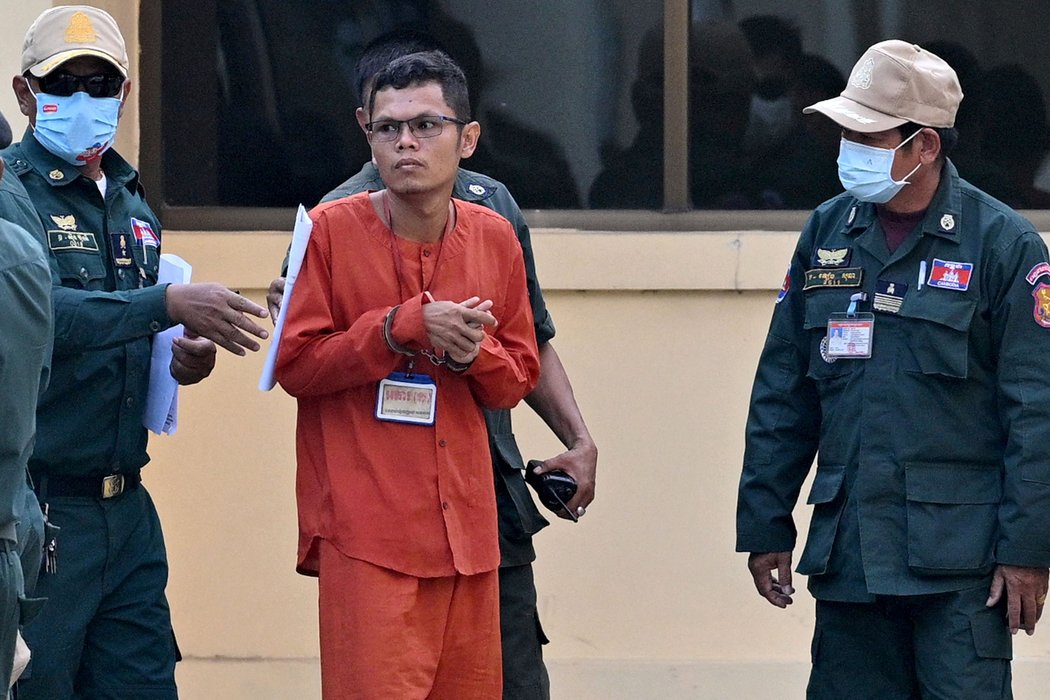
The state of civic space in Cambodia is rated as 'repressed. Repressive laws are routinely misused to harass and criminalise human rights defenders, trade unionists, youth activists, journalists and the political opposition. Arrested individuals are frequently denied bail, while prolonged pretrial detention and secretive judicial proceedings are used to silence dissent. The Cambodian judiciary continues to operate in a politicised and opaque manner, reinforcing a broader climate of impunity for those who target activists and critics of the state. Peaceful protests are systematically supressed and there are excessive restrictions on association under the Law on Associations and Non-Governmental Organisations (LANGO).
In April 2025, Amnesty International issued its annual report where it highlighted that in 2024 there were arbitrary arrests of environmental, human rights and other activists for peacefully expressing their views.
UN experts sent a communication to the government in May 2025 in connection with the mass arrests and ongoing arbitrary detention of individuals expressing opposition to the Cambodia-Laos-Viet Nam development triangle area (CLV-DTA) agreement and planning to exercise their right to freedom of assembly in peaceful protests in July and August 2024.
In June 2025, during a meeting with Cambodian Prime Minister Hun Manet, the European Union reiterated its hope that Cambodia will strengthen human rights and civil liberties, including press freedom.
Since January 2025, there have been reports of activists and critics being arrested and charged on trumped up charges while the courts deny bail for activists in detention. Ta Thma Prang community leaders were summoned by police for defending their land rights, there has been systematic judicial harassment against opposition leaders while there were reports of transnational repression of an opposition activist abroad. The government has threatened to top amend the law to revoke the citizenship of dissidents while journalists faced expulsion, arrest and attacks.
Association
Activists and critics convicted on trumped up charges
The Cambodian government has continued to convict activists and critics on trumped up charges.
Cambodian maid deported from Malaysia facing health issues in prison
— RFA Khmer/វិទ្យុអាស៊ីសេរី (@RadioFreeAsiaKH) December 21, 2024
👉 https://t.co/HAtYJR1B5A
---#RFAKhmer #Cambodia #Malaysia #HunSen #HunMane #Democracy #HumanRights #PoliticsKh #ArbitraryArrests #NuonToeun #TransnationalRepression pic.twitter.com/QthEsRKrTx
In April 2025, Nuon Toeun, a Cambodian domestic worker deported from Malaysia in late 2024 following a request from the Cambodian authorities, was convicted in two separate cases on charges of 'incitement' and 'insulting the king', which results in her serving two years in prison. Her prosecution stemmed from Facebook posts that criticised former Prime Minister and Senate President Hun Sen. Toeun received two separate 18-month prison sentences and fines of two million riel (about US$500) each.
A Cambodian court has sentenced the high-profile unionist and opposition activist Rong Chhun to four years in prison on charges of incitement, and permanently stripped him of his rights to vote and stand for election. https://t.co/hMa1IL43Pr pic.twitter.com/RxN5Ak2qfz
— The Diplomat (@Diplomat_APAC) May 6, 2025
On 5th May 2025, labour and political activist Rong Chhun, an advisor to the Nation Power Party and former vice-president of the Candlelight Party, was sentenced by the Phnom Penh Capital Court to four years in prison and fined 4 million riel (USD 1,000) on charges of ‘incitement to disturb social security’ under Articles 494 and 495 of the Cambodian Criminal Code. He was also permanently stripped of his rights to vote and stand for election under Articles 55 and 498.
The conviction stemmed from public comments criticising the government’s handling of the online fraud sector and the Cambodia-Vietnam border. Chhun had previously served over 15 months in prison following an incitement conviction in August 2021. On 24th April 2025, the court ordered the seizure of his assets due to unpaid damages of 400 million riel (USD 100,000). On 12th May 2025, Rong Chhun was denied rehabilitation and remained legally barred from regaining his full political rights, preventing him from voting, standing for public office, or participating in political activities.
Courts deny bail for activists in detention
Cambodian courts have consistently denied bail to human rights defenders, youth activists, and opposition figures in politically motivated cases, reinforcing a pattern of judicial harassment and impunity.
🇰🇭#Cambodia: One year ago, five environmental activists from the Mother Nature movement were jailed on trumped-up charges for their activism.
— CIVICUS (@CIVICUSalliance) July 2, 2025
We urge the government to overturn their verdicts and halt the use of restrictive laws to criminalise dissent. ➡️https://t.co/IJdcHsSjCB pic.twitter.com/PJNsOH6Y7E
As previously documented, The Mother Nature movement’s environmental activists Long Kunthea, Ly Chandaravuth, Phuon Keoraksmey, Thun Ratha, and Yim Leanghy were convicted in July 2024 on charges of 'plotting' and, in some cases, 'insulting the King' and sentenced to six to eight years in prison. On 17th February 2025, the five activists had their request for bail denied by the Court of Appeal. On 30th April 2025, the Supreme Court once again refused their bail. The five Mother activists were sent to five different prisons, some hundreds of kilometres from their residences and families. In June 2025, Thun Ratha was moved to CC1 (Correctional Center 1) in Phnom Penh.
On 26th May 2025, the Supreme Court denied bail to Khmer Student Intelligent League Association (KSILA) vice-presidents Ream Sreypich Rothana and Thy Thorn, who have been detained since August 2024 and face up to 10 years in prison for alleged plotting under Article 453, in connection with criticism of the Cambodia–Laos–Vietnam Development Triangle Area. As previously documented, on 18th February 2025, the investigating judge of the Phnom Penh Capital Court extended the pre-trial detention of the two.
Phnom Penh Court Upholds Union Leader Morm Rithy’s Convictionhttps://t.co/rDJiw9VpTl
— CamboJA News (@cambojanews) December 4, 2024
On 27th May 2025, the Phnom Penh Appeal Court upheld the denial of bail for three activists, Morm Rithy, Ny Nak, and Chin Bunnaroth. Rithy, head of the Cambodian Tourism and Service Workers’ Federation, is serving an 18-month sentence for 'incitement' and 'discrediting judicial decisions' due to a 2022 Facebook video criticising a colleague's arrest. Nak, a social commentator, received a two-year sentence and heavy fines for questioning a land allocation to Labour Minister Heng Sour. Bunnaroth, a Nation Power Party administrator, was arrested in a broader crackdown linked to protests against the Cambodia-Laos-Vietnam Development Triangle Area (CLV-DTA).
Phnom Penh Municipal Court on Friday denied bail to eight activists, including an outspoken Paris Peace Agreement Srun Srorn, charged with incitement to disturb social security order.https://t.co/TusOC3VTka
— CamboJA News (@cambojanews) July 4, 2025
On 4th July 2025, the Phnom Penh Municipal Court denied bail to eight activists. The activists were arrested in July 2024 after posting live videos on Facebook expressing their opinions on the alleged ceding of Cambodia’s northeastern provinces to Vietnam under the CLV-DTA regional cooperation initiative.
Ta Thma Prang community leaders summoned by police
On 2nd June 2025, four representatives of the Ta Thma Prang forestry community - Khun Sineoun, Chhay Chhon, Phon Pheap, and Han Sambath - were summoned by local police in Banteay Meanchey province. This followed their submission of a petition to Prime Minister Hun Sen’s residence in Phnom Penh on 30th May 2025.
On the day, 60 members of the forest community travelled from Kampong Seila commune in Kampong Seila district, Preah Sihanouk province, to Takhmao village in Kandal province. There, they gathered in front of Senate President Hun Sen’s residence, raised banners, and submitted a petition urging him to intervene in order to protect their community forest.
The community’s petition urges the government to cancel the private land title acquired by a company that has encroached on their community forest. They are also calling for protection of the forest land they have safeguarded for over 20 years. Although the Senate staff received the petition, no formal response or resolution has been announced, leaving the families in continued uncertainty.
Systematic judicial harassment against opposition activists
The regime has also continued to target opposition members
On 28th January 2025, Phan Sarath, deputy chairman of the Daun Keo Municipal Executive Committee of the Nation Power Party (NPP), was arrested without a warrant on charges including 'inciting chaos', 'spreading false information to incite discrimination' against the leadership, and 'harming national security'.
On 7th February 2024, Phnom Penh Municipal Court prosecutor Sorn Mony ordered imprisoned opposition activist Vuong Samnang to pay a fine of 4 million riels (approximately USD 1,000) by 7th March. The court warned that failure to pay would lead to enforced collection and additional detention. Samnang, currently held in Phnom Penh Prison, was previously sentenced by all levels of court to six years in prison and the same fine for ''conspiring to commit treason' and 'inciting serious disorder to social security.' The charges are linked to his public support in 2019 for the attempted return of exiled opposition leader Sam Rainsy and his critical Facebook posts in 2021 targeting then-Prime Minister Hun Sen, who was also Phnom Penh mayor at the time.
On 17th March 2025, Mut Rin, a district councillor from the Khmer Will Party, was arrested by police in Takeo province. The day before, on 16th March 2025, two deputy commune council chiefs from the Candlelight Party, Kan Kun and Mao Hen, were also arrested without warrants. Kan Kun’s daughter reported that approximately ten police officers forcibly took her father from a cashew farm near their home and detained him.
On 3rd June 2025, opposition activist Doem Keang, a member of the Nation Power Party (NPP) from Kampong Speu province, was arrested without a warrant and charged with 'incitement'. On the same day, Douek Chan, deputy commune chief for the Candlelight Party in Phnom Penh’s Steung Meanchey 1 commune, was arrested and charged with 'forgery of public documents' related to election candidate lists for previous local elections.
In recent years, forgery charges have been used to detain several Candlelight Party officials and to disqualify entire candidate lists during the 2022 Commune Elections.
Transnational repression of opposition activist abroad
On 23rd May 2025, the National Police General Directorate of Cambodia issued a statement accusing a Facebook user named Chou Chin, originally from Battambang province and currently an opposition party member living in exile in Thailand, of posting ‘inflammatory and false content intended to incite unrest and overthrow the Cambodian government’.
The charges stem from her Facebook post under the name "Overseas Woman," in which she criticised failed Cambodia-U.S. trade talks and predicted further failure due to Cambodia's human rights record.
The police announced they were pursuing legal steps and will coordinate closely with Thai authorities to locate Chou Chin and facilitate her extradition back to Cambodia to face charges.
Human rights groups have reported that the Cambodian and Thai governments have engaged in transnational repression - government efforts to silence dissent by committing human rights abuses against their own nationals outside their own territory - through reciprocal arrangements targeting dissidents and opposition figures, colloquially known as a “swap mart.” Both governments have facilitated assaults, abductions, enforced disappearances, and the forced return of people to their home countries where their lives or freedom are at risk.
Government threatens to amend law to revoke citizenship of dissidents
The government is planning to amend the constitution to revoke the citizenship of those who ‘conspire with foreign powers’ and ‘plot against the country’.
The National Assembly on 7th July 2025 accepted a proposal from all 125 lawmakers to amend the Constitution, aiming to revoke Khmer citizenship from individuals found colluding with foreign entities to undermine national interests. The Assembly’s Standing Committee has tasked the Committee on Legislation and Justice with reviewing the proposed amendment.
An extraordinary session of the National Assembly is expected to be held on 11th July 2025. The amendment is all but assured given the ruling Cambodian People’s Party (CPP) holds absolute control of parliament, raising serious concerns for political and human rights activists in exile.
Dissidents in exile have been increasing targeted by the Hun Manet regime through transnational repression, as noted above. In 2019, the government revoked the passports of at least 30 dissidents who pushed for democracy and criticized the ruling Hun family
Arbitrarily stripping people of their citizenship and rendering citizens stateless are blatant violations of international law. Article 15 of the Universal Declaration of Human Rights states that everyone has the right to a nationality and that no one shall be arbitrarily deprived of his nationality. The right to a nationality is also protected in Article 24 of the International Covenant on Civil and Political Rights (ICCPR), to which Cambodia is a state party.
Expression
Being a journalist is a dangerous profession in Cambodia. According to Reporters Without Borders (RSF) - which ranks Cambodia in 161st place out of 180 countries in the 2025 press freedom index - many subjects are impossible to cover, such as political opposition, corruption and deforestation. The authorities often resort to the penal code to persecute and arrest – without a warrant – journalists who investigate sensitive issues.
Expulsion and arrest of journalists
#Cambodia immigration officials denied re-entry to Gerald Flynn (@geraldrflynn), a Mongabay journalist who has covered Cambodia’s deforestation crisis, and forced him onto a flight back to Bangkok on January 5.https://t.co/JnfJEYFSFz
— CPJ Asia (@CPJAsia) February 3, 2025
On 4th February 2025, RSF condemned Cambodia's expulsion of Gerald Flynn, a British investigative journalist who spent five years reporting on environmental issues in the country. Despite holding a valid work visa, Flynn was denied re-entry at the Siem Reap International Airport on 5th January 2025 upon returning from a holiday in Thailand. He was told he had been on a "blacklist" since 25th November 2024, was forced to leave Cambodia immediately, and prohibited from returning.
Free Cambodian environmental activist! https://t.co/zrBn75fdnv pic.twitter.com/xMEi54q1He
— Savey Phin (@savey_phin) May 22, 2025
On 16th May 2025, environmental journalist and forest protection activist Ouk Mao was arrested at his home in Stung Treng province without an arrest warrant and placed in pre-trial detention. He faces charges of incitement and defamation, punishable by imprisonment of six months to two years, and fines. Mao’s arrest follows a long history of intimidation, threats, and legal harassment starting in June 2024, largely linked to his investigative reporting on illegal logging and deforestation involving companies with military ties.
Following his reporting for Mongabay, a conservation news web portal, on illegal mining and logging activities, Mao was charged with illegal clearing of state-owned forest and incitement in September 2024.
On 24th March 2025, Mao was physically assaulted while documenting illegal deforestation, and although he filed a police complaint, authorities appeared to protect his attackers and pressured Mao to remove video evidence. He currently faces around 15 lawsuits, which are widely viewed as an orchestrated campaign to silence his environmental activism through legal harassment and intimidation. On 25th May 2025, Mao was released on bail.
Environmental journalists shot at following investigation into illegal logging
In June 2025, journalists Thlang Tao and Hang Chenda were targeted by a shooting while returning from reporting on illegal logging in north-west Cambodia. According to RSF, the two journalists were ambushed and came under gunfire from assailants hiding by the roadside as they travelled by motorbike at night through Stung Treng province in north-eastern Cambodia. Fortunately, both journalists escaped the attack unharmed.
Both reporters work for the online news outlet Norkor Achhariyak and were returning from an investigation into illegal logging in the Prey Lang Wildlife Sanctuary. The assault came soon after they reported the illegal activity of loggers to the authorities. Two suspects in the attack were arrested at their homes the following day and placed in custody.