Freedom of association
Report highlights political and institutional pressures on civic space in Bulgaria
The Bulgaria country report for 2025, published in February 2026 and authored by the Bulgarian Centre for Not-For-Profit Law as part of the MACS: Monitoring Action for Civic Space project, found that freedom of association remained affected by political and institutional pressures amid a prolonged political crisis. The authors concluded that the year’s developments in civic space reflected “a mix of minor positive institutional steps and persistent, and in some cases growing, institutional and political pressures affecting civil society organisations (CSOs), journalists, activists and marginalised groups”. The report documented smear campaigns targeting civil society organisations (CSOs) led by politicians, as well as the return of Russian-style “foreign agents” legislation to the parliamentary agenda. It also noted repeated attempts to restrict CSOs’ activities in schools and establish ad hoc commissions to investigate internationally funded organisations.
The report also identified persistent challenges in registering non-governmental organisations, and found that the right to participate in parliamentary decision-making was not fully respected. It pointed to the rapid adoption of legislation, the bypassing of consultation stages in parliamentary committees, and the cancellation or postponement of meetings as practices that limited opportunities for citizens and CSOs to participate in decision-making. According to the report, these shortcomings in transparency and dialogue hindered civil society’s ability to contribute to public decisions and monitor government activity.
The report further highlighted legislative initiatives and proposals that it considered discriminatory, including a proposed ban on the “propaganda of ideas related to non-traditional sexual orientations” in schools, which has been previously reported by the CIVICUS Monitor. At the same time, it noted that events such as Sofia Pride 2025 took place without major incidents, pointing to fewer instances of direct violence against vulnerable groups compared with previous years.
At the same time, the report identified some institutional progress. The Civil Society Development Council (CSDC) began functioning regularly, though it only held its first meeting five months after its election, while authorities incorporated CSOs’ proposals into a draft law on interest representation (lobbying), removing measures considered particularly controversial and potentially disproportionate in their impact on activists and civic organisations. However, by the end of 2025, the draft had not been submitted for public consultation.
Freedom of peaceful assembly
Mass anti-corruption protests follow 2026 budget proposal; government resigns
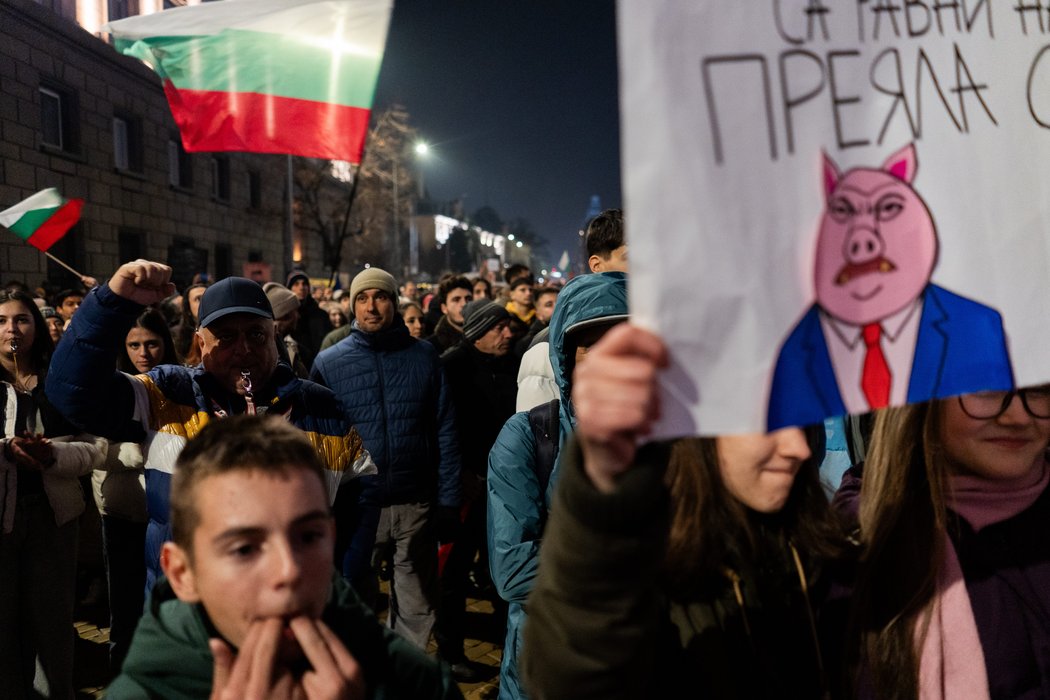
In November and December 2025, Bulgaria was rocked by massive protests, said to be the largest in the country since the 1990s. What began as opposition to proposed budget measures quickly evolved into a broad challenge to the political class and the system of government. The mobilisations were fuelled by dissatisfaction with corruption, a lack of transparency, and the perception of institutional state capture. Two figures at the centre of public anger were Boyko Borissov, who had previously served three terms as Prime Minister and is the chairman of the conservative populist Citizens for European Development of Bulgaria (GERB) which is part of the ruling coalition, and Delyan Peevski, leader of the Movement for Rights and Freedoms (DPS), who has been sanctioned by both the United States and the United Kingdom for alleged corruption, bribery and embezzlement and whose party isn’t formally in government but who is said to wield significant informal influence on Bulgarian politics.
People reacted to the fact that democratic rules were being openly disregarded and governance was increasingly being shaped by informal powers and personal interests.
- Zahari Iankov, senior legal expert at the Bulgarian Centre for Not-for-Profit Law
The protests were initially sparked by a controversial 2026 budget proposal that would have raised individual contributions to pension and social-security programmes while introducing pay hikes in the public sector. On 26th November 2025, around 20,000 people gathered in Sofia in a protest organised by the opposition We Continue the Change – Democratic Bulgaria (PP-DB) party, seeking to surround parliament and prevent MPs from leaving. The protest was largely peaceful, but some clashes occurred between protesters and police. According to media reports, protesters attempted to overturn a police van and threw objects at the police cordon guarding the parliament building, with three officers reportedly injured. Police used pepper spray against protesters who attacked a car belonging to the National Service for Protection (NSP) after it attempted to retreat through the crowd. No arrests were reported. The chief inspector of the Sofia Police Department requested that the mayor order protesters to disperse at the protest’s scheduled end, but the mayor rejected the request. Protesters eventually dispersed a few hours later and the MPs were able to exit the building after midnight.
The next day, GERB leader Boyko Borissov announced his support for withdrawing the proposed 2026 budget. The Prime Minister subsequently announced that consideration of the budget would be suspended pending renewed talks with trade unions and employers. However, the protests continued. On 28th November, a protest was held outside parliament, with the far-right populist Velichie (Greatness) party calling for the government’s resignation. Traffic in central Sofia was disrupted as protesters deliberately stopped vehicles, claiming they “broke down”. After the government clarified that the budget had been postponed rather than formally withdrawn, PP-DB announced new protests against the budget.
On 1st December, between 50,000 and 100,000 people joined a protest in Sofia called by the PP-DB, influencers and civil society groups. While the demonstration was initially peaceful, incidents later erupted that some blamed on provocateurs. Groups of masked youths attacked the offices of Peevski’s DPS and Borissov’s GERB party, clashing with police who used tear gas. After the rally had largely dispersed, masked individuals who had not previously been at the protests caused further incidents, throwing objects at police, vandalising police cars and setting rubbish containers on fire. Some suspected the clashes were staged to discredit the protest, as police did not intervene to stop them causing damage to an abandoned former GERB office, while other protesters were reportedly subjected to bag checks. There were also claims that provocateurs tried to initiate clashes with the police in other towns.
Suspicions of deliberate interference to sabotage the protests were further raised by the fact that there was a power outage in central Sofia during the height of the rally. Organisers also claimed there was an attempted cyberattack on their livestream. Meanwhile, mainstream media coverage of the protest was criticised as manipulated, with local reporters booed by protesters for interviewing those engaging in violence and filming the crowd after people had dispersed. According to a police representative, at least 71 people were detained and three police officers were injured. At least 14 people were subsequently charged with hooliganism, with five ordered to be held in pre-trial detention. Protests also took place in Varna, Plovdiv and Burgas. The following day, the government formally withdrew the proposed 2026 budget and promised to submit a revised version.
Protesters nevertheless continued to demand the government’s resignation. On 3rd December, peaceful anti-government protests took place in Sofia and numerous towns across the country, calling for the government to resign and for action against corruption. Minor clashes between protesters and police were reported in Sliven, with no injuries or detentions reported. Further protests took place on 4th December in multiple cities. That same day, a parliamentary hearing was held to discuss the 1st December protest with police leadership, where opposition MPs accused the Interior Ministry of allowing provocateurs into the protest. The mother of one young man arrested at the 1st December protest claimed he was beaten in custody and that officers had tried to force him to falsely confess to having pyrotechnics. A demonstration organised by the NGO “Boets” and supported by PP-DB was outside the Interior Ministry in Sofia calling for the interior minister’s resignation. Minor clashes were reported after protesters threw toilet paper at the Ministry building, but no injuries or arrests. Velichie supporters also protested outside Boyko Borisov’s residence in Bankya, prompting a subsequent counter-protest by representatives of the GERB’s youth organisation. No incidents were reported at either protest.
On 9th December, Delyan Peevski’s DPS organised pro-government counter-protests under the slogan ‘No to Hate’ in around 20 towns. According to Radio Free Europe’s Bulgarian service, no DPS rallies were held in the capital or other large regional cities such as Plovdiv, Burgas, and Varna, where anti-government protests have garnered widespread support. A planned counter-protest in Botevgrad was banned by the mayor, citing widespread discontent among Botevgrad residents and concerns about potential public disturbances.
On 10th December, thousands again joined anti-government protests across Bulgaria, with students joining demonstrations in large numbers. The protests took place in 25 cities and reportedly drew 150,000 people in Sofia alone. According to media reports, at least 30 people were detained at police checkpoints in the capital after having been found to be in possession of pyrotechnics, weapons and other prohibited items, or for not possessing identification.
The government announced its resignation on 11th December, citing the protests among the factors behind the decision. Parliament formally approved the resignation on 12th December. After parliament unexpectedly placed the previously proposed 2026 budget on its agenda on 17th December, PP-DB threatened renewed protests. The proposal was subsequently removed from the agenda, while parliament approved an extension of the 2025 budget into 2026.
Tens of thousands of people took part in protests across Bulgaria again on 18th December, opposing attempts to revive the 2026 budget proposal and calling for snap elections. On 19th December, a spontaneous protest took place outside bTV headquarters following reports that journalists Maria Tsantsarova and Zlatimir Yochev had been removed from their programme (see under Freedom of expression).
The protests continued in January 2026, albeit with varying intensity, signalling that the change of government had not resolved the dissatisfaction. On 14th January, PP-DB organised another protest in Sofia, supported by several opposition parties, calling for machine voting ahead of the snap elections. The demonstration coincided with parliamentary discussions on electoral reforms.
Freedom of expression
Concerns over political interference following bTV journalists’ removal
In December 2025, private broadcaster bTV removed morning programme hosts Maria Tsantsarova and Zlatimir Yochev from ‘This Morning’, prompting concerns over political pressure on independent journalism. Tsantsarova said her dismissal was politically motivated, noting that she had signed off from the programme on Friday expecting to return on Monday. According to media reports, bTV management called the journalist in for talks on 19th December and offered her several alternative roles, all outside the influential morning programme. Following public criticism, bTV initially said it was exploring alternative roles for Tsantsarova before announcing that it was ending its cooperation with her. The decision prompted strong reactions from professional organisations, including the Association of European Journalists – Bulgaria, which warned of the risk of indirect political pressure on editorial staff.
In an official statement, bTV Media Group rejected allegations of political interference, stating that the changes were part of a reorganisation of its editorial content. However, the lack of detailed explanations and the tense political context, marked by anti-corruption protests and the fall of the government, fuelled concerns about political influence over commercial media.
The case also prompted journalists to protest in defence of press freedom and editorial independence. Demonstrations were held outside bTV headquarters, attended by journalists and former staff. A white coffee cup that Tsantsarova had used symbolically on air during recent political protests became a sign of solidarity with her and a broader symbol of concerns over media freedom in Bulgaria.
Investigative journalists face threats and legal pressure
On 9th January 2026, investigative outlet BIRD reported that Bulgarian MP and leader of the far-right populist Velichie party, Ivelin Mihaylov, had called for violence against its journalists. In a video posted on YouTube, Mihaylov reportedly said BIRD journalists should be “stoned when seen on the streets”, following investigations into his and his wife’s tax obligations. Although Velichie holds only ten seats in parliament, Mihaylov has a significant online following, with more than 18,000 YouTube subscribers. BIRD journalists have reported regularly facing threats and harassment from his supporters.
Further pressure on the investigative outlet was recorded during the reporting period. On 19th February 2026, BIRD reported that journalist Dimitar Stoyanov continued to face legal pressure over a defamation lawsuit filed by former customs official Nikolay Filipov. A first-instance court ordered Stoyanov to pay BGN 3,000 (approximately EUR 1,500) in damages, a ruling he appealed. The appellate proceedings are ongoing. BIRD has publicly questioned the impartiality of judges involved in both stages of the case, citing alleged personal or professional connections with individuals previously investigated by the outlet. Numerous judges reportedly recused themselves, exhausting the available pool in the civil division and leading to the appeal being assigned to a panel from the court’s commercial division.
The case forms part of a broader pattern of legal actions against Stoyanov and BIRD following their reporting on alleged links between public officials and individuals connected to corruption and smuggling investigations. On 8th December 2025, BIRD reported that Filipov and an individual they claim to be his close associate had filed four cases against Stoyanov, seeking a total of BGN 40,000 (approximately EUR 20,000). According to the outlet, one was a civil defamation case, while the other three were private criminal cases.
Former foreign minister criticised for obstructing journalist during interview
On 23rd January 2026, former Bulgarian Foreign Minister Solomon Passy was criticised for repeatedly interrupting journalist Tsvetanka Rizova and attempting to prevent her from asking questions during a bTV interview. The discussion concerned Bulgaria’s participation in the Board of Peace, a controversial initiative to oversee the reconstruction of the Gaza Strip led by US President Donald Trump. Passy repeatedly asked Rizova to stop interrupting him, adopted a dismissive tone and threatened to leave the programme. bTV, the Association of European Journalists Bulgaria and the Council for Electronic Media condemned his behaviour. On the day of the broadcast, Passy’s wife Gergana, herself a public figure and politician, also condemned her husband’s conduct on social media and called on him to apologise to the journalist. Passy later apologised for his behaviour, stating that he regretted it if he had inadvertently offended Rizova.