General
Election ends two decades of MAS rule and opens a new political landscape
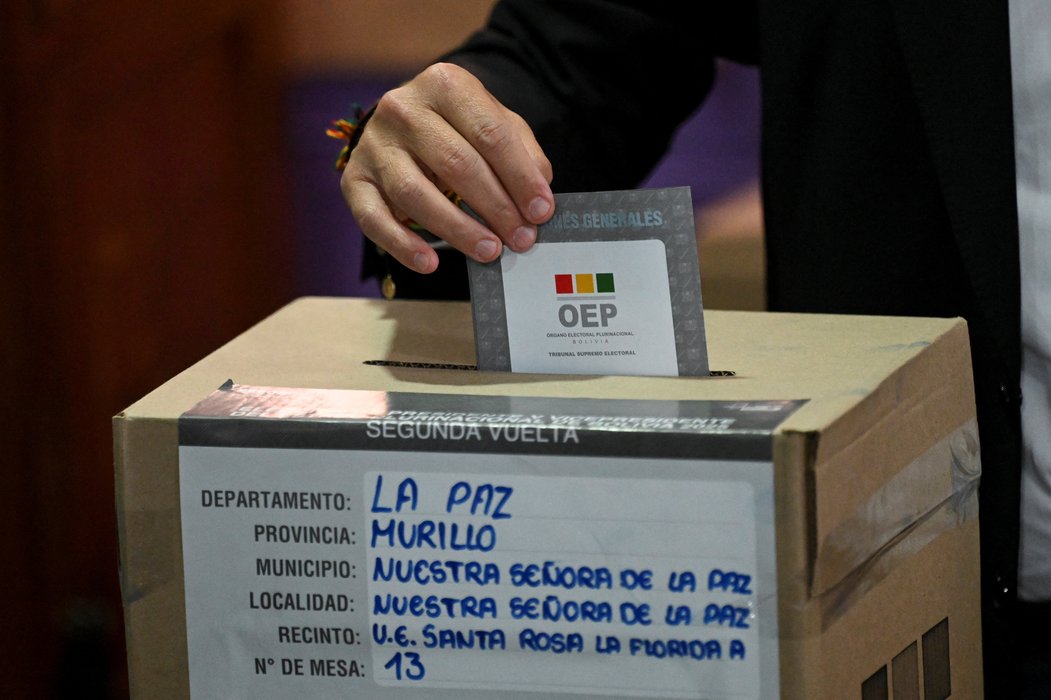
Bolivia’s October 2025 election ended nearly two decades of the Movement Towards Socialism (Movimiento al Socialismo, MAS) dominance, with Christian Democratic Party leader Rodrigo Paz winning the presidential runoff with 54.5 per cent of the vote.
His victory came amid the country’s worst economic crisis in a generation, marked by inflation of close to 25 per cent, shortages of dollars and fuel and long queues for basic goods. Paz’s platform combines market liberalisation, social programmes and conservative positions on gender issues that are causing concern among the women’s rights movement. His lack of a majority in Congress will complicate any attempt at reform.
The result likely closes a major political chapter for Evo Morales, who governed Bolivia from 2006 to 2019 and became one of the most recognisable leftist figures in Latin America. His administration expanded social spending and reduced poverty, particularly in Indigenous communities. However, critics argue that he weakened democratic institutions by placing political allies in the courts and electoral authorities.
Expression
Journalists assaulted and intimidated during elections
On 17th August 2025, violence against the press marked Bolivia’s general elections. The National Press Association (ANP) reported at least twenty assaults on journalists. In Entre Ríos, a town in the central Cochabamba region, a mob attacked Popular Alliance presidential candidate Andrónico Rodríguez as he left the José Carrasco polling station, and the crowd also targeted reporters covering the incident. For example, unknown people struck EFE photojournalist Claudio Abrego with a stone, cutting his chin and jaw and bruising his neck; the local outlet IN Noticias later published images of his injuries.
They also hit his colleague, Jorge Abrego, leaving a pronounced bruise on his right arm. In the same location, several people punched Fem Media journalist Carmen Challapa and pulled her hair amid the confusion surrounding Rodríguez’s departure. In La Paz, a police officer followed and harassed radio journalist Emma Bustamante while she covered the vote at a local school, according to the Association of International Press Correspondents.
En día de elecciones: una periodista golpeada, un periodista herido y otros casos reflejaron la hostilidad contra el trabajo periodístico en Bolivia.
— ANP Bolivia (@ANPBOLIVIA) August 24, 2025
Lea el informe de los periódicos representados por @ANPBOLIVIA:https://t.co/CRACwuJYW5 pic.twitter.com/RqR65CkxYM
On 16th September 2025, supporters of vice-presidential candidate Edman Lara assaulted at least four journalists who attempted to request comment from him during a campaign event at the Abasto market in Santa Cruz de la Sierra, Bolivia’s largest city. Members of Lara’s entourage blocked reporters from approaching him and used physical force to push them away. DTV journalist Alejandra Quintela reported that Lara’s companions grabbed her arm and shoved her to stop her from asking whether he would sign a Supreme Electoral Tribunal (TSE) agreement on mutual respect ahead of a possible second-round election. The DTV cameraman also faced repeated pushing. María Ninavia of Cadena A reported similar aggression, while a supporter struck Unitel journalist Yerko Guevara in the stomach with an elbow. Witnesses said several of Lara’s relatives participated in the assaults.
Lara refused to speak with the press, accusing journalists of “distorting everything” and denouncing what he characterised as a media-driven “dirty war”. He then encouraged the crowd to chant sell-out press” (“prensa vendida”), a rhetoric increasingly used in Bolivia to delegitimise independent journalism. The Santa Cruz Journalists’ Association condemned the attacks and warned that silencing questions through force restricts democratic debate and enables candidates to avoid scrutiny during an electoral process.
Dos mujeres periodistas y reporteros fueron agredidos por acompañantes de candidato a la Vicepresidencia Edman Lara.
— ANP Bolivia (@ANPBOLIVIA) September 20, 2025
Conozca detalles del incidente en un reporte de los diarios asociados de Bolivia @ANPBOLIVIA:https://t.co/sY2Eg1IgE4 pic.twitter.com/UcC2wZ5Iys
Fact-checkers also faced heightened pressure in the weeks leading up to the October 2025 runoff elections. According to the European Union System for an Enabling Environment (EU SEE), Bolivia Verifica, Chequea Bolivia and independent journalist Joaquín Martela experienced intimidation and online defamation between 27th September and 10th October 2025.
They documented a surge in coordinated online attacks after they verified racist tweets from 2010 linked to Juan Pablo Velasco, the vice-presidential candidate of Alianza Libre. The fact-checking teams confirmed that the posts originated from an account registered to Velasco’s party, triggering smear campaigns, intimidation and legal threats.
Break-in at Radio Lasser
On 20th August 2025, unknown individuals broke into the transmission booth of Radio Lasser, a local broadcaster in the municipality of Camargo in southern Bolivia, and caused a short circuit that briefly took the station off air. The assailant forced the padlocks, entered the hilltop facility and disconnected cables, triggering an explosion that blackened the wall and damaged equipment. Radio Lasser restored its broadcast signal later the same day.
Station director Juvenal Serrano characterised the incident as an attack on freedom of expression and suggested a possible link to a recent Facebook post criticising the presence of MAS supporters during celebrations for the Christian Democratic Party (PDC) victory in the August general election.
Public official files complaint against journalist after reporting on alleged vehicle-fraud scheme
On 25th September 2025, journalist Elvin Herrera, a reporter from Santa Cruz working for the investigative outlet El Ojo Ciudadano, faced a legal complaint filed by a public official from RUAT, Bolivia’s municipal vehicle-registration system, in the municipality of Porongo. The complaint followed Herrera’s livestreamed reporting on alleged irregularities in the transfer of vehicle ownership. According to media reports, his reporting helped expose a wider fraud scheme involving fake loans secured with vehicle guarantees.
El Ojo Ciudadano condemned the lawsuit, arguing that it seeks to restrict not only the outlet but the wider press. In a public statement, the outlet said Herrera’s reporting demonstrates a commitment to informing the public about potential wrongdoing, which they described as part of their service to the community.
Association
Environmental defenders face threats, smear campaigns and arson attempt amid illegal mining in Viacha
On 18th September 2025, environmental defenders from Sek’e Jahuira and the collective Qhana Pukara Kurmi filed a complaint with Bolivia’s Ombudsperson’s Office, requesting protection under the Escazú Agreement after facing threats, intimidation and attempted attacks linked to their denunciations of illegal mining in Viacha, a municipality near La Paz. That same day, unknown individuals attempted to set fire to the home of Indigenous authority Pastor Carvajal, forcing him into hiding.
The case reflects a broader escalation of risk. Since May 2024, community leaders have reported unauthorised mining operations using cyanide, mercury and sulphuric acid, and estimate that at least 25 leaching plants operate without environmental oversight. In May, authorities intercepted two tankers carrying sulphuric acid without proper authorisation, reinforcing concerns about ongoing illegal activity. Although local authorities issued temporary closures, communities report that operators continue mining at night with impunity.
Since communities intensified public denunciation, including Carvajal’s intervention at the UN Permanent Forum on Indigenous Issues in late April 2025, defenders have faced retaliation. Bautista and other leaders report anonymous death threats, defamatory social-media campaigns and accusations of being “foreign-funded agitators”.
Government creates Human Rights Defender Committee, but civil society decries lack of independence
On 22nd October 2025, Bolivia’s outgoing government approved Supreme Decree 5478, which creates the Committee for the Protection of Human Rights Defenders (CPROTEGE-DDHH). The government framed the measure as fulfilling constitutional and international duties, citing Article 256 of the Constitution, the UN Declaration on Human Rights Defenders, and the Inter-American Commission’s 2011 and 2025 reports. The decree recognises defenders without conditions, sets guiding principles and creates the CPROTEGE-DDHH committee to assess risks and issue administrative protection measures.
On 5th November 2025, 41 civil society organisations rejected the decree, arguing that it violates the participation principle in the UN Declaration on Human Rights Defenders and lacks independence, resources and accountability safeguards. They noted that the mechanism omits prevention, risk analysis and confidentiality guarantees, despite a decade of UN and Inter-American recommendations urging Bolivia to adopt an effective protection policy. UNITAS stressed that only an autonomous, comprehensive and participatory model aligned with international standards can ensure real prevention, protection, reparation and accountability.
Peaceful Assembly
Protesters challenge presidential result as unverified fraud claims circulate online
On 19th October 2025, following the release of preliminary results announcing Rodrigo Paz as the winner of Bolivia’s presidential run-off (see General), protests took place in Cochabamba, Santa Cruz, Oruro and Sucre, fuelled by unverified allegations of electoral fraud. Local media reported at least ten detentions, although police had not issued an official statement at the time of reporting.
In Santa Cruz de la Sierra, demonstrators gathered at the Cristo Redentor roundabout, lit small fires and blocked roads while calling for an international audit of the vote count. In Cochabamba, self-organised groups marched toward Cala Cala chanting “fraud”. In Oruro, tensions rose when supporters of both political camps confronted one another in Castro de Padilla Square, resulting in pushing and the throwing of objects. In Sucre, protesters marched to the Departmental Electoral Tribunal demanding a review of the preliminary results.
The following day, several hundred people marched in La Paz to contest the presidential outcome. Although runner-up Jorge Quiroga publicly congratulated Paz, he also announced a review of tally sheets following the circulation of unverified irregularity claims on social media. Protesters, largely young people, carried Bolivian flags and chanted “fraud” as they attempted to enter the Plaza de Armas, which houses the executive and legislative branches. Police blocked access and later dispersed demonstrators as they moved toward the Supreme Electoral Tribunal (TSE) to demand an audit.
Participants rejected campaign proposals made by Paz and his running mate Edman Lara, chanting “We don’t want handouts, we want jobs”, and emphasised that the mobilisation did not signify support for Quiroga. Some referenced purported evidence shared online, though none has been independently verified. In response, TSE president Óscar Hassenteufel urged the public to dismiss unfounded allegations, stating that “the word fraud should be banished from Bolivia.”
Teachers’ demonstration in La Paz escalates as police use pepper spray and push back protesters
On 1st August 2025, urban teachers protested outside the Ministry of Education in La Paz, denouncing alleged irregularities in the national promotion exam, a test that determines career advancement within Bolivia’s public education system. Teachers from several schools demanded an immediate explanation from authorities. Tensions increased when several teachers crucified themselves to the ministry’s railings as a symbolic act of protest.
Police officers intervened forcefully, pushing protesters away from the entrance and using pepper spray against those who resisted. Teachers reported escalating aggression, saying officers struck them and sprayed their faces despite what they described as a peaceful vigil. One teacher showed his bloodied hand to the press and called for nationwide mobilisation in response to the police actions.
Before the police intervention, union leader Osmar Cabrera, from Santa Cruz, reiterated the sector’s demands: clarification of the alleged exam irregularities, automatic promotion, and compliance with previously signed agreements.
Thousands of state miners march in La Paz
On 18th September 2025, several thousand state-employed miners marched through central La Paz to demand government action against the illegal occupation of state-operated mineral deposits by private groups. Workers travelled from the mining regions of Oruro and Potosí to denounce escalating “avasallamientos”, forced takeovers of silver, zinc and tin deposits, and to call for the immediate clearance of occupied areas.
The mobilisation, convened by the Federación Sindical de Trabajadores Mineros de Bolivia (FSTMB), advanced across six blocks with protesters chanting “stop the takeovers” (“basta de avasallamientos”) and condemning “juqueo”, the theft of minerals from state sites. They also set off small dynamite charges, a common protest practice in Bolivia’s mining sector, though no injuries or clashes were reported.
Miners argued that private cooperatives increasingly encroach on state concessions, despite existing legal prohibitions. A representative of COMIBOL, Bolivia’s state mining corporation, stated that cooperatives “do not respect fields operated by the state”, while the Ministry of Mining reiterated a policy of “zero tolerance” toward mineral theft. Authorities have not released updated figures on the areas currently under occupation.