Civic space in Afghanistan remains rated as ‘closed’. Since the Taliban seized power in August 2021, the de facto authorities continue to commit human rights violations and crimes under international law against the Afghan people, especially women and girls, with absolute impunity. Civil society activists, journalists and others face severe restrictions, and activists have been arbitrarily arrested and detained for their criticism of the Taliban. Those who are detained are often denied access to urgent medical and legal assistance. Others have faced harassment, intimidation and violence, and some have been killed. The Taliban have also raided media offices and detained journalists. Some activists have been tortured and ill-treated.
On 10th December 2025 (International Human Rights Day), a joint statement was delivered at the UN Security Council by Slovenia on behalf of 56 UN Member States and the EU Delegation, condemning the Taliban’s systematic and widespread human rights violations in Afghanistan.
On 11th December 2025, the People’s Tribunal for Women of Afghanistan, convened under the Permanent People’s Tribunal, issued its judgment after public hearings held in Madrid from 8th to 10th October 2025. The Tribunal found that the Taliban have imposed a systematic and institutionalised regime of repression against Afghan women and girls, including bans on education and employment, severe restrictions on movement and expression, arbitrary detention, torture, and the punishment of peaceful protest. It concluded that these acts amount to gender persecution and other inhumane acts constituting crimes against humanity under international law, and called on the UN, states, and international justice mechanisms to take concrete steps toward accountability.
On 19th January 2026, the UN Human Rights Office published a statement by independent UN human rights experts urging countries to ensure that Afghan women and gender justice advocates play a central role in negotiations on a new Treaty on the Prevention and Punishment of Crimes Against Humanity. The experts stressed that the treaty’s legitimacy depends on the inclusion of those directly affected by atrocities and called on states to consider recognising “gender apartheid” as a crime against humanity.
In a new report to the UN Human Rights Council, the Special Rapporteur on the situation of human rights in Afghanistan, Richard Bennett, found the Taliban was systematically restricting access to healthcare for women and girls by imposing gender-oppressive policies, including limits on freedom of movement, the right to work, medical education, and the imposition of gender segregation in health facilities.
UN High Commissioner for Human Rights Volker Türk said on 26th February 2026 that the cascade of edicts and laws announced by the de facto authorities since coming to power in 2021 is having a crushing impact on the Afghan people, particularly women and girls. Further, a new decree, signed by the Taliban leader in February 2206, defines several crimes and punishments that contravene Afghanistan’s international legal obligations. It also criminalises criticism of the de facto leadership and their policies, in violation of freedom of expression and assembly.
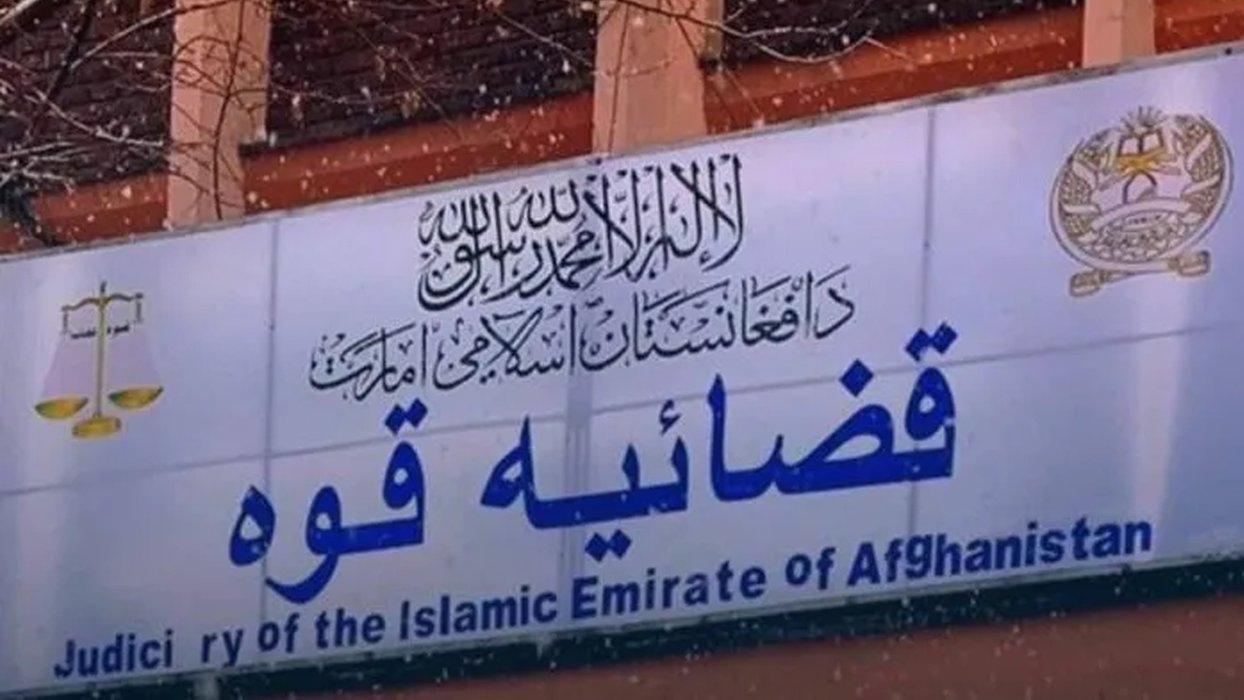
In recent months, the Taliban approved a new Criminal Procedure Code for courts that legalises repression. Activists continue to be arrested while the Taliban has criminalised women’s activities or informal organising. There has been a crackdown on the media and journalists as well as censorship and the dismantling of broadcast media. Despite restrictions, there continue to be small acts of protests, digital activism and mobilisation in exile.
Association
New Criminal Procedure Code legalises repression
In early January 2026, the Taliban quietly approved and began enforcing a new Criminal Procedure Code for courts across Afghanistan. The code, signed by Taliban leader Hibatullah Akhundzada and issued on 4th January 2026, was circulated directly to judges and provincial courts, replacing previous criminal justice norms with a framework rooted in the Taliban’s interpretation of Islamic law.
Comprising three sections, ten chapters, and 119 articles, the code defines crimes, evidentiary standards, and punishments to be applied by Taliban judicial institutions. It was neither publicly announced nor debated, and entered into force through direct distribution to courts, bypassing any transparent legislative or consultative process.
Human rights groups and civil society organisations have strongly criticised the code, warning of its deeply concerning implications for fundamental freedoms and civic space.
After obtaining a copy, the Afghan rights group Rawadari issued a detailed statement arguing that the code contradicts international human rights standards and the basic principles of a fair trial. Rawadari highlighted the absence of essential legal protections, including access to a defence lawyer, the right to remain silent, and compensation for wrongful punishment, noting that the code instead relies heavily on confession and testimony as primary evidence.
Rawadari further warned that the code institutionalises discrimination and enables arbitrary punishment of religious minorities. Additional provisions allowing punishment by private individuals or morality enforcers were described as undermining personal security, due process, and legal safeguards.
Afghan and international civil society organisations in February 2026 stated that the code criminalises criticism of Taliban policies and leaders, grants judges unchecked discretion to punish perceived “mockery” or dissent and obliges individuals to inform on others suspected of opposition. These provisions violate the right to freedom of expression under Article 19 of the ICCPR and undermine the right to privacy and freedom from arbitrary interference. In practice, these measures transform the judicial system into a mechanism for silencing opposition, suppressing independent thought, and enforcing ideological conformity, further extinguishing any remaining civic space in Afghanistan.
On 6th March 2026, Amnesty International published a legal analysis documenting its wide-ranging and regressive impact on human rights.
The code has sparked international outrage among Afghan activists in exile. Overall, civil society voices characterise the Criminal Procedure Code not as justice reform but as the legal entrenchment of repression, raising serious concerns about the rule of law in Afghanistan under Taliban rule.
European Parliament member Hannah Neumann described it as gender apartheid and rejected any normalisation with the Taliban.
Arrests of activists and detention in unknown locations
Civil society activists continue to be targeted by the Taliban.
Habibullah Najafizada, an environmental activist, was detained by the Taliban in Kabul on 10th January 2026, where he was held and interrogated by the Taliban’s intelligence department for three days. According to him, he was then released from custody and returned home. This was his second time in detention.
On 27th January 2026, the Taliban arrested an Uzbek cultural activist Mohammad Mir Rasa and employee of the Turkish Cooperation and Coordination Agency (TIKA) in Herat province. According to reports, he was subjected to physical beatings by Taliban members following his arrest and transferred to Kabul. He was then held at the Taliban’s Interior Ministry. The reasons behind his detention remain unclear, as the Taliban administration did not issue any official statement regarding the charges against him.
Taliban Intelligence Detains Civil Society Activist in Baghlan
— Hasht-e Subh English (@8AM_Media) January 28, 2026
Read more: https://t.co/zivnLUuvK6 #Afghanistan #Taliban #Civilsociety #8am_media pic.twitter.com/rq2fy23F14
On the same day, the Taliban detained Hikmatullah Turkistani, a civil society activist, in the Baghlan province. Sources told Hasht-e Subh Daily, that he was arrested by Taliban intelligence after attending and speaking at a local gathering. The activist is a resident of the Burka district in Baghlan. His place of detention remains unknown.
#ZuhalFazel , a brave young woman who fought for women’s rights, was arrested today by Taliban on March 8 – International Women’s Day .
— Dr Zahra Haqparast (@ZahraHaqparast) March 8, 2026
Her family has not yet received any information about her whereabouts.
As usual, Taliban don’t deny her detention.#Free_Zohal_Fazel pic.twitter.com/muWV9ghICG
Amu TV reported that the Taliban detained Zuhal Fazel, a women’s rights activist, in Kabul on 8th March 2026. Taliban members raided Fazel’s home near the Baraki Roundabout in Kabul and took her away. It was not immediately clear where she was taken or what charges, if any, she may face.
Criminalisation of women’s activities and informal organising
Freedom of association in Afghanistan remains severely restricted, particularly for women, with de facto authorities continuing to criminalise even informal, community-based initiatives.
In January 2026, the arrest of Khadija Ahmadzada, a 22-year-old taekwondo coach reportedly running a gym for girls near the western city of Herat, highlighted the extent to which women’s associations - even in informal or private settings - is treated as a punishable offence. Ahmadzada was arrested on 10th January and detained for 13 days before being released. Taliban authorities stated that she had violated rules governing women’s sports facilities, which have been banned since the Taliban returned to power in 2021. According to the Ministry for the Propagation of Virtue and the Prevention of Vice, she was accused of not wearing a “proper hijab,” playing music, and allowing gender mixing at her gym. Officials claimed she had previously received warnings and that her case was referred to the Taliban’s supreme court, which confirmed her release on 22nd January.
The arrest sparked widespread outrage on social media and drew international attention, including from Richard Bennett, UN Special Rapporteur on the situation of human rights in Afghanistan, who called for her release.
The case illustrates how bans on women’s sports, alongside restrictions on education, employment, and dress, function as tools to dismantle women’s associative life altogether. As of January 2026, women’s sports clubs remain closed nationwide, and women continue to be barred from competition, eliminating formal avenues for collective participation while exposing informal initiatives to punitive enforcement.
Expression
Crackdown on the media and journalists
Freedom of expression in Afghanistan remained severely curtailed and there has been a sustained and increasingly institutionalised crackdown on independent media and journalists.
In its 2025 annual report on media freedom published in December 2025, the Afghanistan Journalists Centre (AFJC) documented at least 205 incidents of violence and violations against media freedom during the year. These included two journalists killed, three injured, 166 cases of threats, and 34 arrests, with five journalists still in detention at the end of 2025. The findings illustrate that repression is not episodic but systemic, targeting journalists through both physical violence and legal or administrative pressure.
Beyond direct violence, the AFJC identified a sharp escalation in censorship and content control. Female journalists faced heightened restrictions on participation in press activities, while authorities reportedly forced confessions from detained journalists and censored women’s voices during live broadcasts, reinforcing gendered silencing within an already hostile media environment.
Just In!!
— HTN World (@htnworld) January 13, 2026
Taliban police in Kunduz have confirmed the arrest of journalist Nazira Rashidi and four other women over an alleged “criminal incident.” No details have been released. Family members claim Rashidi is being pressured into forced confessions, raising fresh concerns over… pic.twitter.com/syFjUP0bso
Women journalists remained particularly vulnerable. On 6th January 2026, Nazira (Nazera) Rashidi, a journalist in Kunduz, was detained. She was taken to an undisclosed location and was not formally charged. She also faced pressure in custody, including concerns about forced confession. The UN Special Rapporteur on the situation of human rights in Afghanistan publicly expressed concern and called for her release.
Two journalists from Rasa TV - Ghulam Mohyeddin Sahibzada, head of the channel, and Jihadmal Habibi, a reporter - were released on 15th December 2025 after spending ten months in detention. They had been sentenced on 24th March 2025 by the Second District Court of Kabul to ten months’ imprisonment on charges of “propaganda against the Islamic Emirate of Afghanistan.” Despite their release, Rasa TV remains closed, with its equipment confiscated and offices shuttered, highlighting the continued suppression of independent outlets even after journalists are freed.
Censorship and the dismantling of broadcast media
There has been an expansion of the ban on publishing images of living beings, enforced under the Law on the Promotion of Virtue and Prevention of Vice. According to AFJC in December 2025, the ban expanded from 17 to 23 provinces during 2025, contributing to the closure of at least 20 television stations nationwide. In addition, two television channels and two radio stations were shut down after refusing to comply with government directives.
In early January 2026, AFJC reported that the ban had expanded further to 24 of Afghanistan’s 34 provinces, including measures in Uruzgan province that forced the provincial state television station to convert from television to radio broadcasting, effectively eliminating visual content and severely limiting programming.
On 29th January 2026, AFJC condemned a directive issued by de facto authorities in Kapisa province following a 16th January meeting of the Department of Information and Culture, banning the publication of images of living beings and restricting video interviews. The order resulted in the closure of the provincial state TV branch and the suspension of visual reporting by both state and private outlets.
According to AFJC, the cumulative impact of these restrictions has produced an atmosphere of fear, authoritarian control, and gender-based discrimination, stifling independent media and eroding freedom of expression across the country.
Taliban shuts media support organisations
On 26th January 2026, the Taliban’s Ministry of Information and Culture announced the revocation of operating licences for most media support and journalist advocacy organisations, allowing only three organisations to continue operating. The ministry claimed the affected organisations had created “problems” rather than resolving challenges faced by journalists, and accused them of damaging the international credibility of Afghan media. No criteria or list of affected organisations was publicly provided.
The move drew immediate condemnation from press freedom and civil society groups. AFJC described the revocations as unlawful and a blatant violation of press freedom, noting that at least ten organisations previously providing training, legal assistance, and safety support to journalists were affected, with only three licences renewed. AFJC stressed that many of these organisations had been licensed prior to the Taliban’s return to power and that no meaningful assessment of their work had taken place.
Amnesty International condemned the decision on 27th January 2026, describing it as part of a “relentless campaign” to suppress freedom of expression. Amnesty warned that eliminating media support organisations removes some of the last remaining professional, legal, and security lifelines for journalists operating under extremely repressive conditions.
Rights groups argue that this measure reflects a broader pattern of shrinking civic space since 2021, in which not only journalists but also the institutions that sustain independent media have been systematically dismantled.
Peaceful Assembly
Small acts of protest, digital activism and mobilisation in exile
The right to peaceful assembly inside Afghanistan remains effectively denied, with protests met by intimidation, dispersal, or arrest. As a result, civic resistance increasingly takes place either through symbolic, short-lived actions inside the country or through digital and diaspora-led mobilisation beyond its borders.
Members of the Afghanistan Women’s Light of Freedom Movement marched in Kabul today, on December 10 — Human Rights Day — despite all threats.
— Jahanzeb Wesa (@jahanzebwesa) December 10, 2025
Their message was clear:
“Women’s rights are human rights.”
“Free Afghan women.” pic.twitter.com/aPeIA4mFTu
On 10th December 2025, International Human Rights Day, members of the Afghanistan Women’s Light of Freedom Movement staged a protest in Kabul, calling for women’s rights and freedom for Afghan women. While such protests remain rare due to the risk of retaliation, their occurrence underscores continued defiance despite extreme repression.
در آستانهی هشتم مارچ، روز جهانی همبستگی زنان،اعضای جنبش تحول تاریخ زنان افغانستان امروز در کابل با تجلیل از این روز دست به اعتراض زدند.
— Rukhshana Media (@RukhshanaMedia) March 1, 2026
آنان شعارهای «آموزش، کار و آزادی» را سر دادند. pic.twitter.com/jsjUtW6nSp
On 1st March 2026, a group of women protested in Kabul against Taliban restrictions on women’s rights, chanting slogans including “bread, work, freedom”. Members of the Afghanistan Women’s Freedom Lantern Movement gathered on a street in the capital ahead of International Women’s Day to protest restrictions imposed by the Taliban and to call for the protection of their fundamental rights.
A group of Afghan journalists held a protest in Paris on Saturday, calling for urgent protection and faster processing of humanitarian visas for colleagues stranded in Pakistan and Iran after fleeing Afghanistan.
— KabulNow (@KabulNow) December 21, 2025
Read more: https://t.co/qgACzrdPvd pic.twitter.com/LRq5wKSvm0
Organisation (AMSO) organised a protest in Paris to condemn the severe and life-threatening conditions faced by Afghan journalists and media workers stranded in countries such as Pakistan and Iran. AMSO warned that many journalists face rejected or delayed asylum claims, economic hardship, police harassment, arrests, deportation threats, and extreme psychological distress—conditions that have reportedly led some to suicide attempts. The organisation stressed that journalists deported back to Afghanistan face serious risks, including arrest and enforced disappearance, and called on France and international actors to accelerate asylum processing and provide protection in line with the 1951 Geneva Convention.
On #InternationalDayOfEducation, Afghan girls remain banned from schools and universities by the Taliban for the 5th year. We the members of Afghan Women Courage Movement calls on the world to act. Education is a right, not crime. Save women’s. #LetAfghanGirlsLearn #AfghanWomen pic.twitter.com/iEiLCn9JYM
— Afghan Women’s Courage Movement (@AWCMovement_) January 26, 2026
On 24th January 2026, marking the International Day of Education, women again mobilised in protest - both online and in exile - in support of women’s and girls’ right to education, reinforcing the persistence of collective action despite its displacement beyond Afghanistan’s borders.
Overall, the period illustrates how peaceful assembly for Afghans has been fragmented and displaced, with in-country protest severely constrained and civic mobilisation increasingly occurring digitally or in exile. While these forms of resistance sustain visibility and solidarity, they also reflect the near-total closure of physical civic space inside Afghanistan